
Debunking common myths about suicide
While social stigma about suicide means that open conversations about the topic are rare, the reality is that suicide is a in the United States. In 2023, more than 49,000 people died by suicide. That amounts to about one death every 11 minutes.
Despite its prevalence, suicide can still be difficult to talk about. So, in honor of National Suicide Prevention Month, is debunking some common myths related to suicide. Learning the facts about suicide can help you spot the warning signs, challenge stigmas, and potentially save a life.
Key takeaways:
- Knowing the facts about suicide can help you debunk harmful myths. For example, you don’t have to have a mental health condition to experience suicidal ideation.
- Suicide is a sensitive topic that can be hard to talk about. But if you’re worried about someone, don’t hesitate to bring it up directly.
- If you or someone you know is having suicidal thoughts, support is available. Crisis resources,* therapists, and support groups can help you navigate this experience and stay safe.
*The 988 Suicide and Crisis Lifeline provides 24/7, confidential support with trained crisis counselors. If you or a loved one is in emotional distress or a suicidal crisis, please call or text 988. If you’re experiencing a life-threatening emergency or you need immediate help, please call 911.
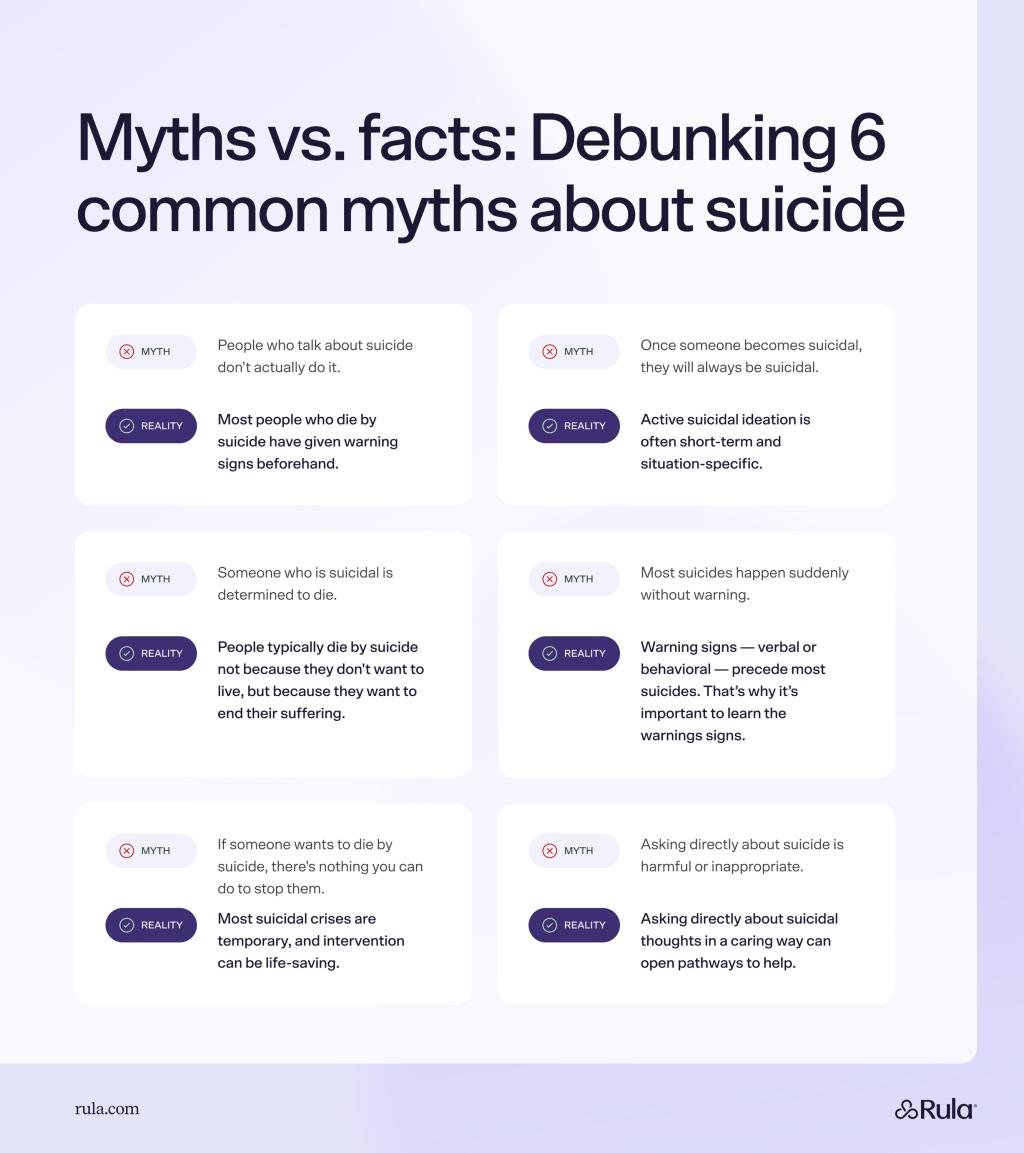
Myth 1: People who talk about suicide don't actually do it.
Fact: Most people who die by suicide show warning signs or talk about their suicidal thoughts beforehand. In many cases, this can be a cry for help. If you hear someone make a comment about suicide, always take it seriously. It’s better to be overly cautious than stay silent when someone could be struggling.
Myth 2: Suicide only affects people with mental health conditions.
Fact: Mental health conditions can increase a person’s risk for suicide, especially if they aren’t getting support. But suicide doesn’t only affect people with a diagnosis. In fact, studies show that about don’t have a diagnosed mental health condition.
Suicidal thoughts can happen when someone is going through a really hard time — like a big loss, serious stress, or a major life change. These thoughts are often short-term and linked to what’s going on in someone’s life. For people who do have mental health conditions, treatment can help reduce the risk by helping them manage symptoms and find support.
Myth 3: Someone who is suicidal is determined to die.
Fact: Typically, people don’t die by suicide because they don’t want to live. Rather, people die by suicide because they want to end their suffering. If you don’t have firsthand experience with this type of pain, it might be tough to imagine being in a position where suicide feels like the only choice. But suicidal thoughts are often about seeking relief — not about giving up on life. With the right support, many people who have felt this way go on to heal and find hope again.
Myth 4: Most suicides happen suddenly without warning.
Fact: There are usually verbal or behavioral indicators that someone is at risk for suicide. That’s why it’s so important to learn and understand .
Don’t hesitate to reach out to support someone who starts:
- Giving away their belongings
- Talking about wanting to die
- Talking about not wanting to be a burden to others
- Seeming sad, anxious, irritated, or angry
- Withdrawing from friends and loved ones
- Engaging in risky behavior (like reckless driving or unhealthy substance use)
- Creating a plan to end their life
Myth 5: If someone really wants to die by suicide, there's nothing you can do to stop them.
Fact: Most suicidal crises are temporary. With the right support, people can get through a crisis. This is because, even in a person’s darkest moments, they . In other words, there might be part of them that wants to live, despite the difficulties they’re facing. Staying with that person, contacting crisis care, and encouraging them to seek ongoing support can help keep them safe.
Myth 6: Asking directly about suicide is harmful or inappropriate.
Fact: Many people worry that bringing up the subject of suicide might “put ideas in someone’s head” or increase the person’s risk. But this isn’t the case. Asking can provide relief and open pathways to help.
Here are some examples of things you can say:
- “I’ve noticed you haven’t been leaving the house lately and are sleeping a lot. I’ve also noticed you’ve been giving away some of your belongings. Have you had thoughts about suicide?”
- “It seems like your mood has been really up and down, and I know you’ve been taking some risks lately. Trust me, I’ve been there, and I just want you to be safe. Are you thinking about suicide?”
If the person says “yes,” try to remain calm, validate their feelings, and ask if it’s OK to connect them with resources like the ones listed below. If they’re , try to keep the door open for another conversation. Ask them if it’s OK if you check in later, and be sure to follow up.
Where to turn for help:
- Emergency services: If you or someone else is in immediate danger, call 911 right away. Emergency responders can provide urgent help to keep you safe.
- Crisis intervention: If you need immediate support, contact the by dialing or texting 988 from any phone. The counselors there will provide confidential support and resources to help keep you or someone else safe.
- Therapy: A therapist can help a person identify what’s causing their suicidal thoughts and learn healthy ways to cope with their challenges. They can also provide a safe, judgement-free space to process their experiences and connect them with other supports (as needed).
- Support groups: Talking to other people who understand what it’s like to experience mental health challenges can be very healing. To find a support group, visit the or contact your local mental health center.
Suicide is a common occurrence in the United States. However, it’s still widely misunderstood. For example, some people mistakenly believe that asking someone about suicide will increase their risk. But the truth is, talking about suicide and raising awareness can save a life. Knowing the facts about suicide can help you spot the signs, empower you to intervene, and allow you to connect someone with resources to keep them safe.
was produced by and reviewed and distributed by Â鶹ԭ´´.