Every 30 minutes, someone arrives at an ER with a gunshot wound, according to the CDC
Every 30 minutes, someone arrives at an ER with a gunshot wound, according to the CDC
The COVID-19 pandemic and its corresponding increase in shootings sparked a national conversation around firearm injury, emergency room visits, and the violence victims in hospitals. Five years later, the conversation has faded, but new from the Centers for Disease Control and Prevention shows that gun violence remains a stubborn presence across the country, with 93,022 shooting injuries treated in hospitals from 2018 to 2023.
According to , an American emergency room treats at least one firearm injury every 30 minutes.
鈥淢ost cities use police data to inform prevention planning, but data from hospital and public health sources is an essential, and often missing, piece to guide action, as many incidents of violence and crime are not reported to police,鈥� said Dr. Adam Rowh, a medical epidemiologist at the CDC and lead author of the study, via e-mail to .
The study, published in Annals of Internal Medicine in April, analyzed the CDC鈥檚 data on emergency department firearm injuries, which is limited to the District of Columbia and nine states: Florida, Georgia, New Mexico, North Carolina, Oregon, Utah, Virginia, Washington, and West Virginia. The study showed that the monthly rates for shooting injuries were highest in July and lowest in February; daily rates were disproportionately high on holidays, and nighttime peaks were the highest on Friday and Saturday, consistent with . The researchers also found that rates were highest between 2:30 a.m. and 3 a.m., and were the lowest between 10 a.m. and 10:30 a.m.
The authors of the study concluded that knowing the periods when gunshot injuries are highest could be essential both in deploying care and in effectively allocating resources, such as trauma preparedness, ambulance services, hospital staffing, and strategies for intervention.
One of those strategies is hospital-based violence intervention programs (HVIPs), an effort aimed at mitigating reinjury by providing holistic and rehabilitative care to shooting victims. The model, first developed , has spread nationwide, and various programs through myriad resources, most notably through grants now facing the threat of .
鈥淚t鈥檚 happening on every front,鈥� January Serda, the grant coordinator of one such program in Newport News, Virginia, said of federal cuts to community violence intervention funding, education, and healthcare.
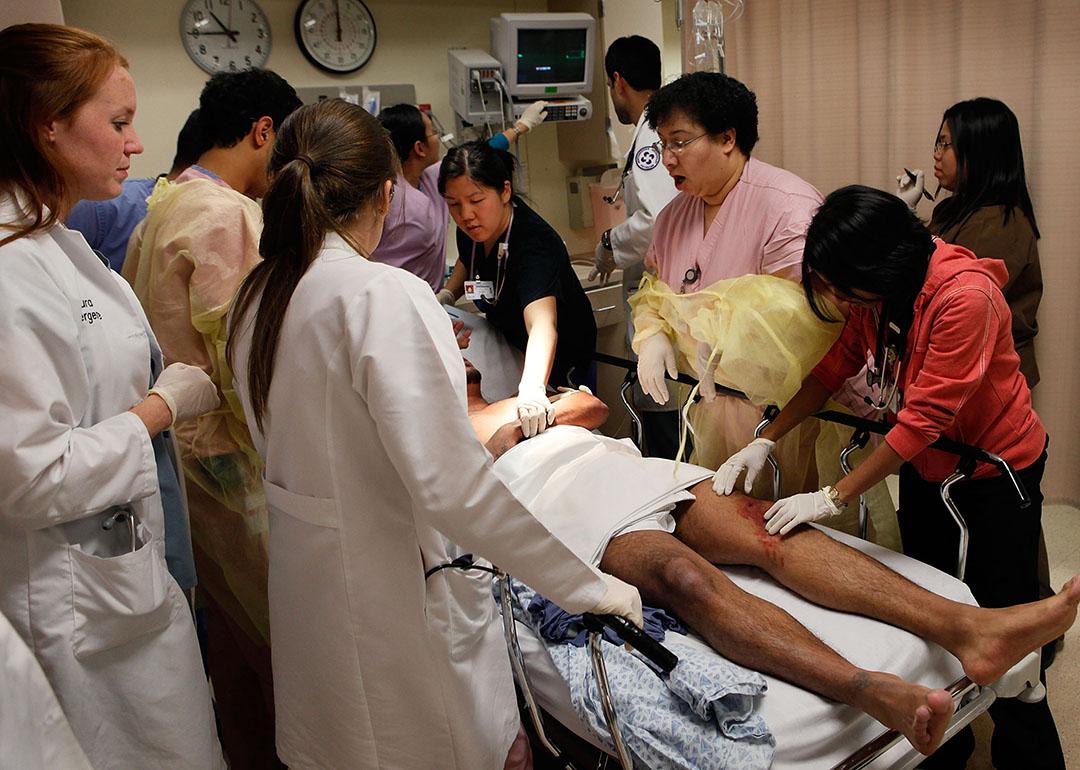
Dr. Randi Smith, a trauma surgeon who launched an HVIP at Grady Memorial Hospital, in Atlanta, said she has attended to a gunshot victim on every one of her on-call days in the trauma center. Financial and social investment in such programs is as paramount to treatment as life-saving medical care, she emphasized.
鈥淚 was very motivated to start a violence intervention program, taking best practices from some of the programs that I have been a part of and shortcomings that I had learned from the past,鈥� Smith said. The program she started in 2023, Interrupting Violence Among Youth and Young Adults, is one of the few based in .
The program has served more than a thousand people, including survivors and their family members. According to Smith, its reinjury rates are less than 3 percent, compared with national benchmarks that are up to 30 percent and benchmarks that are between 12 percent and 15 percent.
Her work has a long legacy. Nearly four decades ago, and 鈥攅specially those with public health experience鈥攚ere among the first cohort of medical practitioners to recognize gun violence as a public health issue. That recognition was largely based on what they witnessed in hospitals and emergency rooms, as the rate of shootings reached historic highs in the 1980s and 1990s. Those firsthand accounts were pivotal in the development of the nation鈥檚 first hospital-based violence intervention programs.
Serda, the grant coordinator for an HVIP in Virginia, said in today鈥檚 multilayered crisis, it鈥檚 more paramount than ever to prioritize care for the people on the frontlines. She came to violence intervention from nonprofit management and fundraising for survivors of sexual assault in 2022, after her 17-year-old son, Justice Dunham, was fatally shot in a high school parking lot after a basketball game.
鈥淚 was blown away by the lack of training around trauma-informed care, or safe spaces and outlets, for nurses and practitioners, and people who are seeing this firsthand and helping the community,鈥� said Serda, who began to advocate for trauma-informed initiatives designed to help patients, her HVIP team and others address the emotional impact of caring for victims of violence and firearm injuries. 鈥淭here was no discussion about compassion fatigue, burnout, or vicarious trauma.鈥�
As hospital personnel adjust to the ever-evolving firearm violence crisis, Smith said listening to their experiences, and supporting their well-being, has never been more crucial.
鈥淚 think a lot of people are looking at the recent news, post-pandemic, that shootings have decreased, and have not realized that we as hospital staff are still treating patients day after day,鈥� said Smith, 鈥渄ealing with a medical environment that shifted significantly since the pandemic, and navigating extreme burnout.鈥�
was produced by and reviewed and distributed by 麻豆原创.