This story originally appeared on Vivian Health and was produced and distributed in partnership with 麻豆原创 Studio.
How the new generation of younger nurses is impacting the future of care
The nursing industry lost at least between 2020 and 2022 as the COVID-19 pandemic demanded more working hours, causing emotional drain, according to the 2022 National Nursing Workforce Study. However, that exodus was largely offset by new nurses entering the field, many of whom were inspired by the pandemic to effect positive change.
With the continued rise of burnout and fewer mentors in the workplace, government agencies鈥攁long with private companies and nonprofits鈥攈ave been investing millions in recruiting and retaining experienced employees in the nursing industry.
used data from the Bureau of Labor Statistics and the most recent National Nursing Workforce Study to examine how widespread nurse retirement is shaping the nursing industry. The data also illustrates how demographics have changed in the last five years.
While some new nurses enter the field through a career change, overall, nurses have become younger. According to the study, the median age of registered nurses was 46 in 2022, falling from 52 in 2020. Younger nurses also make up a larger share of the workforce. The portion of registered nurses younger than 29 grew, while the share of nurses older than 55 shrank from about two out of five nurses of the workforce to less than a third.
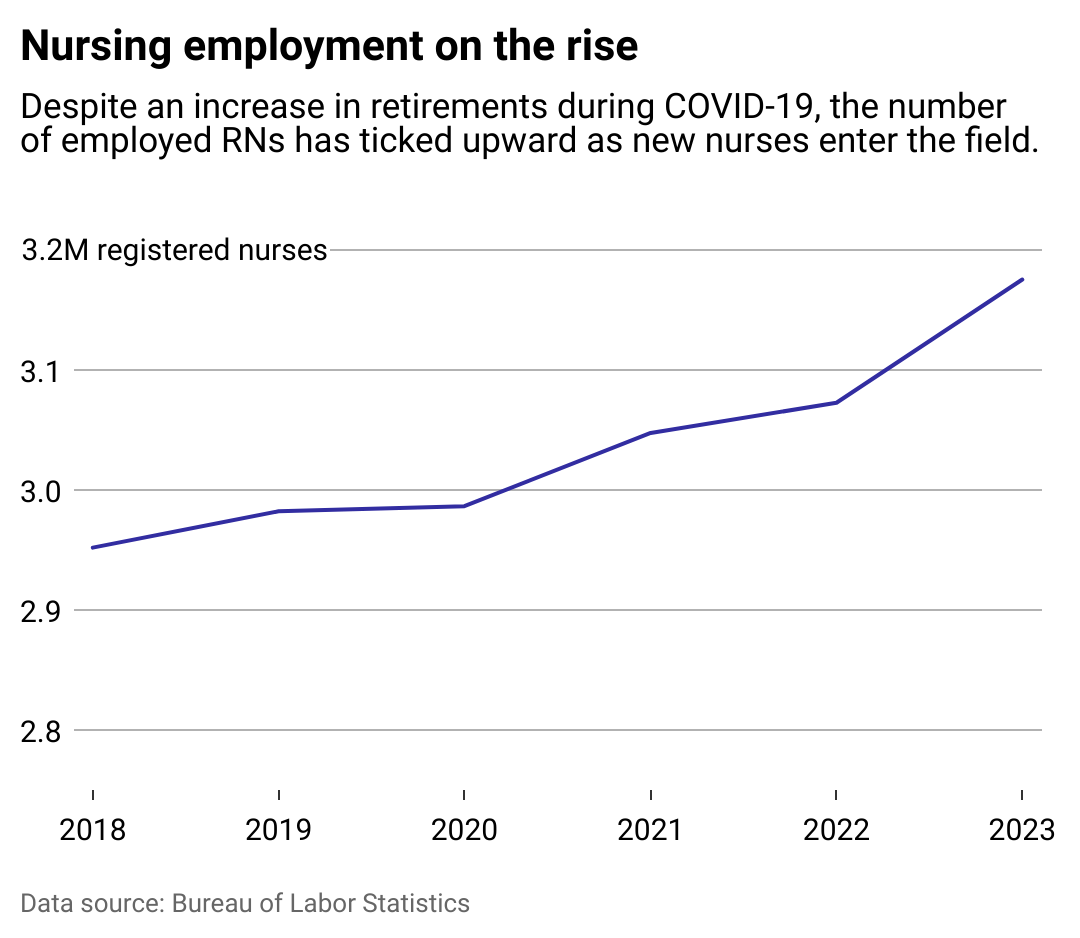
More nurses are entering the field
A shortage of nurses could have dire implications for patients, including increased readmission rates, staffing shortages, and higher morbidity rates. However, despite chatter about nurse scarcity, the number of registered nurses in the workforce has increased steadily over the past five years, according to data from the Department of Labor.
Widespread retirements have impacted some sectors more than others. A March 2024 survey from the American Health Care Association found that have open positions; among those, about 9 in 10 seek to hire for registered nursing roles. What's more, three-quarters say their workforce is down from prepandemic levels.
Demand for nurses is only expected to grow over the next decade as Americans grow older and need long-term care.
The Health Department estimates a shortage of in 2030. However, as more nurses graduate and enter the workforce, the department projects an oversupply of registered nurses by 2035.
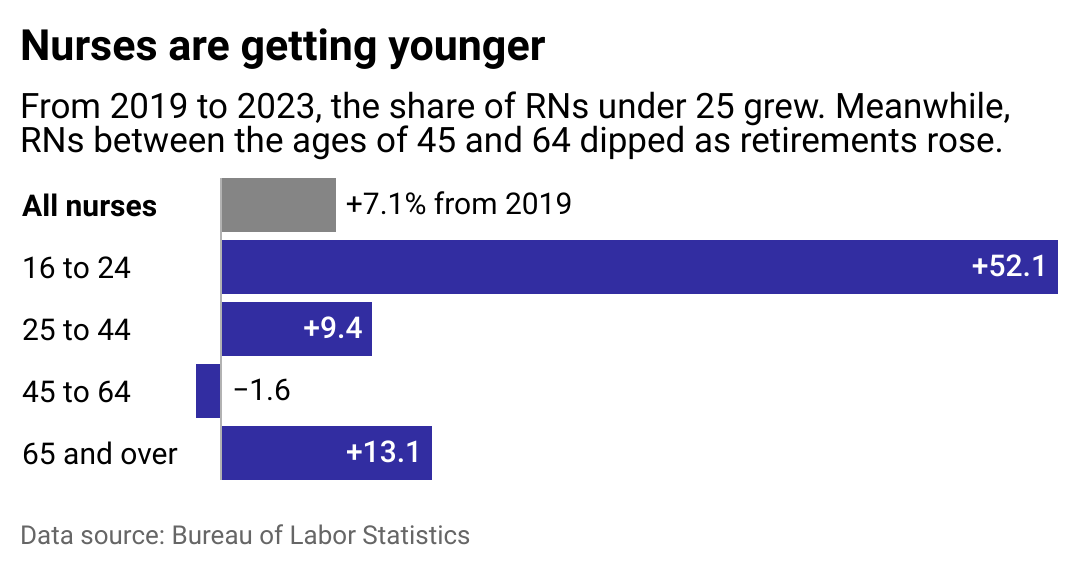
Share of young nurses on the rise
In the last five years, the number of nurses under 25 has grown seven times faster than nurses in other age groups. While most hospitals and schools require nurses or prospective students to be at least 18, some programs allow high school students to participate in vocational training.
This shift is making the industry more diverse and tech-savvy but comes with a new set of challenges. Younger nurses, like Millennials and Gen Z workers, are , according to a 2023 study in BMC Nursing. However, they also say they .
As the industry shifts focus to collaborative care, nurses play a key role in improving health care quality and managing chronic conditions. However, a comparative study published in the journal Policy Politics & Nursing Practice found that left the field after their first year, meaning those entering the profession need leadership support. With the lack of institutional knowledge gained through mentorship, continuing education is important to convey best practices and keep up with technological advances.
To retain experienced nurses, hospitals and other employers are adjusting their approach to increase employee engagement, which has been shown to correlate with improved performance among nurses across health care settings. Boosting engagement includes establishing clear paths for career growth and creating a climate for collaboration and appreciation.
Story editing by Alizah Salario. Additional editing by Kelly Glass. Copy editing by Janina Lawrence. Photo selection by Clarese Moller.