
How nurses' pay changed over the past 20 years鈥攁nd what it means for the health care worker shortage
This story originally appeared on Incredible Health and was produced and distributed in partnership with 麻豆原创 Studio.
How nurses' pay changed over the past 20 years鈥攁nd what it means for the health care worker shortage
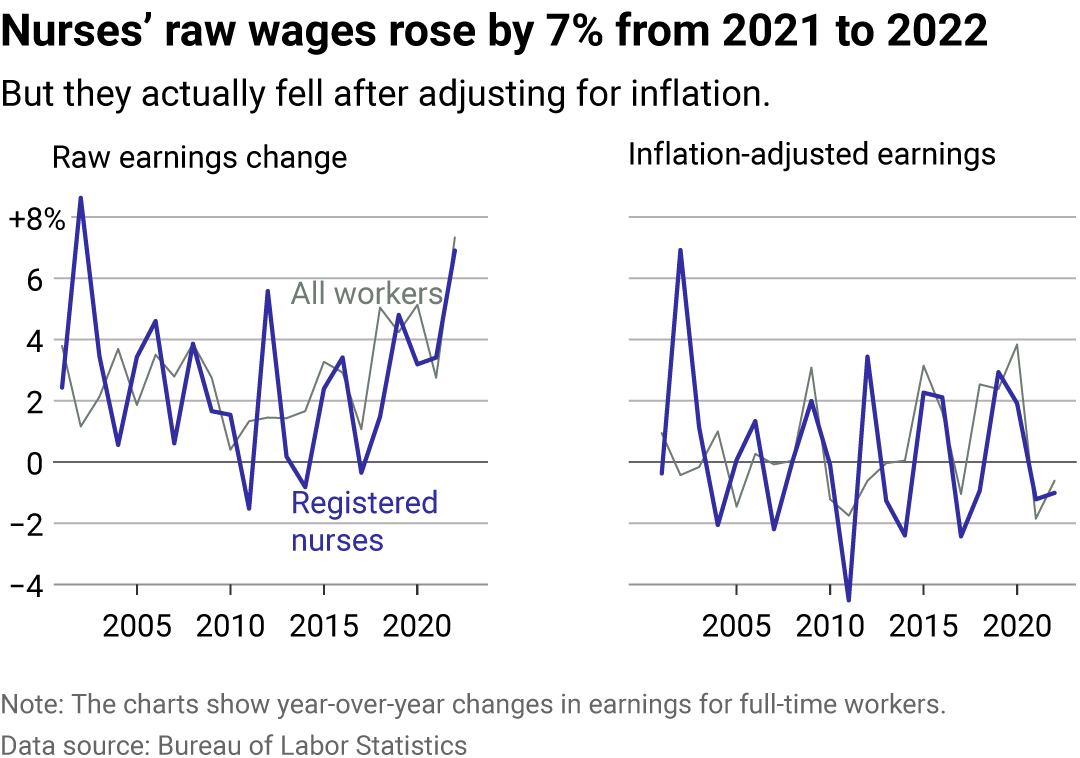
Nurses might think they are experiencing healthy pay increases, but those new salaries are weaker than in the past due to record inflation.
Courtesy of a consistent industry labor shortage and an unprecedented global pandemic, nursing wages jumped 7% from 2021 to 2022鈥攖he largest one-year jump in more than 20 years. However, inflation erased that apparent increase and then some, dropping actual earnings by 1%.
Staffing agency looked at Bureau of Labor Statistics data to see how much nurses' salaries changed in 2022. The study used median weekly earnings for registered nurses and compared them against wages for all full-time workers aged 16 and over. In addition, Incredible Health looked at the data before and after inflation.
Most American workers experienced pay increases since the pandemic. After adjusting for inflation, the average worker's wages fell by 0.6%, less than the decrease for nurses.
In general, nurses make more than the average worker.
According to the BLS, the is $81,220, while the median weekly earnings for all full-time workers in the U.S. is $1,118, which amounts to $58,136 a year.
Despite the decent salaries and job stability, the nursing field has higher attrition than other jobs. During the COVID-19 pandemic, 100,000 registered due to stress, burnout, and retirement, according to a 2023 study by the National Council of State Boards of Nursing.
A 2022 analysis by McKinsey & Company estimates the nation will be short between by 2025.
"Many nurses, especially in hospital settings, have sought to move away from direct patient care," the paper stated, with surveys indicating this is due to "a perceived lack of support, safety, and flexibility." The article reports that home care, hospices, ambulatory clinics, and hospital-based departments especially need nurses.
The health of America depends on having enough nurses working.
Labor shortages may cause further health care inequity
COVID-19 changed the health care profession in multiple ways. During the pandemic, nurses and other frontline workers cared for the dying, while many of their colleagues also died.
In COVID-19's first year, a Guardian and Kaiser Health News analysis found that , most of them nurses and support staff. Those who remained have reported needing employers to pay more attention to their mental health. An article in the Nurse Journal trade publication suggests nurses should get one off monthly in addition to their traditional paid time off.
Compounding the issue is that nursing schools are to teach future nurses, according to the American Association of Colleges of Nursing. Many nursing educators are opting to leave the classroom for better-paying jobs in the industry.
Nursing shortages don't benefit workers, patients, or employers. McKinsey estimates wage increases to attempt to fill the shortages will be a major factor in health care cost increases and could by as much as $70 billion in 2027 compared with 2023.
The company also warns that labor shortages could hurt local health providers, making health care less accessible and increasing wait times. McKinsey's analysts wrote that it will because "when access to care contracts, disadvantaged communities are often disproportionately impacted."
Data reporting by Wade Zhou. Story editing by Jeff Inglis. Copy editing by Kristen Wegrzyn.