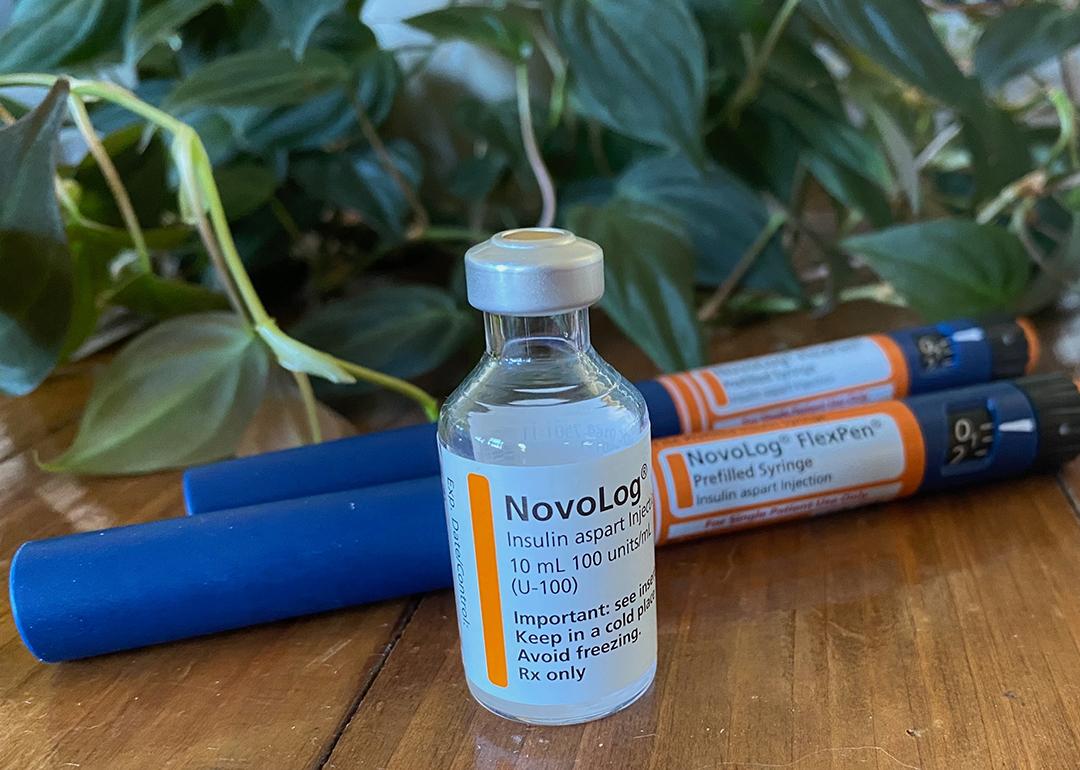
Insulin: The century-old drug that still shapes modern diabetes care
A century ago, type 1 diabetes was a death sentence. Children diagnosed rarely survived more than a year or two, wasting away as their bodies starved despite food. Then, in 1921, in a modest lab in Toronto, Frederick Banting and Charles Best isolated insulin from a dog鈥檚 pancreas. By 1922, a 14-year-old boy named Leonard Thompson, frail and near death, received the first insulin injection. Within days, he was sitting up, smiling, and eating.
That moment didn鈥檛 just change one boy鈥檚 life, it changed medicine forever.
Quick Hits
- Rapid-acting insulins: lispro (Humalog), aspart (Novolog), glulisine (Apidra). Fast onset (~15 minutes), used at mealtimes.
- Short-acting insulin: regular human insulin (Humulin R, Novolin R). Slower than rapid-acting; sometimes used in hospitals.
- Intermediate-acting insulin: NPH (Humulin N, Novolin N). Developed in the 1940s, peaks mid-day, still used in low-cost regimens.
- Long-acting insulins: glargine (Lantus, Basaglar, Toujeo), detemir (Levemir). Provide 24-hour 鈥渂asal鈥� coverage.
- Ultra-long-acting: degludec (Tresiba). Lasts up to 42 hours, offers flexibility.
- Premixed insulins: blends of intermediate + rapid/short (70/30, 75/25). Convenient, but rigid schedules.
- Delivery innovations: insulin pens, pumps, closed-loop 鈥渁rtificial pancreas鈥� systems, and inhaled insulin (Afrezza).
Today, insulin is one of the most prescribed, most essential drugs in the world. Nearly 8.4 million Americans use insulin to manage . Despite newer drugs and technologies, insulin remains the backbone of diabetes care, , a prescription discount card website, reports.
Yet is not one drug but a family of medications, engineered over decades to better mimic the body鈥檚 natural rhythms. From the first crude animal extracts to modern designer analogs and smart delivery systems, insulin鈥檚 story is one of both scientific triumph and human struggle, including debates about cost and access.
Rapid-Acting Insulins: Mimicking Nature鈥檚 Mealtime Spike
When you eat, your pancreas normally releases a burst of insulin to shuttle glucose into cells. In diabetes, that mealtime surge has to be replaced.
Enter rapid-acting insulins like lispro (Humalog), aspart (Novolog), and glulisine (Apidra). Engineered in the 1990s, these analogs kick in within 15 minutes, peak in an hour, and fade within four hours.
Why it matters: This speed allows patients to take insulin just before meals, matching their blood sugar rise. It鈥檚 a far cry from the older regular insulin, which forced patients to plan meals 30鈥�45 minutes in advance.
Everyday life: A 22-year-old college student with type 1 diabetes can use an insulin pump filled with aspart. The pump delivers tiny continuous doses, plus mealtime 鈥渂oluses.鈥� With it, she has the freedom to eat pizza at midnight or skip breakfast without as much fear of a glucose rollercoaster.
Caveat: Rapid-acting insulins require careful carb counting and monitoring. If meals are skipped or delayed, hypoglycemia (dangerously low blood sugar) can occur.
Short-Acting Insulin: The Old Workhorse
Before the analog revolution, regular human insulin (Humulin R, Novolin R) was the standard mealtime insulin. It鈥檚 slower, kicking in after 30 minutes and lasting up to eight hours.
Why it鈥檚 still around:
- Cheaper than newer analogs.
- Hospitals rely on it for IV infusions to control blood sugar in critically ill patients.
- In resource-limited settings, it remains the mainstay.
But in daily life, its slower onset means patients must plan meals in advance, a burden in today鈥檚 fast-paced world.
Intermediate-Acting Insulin: NPH and the 1940s Breakthrough
In 1946, scientists added a protein (protamine) to insulin, creating NPH (Neutral Protamine Hagedorn) insulin. For the first time, insulin could last 12鈥�18 hours, reducing the need for multiple daily injections.
Today鈥檚 role:
- Still widely used globally, especially where cost is an issue.
- In the U.S., it鈥檚 sometimes used for gestational diabetes or in combination with short-acting insulins.
Drawback: NPH has a pronounced peak 4鈥�12 hours after injection. If meals don鈥檛 match that curve, blood sugar can crash. For many patients, this unpredictability has been replaced by smoother long-acting insulins.
Long-Acting Insulins: Smoothing the Basal Line
The 1990s brought a revolution: long-acting insulin analogs designed to provide a flat, 24-hour background level of insulin, much like a healthy pancreas does between meals.
- Glargine (Lantus, Basaglar, Toujeo): The first 鈥渂asal鈥� analog, releasing steadily for about 24 hours. Toujeo is a concentrated form lasting a bit longer.
- Detemir (Levemir): Another long-acting option, sometimes requiring twice-daily dosing but predictable and steady.
Impact: Long-acting insulins reduced nighttime hypoglycemia and simplified regimens. Instead of juggling NPH peaks, patients could take a once-daily injection and not worry about timing meals so rigidly.
Real-world story: A 60-year-old man with type 2 diabetes struggling on pills is started on glargine at bedtime. His morning sugars stabilize, his A1C drops, and he avoids the dangerous lows he had on NPH.
Ultra-Long-Acting Insulin: Freedom in Flexibility
Insulin degludec (Tresiba), introduced in the 2010s, pushed boundaries further. With a half-life of over 25 hours, it provides stable coverage for up to 42 hours.
Why it鈥檚 different: Patients no longer have to take insulin at the exact same time every day. Miss a morning shot? Take it in the evening. Travel across time zones? Adjust without chaos.
Evidence: Trials show degludec reduces hypoglycemia episodes compared to glargine, making it a favorite for those with unpredictable schedules, from night-shift nurses to frequent travelers.
Premixed Insulins: Convenience at a Cost
For patients who want fewer daily injections, premixed insulins combine rapid- or short-acting insulin with intermediate insulin in fixed ratios (like 70/30 or 75/25).
Pros:
- Two-in-one shot simplifies regimens.
- Useful for patients with consistent meal schedules.
Cons:
- Less flexible, insulin peaks may not match irregular eating habits.
- Harder to adjust one component without affecting the other.
Beyond the Needle: New Delivery Systems
For decades, insulin meant vials and syringes. Today, options abound:
- Pens: Disposable or refillable, with easy dose dialing and less stigma.
- Pumps: Continuous infusion of rapid-acting insulin, paired with 鈥渂oluses鈥� for meals.
- Closed-loop systems (鈥渁rtificial pancreas鈥�): pumps linked to continuous glucose monitors (CGMs) that automatically adjust insulin, a major step toward automated care.
- Inhaled insulin (Afrezza): A needle-free powder inhaled before meals. Fast-acting, though not suitable for people with lung disease.
Safety: The Double-Edged Sword
Hypoglycemia: The most feared side effect. Too much insulin, too little food, or too much activity can send glucose plummeting. Symptoms include shakiness, sweating, confusion, and 鈥� in severe cases 鈥� seizures or coma.
Weight gain: As insulin helps the body store glucose, weight gain is common, especially in type 2 diabetes.
Injection site issues: Repeated use of the same spot can cause lumps (lipohypertrophy), affecting absorption.
Despite these concerns, insulin remains one of the most effective, life-sustaining drugs ever created.
The Future: Smart Insulins and Beyond
Researchers are developing 鈥渟mart insulins鈥� that activate only when blood sugar rises, reducing hypoglycemia risk. Others are working on once-weekly insulin injections and improved closed-loop systems that act almost like a natural pancreas.
Yet even as technology advances, insulin affordability remains a pressing issue. In the U.S., high prices have forced some patients to ration doses, with tragic consequences. Efforts are underway to cap insulin costs and expand access to generics and biosimilars.
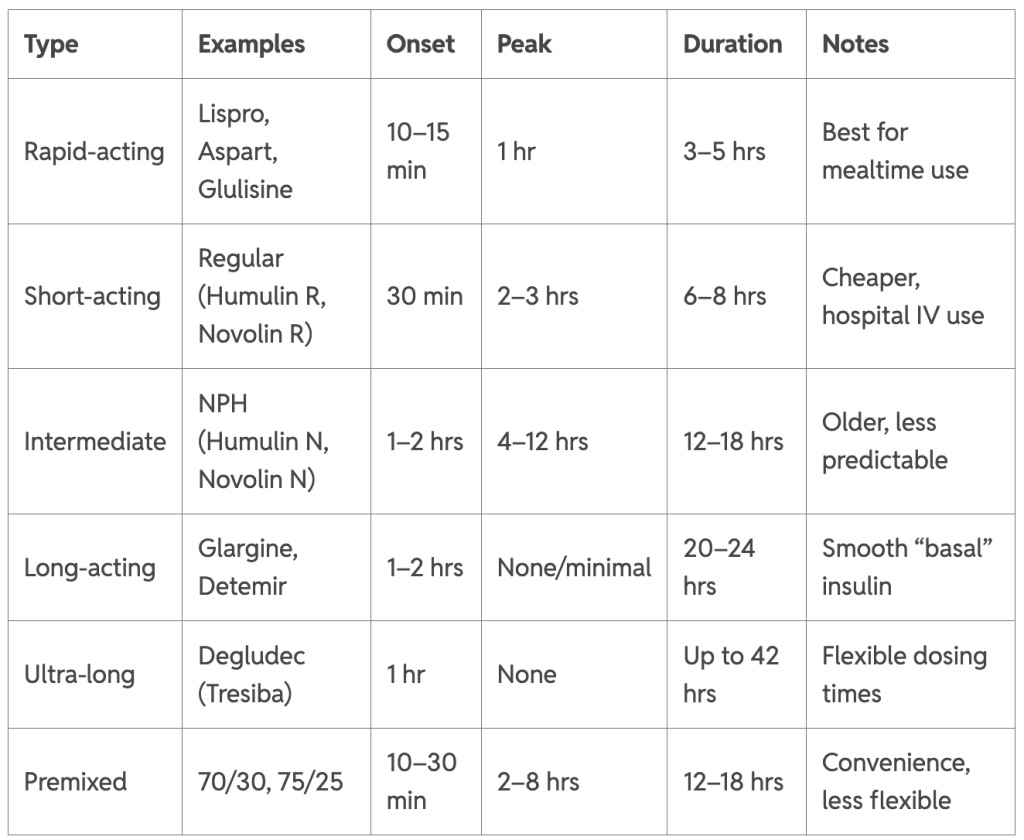
Popular Insulins at a Glance
Insulin: Old Medicine, Ever-New
Insulin is both a 100-year-old discovery and a modern marvel. It turned a fatal disease into a manageable condition, saving millions of lives. Over the decades, scientists have refined it into faster, longer, smoother versions 鈥� and built delivery systems that give patients more freedom.
But at its core, insulin remains what it has always been: a lifeline. For patients with diabetes, it is not just a drug but a daily companion, sometimes frustrating, sometimes empowering, but always essential.
This article is for educational purposes only. Always consult your healthcare provider before starting or changing any medication.
was produced by and reviewed and distributed by 麻豆原创.