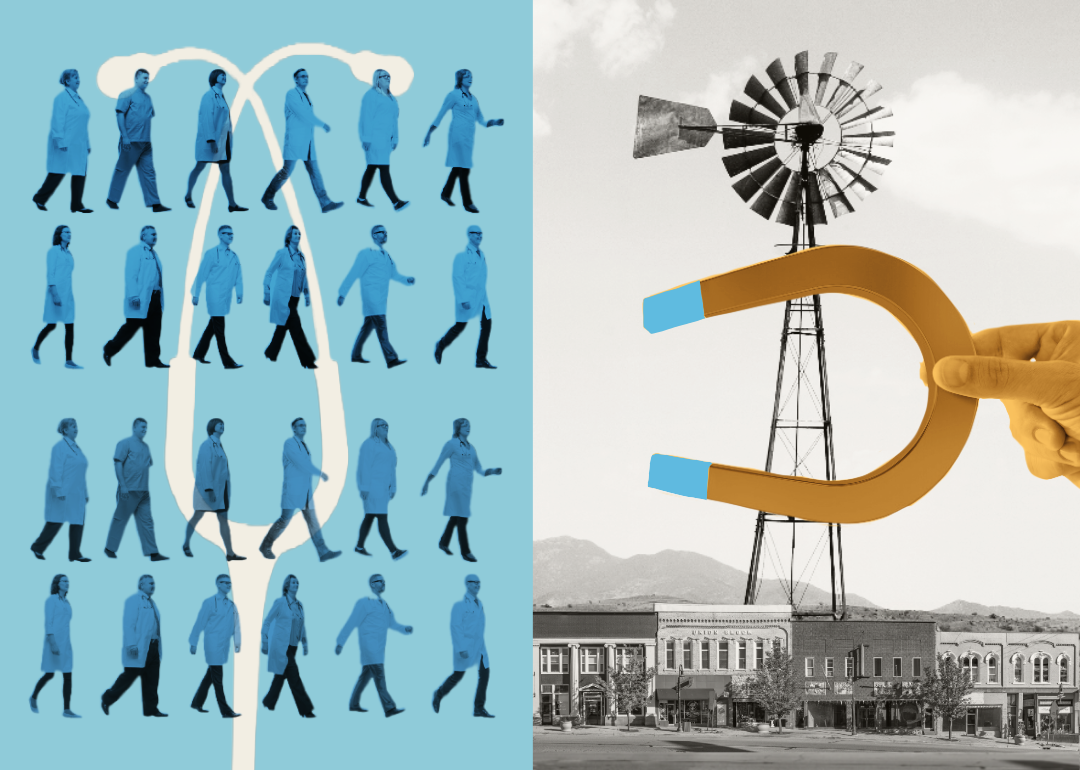
Location can impact health more than genetics. These initiatives are improving rural health care access.
originally appeared on and was produced and distributed in partnership with 麻豆原创 Studio.
Location can impact health more than genetics. These initiatives are improving rural health care access.
When it comes to health, our genes mean a lot: They carry our families' history of diabetes or cancer, make us more susceptible to certain diseases, and impact our blood type. While genetics play a large part in health outcomes, they are only one piece of a complex puzzle. Based on recent examination, it's clear that what public health experts call the social determinants of health are just as, if not more, influential in determining health outcomes.
Social determinants of health include economic stability, access to and quality of health care and education, social and community context, and environmental and geographic factors.
Living in a rural area intersects with many of these social determinants. There is frequently less economic stability, communities are more spread out, and drives to school are longer. Obstacles to health care access are far more prevalent than in more populated areas. Longer wait times, provider shortages, and fewer resources devoted to health care are several barriers to accessing medical professionals in rural communities. What's more, fewer people in rural areas have health insurance than their urban and suburban counterparts.
Within rural areas, significant racial and ethnic disparities in health persist. Black and Indigenous Americans living in rural communities face much worse health outcomes than white rural residents due to inequities that impact wealth, access to education, and living and working conditions.
Only , though 20% of the U.S. population lives in rural areas, according to 2017 government data. In areas without enough physicians for the population鈥攑laces designated 鈥攅xisting health issues often go undiagnosed and untreated for longer, emergency medical situations require long commutes, and there are fewer specialists to treat specific issues.
Doctor shortages have long been a part of rural life鈥攎edical students and doctors frequently go to school and practice in more heavily resourced urban or suburban areas. For rural patients, this lack of access to medical care can be distressing, frustrating, and psychologically damaging.
Medical schools and state and federal governments have taken steps to remedy these shortages. dove into government data, public health research, and news coverage to investigate the reasons behind rural doctor shortages and how these shortages are being addressed.
Medical schools invest in students with the hopes they'll put down rural roots
Various recruitment programs and incentives exist to attract physicians to rural areas where doctors are few and far between. Within about 40 medical schools and counting, organizations have created rural training tracks to attract medical students to practice rurally and prepare them adequately for this kind of work.
Part of these programs include outreach before students arrive at medical school鈥攐r even prior to them deciding to be doctors. A number of studies have shown that if they come from a rural place, but are significantly underrepresented in medical school programs. These programs frequently recruit from rural community colleges and four-year schools to foster interest in medical school and attract more students from rural backgrounds to pursue medicine.
Once in these programs, students have more opportunities to train in rural communities than the average medical student. They complete their rotations and residencies in small communities and learn about the scope of rural practice, often broader than the scope for physicians in urban areas with more specialized practitioners.
In addition to rural-specific tracks and training programs, there are incentives for medical students pursuing rural practice, such as loan repayment programs for doctors. Federally, the National Health Service Corps has a loan repayment program for health care providers working in communities impacted by the opioid epidemic. Certain states also offer similar programs, promising loan repayment or forgiveness in exchange for a certain number of years of service within rural communities.
Another type of incentive aims to attract international medical students attending school in the U.S. to rural areas. These programs, known as J-1 visa waiver programs, allow students to live in the country on J-1 visas and practice immediately in the U.S., waiving the usual requirement that they return to their home country for at least two years鈥攁s long as they practice rurally in a designated Health Professional Shortage Area.
Although these programs are sometimes effective in getting physicians to rural areas, evidence is scant regarding the success rates of keeping them there.
According to a 2023 review of, little is known about the retention of doctors practicing in rural communities, and minimal resources and incentives remain available for doctors who stay in rural positions. Many physicians leave rural areas once they have completed incentives or service commitments, often leaving communities in a similar situation as they started.
Existing information about rural health care providers points to the importance of adequate preparation for rural practice and small-town living, as well as strong community bonds to keep physicians rooted in rural areas. Studies show that preparing doctors for a rural lifestyle, as well as giving them rural rotations, can . Integrating doctors into the communities they serve through can also boost the likelihood of providers staying put in rural areas.
Story editing by Alizah Salario. Additional editing by Kelly Glass. Copy editing by Kristen Wegrzyn.