originally appeared on and was produced and distributed in partnership with 麻豆原创 Studio.
Tick bites are on the rise. Here's how to protect yourself.
Longer summers and shorter winters in North America mean more warm days throughout the year. These conditions are also for native arachnids, including bloodsucking ticks.
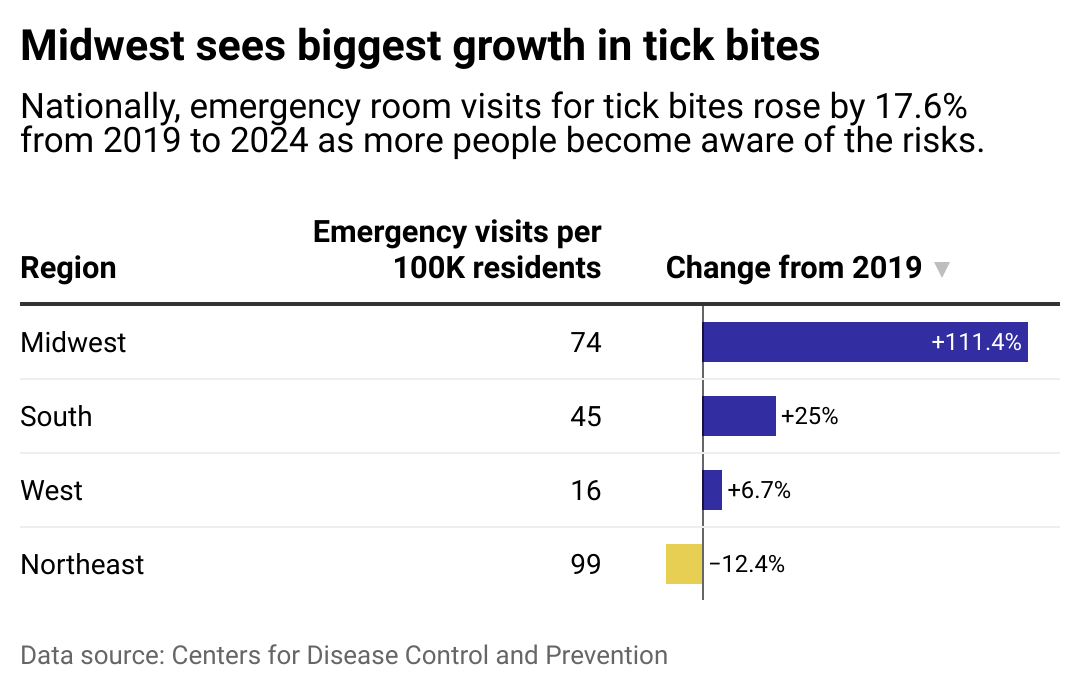
During the height of tick season in 2024, emergency departments saw 鈥攖he highest level since May 2019, according to the Centers for Disease Control and Prevention. Tick bites are also being reported in more states, including the Midwest and the South, as the small parasite's habitat expands.
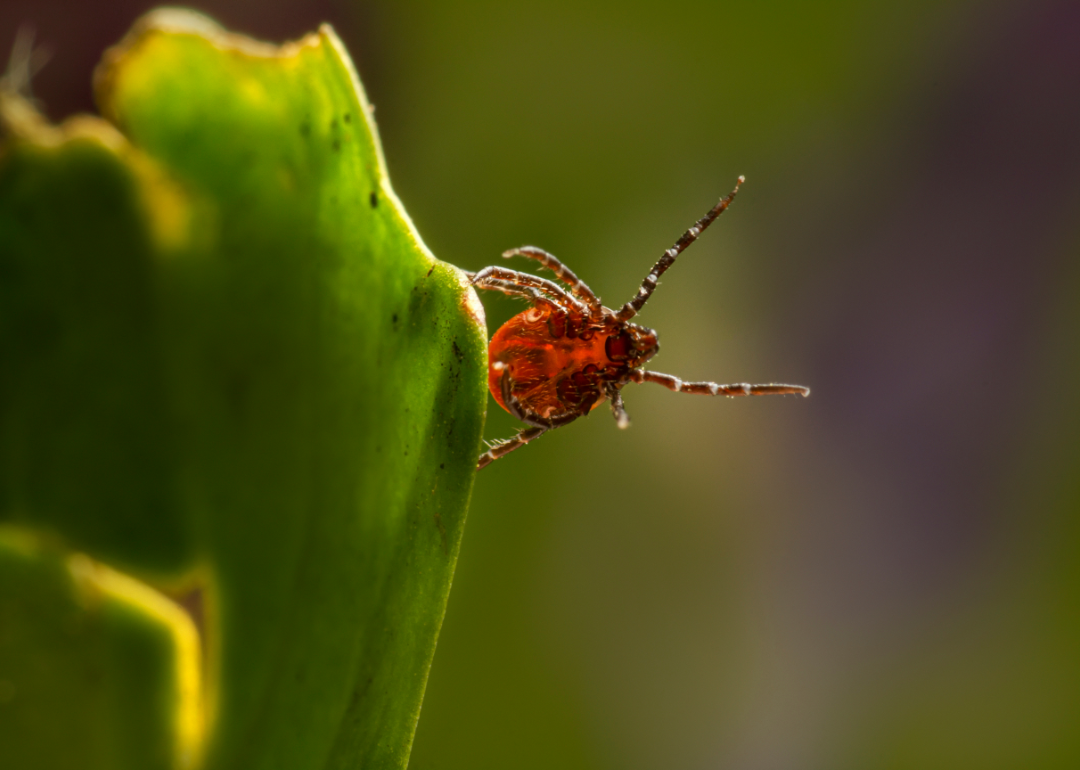
There are various types of tick species that come in , but they all have eight legs and are members of the spider family. They attach to the skin of warm-blooded animals鈥攊ncluding dogs, cats, and humans鈥攖o consume their blood and can pass dangerous bacteria through their saliva, which can lead to disease.
partnered with 麻豆原创 to examine the reasons behind rising rates of tick bites and their expanding habitat using the CDC's and other sources.
More people reporting tick bites
Ticks become active when the temperature is above 45 degrees Fahrenheit, and they thrive in moist, humid environments. They can typically be found in tall grass or other greenery but have been increasingly reported in urban areas, including abandoned and overgrown parking lots.
Tick bites are most common in the Northeast, making up 99 out of every 100,000 emergency visits as of August 2024, according to the CDC. However, the Midwest is experiencing the highest tick population growth, particularly in Minnesota and Wisconsin.
In 2024, the Badger State experienced a , causing ticks to appear in February, months ahead of schedule. Beyond weather changes, also play a role鈥攁s they are a major host to deer ticks.
To track growth, researchers at the at the University of Wisconsin-Madison where people can submit photos and identify ticks. In 2021, there were reported in the Midwest, according to the latest data available.
Lyme disease also on the rise
Tick bacteria can cause diseases like or Alpha-gal syndrome, more commonly known as , but the most common tick-borne illness is .
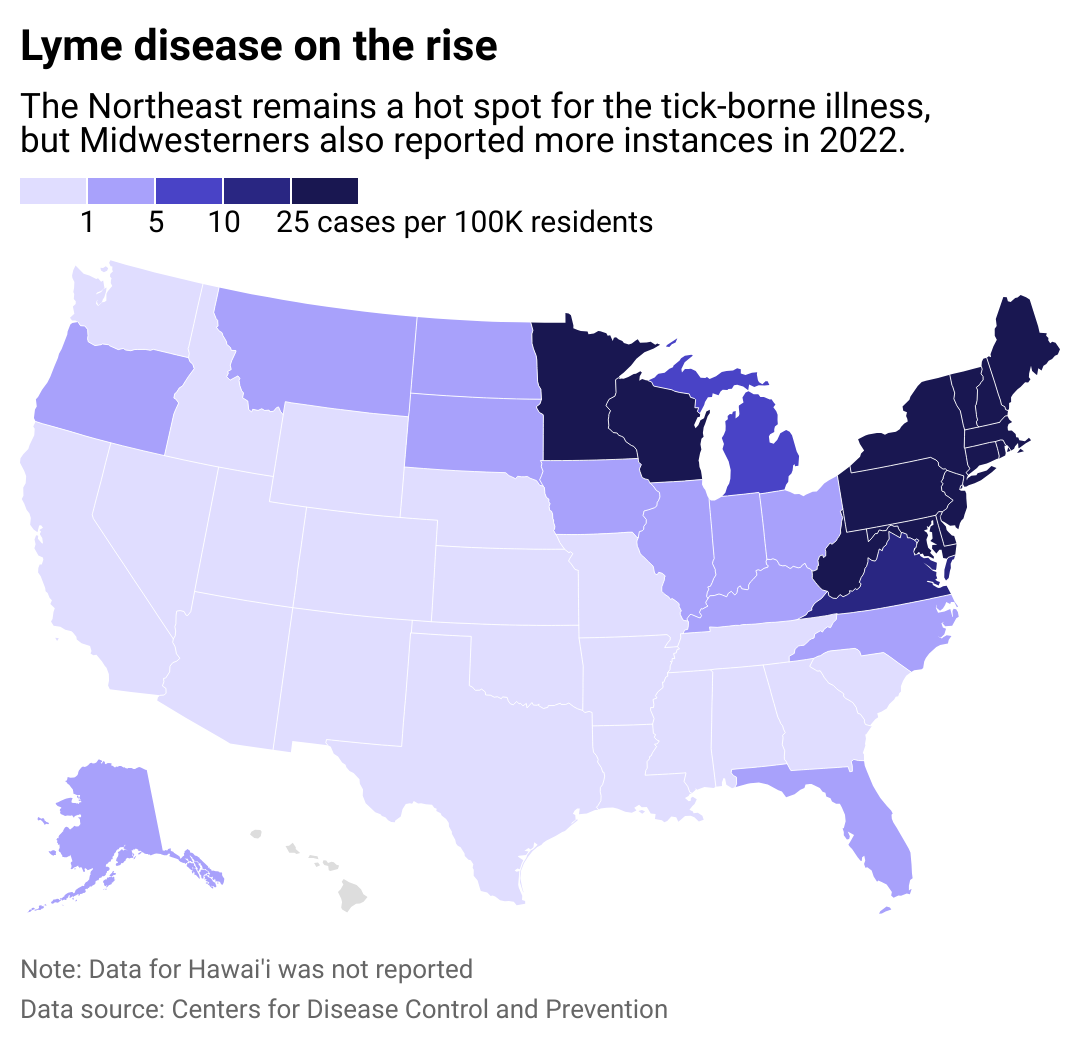
The number of reported cases of Lyme disease has increased fivefold from the 1990s; from people to . Adults over age 65 have been particularly impacted.
Initial signs and symptoms for most tick-related illnesses include a rash, fever, aches, and pains. If an infection remains untreated, the bacteria can have a serious impact on the heart, joints, and nervous system.
Increased awareness and screening have contributed to reported infections, but most of it can be attributed to a change in . In 2022, the CDC and the Council of State and Territorial Epidemiologists updated their criteria for regions with high tick populations to be based solely on lab testing. Previously additional clinical data, including demographic information and family history, was also required.
Still, scientists believe that the actual number may be 10 times higher than reported.

How to protect yourself from ticks
The best way to prevent tick bites is to , including avoiding wooded areas and removing leaf litter and brush from your yard. Covering skin with long shirts, pants, and boots also helps, as does using an or treating clothing with the insecticide permethrin.
When returning from outdoor activities, carefully check clothes, skin, and pets for ticks. Showering with hot water within two hours can also help reduce Lyme risk and allows for a thorough self-examination.
If you do find a tick, to grasp and pull it upwards. Take care not to twist, which can break the tick and leave the mouth attached. Once it is fully removed, clean the area with warm soapy water or rubbing alcohol.
To dispose of the tick, soak it in alcohol and wrap it in a plastic bag before putting it in the trash. They can also be flushed down the toilet. Lastly, stay safe and don't let ticks make your home their home, too.
Story editing by Cynthia Rebolledo. Additional editing by Kelly Glass and Alizah Salario. Copy editing by Tim Bruns.