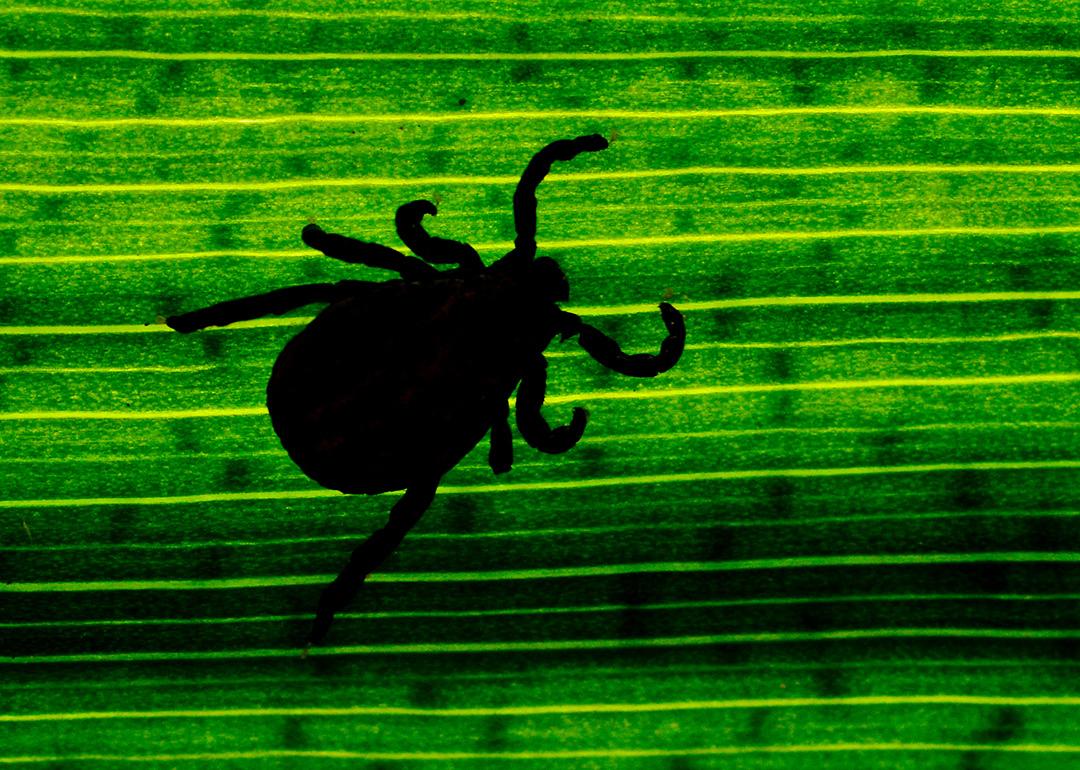
Tick populations have surged in the Northeast. Here鈥檚 how to keep you and your pets safe this summer.
Tick populations have surged in the Northeast. Here鈥檚 how to keep you and your pets safe this summer.
As climate change brings longer summers and milder winters, across the Northeast. And while New York City isn鈥檛 a hot spot for ticks, it鈥檚 surrounded by regions where the .
In the city, transmission of tick-borne diseases tends to occur on Staten Island and in parts of the Bronx. But most of the local cases of tick-borne disease come from visits to upstate New York, Long Island, Connecticut, New Jersey, Pennsylvania, and Massachusetts. The New York City Department of Health and Mental Hygiene recently to be vigilant for tick-borne diseases, particularly in patients who have traveled outside of the city.
On Long Island, Dr. Sandeep Gandhi sees patients with suspected tick-borne diseases at Stony Brook Southampton Hospital鈥檚 Regional Tick-Borne Disease Resource Center Clinic in Hampton Bays.
鈥淲e are seeing a huge uptick in tick-related infections, particularly Lyme disease,鈥� he said of cases on Long Island.
While your risk of encountering an infected tick is far higher on Long Island than in the five boroughs, the regions are closely connected, Gandhi noted.
鈥淭here鈥檚 a lot of exchanges, travel, between Manhattan and Long Island, and the pets travel with them,鈥� he said. 鈥淭hat is an increasing factor.鈥�
shares what to know about tick-borne diseases, and how to stay safe this summer.
How should you protect against tick bites?
Reducing your risk of tick-borne disease transmission comes down to awareness, prevention, and monitoring, Gandhi said.
If walking in wooded areas, wear long pants, tuck them into your socks and stay on paths, . Ticks tend to climb tall grasses and shrubs, wait for animals or humans to brush up against them, and then attach to feed. Wearing light-colored clothing can make it easier to spot ticks.
Insect repellant that contains the permethrin can be sprayed directly onto clothing and last for multiple washes, but should not be used on the skin. containing DEET and picaridin, formulated to work against ticks, should be sprayed on the skin.
When returning home, check yourself for ticks as soon as possible, Gandhi said, paying close attention to your hairline areas, armpits, and groin. If you find a tick on yourself, remove it with fine-tipped tweezers, grabbing the tick close to its head, and pulling it out in one smooth motion.
The city Health Department also recommends bathing or showering within two hours of coming indoors and drying clothing on high heat for at least 10 minutes to kill ticks.
Dog owners should also carefully check their pets for ticks, Gandhi said.
鈥淲hen dogs sleep in the bed with the patient, that鈥檚 one of the greatest risk factors for getting tick-related infections,鈥� he said.
What kinds of ticks are there, and what diseases do they carry?
Tick surveillance conducted by the Health Department has found the blacklegged tick to be widely established in Staten Island and parts of the Bronx, including Pelham Bay Park and Hunter Island. The Health Department has detected pathogens that can cause Lyme disease, anaplasmosis, babesiosis, Borrelia miyamotoi disease, and Powassan virus disease, in a small number of those ticks.
Lone star ticks, often associated with ehrlichiosis, have been detected in Staten Island and the Bronx, and Gulf Coast ticks have been found on Staten Island. American dog ticks have been detected in all five boroughs, but the Health Department has not found any of them testing positive for Rocky Mountain spotted fever in recent years.
Lyme disease is the most common tick-borne disease found in the New York City region, accounting for 2,952 cases among New Yorkers in 2024 (including 1,900 newly diagnosed cases and 1,052 new positive results for cases from prior years), according to the Health Department鈥檚 preliminary data.
Lyme disease is spread through the bite of an infected blacklegged tick, and in most cases has to be attached to a person for 24 to 36 hours before it can transmit the disease.
鈥淭here are other tick-related infections that have a shorter period of time,鈥� Gandhi said. 鈥淭he shortest period of time is the Powassan virus, which can transmit within 15 minutes.鈥�
The Powassan virus disease is dangerous but exceedingly rare in New York City. The Health Department noted that it was reported in one resident who was infected in the Hudson Valley in 2018.
Last year, the Health Department also reported 78 cases of and 65 cases of , 24 cases of , two cases of Rocky Mountain spotted fever, and one case of rickettsialpox.
How do you know if you have Lyme disease?
When it comes to Lyme disease, in Gandhi鈥檚 experience, a bruiselike lesion is more common than the classic 鈥渂ull鈥檚 eye鈥� rash people might be prepared to look for. Other symptoms can include fever, cold or flu-like symptoms, body aches, joint pain, and, in rare cases, a shooting nerve pain.
If you have a lesion of more than 5 centimeters and a tick bite, or live in an area like Long Island where ticks are endemic, you should be for Lyme disease, Gandhi said.
鈥淟yme disease is very, very treatable,鈥� he said. 鈥淭he antibiotic most commonly used is doxycycline.鈥�
Early symptoms of Lyme disease typically begin three to 30 days after a tick bite; late symptoms can occur months later. If caught early and treated with prescription antibiotics, recovery can occur within weeks.
In rare cases, symptoms can persist even when Lyme disease is detected and treated early, as is the case with . With that condition, people can continue to experience symptoms like severe fatigue, body pain, and cognitive challenges six months or more after the end of treatment.
was produced by and reviewed and distributed by 麻豆原创.