What the U.S. can learn from Japan鈥檚 experience with an aging population
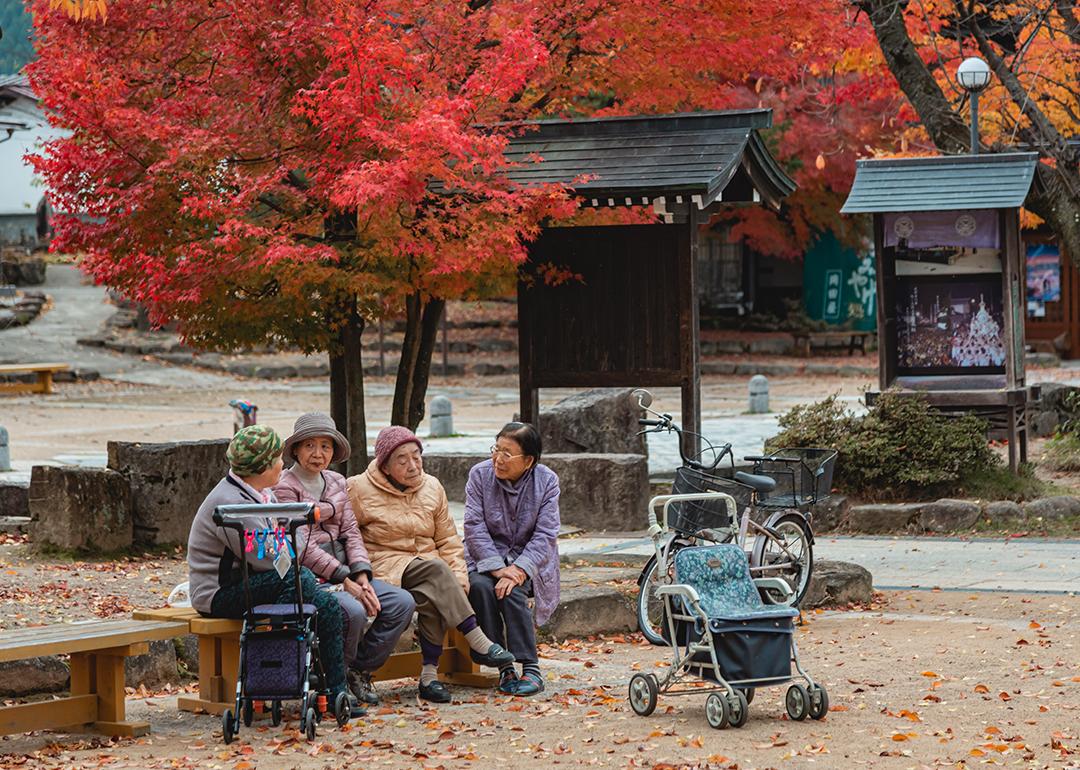
The U.S. population is older than ever, and that trend is accelerating. As baby boomers age and birth rates decline, the country is heading toward a demographic reality that Japan has been grappling with for decades. In Japan, , and nearly a third of the population is over 65. This marks a dramatic shift that has reshaped healthcare, the economy, city infrastructure, and cultural norms.
By learning from Japan鈥檚 successes and setbacks, the United States has a critical opportunity to act now. From community-driven eldercare to 鈥渁ge-ready鈥� cities and tech-powered solutions, Japan鈥檚 example offers a practical blueprint for navigating this transition. joins the conversation to emphasize why planning today 鈥� with flexible insurance, better infrastructure, and policy foresight 鈥� can save both lives and costs tomorrow.
The demographic reality
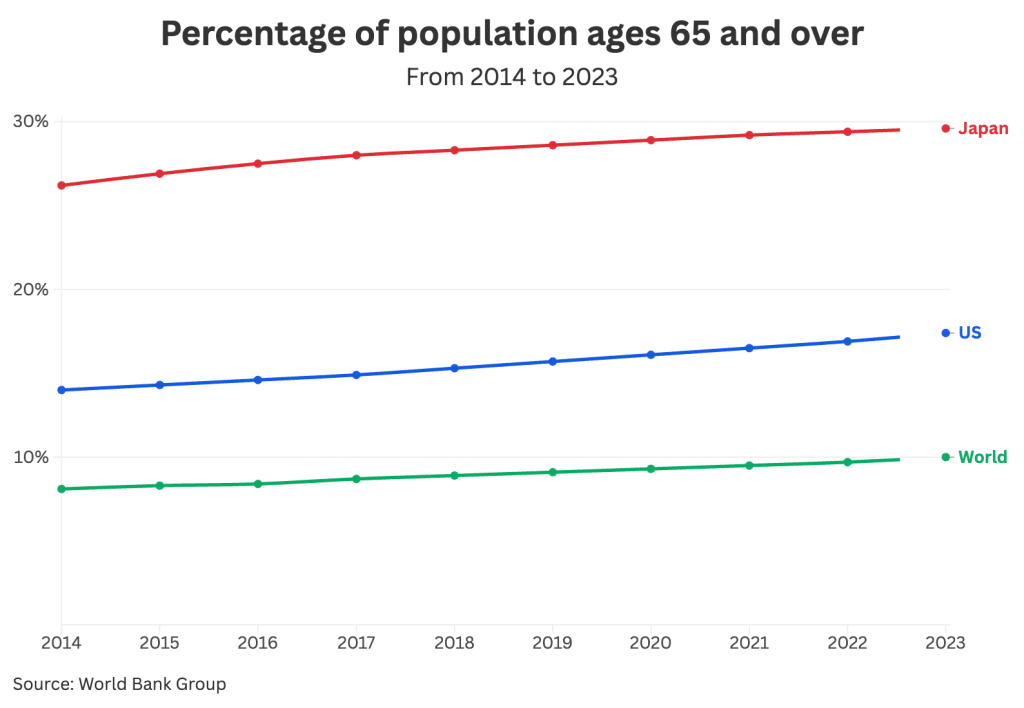
Japan鈥檚 population over age 65 has nearly quadrupled since 1974, rising from 7% to 29.3% as of 2023, according to the World Economic Forum. This dramatic aging has reshaped nearly every sector of Japanese society and offers a valuable case study for countries like the United States.
In comparison, the U.S. currently has 17.4% of its population aged 65 and older, according to the , and is projected to reach 23% by 2050, based on estimates from the Population Reference Bureau. These figures suggest that the U.S. is on a delayed but parallel path.
One of Japan鈥檚 most notable innovations was the launch of a mandatory Long-Term Care Insurance (LTCI) system in 2000 鈥� the first of its kind globally. This system was built on the foundation of the 1989 鈥淕old Plan,鈥� which allocated trillions of yen to develop eldercare infrastructure and services. By 2017, from 30.1 to 42.2 trillion yen. A 2015 reform emphasized community care models, like , which cut long-term care needs by 50%. These community-centered strategies offer a scalable model for U.S. eldercare systems.
Japan also took steps to design more inclusive, 鈥渁ge-ready鈥� communities. According to the , the country prioritized universal design in its infrastructure, integrating accessible public transport, repurposed schools into community hubs, and walkable spaces that benefit residents of all ages.
Finally, Japan has softened the impact of its demographic shift through a combination of technology, workforce adaptation, and cultural transformation. As reported by Work Japan and the , the country has integrated robotic caregivers, increased employment among older adults, and welcomed a record number of foreign workers into its economy.
Designing age-ready communities
Japan鈥檚 鈥淪mart Platinum Society鈥� vision reimagines cities for centenarians, as explored by the. This includes barrier-free access, repurposed school buildings, and intergenerational community centers. Yet, challenges persist: now operate below break-even due to depopulation. America鈥檚 cities and towns can now act by embracing universal design before these needs become critical.
Cultural and economic adaptations
Japan has adapted on multiple fronts. It maintains a low 2.5% unemployment rate, and. Employment among older adults stands at 25.2%, the highest among major economies. To supplement its shrinking labor base, Japan has welcomed a record 2.3 million foreign workers, up 12.4% from the previous year. At the same time, cultural views around aging have shifted: older workers now face less stigma, and intergenerational co-residence is on the decline, per.
What the U.S. can take away from this
By 2030, the U.S. is expected to reach the 21% senior population Japan hit back in 2006, according to Northwestern Medill. That gives policymakers a window to act through urban planning, healthcare innovation, and workforce flexibility. Japan鈥檚 model shows that aging populations need not signal decline, but a shift toward community-oriented, tech-assisted, and inclusive societies.
Conclusion
Japan鈥檚 experience proves that aging doesn鈥檛 have to mean a crisis. Through bold policy, smart planning, and cultural adaptability, societies can become more resilient as they age. For the U.S., this is the moment to learn and lead 鈥� before the silver wave crests.
was produced by and reviewed and distributed by 麻豆原创.