What you need to know about COVID-19 testing options
What you need to know about COVID-19 testing options
After a critical shortage during the beginning of the U.S. pandemic, COVID-19 tests are now widely available. We also have a better understanding of which tests are best used in which scenarios, and how to interpret test results.
used a variety of public health sources, such as the and the , to compile 30 helpful tips on COVID-19 testing, including how the tests work, major test providers, how to interpret your results, and more.
People with symptoms consistent with COVID-19 should continue to be a priority for testing, but with a steady, adequate supply of tests, we can test at-risk people, as well. This is a key part of any plan to safely reopen schools and workplaces because people must be able to know who's at risk and keep those students or workers at home in order to protect the group.
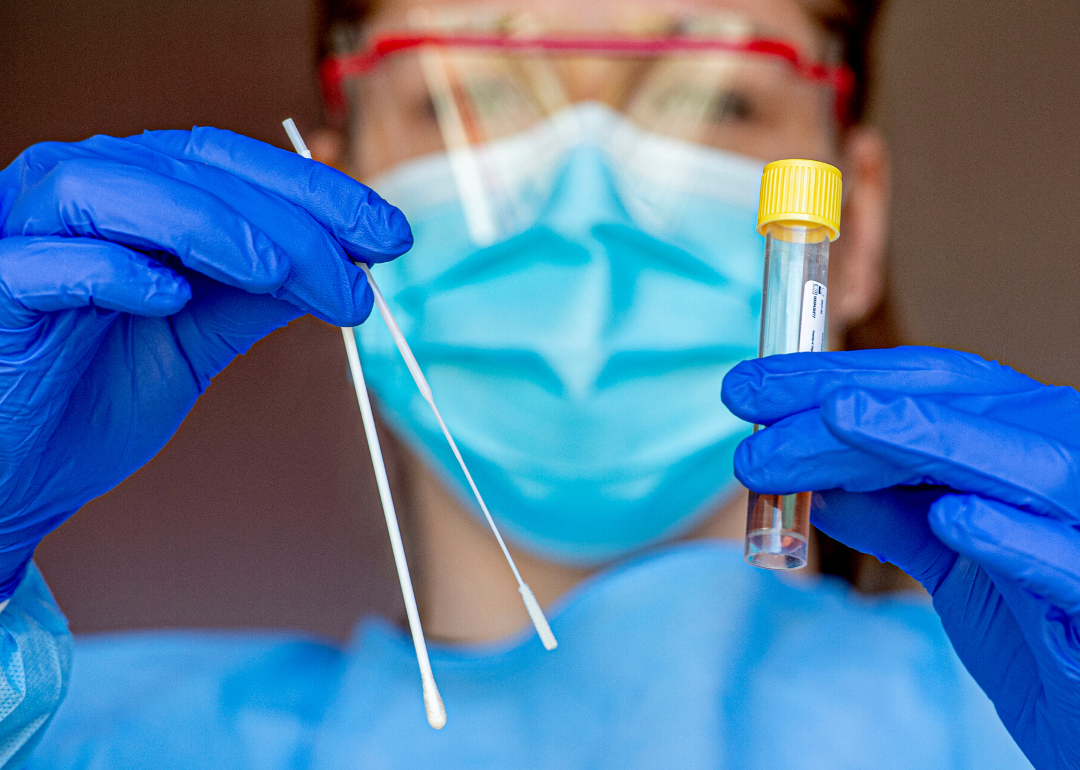
A DNA-based test takes a swab from inside your nose or throat, mixes the sample with certain chemicals, and then tests for the presence of COVID-19 genetic material that's active in your body. In contrast, an antibody test uses a tiny sample of blood to identify the signs that you've already had the virus, which can still be useful for contact-tracing how the disease is spreading.
Deciding where to get tested depends on a number of factors. Do you have symptoms? Are you at high risk of catching COVID-19, precluding even a masked visit to a crowded clinic waiting area? Drive-through testing sites or, if nothing else works, at-home tests can help to diagnose even the highest-risk people without exposure to others. Many of the makers of these tests have decades-long track records in genetic and disease testing, and this infrastructure has helped them to ramp up production and the speed of testing.
If you get tested, be prepared for a slightly uncomfortable swab inserted into your nasal cavity, and start thinking about the people you should notify if you test positive. But having the information is a huge benefit for public health, and it can guide you and your family in your own decision-making going forward.
Editor's note: Betsy Ladyzhets, a research associate at Â鶹ԭ´´, helped compile this list.
What a molecular test feels like
If you’ve ever had an oral swab test for something like HIV or the flu, is not so different. The Mayo Clinic advises that the best site for collection is either far up your nose or in the very back of your throat, which can be pretty uncomfortable, but for people whose health prevents collection from those places, a sample can come from inside your mouth. The goal is to find a place where the virus is most likely to congregate to achieve the best accuracy.
The conveniend of drive-through testing
Drive-through clinics are opening around the country as a very low-contact option, especially for people who are high risk. CVS has of these drive-through test sites. Patients drive up for a swab and are typically notified by phone or text once their results come in.
The importance of testing
People who have COVID-19 symptoms have a clear reason to be tested as soon as possible, but even many healthy people , according to the Harvard Global Health Institute. One reason for this is to catch asymptomatic people who can change behaviors if they know they’re positive. Another is to ensure the ongoing safety of people who work with the public, even if they’re exercising caution. Regular, widespread testing also helps health officials to better understand the scale of the pandemic.
When you should get tested
If you’ve been exposed to someone you think has COVID-19 or you have been in any kind of large crowd, you , according to Healthline. Don’t get tested immediately, though: the virus will likely take five to seven days to proliferate in your body to the point that it becomes detectable. If you get tested right after a potential exposure, you may receive a “false negative,” meaning that your result is negative even though the virus is, in fact, present. Public health experts recommend quarantining for a week, then getting a test, so that your result is more reliable.
How to find a testing site
You can by searching online at sites like Castlight, and you can also check neighborhood drop-in clinics and urgent care facilities. Exercise caution when deciding on a time and place to be tested, because waiting in a crowd is a bad idea unless there's no other way to be tested. You can also call ahead to ask what a particular place is doing to ensure the safety of their visitors.
How long it takes to get results
Some kinds of medical testing are instant or nearly so, but takes anywhere from at least about a day to up to a week or more, according to CNET. Right now, factors like health-worker shortages, distancing protocols, and available number of testing kits means the wait is both hard to predict and potentially very long. Your testing site should be able to give you an idea how long your test results will take.
How to prepare for getting tested
The Mayo Clinic advises that if you do have COVID-19 symptoms, you should if you can and talk with them about your symptoms—if not, you can find an online screening tool to review some possible symptoms. Think carefully and retrace your steps in case you can pinpoint where you might have been exposed, because that can determine whether you’re able to be tested at some places. Make sure you have clean protective gear to wear the entire time you’re en route and at the doctor’s office.
The prevalence of of Quest Diagnostics tests
Quest Diagnostics is a household name across many kinds of medical testing, and they say they were responsible for in use during the worst part of the first wave of U.S. cases. Their robust existing infrastructure of testing sites and protocols may have given them an edge in processing a lot of tests in a timely fashion.
How much a test costs
Americans with insurance after the passage of a relevant law in March. Even without insurance, you can pay out of pocket to be tested at a walk-in clinic or medical office, but you could pay up to or more than $100 for the test itself, let alone the doctor's visit. Call ahead for the entire out-of-pocket cost or look for low-cost or free testing that may be available in your community for people who meet certain qualifications.
Thermo Fisher Scientific's multiplex testing
Thermo Fisher Scientific's gives testers all the materials that they need to conduct up to 1,000 tests per kit. Those numbers are only suggested for testers who are using the right kinds of swabs and performing the tests in a certain way, so Thermo Fisher recommends adhering to this protocol in order to maximize output.
Testing at a hospital
Hospitals are and staffing shortages because of COVID-19, so a hospital shouldn’t be your first option to get tested. If it’s the best choice for you, call ahead to make sure you’re satisfying any requirements to make an appointment or be screened in advance. You may need a doctor’s referral as well.
CDC diagnostic panel
The is a one-stop shop in a box, giving testers everything they need to process patient samples. This test went through FDA certification along with all the other kinds of COVID-19 tests, and the CDC has developed a second kit that will test for two kinds of flu along with COVID-19.
Testing at a clinic
Many community clinics and walk-in medical services are , and your area might have pop-up clinics that only do COVID-19 testing. Be careful about when and where you go because of the potential for long waits in risky indoor groups. Still, clinics may be more accessible and with fewer barriers to get tested.
How at-home tests work
GoodRx lists a handful of companies that make ; the list has expanded in recent months. Even the best tests are effective because of the skilled way they’re administered, and home users who aren’t trained in health care are not likely to get these optimal results—especially for tests that require a nasal swab. At-home saliva tests may be more reliable. Still, experts recommend that an at-home test should be considered a backup option, or for patients who are at very high risk even at a drive-through testing site. for patients who might be considering an at-home test.
Interpreting PCR test results
Clinicians of an individual patient's case—with information like potential exposure, any symptoms they've experienced, and their level of risk—with the scientific outcome of the molecular test, according to the British Medical Journal. That means the interpretation can be slightly different for someone who, say, still works full-time at a grocery store, as opposed to someone who has sheltered in place and stayed home. Still, PCR tests are considered to be more accurate than other molecular test types, which will be discussed on later slides.
Antibody COVID-19 test
Antibody testing shows a medical professional that a patient , which can be useful in a direct way if patients are experiencing enduring symptoms or aftereffects caused by lung impairment. It can also help connect the dots for contact tracers and scientists trying to better understand the spread of the virus. Many patients will experience only mild symptoms that don’t necessarily need to be diagnosed in real time. The Red Cross has started testing all blood donors for antibodies.
Antibody test accuracy
Antibody tests are , but researchers are less certain overall what the information about antibodies tells us, especially depending on when the test is conducted. These tests are not a substitute for a molecular test for an active COVID-19 infection. FDA research has also suggested that people who have had COVID-19 may lose their antibodies after a certain point.
What the antibody test feels like
Testing for antibodies involves blood draw and can take as little as 15 minutes, according to the Palm Springs Desert Sun. It’s more like a finger stick for a blood-sugar test, with just a drop of blood placed onto the testing material.
Interpreting antibody test results
Antibodies are a good indicator of what has already happened, but scientists the role they play in a patient’s future. That means clinicians can identify many patients who have had COVID-19, including filling in gaps for contact tracers and helping to explain spikes following large gatherings. In the future, scientists may better understand whether having antibodies makes patients more likely to resist a second or subsequent infection.
Abbott Core Laboratory
Abbott Labs is a mainstay of pharmaceutical chemistry in the U.S., and it has authorized for use in the COVID-19 pandemic—including both rapid tests and antibody tests. One of Abbott Labs' antibody tests, according to the company, is 99.6% effective in detecting one kind of COVID-19 antibody.
Roche Diagnostics
Roche Diagnostics has to produce its “highly accurate” antibody test. Like other manufacturers, they emphasize that antibody tests only indicate past infection—they don’t suggest anything about a patient’s ability to contract the virus again.
How tests get approved
The of individual test designs made by many manufacturers. Some of these test for antigens, some for antibodies, and some for secondary markers like inflammation. The FDA has fast-tracked these with Emergency Use Authorization, a policy that predates COVID-19 and covers development of new technology for any similar medical emergency.
What to do if you test positive
If you for COVID-19, the most important thing to do right away is to minimize any exposure to other people, according to the Washington State Department of Health, and your family members or anyone else you’ve come into contact with should be tested. Your symptoms may stay very mild—or you may be one of the lucky people who never experiences symptoms—but severity of symptoms doesn’t affect how contagious you are. If you have symptoms, call your doctor and ask if your symptoms are of the kind or severity that warrants a trip to the hospital or other treatment.
Contact tracing
Contact tracing is we have to understand and minimize the spread of a virus like COVID-19. Patients can do this themselves by making lists of who they’ve seen and potentially exposed, and then notifying those people. Many states have professional contact tracers who are helping to do this work on a larger scale.
When to get tested again
Plenty of people during the course of the pandemic. The largest group this applies to is those still working in customer-facing jobs, including the many people who work in health care every day, but many businesses are only open on the condition that their workers stay safe and healthy. Regular preemptive testing helps to ensure this, so if you have new symptoms that match COVID-19, even if you've previously tested negative, get tested again.
Avellino Labs
Avellino Labs turned their existing genetic testing infrastructure into a fast-tracked . Samples are sent to their United States laboratory for testing, which the company says is done in one or two days.
Interpreting testing data for your community
Trying to is difficult anyway, but the pandemic is frightening and personal, and this information hits very close to home. Right now, the rates of positive tests are , but not because the number of overall cases is significantly falling—it’s because more people are finally able to be tested, period. That means doing more preemptive testing to ensure workplaces are safe rather than simply testing sick people to see if they have COVID-19. Your state’s individual data will show how many new confirmed cases there are each day, and you can use this information to decide how to make decisions. There’s no guarantee that any specific person will have the “milder” version of COVID-19, and the best bet is still to stay home as much as you can, wear masks, social distance when around other people.
Test specificity
Because of the unique nature of the materials identified by a COVID-19 test, , according to ARUP, a diagnostic nonprofit. There aren’t a lot of other things that could be mistaken for COVID-19, and the tests are measuring direct viral material or antibodies for a specific virus. The symptoms may seem like those of other conditions—ranging from “regular” flu or a cold to chronic fatigue syndrome—but viral material doesn’t lie.
Test sensitivity
Sensitivity of COVID-19 testing depends on factors like , including collection of the sample and testing of that sample, according to ARUP Laboratories. False positives are unlikely with both antigen- and antibody-type tests, but a false negative can occur if the sample isn’t treated correctly. Taking the nasal swab can be particularly challenging, but the tests still identify if any amount of a particular substance is present in the sample.
PCR COVID-19 test
Polymerase chain reaction tests, more commonly known as PCR tests, are commonly considered to be the gold standard for COVID-19 testing. These tests are known as says Cleveland Clinic. That reliability comes from the specific process used to determine a test's results: genetic material extracted from a patient gets multiplied millions of times in a special machine and, if the coronavirus DNA is present in the sample, a chemical in the machine will show a fluorescent light. Thanks to the multiplication step, even a tiny amount of COVID-19 DNA will be detected.
Cycle threshold value
Not only are PCR tests the most accurate way to determine if someone is infected with the novel coronavirus—they can also tell you . PCR tests operate in “cycles”; in every cycle, the DNA from a sample is doubled. If it only takes a few cycles for the test to find coronavirus DNA, that means the virus is more prevalent in your body. If it takes more cycles, that means the virus is less prevalent—or, as an epidemiologist would put it, your “viral load” is lower.
A patient’s viral load is reflected in a metric called the “cycle threshold value.” Although this metric is typically reported in the labs where patient samples are tested, it often doesn’t get communicated to patients. Some hospitals and other clinical settings are starting to make more use of the metric.
Rapid nucleic acid test
While PCR tests are accurate and reliable, there’s a trade-off: these tests are also expensive and difficult to perform. Results can take days when demand is high. As a result, researchers have developed . These tests are similar to PCR, in that they look for coronavirus DNA in a patient’s sample by multiplying the genetic material, but they use technological processes that don’t require the same expensive equipment or trained technicians. Every rapid test has a different accuracy level, though, so PCR tests continue to be the gold standard.
Antigen test
Like rapid nucleic acid tests, antigen tests have come into use in recent months as a faster, cheaper equivalent to PCR tests. These tests work by identifying molecules on the surface of the coronavirus; some antigen tests may be performed with no lab technology at all, just a swab, a paper card, and some chemicals. Antigen tests are more likely to yield false negatives, especially when they’re used on people who aren’t showing COVID-19 symptoms. Their speed and low cost may still make these tests an invaluable tool in finding infections at places like schools and factories, but we largely on how many antigen tests have been used in the U.S., according to The Atlantic.
Swabs vs. saliva tests
We usually associate COVID-19 testing with the nose swab experience: a healthcare worker sticks a swab far up a patient’s nose to collect some mucus. But, for some tests, —spitting into a cup rather than getting one’s brain poked. Some rapid tests that rely on saliva have been implemented at colleges and universities, such as the University of Illinois. The format is easier on both patients and health care workers, though more investigation is needed into its accuracy.
Testing when you don't have symptoms
If rapid tests are so fast and easy to use, you might wonder, why aren't we just relying on these tests instead of waiting for PCR results? The answer is that PCR tests remain the gold standard for diagnosing a COVID-19 case, while both antigen and rapid nucleic acid amplification tests —especially for patients who aren't showing symptoms. To successfully identify outbreaks and keep communities safe, rapid tests should be used regularly; a college might test students every week, for example. (A single rapid test before traveling to visit family is not an example.)
Interpreting rapid test results
Since many types of rapid tests are prone to false negatives—telling you that you aren’t infected with the coronavirus when, actually, you are—experts advise patients to . If you have a negative rapid test result, but you know you were exposed to someone with COVID-19, you should get a PCR test and wait on those results before assuming you’re in the clear.
The difference between screening and diagnostic tests
Throughout COVID-19 mitigation efforts in the U.S., the majority of testing that Americans go through is diagnostic: tests that are meant to help a doctor make a medical decision on whether or not you are sick with COVID-19. Screening tests, on the other hand, , as the American Society for Microbiology explains. These tests are implemented on a population level, on a regular basis, and are meant to look for potential pockets of disease—catching outbreaks before they get big. At some universities, rapid tests are used for screening (testing students once a week). Students with a positive rapid test result need a positive result on a PCR test before they could be officially diagnosed with COVID-19.
Testing before traveling
During the winter holidays, the pre-travel test became a major conversation for many Americans. If I have a negative test result, many wondered, does that mean I’m clear to visit my parents for Thanksgiving? The answer is pretty complicated, as ·¡±ô±ð²Գٲ¹±ô’s Dana Smith explains. A negative test result around the time you got a test. If you fully quarantine for two weeks before getting tested, then you know that no outside contact has put you at risk. But if you go grocery shopping, visit a restaurant, and hit up the gym in the five days before your test, that’s three opportunities you may have had to get infected that the test will not catch due to the coronavirus’ incubation period.
Testing after a quarantine
Staying in quarantine before getting tested is the best way to know your test results are trustworthy. A true quarantine means staying in your home with no outside contact. But for how long? While two weeks has been the gold standard for much of the pandemic, : A quarantine can end after day 10 without testing (and if you have no symptoms), the agency says, and after day seven with a negative PCR test.