
When sharing is not caring: Flu season and indoor air quality
Flu season is here鈥攁nd while most people focus on wearing masks and hand washing, there鈥檚 a powerful flu-fighting tool hiding in plain sight: the air inside your home.
Indoor air quality (IAQ) directly affects how easily flu viruses spread. If the air in your home or office is stale, dry, and poorly filtered, you could be giving germs the perfect environment to thrive, reports.
How Flu Viruses Spread Indoors
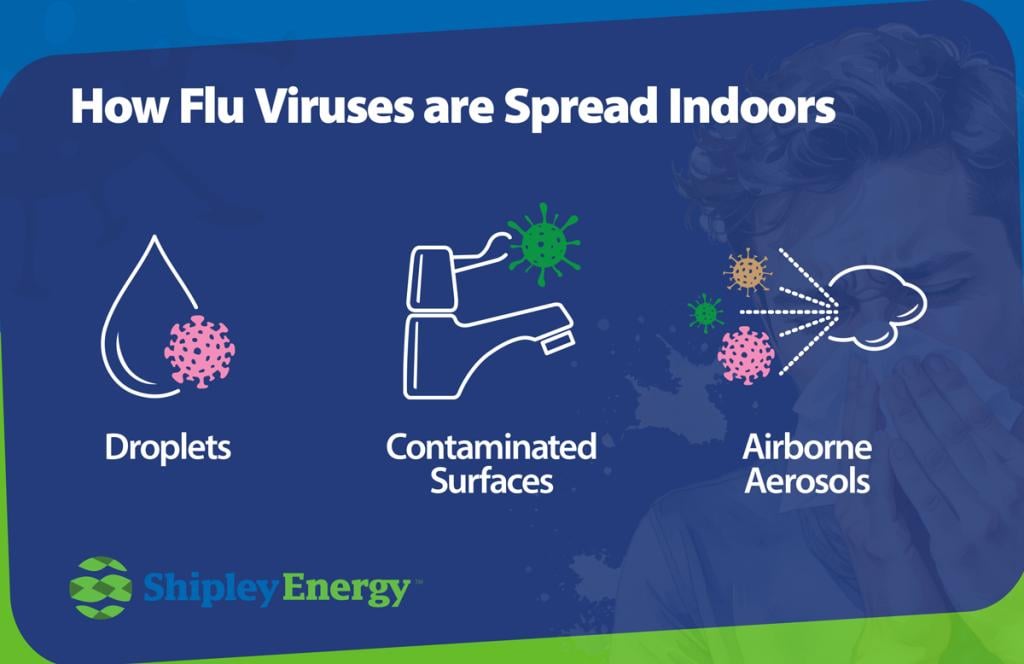
According to the , flu viruses move in three main ways:
- Droplets from coughs and sneezes.
- Direct contact with contaminated surfaces.
- Airborne aerosols鈥攖iny particles that can stay suspended for hours.
In poorly ventilated indoor spaces, these airborne particles build up fast. That鈥檚 why indoor air quality can make or break your flu prevention plan.
Why Flu Season Hits Harder Indoors
During the colder months, we seal our homes to keep the heat in. While that鈥檚 great for comfort, it鈥檚 bad for air quality:
- Low ventilation means viruses linger longer.
- Dry winter air helps viruses survive.
- Heating systems recirculate the same stale air.
The warns that without fresh air and filtration, viruses can spread more easily in winter. Indoor air quality needs to be on your family鈥檚 action plan for controlling sickness.
Quick Facts: Indoor Air Quality & Flu Season
- is spent indoors, where air can be more polluted than outside.
- in the air for hours as tiny airborne particles.
- Dry winter air helps viruses survive longer鈥攌eep humidity between 30% and 50%.
- MERV 13+ or HEPA filters can capture virus-carrying particles smaller than 1 micron.
- in HVAC systems can neutralize airborne viruses before they circulate.
- technology is available for both residential and commercial HVAC systems.
- Improving ventilation dilutes indoor virus concentration鈥攐pen windows or use mechanical fresh air settings.
- Better indoor air quality can improve
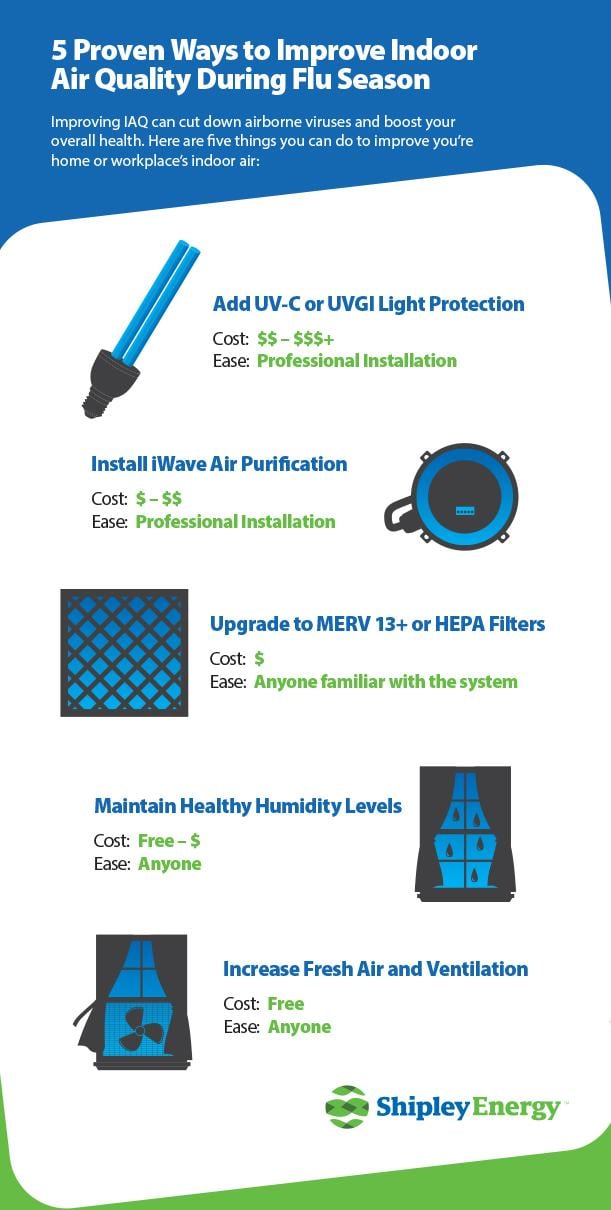
5 Proven Ways to Improve Indoor Air Quality During Flu Season
Improving IAQ can cut down airborne viruses and boost your overall health. Here are five things you can do to improve you鈥檙e home or workplace鈥檚 indoor air:
1. Increase Fresh Air and Ventilation
Open windows briefly, even in winter, or use your HVAC system鈥檚 fresh air settings. More fresh air dilutes viruses in the space making it less likely that you will contract them.
Cost: Free
Ease: Anyone
2. Add UV-C or UVGI Light Protection
UV-C or UGVI (Ultraviolet Germicidal Irradiation) light in HVAC systems can neutralize viruses by damaging their DNA or RNA, preventing them from reproducing. These ultraviolet lights can be installed in-duct or as upper-room disinfection systems.
Cost: $$ 鈥� $$$+
Ease: Professional Installation
3. Install iWave Air Purification
iWave ionization devices actively reduce particles, allergens, and certain pathogens. Options exist for both homes and commercial buildings, and are easy for a professional to install into existing systems.
Cost: $ 鈥� $$
Ease: Professional Installation
4. Upgrade to MERV 13+ or HEPA Filters
Higher-rated filters capture smaller particles, including virus-carrying aerosols. If your system can handle higher level MERV filters, it is easy to replace to gain higher levels of indoor air quality. Continue to replace them on schedule to maintain performance.
Cost: $
Ease: Anyone familiar with the system
5. Maintain Healthy Humidity Levels
Keep indoor humidity between 30% and 50%. Dry air increases virus survival, while proper humidity helps deactivate airborne particles.
Cost: Free 鈥� $
Ease: Anyone
The Health Benefits Go Beyond Flu Prevention
Better indoor air quality doesn鈥檛 just keep you from getting sick. links clean air to:
- Improved concentration and productivity.
- Better sleep quality.
- Reduced allergy and asthma symptoms.
Considering we breathe over 20,000 times a day, small changes in air quality can have a big impact.
Make 鈥淪haring Clean Air鈥� Your New Motto
Flu prevention isn鈥檛 only about avoiding contact鈥攊t鈥檚 about improving the air you share.
This flu season:
- Keep your air moving and clean.
- Invest in simple IAQ upgrades 鈥� call your preferred HVAC partner.
- Pair them with common-sense habits like wearing masks or washing your hands.
Because when it comes to germs, sharing is not always caring鈥攂ut sharing clean air is.
was produced by and reviewed and distributed by 麻豆原创.