A brief look at American health care's long, complicated history
This story originally appeared on Sidecar Health and was produced and distributed in partnership with Â鶹ԭ´´ Studio.
A brief look at American health care’s long, complicated history
America’s health care system has existed, in one form or another, since the time when the country’s founding fathers were still fighting for their freedom from Great Britain. Over the intervening 200-plus years, medical care in the U.S. has had a long history of ups and downs, from the difficulty of addressing racism toward the formerly enslaved to the historic enactment of the Affordable Care Act.
Health care in the U.S. may be best described as a hodgepodge of systems. From a global perspective, there are four main models of health care, each of which takes a different approach both legislatively and in practical terms of how it affects a populace’s ability to obtain health care coverage and services. The U.S. model is among nations in that it incorporates aspects of each of the four health care models into its own. receive coverage under what is known as the Bismarck model, which is to say they are covered through their employer. But the U.S. Veterans Health Administration more closely resembles the Beveridge model, as it leans toward a more socialized coverage system. And then there is Medicare, whereby the U.S. government acts as a single-payer service for older Americans. This is in stark contrast to our neighbor to the north—Canada offers a national health insurance model, where the government essentially runs health care on behalf of its citizenry. In China, an out-of-pocket model is in place, meaning people are on the hook to pay their medical expenses as needed, while in Europe, various countries offer more socialized renditions of the Beveridge and Bismarck models.
The indicated that as many as 8.6% of Americans do not have health insurance. Universal health care has proven to be an especially tricky topic for Americans to navigate, as lobbyists and politicians alike have waged ferocious campaigns to try bringing it to life—or burying it from ever being signed into law. To this day, the Affordable Care Act, which in recent years brought the country closer to the universal health care model, .
With political battles over the health care system ongoing—the most recent controversies centering on and the COVID-19 vaccine— identified 10 major milestones in U.S. health care policy from the colonial era to recent history, charting our nation’s fraught relationship with how it cares for its citizens.

1781: First medical society established
The is the oldest medical society in the U.S. that is still in operation. It was incorporated in 1781 to “promote medical and surgical knowledge, inquiries into the animal economy & the promotion & effects of medicine.” Several of the nation’s founding fathers, including revolutionary leaders Samuel Adams and John Hancock, were among the Society’s 31 founding members. “It was born in troublous times; and its founders were still engaged more or less actively in a political struggle which even today, by reflex action, is exerting a powerful influence on the events of the world,” Samuel Abbott Green, a physician and historian, in 1881. The “political struggle” Green referred to was the Revolutionary War and, in fact, the society was established just days after the Battle of Yorktown. A medical society had been previously established in 1735 in Boston, but it was short-lived and its records were lost. Since it was established, the Massachusetts Medical Society has grown from its original number of 70 members to its current roster of 23,000 members.
1865: Medical division of Freedmen's Bureau is established
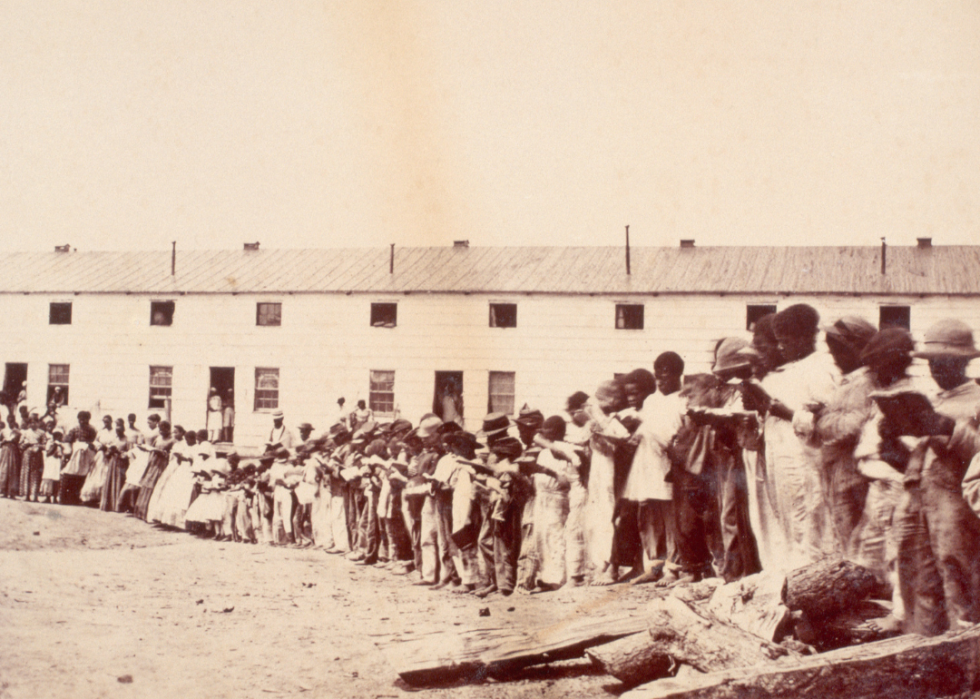
The was an institution dedicated to serving the formerly enslaved, or freedmen, in the South after the Civil War. The Freedmen’s Bureau was established on March 3, 1865, and played a vital role during the Reconstruction era as a means to “direct such issues of provisions, clothing, and fuel.” The organization, which was and General Oliver O. Howard, was meant to help bring unity in the South between Black and white Americans. The medical division addressed the health needs of the formerly enslaved, and despite poor conditions, it was often the only access to medical care many freedmen had. Demand for medical attention became so overwhelming, it was difficult for these hospitals to keep up and provide resources. The Freedmen’s Bureau came to an end in 1872 due to an overall lack of support in Congress.

1929: First employer-sponsored health care plan in the US is made available to teachers
In 1929, established the first employer-sponsored health coverage in Dallas as a partnership between the Baylor University hospital and its patients. The patients, many of whom were school teachers, were struggling to cover their medical bills. To counteract this, , an administrator at the university, offered a plan in which teachers were provided 21 days of hospital care for just $6 annually. Many employees began to sign up for the plan, and it didn’t take long for this plan to gain popularity across the U.S. Today, BCBS serves more than across the U.S.
1943: IRS makes employer-sponsored health insurance tax-free
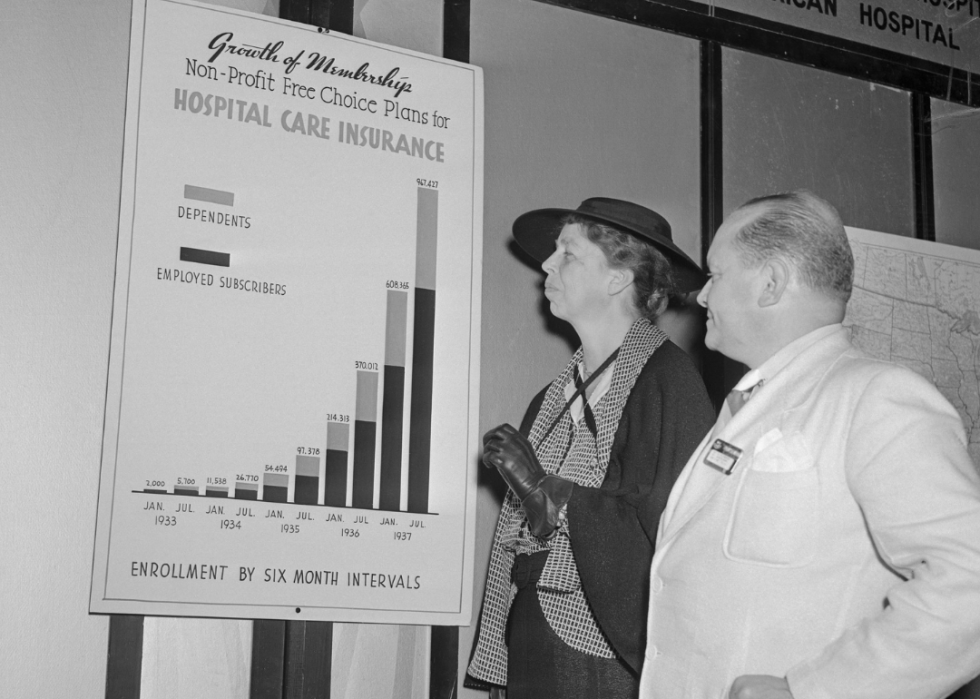
President Franklin D. Roosevelt’s Executive Order 9250 the Office of Economic Stabilization, one of the direct effects thereof was a nationwide wage freeze. The executive order, issued in 1942, was in response to the labor shortage the country was facing due to its participation in World War II. As a result, businesses began to use employer-sponsored health care benefits as a way to attract employees. A year later, the Internal Revenue Service made health insurance provided by employers . As a result, this made it far cheaper for Americans to get health insurance through an employer than other providers. As the economy improved after World War II, employer-sponsored health insurance became even more popular among businesses.
[Pictured: Mrs. Franklin D. Roosevelt stands with Dr. Claude Munger, president of the American Hospital Association, during her visit to the American Hospital Association Convention.]
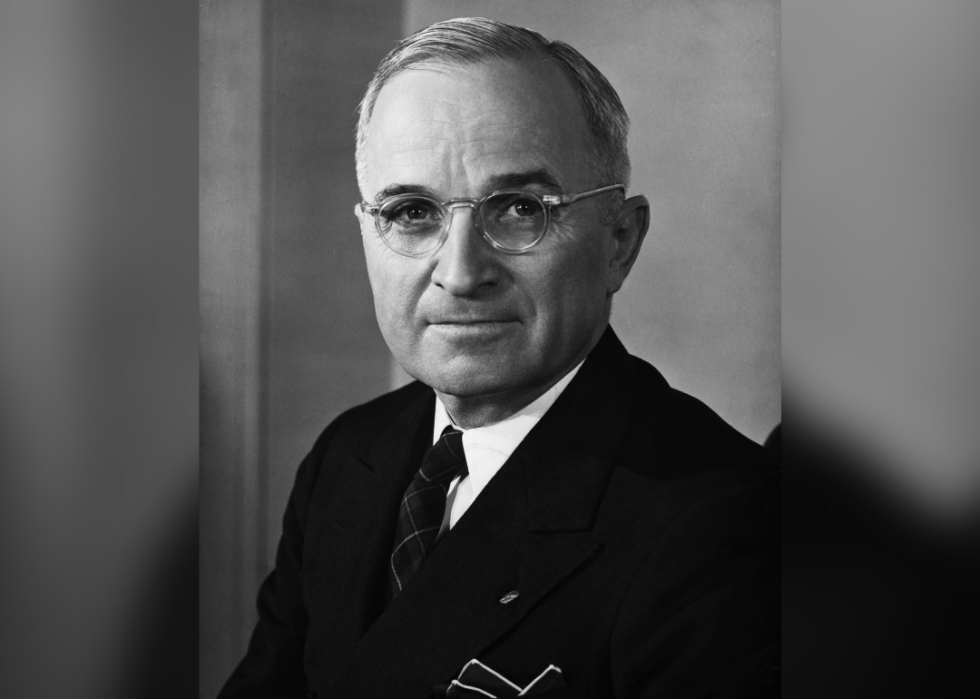
1945: Harry Truman’s proposal for a national health insurance fails
Despite it being a failed attempt, President Harry Truman’s proposal in 1954 for national health care was still a crucial moment in American history. After pointing out that millions of Americans were without health care, , “The time has arrived for action to help them attain that opportunity and that protection.” Truman wanted to introduce universal health insurance to address the shortage of health care available to workers in rural areas, improve the quality of hospitals, and slow rising health care costs. His bill, however, didn’t gain enough support. But it was a significant ask during a time when the country was mired in the early decades of the Cold War and any governmental system perceived to be “socialist” in nature was construed as anti-American.
1950-1960s: American Medical Association lobbies against single-payer systems
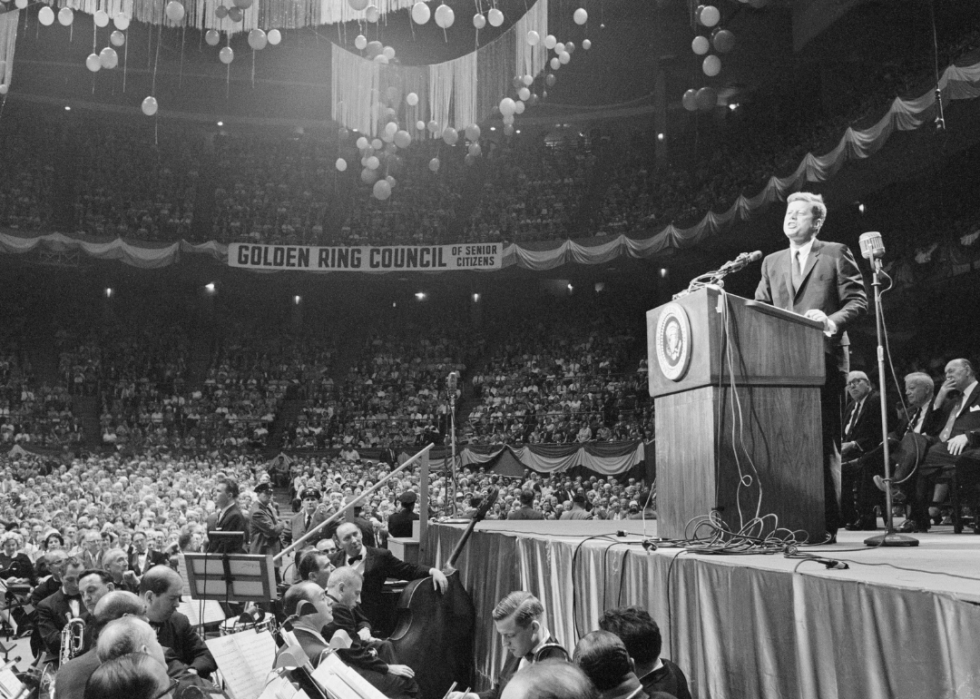
The American Medical Association has long been in opposition to single-payer systems, stretching as far back as the 1950s. During that time period, the AMA lobbied harshly against socialized health care, supporting employer-sponsored health care plans instead. Later, in the 1960s, the organization created in retaliation against President John F. Kennedy’s proposal to introduce federally supported health care for the elderly. The plan called for the Woman’s Auxiliary, which had partnered with the AMA, to rally support through morning coffee meetings. The campaign even featured a speech by who stated, “One of the traditional ways of imposing statism or socialism on a people has been by way of medicine.”
[Pictured: President Kennedy speaks at Madison Square Garden in New York to a crowd of 17,000 people, many of them elderly. In his address, Kennedy urged the nation's doctors to get the facts on his proposed legislation to offer medical care for seniors.]
1965: Medicare and Medicaid programs established
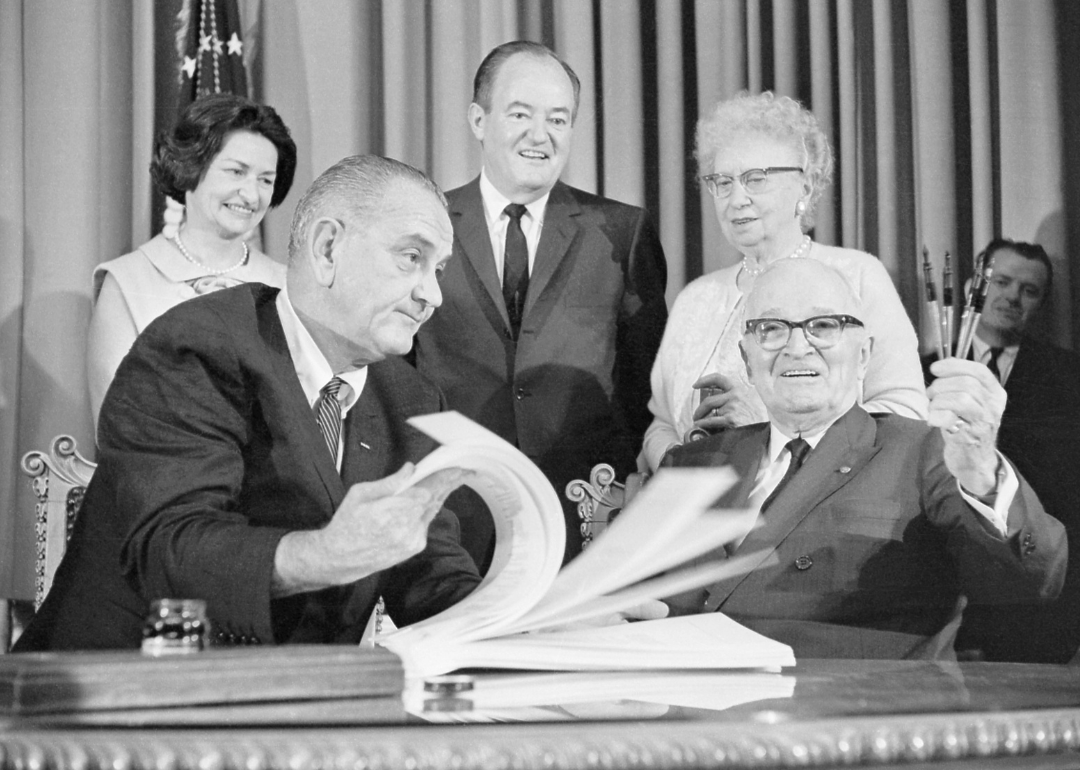
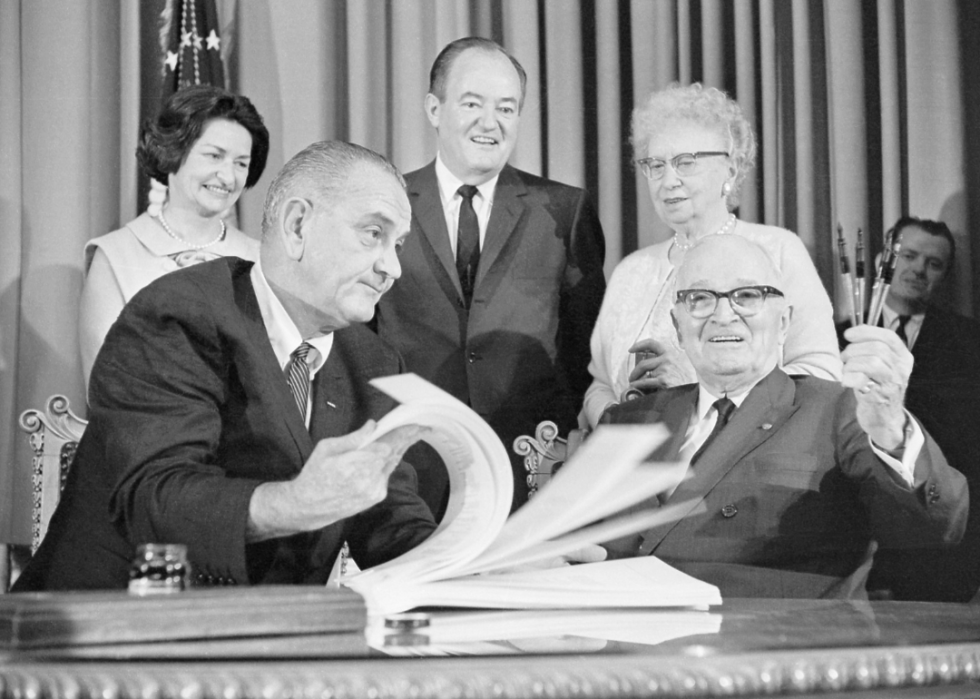
One of the largest health care acts in American history, commonly referred to as the Medicare and Medicaid Act, was approved by in July 1965. Both Medicare and Medicaid are actually subtitles to the overall Social Security Amendments of 1965. In addition to providing health insurance to the elderly and to those with low incomes, they also established programs for retirement, disability benefits, and survivors’ benefits. During the first six months of its enactment, Medicare covered the health care of more than 2.5 million Americans. When the bill was first passed, it allowed users over age 65 to pay a monthly fee of just $3 for health insurance, which covered 80% of their health care services. Early forms of the Medicare and Medicaid Act also required that users promise that they were not members of the Communist Party. Former President Harry Truman, who originally proposed the legislation almost two decades before, and his wife, Bess, were the first people to register for Medicare at the act’s signing ceremony.
[Pictured: President Lyndon Johnson flips through the pages of the Medicare bill while former President Harry Truman holds the pens that Johnson used to sign the bill. Behind Johnson and Truman are Mrs. Johnson (L), Mrs. Truman, and Vice President Hubert Humphrey.]
1970s: First bills for single-payer system are proposed in Congress
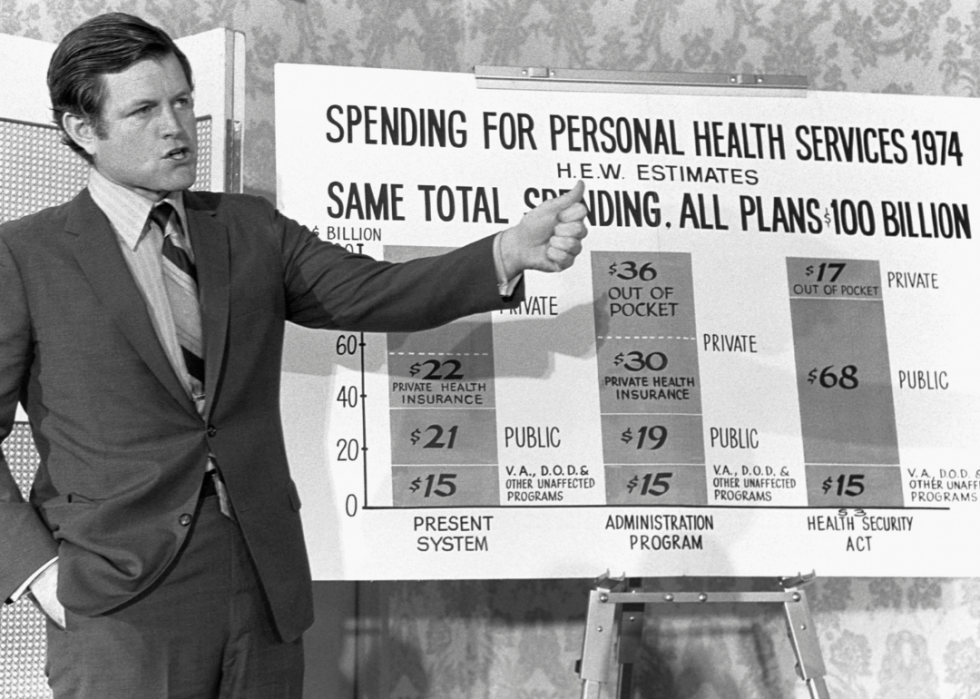
In 1971, Senator Ted Kennedy introduced the , which called for health care coverage for all U.S. citizens and documented permanent residents. It competed with a , the National Health Insurance and Health Services Improvement Act, backed by Senator Jacob Javits. The legislation was offered up as a solution to skyrocketing inflation that was impacting the health care system. Eventually, in 1974, Kennedy presented a compromise, though it not only lost approval from unions, but also was dropped entirely due to President Nixon’s Watergate scandal and subsequent resignation from office. After Gerald Ford became president, Representative Grey Mills attempted to reintroduce the bill, but it lost traction after it received lukewarm support from both political parties.
[Pictured: Senator Edward Kennedy lectures in front of a chart on health care spending in June 1971.]

1996: Health Insurance Portability and Accountability Act passes
To protect the privacy of medical patients, in 1996 the was signed into federal law by President Bill Clinton. HIPAA prohibits the sharing of private medical information without a patient’s consent. This law can even extend to sharing medical information with an individual’s relatives, which has led to issues in some missing persons cases, such as in the case of the . According to the Centers for Disease Control and Prevention, “A major goal of the Privacy Rule is to ensure that individuals’ health information is properly protected while allowing the flow of health information needed to provide and promote high-quality health care and to protect the public’s health and well-being.” If a health care provider breaks HIPAA laws, they may face criminal charges as well as the loss of their medical license.

2010: Affordable Care Act passes
The Affordable Care Act, popularized in the media as “Obamacare,” was a sweeping health care reform law that expanded health care coverage for Americans and was the most dramatic overhaul of the U.S. health care system since the ratification of the Medicare and Medicaid Act in 1960s. The ACA and required that all American legal residents obtain and hold health insurance. The act also created a where people could search, compare, and sign up for health care plans. Of the reform legislation, President Barack Obama , “In the wealthiest nation on Earth, no one should go broke just because they get sick.”
While the act remains in place and certain evidence shows that it has for minorities, there has been no shortage of challenges to its retention. On April 5, 2022, President Joe Biden signed an executive order directing federal agencies to expand . The Biden Administration has also proposed eliminating “,” which is when employer-sponsored health care insurance is affordable only for the employee. Purchasing family coverage is often costly, so the proposal would give an employee's family members premium tax credits to purchase more affordable insurance in the marketplace.