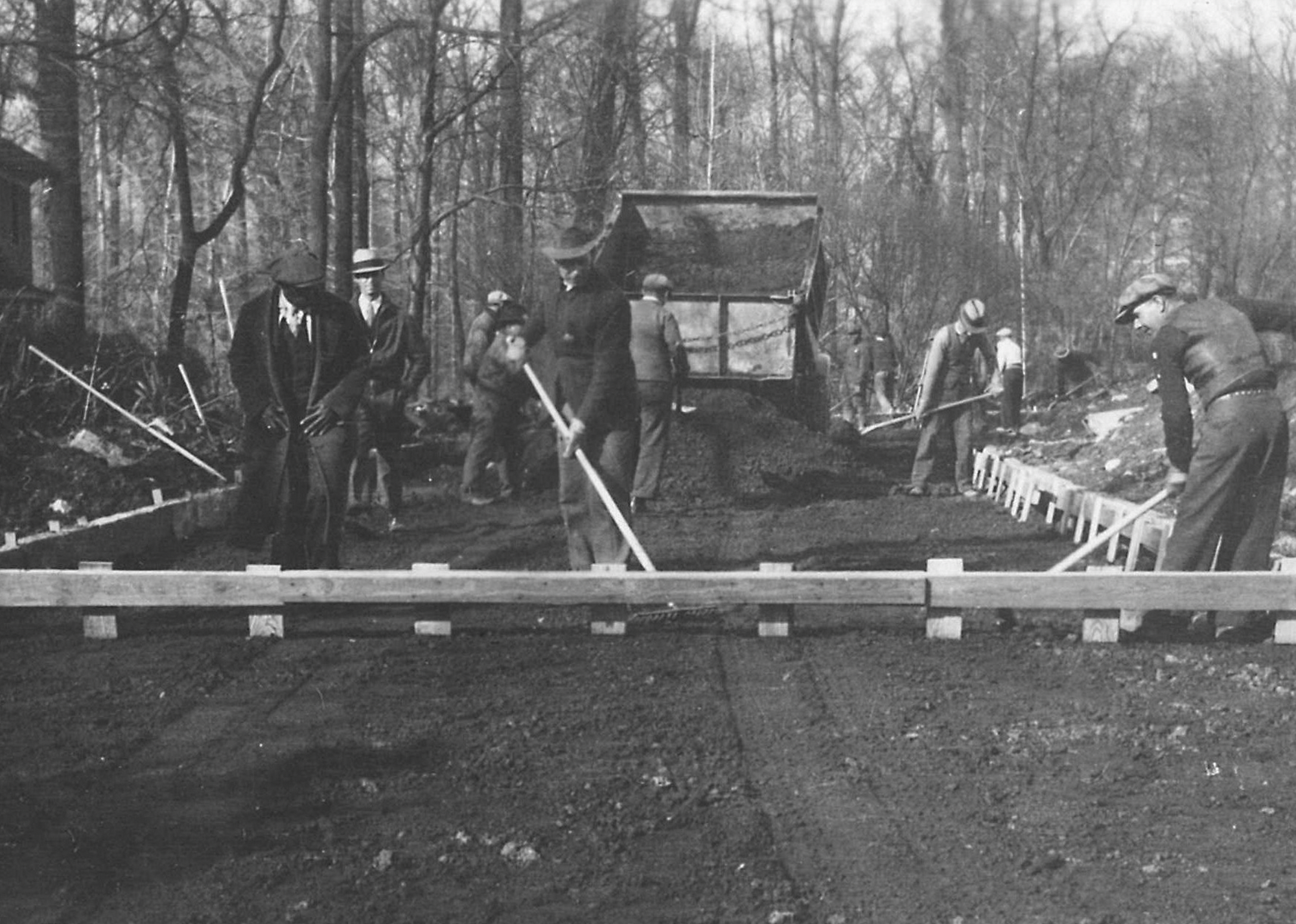
The history of how roads are built, and what future construction may look like
This story originally appeared on The General and was produced and distributed in partnership with 麻豆原创 Studio.
The history of how roads are built, and what future construction may look like
We've come a long way from what are , streets paved with mud bricks and bitumen built in Mesopotamia around 4000 B.C. Today, there are more than 鈥攅nough to circle the Earth 160 times.
In between, society has seen considerable developments: from asphalt to concrete, private projects to federally funded efforts, and beyond. And these leaps aren't just in the field of construction, either. Improved roads mean an improved society. They help facilitate an economic and social connection between previously disparate communities and give people access to independence, freedom, and increased opportunity. For instance, after the National Highway System was implemented in the mid-20th century, the country , during which 70% of Americans were able to own a home for the first time, leading to the birth of the American middle class.
However, our current system is long overdue for a major overhaul. Currently, the and are in poor condition. Our old methods of construction aren't holding up against an increasingly mobile society, and with , the funding to improve is evaporating quickly.
This means that engineers, federal agencies, and urban planners alike are working on some exciting alternatives. Whether it be ultra-high-performance concrete or nature-informed coastal highway designs, roads will be built quite differently than we are used to in the very near future.
compiled historical information, government data, and university research to show how roads have been an integral part of connecting people and cultures and how construction has changed over time. Read on to find out how we arrived at our current road construction system and how it may change sooner than we think.
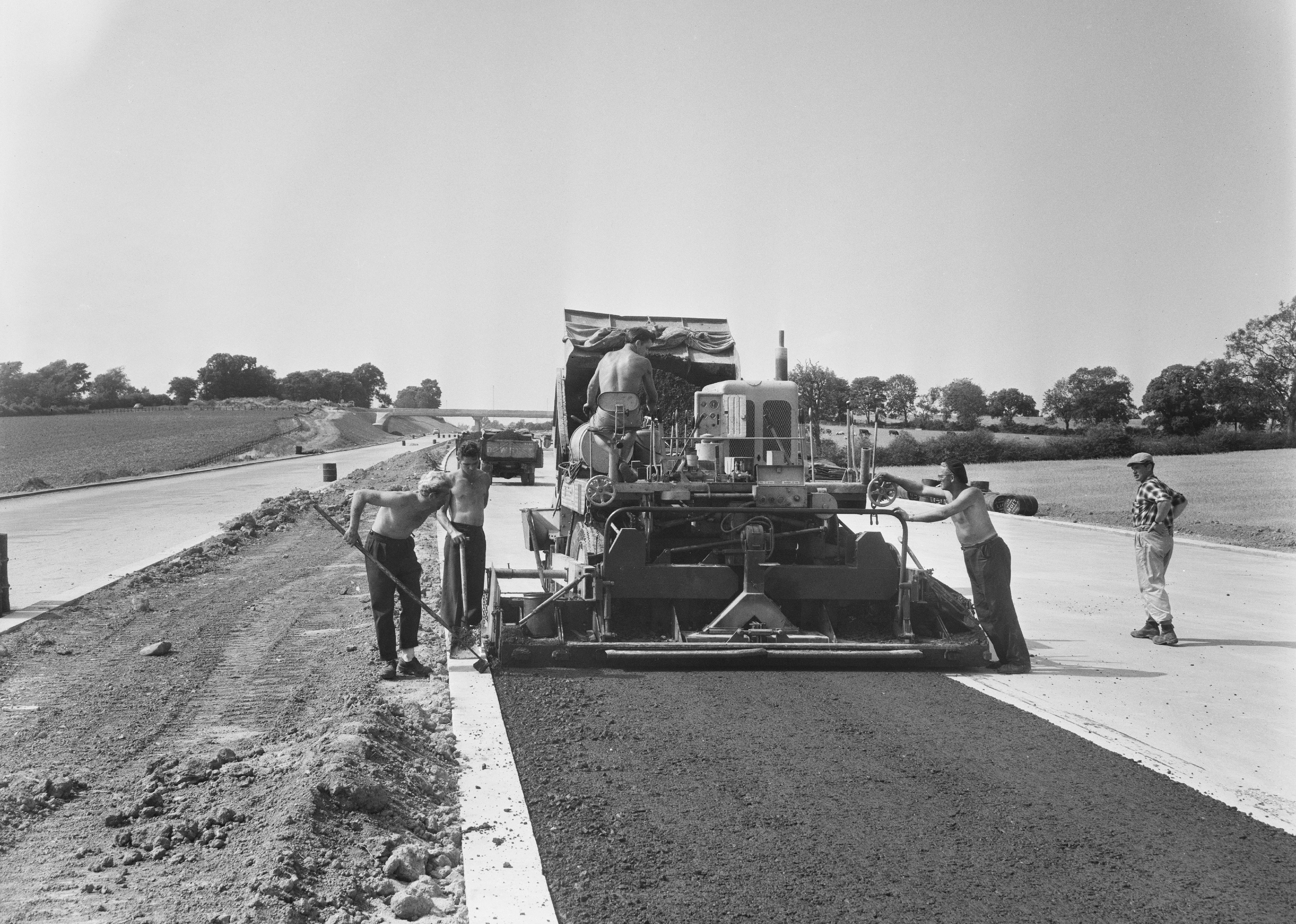
Past: The foundation of the road systems
Perhaps the first modern roads were the work of Thomas Telford and John Loudon McAdam, two Scottish engineers working in the 19th century. Their work set the precedent for many construction norms, including raising the road's foundation to improve water drainage and laying smaller stones over a foundational layer of hard, broken stones wedged tightly together, known as macadam.
Around the same time, in 1824, was laid over with asphalt, setting an example that would be greatly expanded in 1852 by the (some 800 kilometers). The United States would soon follow suit paving roads using asphalt concrete, the first completed in Newark, New Jersey, in 1870.
By the 20th century, an increasing number of cars and trucks led to a nationwide demand, leading to the first federally funded road construction projects. As the number of cars traversing American roadways boomed, so did the roads themselves: While in 1904 one-sixth of rural roads had paved surfacing, by 1935 this number jumped to more than one-third, the weaving of a road network beginning to take shape.
In 1921, Congress , providing funds to pave state roads, though the act was not quite the expansive investment advocates of a national highway system wanted. The act limited federal aid to only 7% of roads in any given state and stipulated that three-sevenths of federally supported roads be "interstate in character."
It was not until the advent of the National Highway System, which first began developing in 1941 amidst World War II under President Franklin D. Roosevelt, that a comprehensive national road network truly began to flourish. When President Eisenhower picked up the project following his election in 1952, construction accelerated rapidly. While the first funding for the NHS was authorized as early as 1952, the sheer magnitude of constructing such a wide-ranging infrastructure project was outside the means of the federal and state-level government, and thus the first portions of highway built were toll roads.
The passage of finally, truly, hit the gas on highway expansion, solidifying the creation of 41,000 miles of interstate highway in the single largest public works program in U.S. history at that time. The act also , including ensuring that roads were made with materials equipped to handle vehicle speeds of 50 to 70 mph, with at least two 12-foot-wide travel lanes and a paved left and right shoulder.
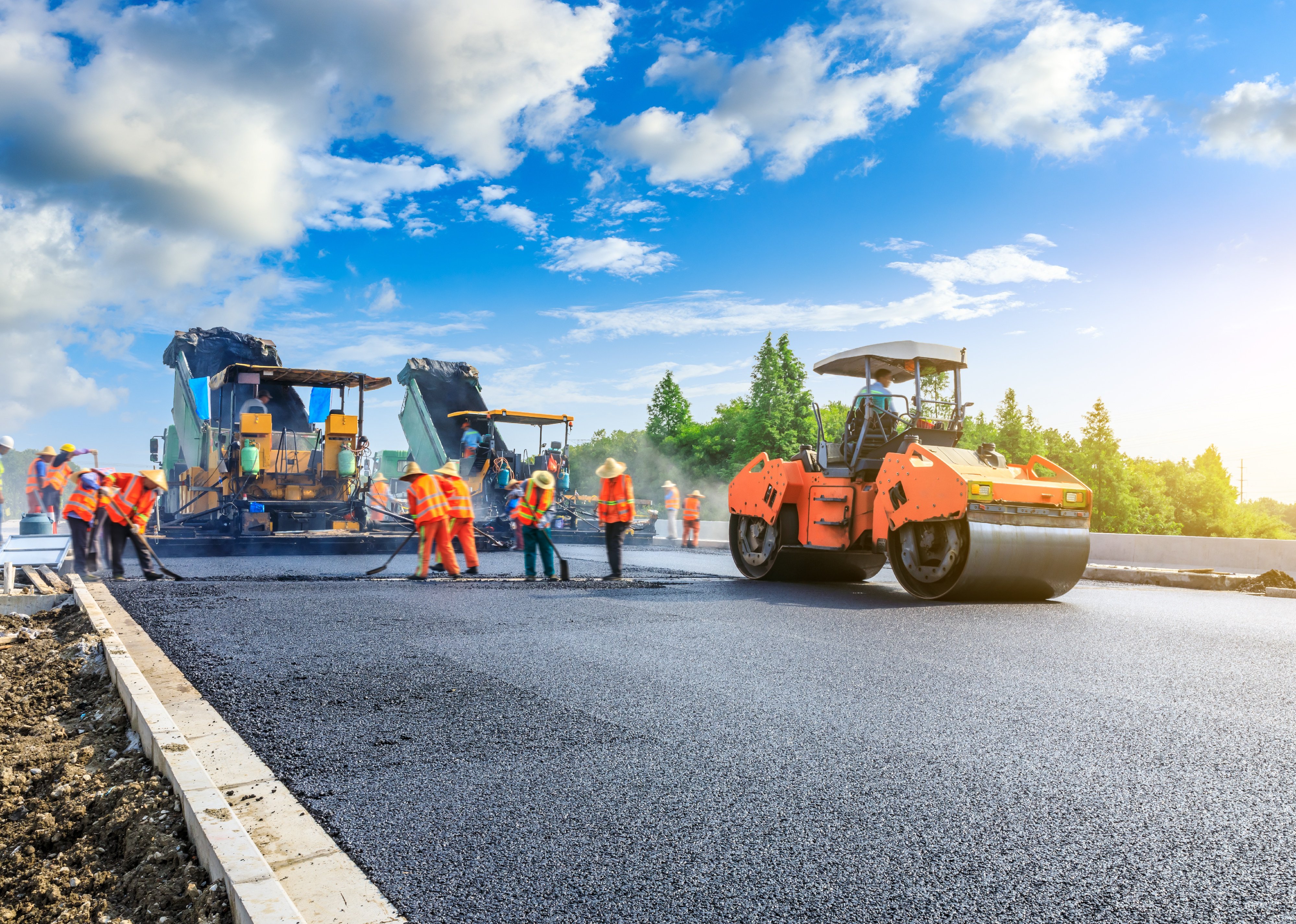
Present: An enormous investment in resources
Today, while materials specs vary slightly, interstate highways continue to be built and rehabilitated by much the same process and with similar materials as those outlined by the U.S. Geological Survey in its 2006 fact sheet on interstate materials use. Interstate construction consists of three main components: a base of compacted soil, followed by a thick sublayer of natural aggregate鈥攚hich is a mixture of sand, gravel, and crushed stone鈥攁nd finally a thick "lift" of concrete pavement, often ranging from 9 inches to 1 foot in depth.
One final aspect, which is the top inch of pavement on which vehicle tires meet the road surface, can differ depending on several factors, including the region of the country in which the road is located, the particular requirements of the roadway with regard to traffic volume, and climatological patterns.
Whereas concrete can better withstand the punishing weight of heavy traffic such as truck and freight traffic, asphalt can be more resistant to certain types of weather, especially cracking caused by ice. One of the ways in which concrete begins to deteriorate is when ice melts, trapping water below the road surface and causing what is known as , or cracks and flaking of the roadway.
Coastal highways, for example鈥攑articularly those in the Pacific Northwest and New England region鈥攐ften get an asphalt overlay, because of the combination of salty air and the . Asphalt tends to be less expensive than concrete and so even though its service life is shorter, it is cheaper and easier to replace鈥攁nd can .
The that has gone into the National Highway System is staggering. The Federal Highway Administration estimates that the natural aggregate used in the system's construction was equal to 700 of Egypt's largest pyramids and the portland cement concrete used could build 80 Hoover Dams.
As simple as materials like stone, sand, and ash may be, footing their bill has been no small feat: The 鈥攚hich began tracking data in 2003鈥攕hows that, over the past two decades, construction costs have nearly tripled. The vast majority of these costs are handled by state and local governments, with federal government assistance dependent on the creation or reauthorization of funding legislation. In 2020, state and local governments put $154 billion into road and bridge work against the federal government's $51 billion, .
Since the passage of the Federal-Aid Highway Act in 1956, funding for surface transportation projects has traditionally come from the , established that same year. The fund comprises two main branches: the Highway Account, which focuses on constructing and maintaining highways, and the Mass Transit Account, which purchases buses, subways, ferries, and other public transportation vehicles.
Unfortunately, the fund is now in danger of no longer being able to support its objectives, in large part due to falling revenues from the federal tax on gasoline. Approximately 82% of the Highway Trust Fund's revenue comes from the gas tax. However, due to inflation, rising construction costs, and the increasing fuel efficiency of new vehicles, along with the growing popularity of electric and hybrid vehicles, this funding source has begun to come up short.
The federal gas tax has not been increased since 1993, and thus experiences decreased value year over year because . Many advocates for a gas tax increase have called specifically for a tax that is directly tied to inflation as a means of addressing this problem.
As we move further into the third decade of the 21st century, the biggest concern for civil engineers is making roads more resilient against deterioration due to 鈥攏otably truck traffic鈥攁s well as the increasing frequency of natural disasters and other extreme weather events as a result of .

Future: Toward more innovative infrastructure
Perhaps the most significant indicator of what the future of road construction holds is the . Also known as the Infrastructure Investment and Jobs Act, it was passed by Congress and signed into law by President Biden in November 2021. Under the bill, into repairing nationwide infrastructure, with an emphasis on rebuilding and repairing roads.
In October 2022, the Department of Transportation in fiscal apportionments to be distributed across all states for road and bridge improvements in 2023. Among the programs these funds support is the National Highway Performance Program, which has funded over 6,000 individual projects to date to resurface, reconstruct, and improve roads across the country. This funding is arriving at a pivotal time, as electric vehicles grow in popularity, gas consumption鈥攁nd thus gas tax revenue鈥攊s decreasing, and the Highway Trust Fund is .
So, now that we have a solid federal funding package for the next several years, what will the future of roads and bridges look like and what will they be made of?
One of the most popular developments in has been ultra-high-performance concrete. First developed in the 1980s but not popularized until more recently, to provide than run-of-the-mill concrete鈥攊n other words, it gets much stronger much faster, making it more cost-effective, sustainable, and resilient. The use of UHPC in repairing or rehabilitating old roads and bridges is expected to reduce construction time鈥攁nd along with it cost and emissions from construction vehicles.
The FHWA's Turner-Fairbank Highway Research Center is fine-tuning a process called T 365, which measures the deterioration of roads due to deicing salts during winter and can assist in road maintenance. Researchers at the FHWA are also examining the possible benefits of incorporating supplementary cementitious materials into concrete with the possibility of creating less carbon-intensive, more durable cement.
And when it comes to the drivability of American roadways and road safety, technology is taking the lead鈥攆rom that make lanes clearer at night, to digital signage that offers real-time traffic information, to roads . Society has already reached a point where most new vehicles come equipped with some form of automation鈥攂e it crash avoidance warning systems, lane-keep assistance, or even assisted driving modes鈥攁nd road infrastructure must now evolve to make the spatial requirements of these systems more robust.
The IIJA also contains earmarked funds to help with that meld present road systems with expanded broadband coverage to assist vehicles' lidar (light detecting and ranging), radar, and camera-based systems.
Story editing by Brian Budzynski. Copy editing by Tim Bruns.