History of LGBTQ+ inclusion in the American workforce
This story originally appeared on Kazoo and was produced and distributed in partnership with Â鶹ԭ´´ Studio.
History of LGBTQ+ inclusion in the American workforce
LGBTQ+ inclusion in the workforce goes beyond displaying rainbow logos in June and public relations statements about Pride Month—it begins with tenacious, grassroots efforts that propel empathy and compassion into the working world. The oppression of queer people in American history dates back to the pre-colonial era and continues today. Efforts by outspoken activists prompted legislation changes and larger cultural shifts throughout the decades, but substantial progress only has tangible outcomes over the last two decades. Sodomy was , and discrimination of queer people in the workplace became .
And even still, several continue to stand in the way of equality. Queer people of color—especially those who are queer and transgender—still face employment discrimination, on-the-job harassment, and increased incidence of violence. LGBTQ+ people are also more likely to live below the poverty line, dealing with suppressed wages alongside the fear of being harassed or judged for existing in the workplace.
To better contextualize the history and efforts taken to advance—and many times also regress—the inclusion of LGBTQ+ workers in the American workforce, analyzed the points in history where workers’ and queer people’s rights intersected. In addition to drawing on information from the and a variety of other online resources, we consulted three books: Liz Winfeld’s (1995); Sharon Silverstein and Annette Friskopp’s (1996); and Sachi Barreiro’s (2018).
While this compilation is comprehensive, it is not exhaustive. Data and other information around the rights of LGBTQ+ workers for decades excluded bisexual, nonbinary, and transgender people, focusing on primarily white, affluent, cisgender gay men and lesbian women. While strides have been made over the years to bar discrimination, workers in America, if they are not contracted, remain at-will employees. This means an employer despite the Supreme Court’s 2020 ruling, so long as the employer’s homophobic motivations are not made overtly. can protect employees from being fired without cause.
The landscape for LGBTQ+ workers continues to change amid activist efforts and a better sense of understanding across the nation. Since the same-gender marriage ruling in the Supreme Court in 2015, there has been a clear stagnation of advancements made on behalf of LGBTQ+ workers, and workers in general in the U.S. The federal minimum wage has not increased since 2009, and the number of workers continues to shrink.
But one theme remains clear for LGBTQ+ workers: Overcoming fear and judgment is their greatest tool in fighting discrimination.
As outlined in “Straight Jobs, Gay Lives”: “Fear is the major enemy of gay professionals, we found. Those who summoned the courage to stand up to discrimination emerged with both their pride and their career intact. Thus, we believe, it is never too late to come out. Even after a discriminatory incident takes place, coming out may be a gay professional’s best defense.”
Precolonial, Reconstruction, and pre-20th-century America
The discrimination against LGBTQ+ individuals began before America’s official inception in the 1770s.
for any expressions of queer desires or nontraditional gender expression. These penalties applied to colonists and enslaved people alike, and laws mandated fines, exile, and in some cases, execution. Many provisions were only enforced in cases of abuse of minors or use of force. But if one worker or enslaved person engaged in queer behavior or expression around the wrong company, ramifications could be dire.
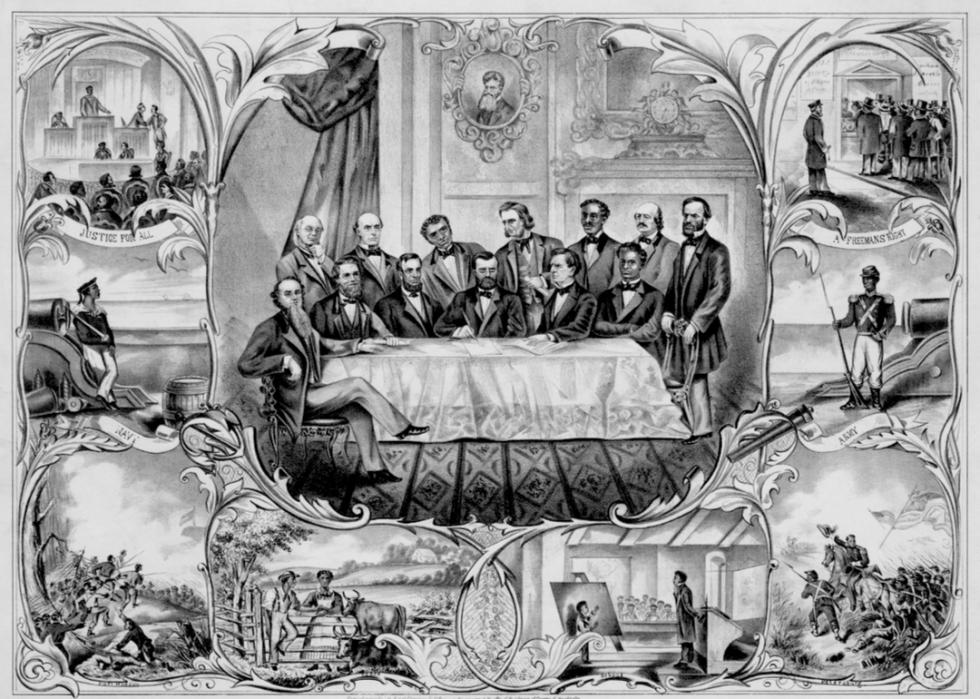
This era in American history provided the slowest progression of LGBTQ+ rights, and nothing reached the radar of employment inclusion until the 14th Amendment passed in 1868, granting Black people the same protection and rights as white people under the Constitution. The 14th Amendment served as a baseline for civil rights that queer people could point toward throughout this century and the next, even though this amendment was not as comprehensive as the Civil Rights Act of 1964.
The Lavender Scare: Queer workers fired for their identities
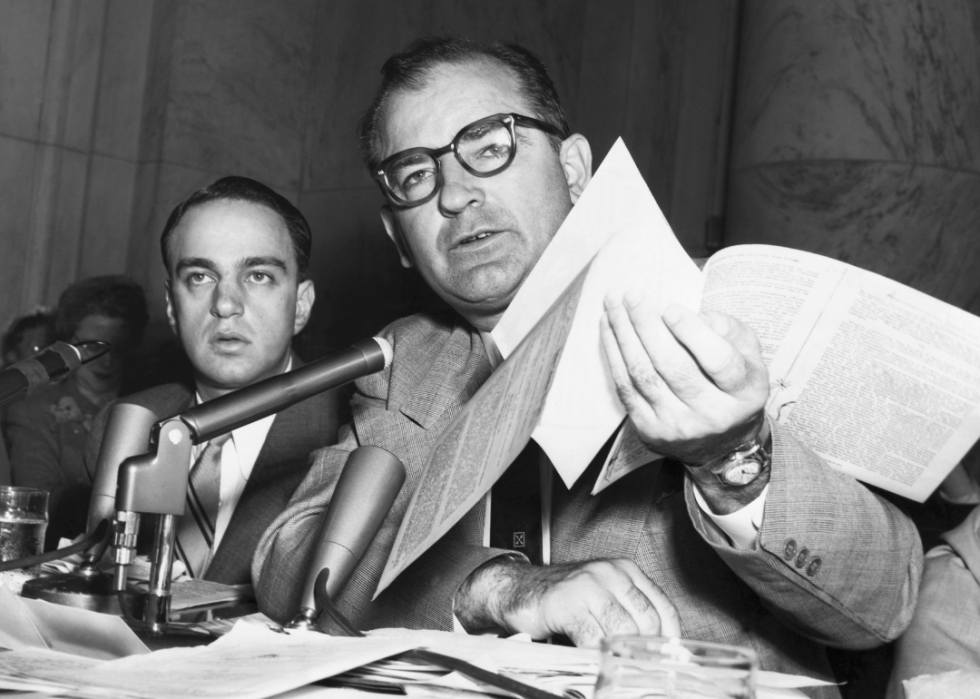
In post-World War II America, cultures shifted to more conservative and traditional values, placing importance on the heteronormative nuclear family with gendered family values. McCarthyism affected nearly every facet of American life, instilling fear of communism and left-wing values. Also dubbed the Red Scare, this phenomenon took hold in 1947 with President Harry S. Truman’s Federal Employee Loyalty Program executive order. This, from 1947–56, resulted in of federal employees who were deemed “un-American.”
At the same time, the Lavender Scare tore through the rights and freedoms of American LGBTQ+ federal workers. In 1953, President Dwight D. Eisenhower signed an executive order that would allow termination of employees on suspicions of “sexual perversion.” This largely translated to homosexual activity under the and threats to national security. The executive order also tied queerness to communist values, breaking the mold of the nuclear family and heteronormative lifestyle McCarthyism sought to crystalize.
The aftermath of the Lavender Scare
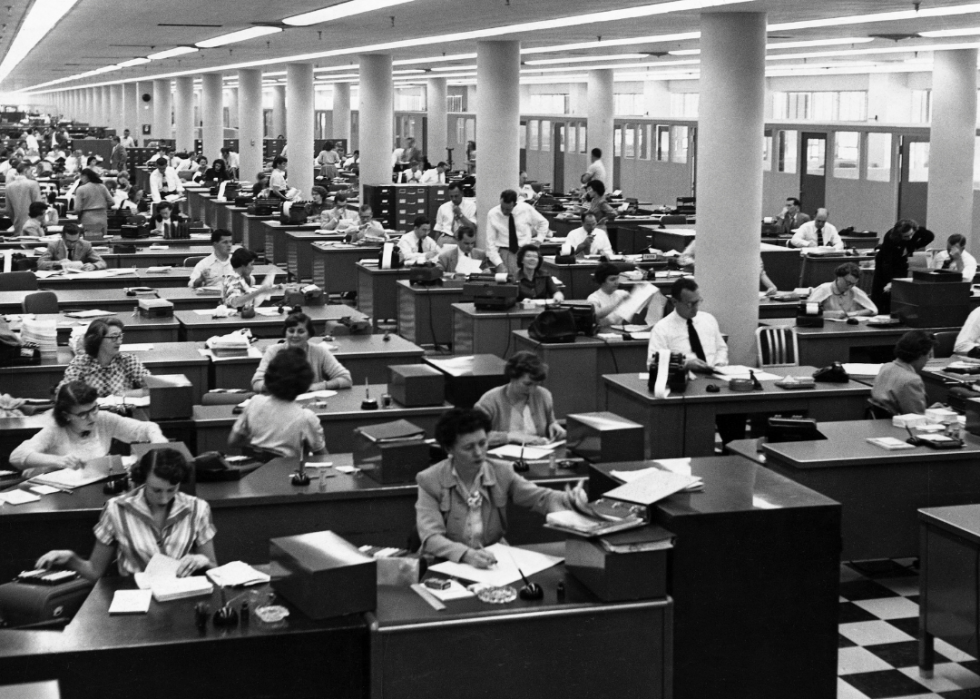
Eisenhower’s executive order wasn’t repealed until the 1990s under the administration of President Bill Clinton, and even then, the cultural shift to an accepting environment for LGBTQ+ people was still out of reach. Secretary of State John Kerry about the Lavender Scare in 2017, but the Trump administration from the White House website, where it has not been restored.
In a 1992 survey by The New York Times, teenagers—the generation raised by and shaped from those who grew up during the Lavender and Red Scares—showed doubt in the discussion of racial and ethnic hatred, but remained mostly steadfast when discussing their hatred for gay people. The survey results revealed at the time, , that distaste for queer people was considered a litmus test for moral good.
HIV and AIDS epidemic: Careers ended and lives lost
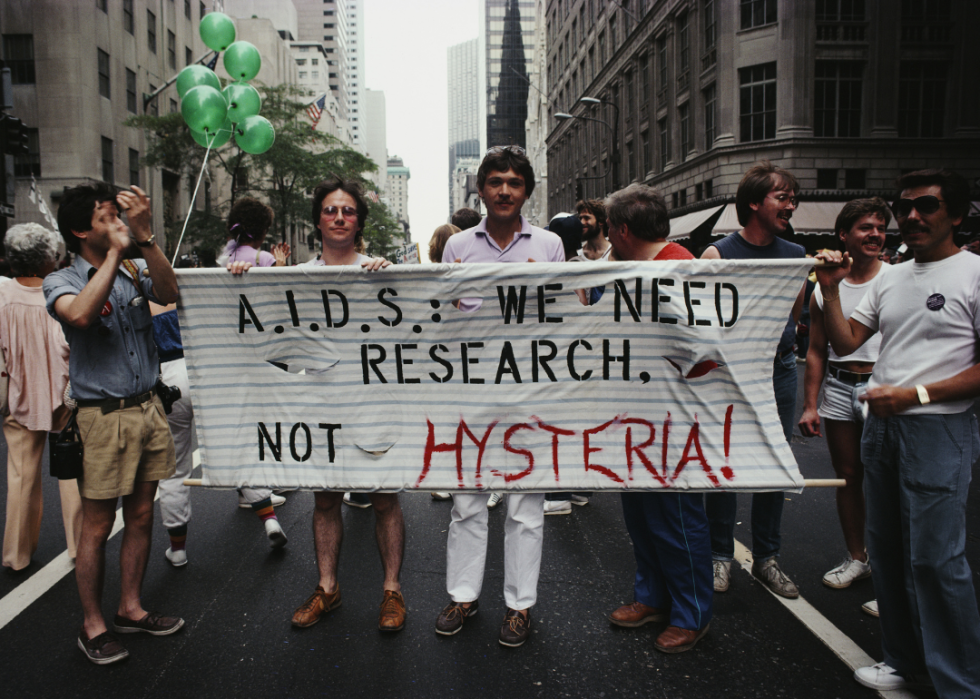
The AIDS epidemic began in the early 1980s, but it wasn't until 1990 that any legislation was passed to protect people with the virus. The Americans with Disabilities Act of 1990 stated American workers could not be fired or discriminated against for their health status. The act did not provide official protection against AIDS until , but many workers still pointed toward the disabilities act if they believed they had been wrongfully fired.
AIDS would later claim the lives of more than in the U.S. between 1987 and 1998—most of whom were cisgender gay or bisexual men. The ramifications for testing positive usually meant losing a job since many employers feared infected workers could spread the virus to others. Getting fired for having AIDS became so widespread that activists discouraged many queer men —without a known cure or treatment, testing positive likely meant ending their careers, getting kicked out by roommates, being disowned by family, or all of the above.
The stigma of testing positive permeated through the LGBTQ+ community, as many fed into homophobic notions around the virus. In the book which features a collection of survey responses from gay business professionals gathered in the early 1990s, one respondent said of the virus: “I think AIDS did not hit the well-off professional people as much. ... It may sound snobby and I apologize for that, but a lot of the people who had AIDS were not in that same category. … Not being involved in long-term relationships meant they were having a lot more unsafe sex.”
Domestic partner benefits: How LGBTQ+ workers received benefits for partners
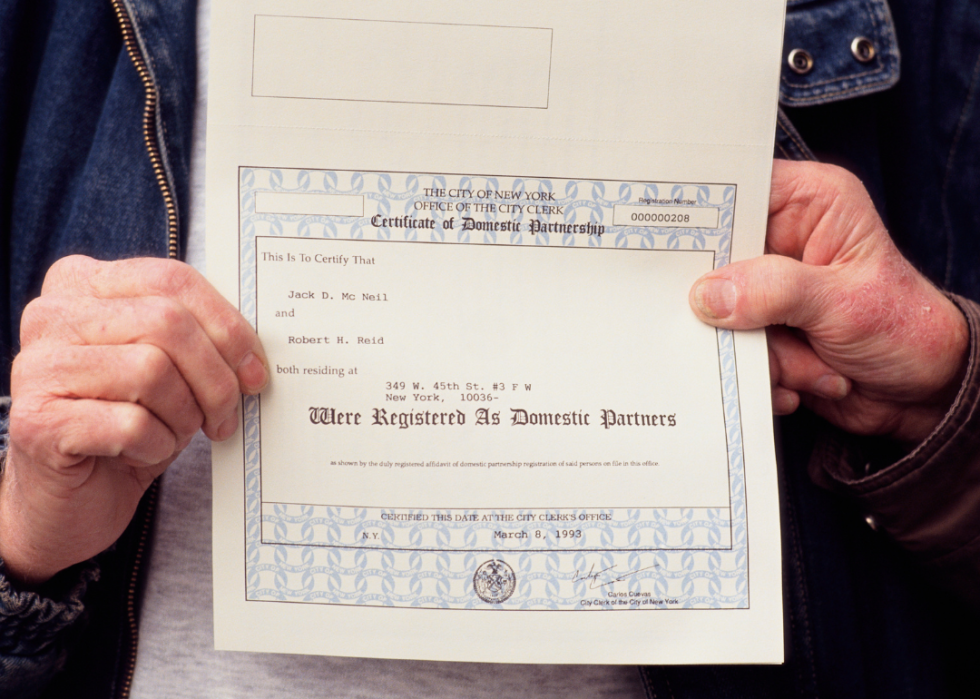
Since same-gendered couples didn’t have the federal right to marry until a 2015 Supreme Court decision, adding partners on employer-sponsored health care plans came with a slew of obstacles. Before the ruling, if a person in a queer relationship asked the employer if an unmarried, same-gendered partner could be added to a healthcare plan, several employers would shrug off the request, claiming the insurance provider did not offer the benefit.
In actuality, no law existed that stated insurance companies cannot offer domestic partner benefits to queer couples. In many cases, including when Stanford University rolled out domestic partner benefits in 1994, the cost of insurance plans went down for both the employees and the companies. Without partner benefits, many LGBTQ+ workers in the ’90s claimed they were less likely to relocate for a job because it would mean their partner would need to find a new job in a new city. Otherwise, their partner would not have health insurance coverage.
Early LGBTQ+ organizations and their activism
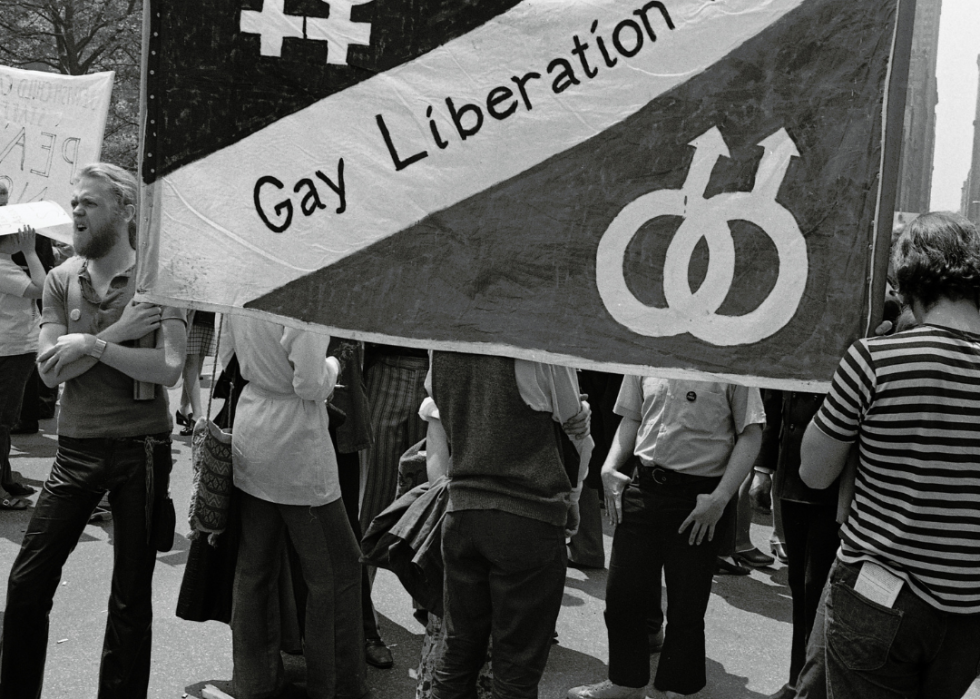
Making strides toward acceptance of LGBTQ+ people comes with patience and tenacity, finding strength in numbers in the form of activist organizations and unions, and overall solidarity within the community and other minority groups. In 1924, German immigrant Henry Gerber of Chicago led the Society for Human Rights, the in the U.S. The organization was short-lived after a the following year. While Gerber advocated for the freedom to be a worker without the constant threat of being fired, many individuals were reluctant and afraid to join for fear of damaging their reputations.
The Society for Human Rights planted the seeds for the , led by a small group of men including activist Harry Hay. The first national homophile movement in the U.S., the Mattachine Society fought through police harassment and brought attention to homosexual rights and oppression—including rights in the workplace, as Hay was an . A decade later, the Tavern Guild was founded in 1962 and was the in the U.S., working with bars to raise money, coordinate against police harassment, and provide a safe space for queer professionals in the industry.
Workplaces that broke ground for LGBTQ+ workers’ benefits
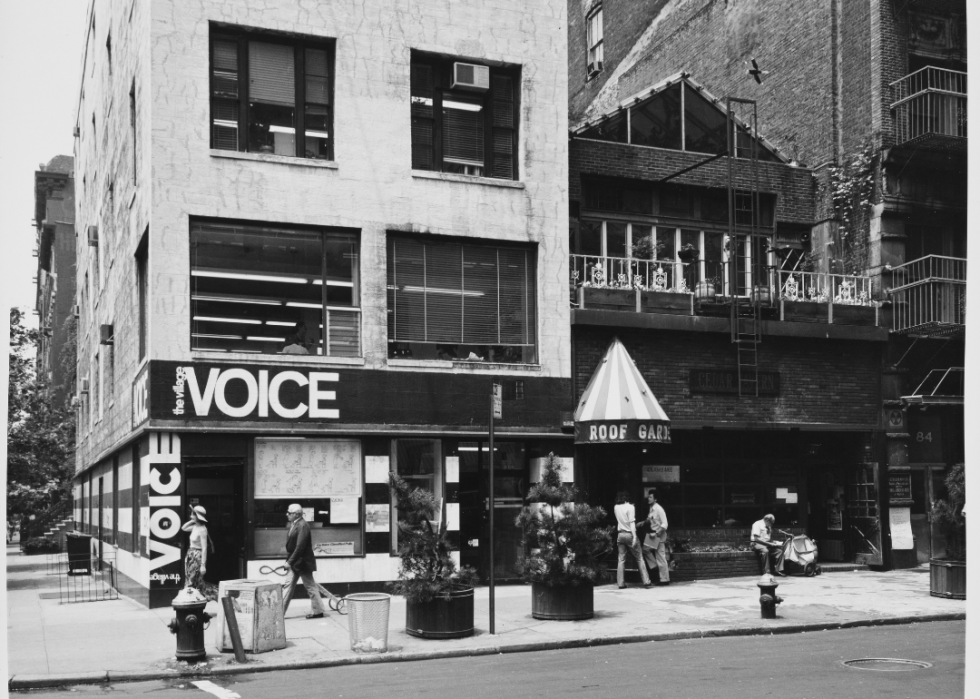
In 1982, the became the first workplace to implement domestic partner benefits in the U.S. after the newspaper’s workers’ union bargained for the benefits with the Voice’s leadership. The Distributive Workers of America’s negotiations helped pave the way for other private companies to begin offering these benefits, with the American Psychological Association Insurance Trust following suit a year later. And in 1984, the California cities of Berkeley and West Hollywood became the first municipalities to adopt domestic partner legislation for workers.
Fewer than five organizations offered domestic partner benefits by 1990, and yet, by December 1994, 42 cities and states, 96 private companies, and 68 higher education institutions offered domestic partner benefits. Before the Village Voice, queer workers bargaining for domestic partner benefits could only feebly point to the Unfair Insurance Practices Act of the 1970s.

Queer workers’ hesitancy to come out
Making the decision to come out of the closet in the workplace plagues queer workers even today. Generations of judgment, stigma, and a lack of legislation protecting LGBTQ+ workers often keep people in the closet, for fear that coming out will cost them their careers. Professionals outside of the LGBTQ+ community often question why sexual orientation is relevant or even appropriate to discuss in the workplace. As described in “Straight Talk About Gays in the Workplace”: “Sexual behavior does not and should not have anything to do with work. Sexual orientation, however, is not sexual behavior. Orientation is who a person is, not what a person does.”
In “Straight Jobs, Gay Lives,” the researchers determined the queer people who faced the most discrimination were those who were not out at work. Coming out actually lessened discrimination at work. When the findings were published in the mid-’90s, the existed in many facets of American life and culture, punctuated by the Defense of Marriage Act, which denied federal recognition of same-gender marriages and was signed into law by President Bill Clinton after it passed overwhelmingly in Congress.

Coming out: an LGBTQ+ worker's best defense
Having a heteronormative culture enshrined in the American workforce created what felt like an unwelcoming space for many queer people. Often, LGBTQ+ workers who chose to stay in the closet felt they faced the brunt of vague, discriminatory behavior at work. Blackmail of LGBTQ+ workers was not as common as queer and non-queer people believed, and overall, victims of blackmail did not experience long- or short-term career damage.
Similarly, out queer blue-collar workers than their closeted colleagues. Out queer workers can more easily point toward discrimination and receive union support—if the worker is part of a union. The stigma to come out in trade jobs is than in white-collar environments, leaving many of these workers in vulnerable positions.
Aside from blatant harassment, discrimination in the workplace is most often covert. This makes tracking the overall treatment of queer workers—from promotion tracks to salary gaps—difficult to illustrate. But one facet of the American workforce remains true: Homophobic work cultures and policies can historically be quantified as . Employee retention drops, some employers have lost thousands in legal cases—even before federal legislation passed—and workers generally felt more disinterested in the company and their work.
A stall on transgender workers’ rights: In-fighting and the Erickson Foundation
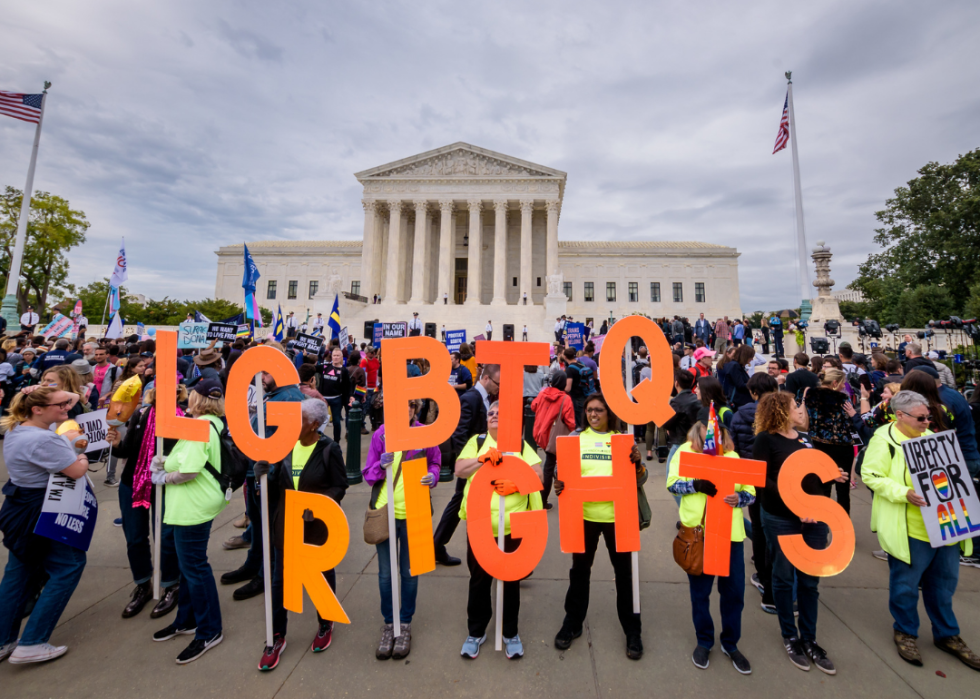
The Erickson Educational Foundation was founded in 1964 to fund research and activism specifically for transgender people. While the foundation only lasted about 20 years, no other organization existed specifically for transgender activism. It could be argued the foundation laid the groundwork for the in 1992.
Advocacy specifically for transgender rights remained under the radar at the time, so much so that the conference wasn't able to add any transgender protections under the Employment Non-Discrimination Act. The reason for the halt in progress came more from , rather than resistance from outsiders. Gay, cisgender organizations and the Human Rights Campaign shot down any protections for transgender workers during the conference.
In terms of protections, historically, LGBTQ+ people are the last minority group to receive rights and protections. Women, racial and ethnic minorities, people older than 40, and people with disabilities have long been on a federal level. Before the that barred discrimination of LGBTQ+ workers, no federal law existed to protect the community.
Being a queer US military service worker
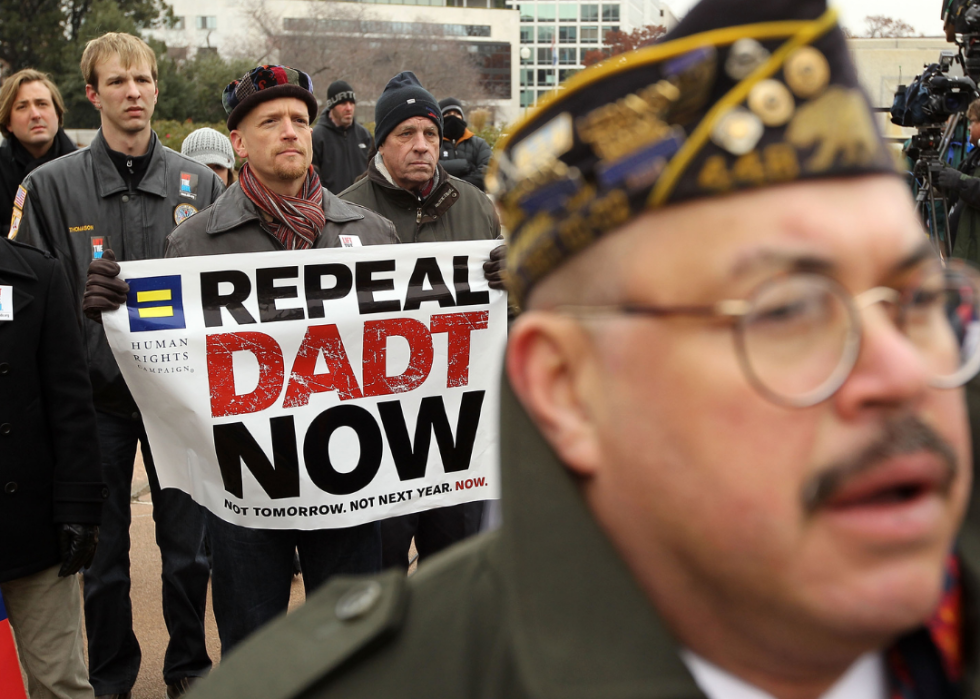
Before the 1990s, and dating as far back as the American Revolution, being fired or dismissed from the service due to “homosexual acts” , so much so that many service members did not come out. The military saw two gay men come out in 1975 and in 1976. Leonard Matlovich, a sergeant in the Air Force, came out first by appearing on the cover of Time magazine with the headline: “I am a Homosexual.” The article received . These responses ranged from claims that Matlovich was “a disgrace to the uniform of an honorable service” to pointing out the irony of a person who “[is] highly decorated for killing thousands of your fellow men and [is] drummed out of the corps if you dare to love one.” A year later, Tom Gallagher became the first out foreign services officer. He because his sexuality barred him from passing security clearances.
Most famously, the Clinton administration implemented the “don’t ask, don’t tell” policy in 1994, which prohibited military personnel from harassing and discriminating against LGBTQ+ service members. The administration designed the policy to protect queer workers in the military, but it who claimed it forced people back into the closet. After all, service members could still be dismissed for talking about their queerness. The Obama administration repealed the policy in 2011, but still lost their jobs over those 17 years in effect for speaking about their sexual and gender identities.
The recent history of LGBTQ+ inclusion for military workers
Workers in the U.S. military face a different set of challenges from other employees across the U.S., as these members are bound more strictly by federal law and other employment laws specific to this sector. Due to such conditions, queer inclusion in the military proves to be more arduous and inconsistent than acceptance in other facets of the American workforce.
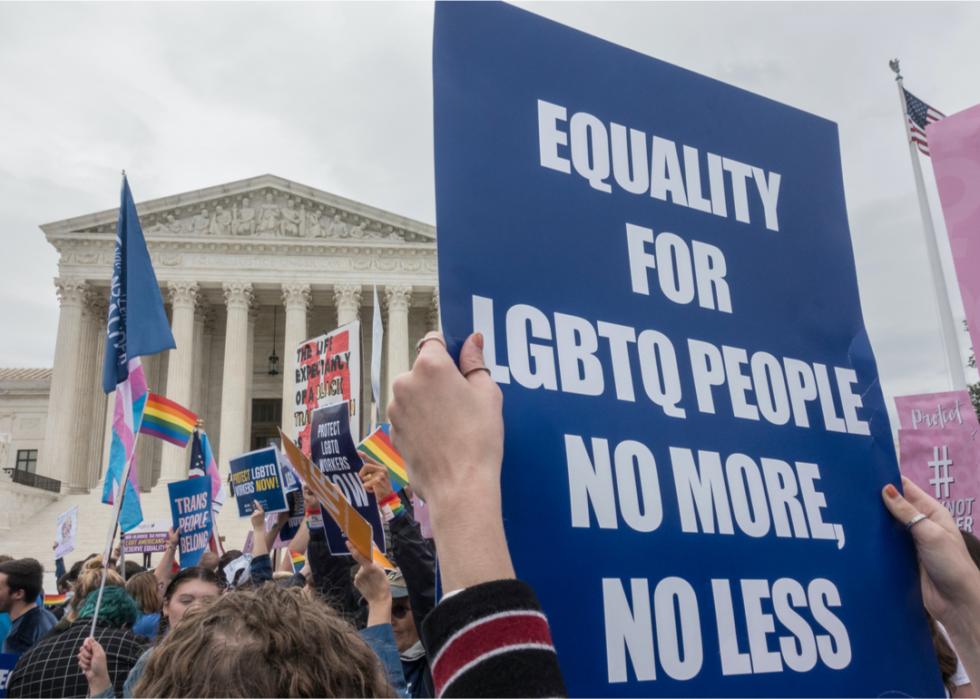
The 2010s saw inconsistencies when it came to queer inclusion in the military. In 2014, Veteran Affairs granted widow benefits to the . A year later, the military made efforts to be more trans-inclusive with the opening of its , and progress for transgender members continued into 2017 when the for a transgender member of the military. But rights initiatives came to a screeching halt in 2019 when the Trump administration , which wasn’t repealed until the .