This story originally appeared on HeyTutor and was produced and distributed in partnership with 麻豆原创 Studio.
How teachers unions have changed since the 1980s
Teachers unions have played an integral role in shaping the U.S. education system, providing a platform for educators to advocate for themselves and their students when working and learning conditions become poor. Citing union membership data among elementary and secondary school teachers from , examined how teachers unions have evolved since the 1980s.
Union members are employed workers who are members of unions while people covered by unions are workers covered by a collective bargaining agreement. Some of the largest teachers unions in the country include national groups like the National Education Association (NEA) and American Federation of Teachers (AFT) as well as state and city groups such as the California Teachers Association, West Virginia Education Association, Detroit Federation of Teachers, and Chicago Teachers Union.
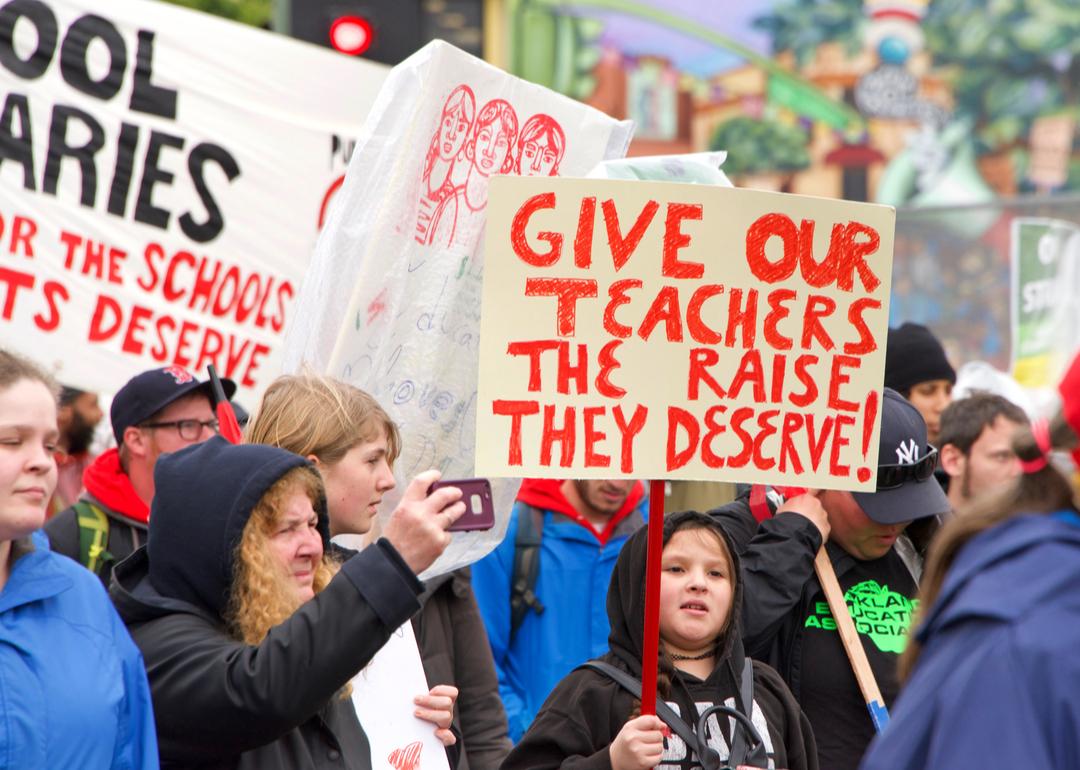
One way teachers unions campaign for themselves is by going on strike. During this time, union teachers do not work in protest of, oftentimes, poor working conditions and wages. The teachers鈥� refusal to work puts pressure on school and government officials to negotiate a deal with the union. The first teacher strike in the U.S. took place in 1902 in Chicago, the home of several historical teacher union protests. The first statewide strike took place in Florida in 1968 when over 40% of the state鈥檚 teachers took to the picket lines over funding.
Read on to see just how far teachers unions have come since the 鈥�80s.
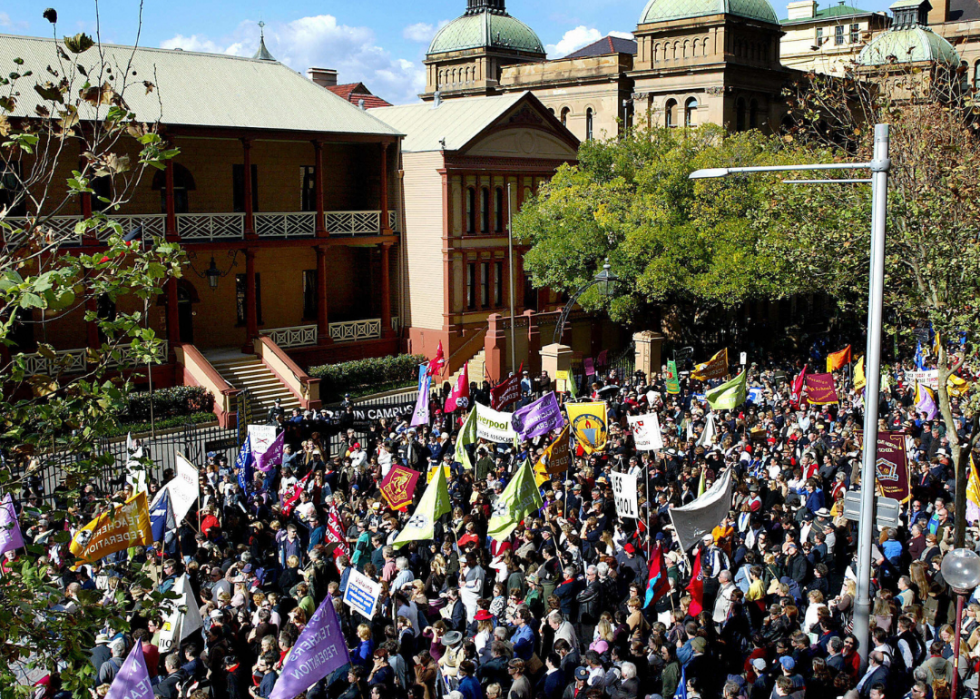
1985
- Total employment: 5,477,043
- Members of unions: 44.5% (2,435,136)
- Workers represented by unions: 53.8% (2,945,869)
The year 1987 marked what is considered the . The strike did not take place in a big metro like Los Angeles or New York City but in the small Midwestern town of Homer, Illinois. Starting in October 1986, teachers went on strike in the town of 1,200 residents after the school board only offered a 2% raise.
Tensions were high as the school district reportedly fired some teachers and hired substitutes, which broke the terms of the strike. The protest didn鈥檛 end until June 1987, essentially canceling school for the entire 1986鈥�87 school year. The school board and teachers agreed to base pay on the median salaries of other local school districts, and that the teachers who were fired during the strike would regain their employment.
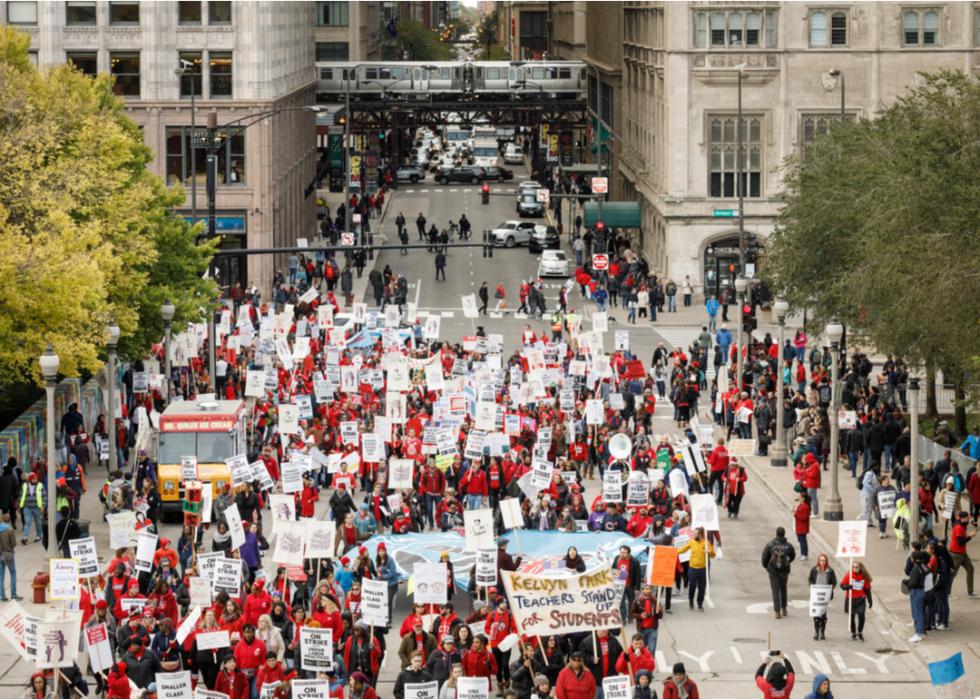
1990
- Total employment: 6,048,835
- Members of unions: 44.9% (2,716,948)
- Workers represented by unions: 53.5% (3,237,215)
The early 1990s were a time of for teachers unions. The American Federation of Teachers, one of the most sizable teachers unions in America, began to aggressively recruit teachers into their organization. The group even created a television ad campaign with the slogan, 鈥淯nion, yes.鈥�
Another significant event in the early part of the decade was the 11-day held in 1990 over benefits and wages, the first statewide teachers strike in West Virginia. To end the strike, the West Virginia House speaker and Senate president agreed to hold a legislative session to come up with solutions.
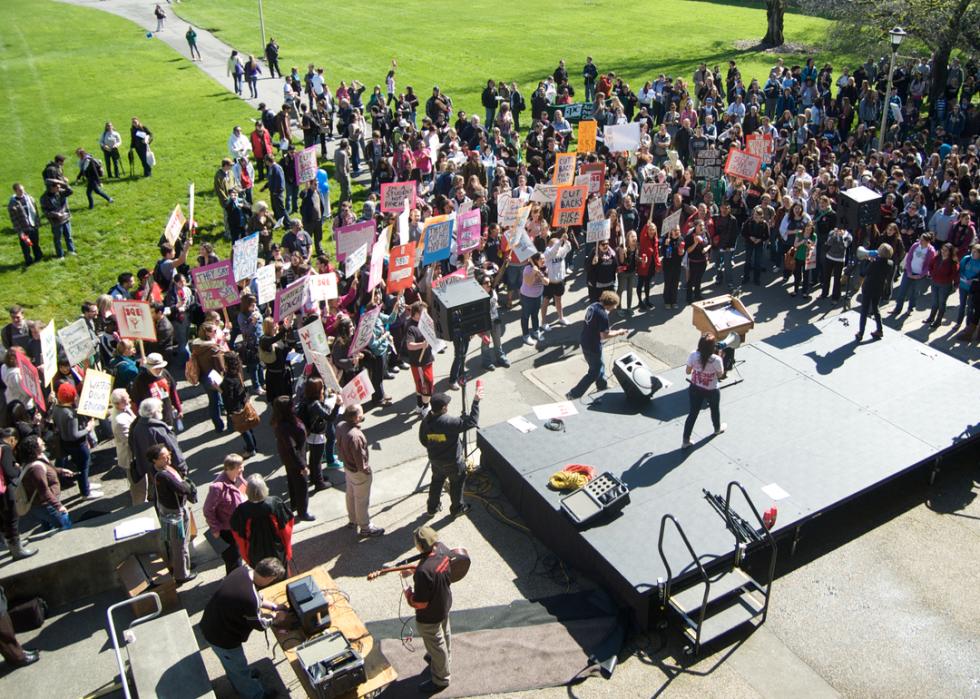
1995
- Total employment: 6,619,776
- Members of unions: 45.3% (3,000,660)
- Workers represented by unions: 52.3% (3,464,079)
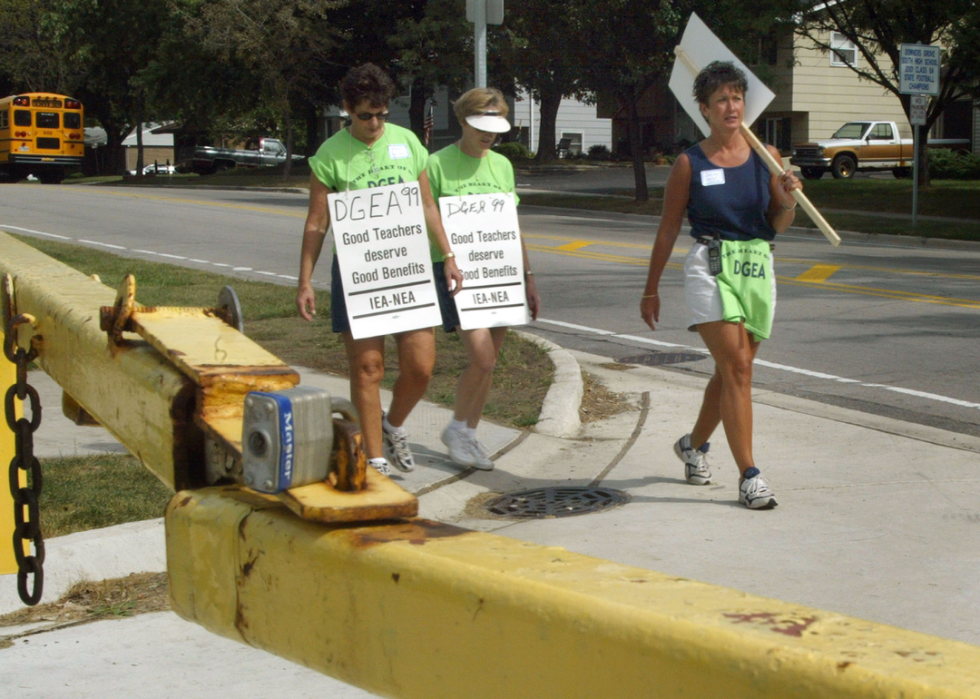
In 1995, Washington teachers went on the after the Fife Education Association refused to accept Fife school district pay cuts. About 2,500 teachers took to the picket line on Oct. 9 of that year.
Teachers refused to return to the classrooms even after a Superior Court judge gave the order to go back. The union鈥檚 refusal to get back to work, even after a court order, caused bargaining between the school board and teachers union to pick up speed. The teachers came back to work after both the district and union agreed to supplemental pay cuts.
2000
- Total employment: 7,556,886
- Members of unions: 43.9% (3,314,309)
- Workers represented by unions: 49.8% (3,766,976)
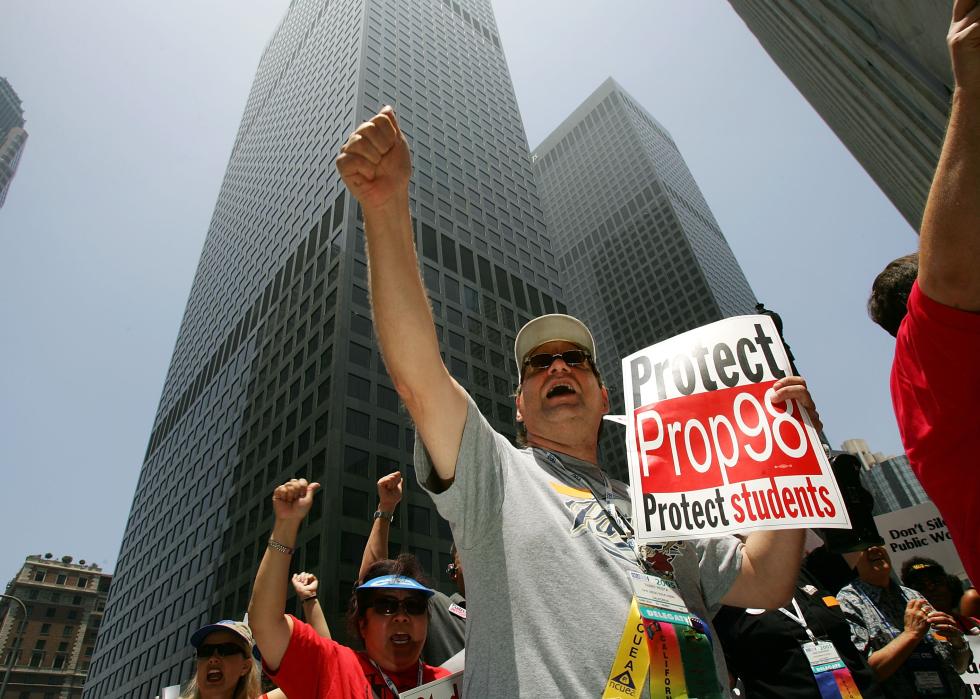
Between No Child Left Behind legislation being signed into law in 2002 and the 2003 Higher Education Act, the early 2000s was a significant time for education policy. However, lawmakers weren鈥檛 the only ones making moves. In 2001, two of the largest teachers unions鈥攖he American Federation of Teachers (AFT) and National Education Association (NEA)鈥� to lobby together and strategize legal matters.
The two groups had formerly attempted to merge in the 1960s; however, the NEA ended up turning down the offer. With a collective 2.5 million teachers at the time, the partnership between the AFT and NEA created a force to be reckoned with.
2005
- Total employment: 8,311,445
- Members of unions: 42.8% (3,559,196)
- Workers represented by unions: 47.7% (3,968,048)
The mid-to-late 2000s brought about several instances of unrest among teachers in major U.S. cities. In 2005, New York City鈥檚 United Federation of Teachers during New York City Mayor Michael Bloomberg鈥檚 reelection campaign. The union leveraged the mayoral election in their favor to secure a 14.25% raise that also required them to work longer days.
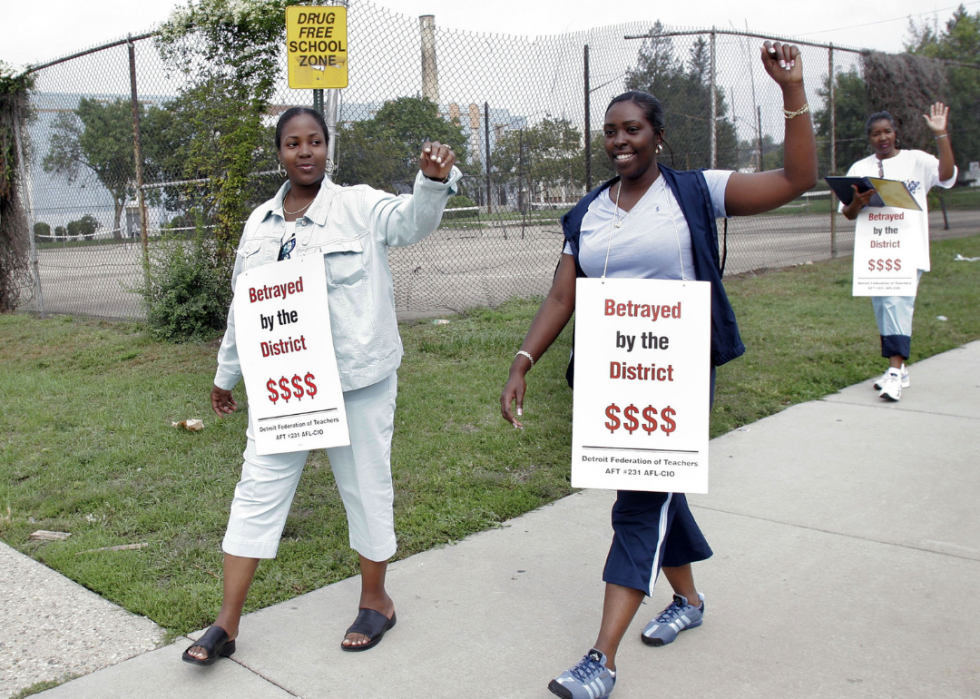
In Detroit, the public school district鈥檚 teachers went on strike after a proposed 5.5% wage cut and a drastic increase in the cost of benefits. On day one of the strike, which was the first day of school for the district, only 7% of teachers went to work. The returned to their classrooms after 16 days behind the picket line once teachers agreed to a temporary pay freeze and an eventual 2.5% pay raise in the following years.
2010
- Total employment: 8,713,733
- Members of unions: 42.7% (3,721,096)
- Workers represented by unions: 47% (4,094,972)
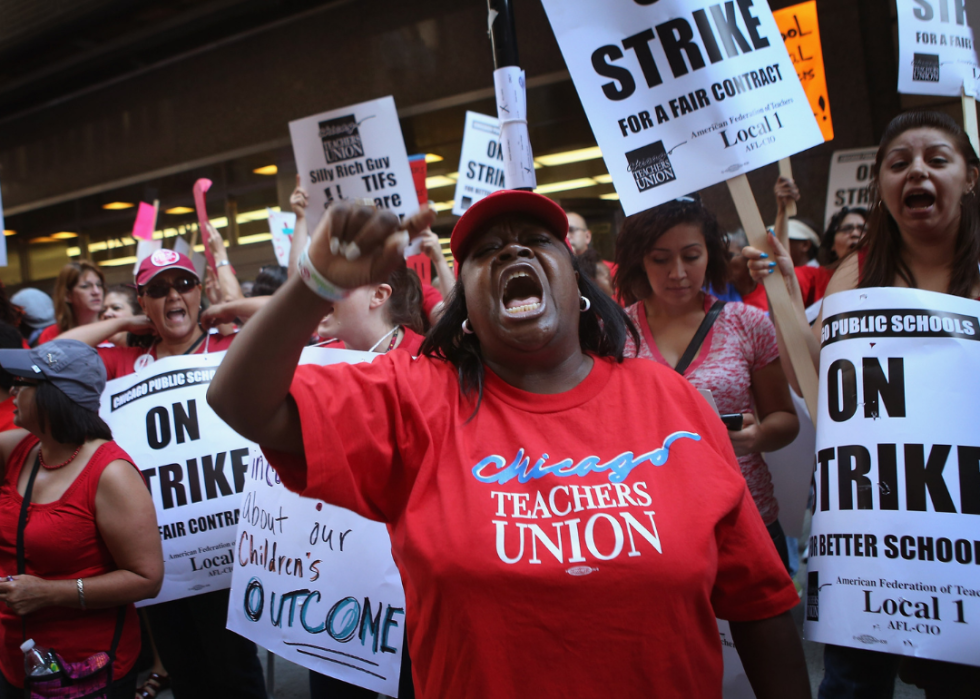
After not going on strike since the 1980s, in September 2012, the country鈥檚 third-largest teachers union took to the streets to protest against a host of issues. For a week, 26,000 Chicago teachers marched on the picket line over low pay, classroom sizes, layoffs, student testing, and more. The strike eventually ended when the on a 17.6% pay raise, a scaled-back emphasis on test scores, better employment protections, and improved health insurance.
The strike was so monumental for Chicago teachers that a book was written on the subject鈥� authored by Robert Bruno and Steven K. Ashby, two labor education professors at the University of Illinois. They described the Chicago protests as being so impactful that 鈥渢he ripple effects鈥� of the strike were felt nationwide.
2015
- Total employment: 8,943,415
- Members of unions: 40.4% (3,615,515)
- Workers represented by unions: 44.9% (4,013,628)
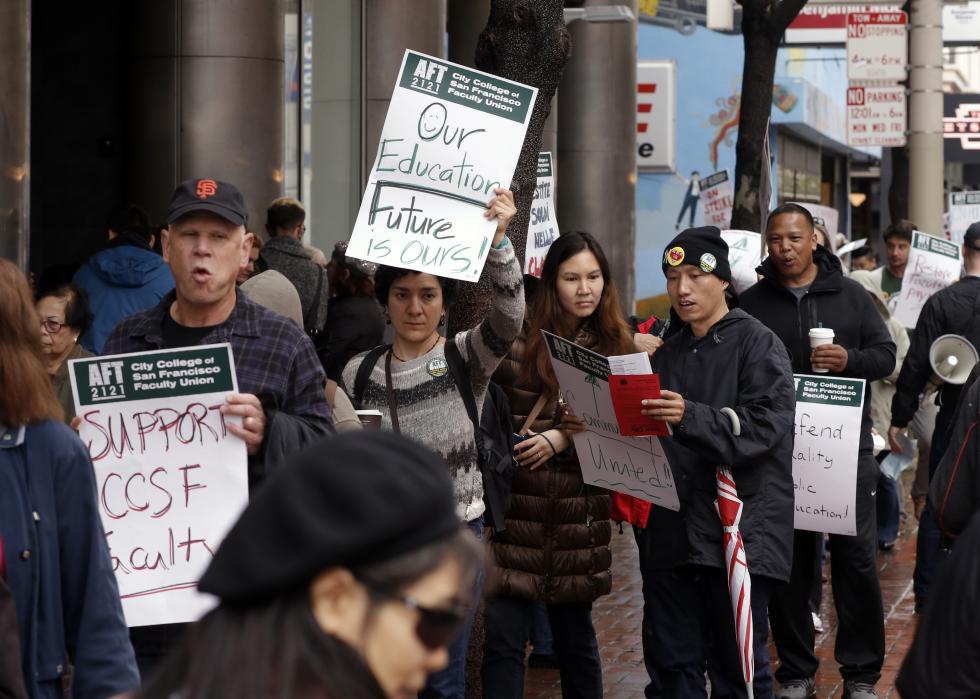
The years between 2015 and 2020 were marked with two major strikes by teachers unions that made national headlines. The first was the 2018 West Virginia teachers鈥� strike over low wages and rising health care costs. In February that year, thousands of teachers鈥攚hose starting pay was in the U.S. at the time鈥攚ent on strike for nine days, impacting roughly 277,000 schoolchildren.
West Virginia Gov. Jim Justice eventually agreed to a 5% pay raise for teachers. The second major strike took place in 2019 when Chicago teachers went on an to protest poor pay, overwhelming classroom sizes, and a lack of support from schools. After all was said and done, Chicago Mayor Lori Lightfoot agreed to a 16% bump in salaries, smaller classroom sizes, and to hire more nurses, librarians, and social workers for schools.
2020
- Total employment: 8,597,685
- Members of unions: 40.9% (3,514,453)
- Workers represented by unions: 45.2% (3,886,705)
The COVID-19 pandemic, which flipped the world on its head starting in early 2020, threw a wrench in everything from the housing market to unemployment rates. One of the pandemic鈥檚 biggest points of impact, however, was the education system.
As schools across the U.S. struggled with whether to reopen in the fall of 2020, teachers unions were in pushing for remote and hybrid learning. This was particularly evident with the nation's three biggest school districts鈥擟hicago, Los Angeles, and New York City鈥攁s teachers unions in these cities galvanized against reopening schools due to safety concerns. Teachers unions in other cities applied pressure to school officials as well. In August 2020, Detroit teachers voted to to push back against the Detroit Public Schools Community District鈥檚 decision to bring back in-person learning.