Indigenous Peoples Day: Why it's replacing Columbus Day in many places
was produced by and reviewed and distributed by 麻豆原创 Media.
Indigenous Peoples Day: Why it's replacing Columbus Day in many places
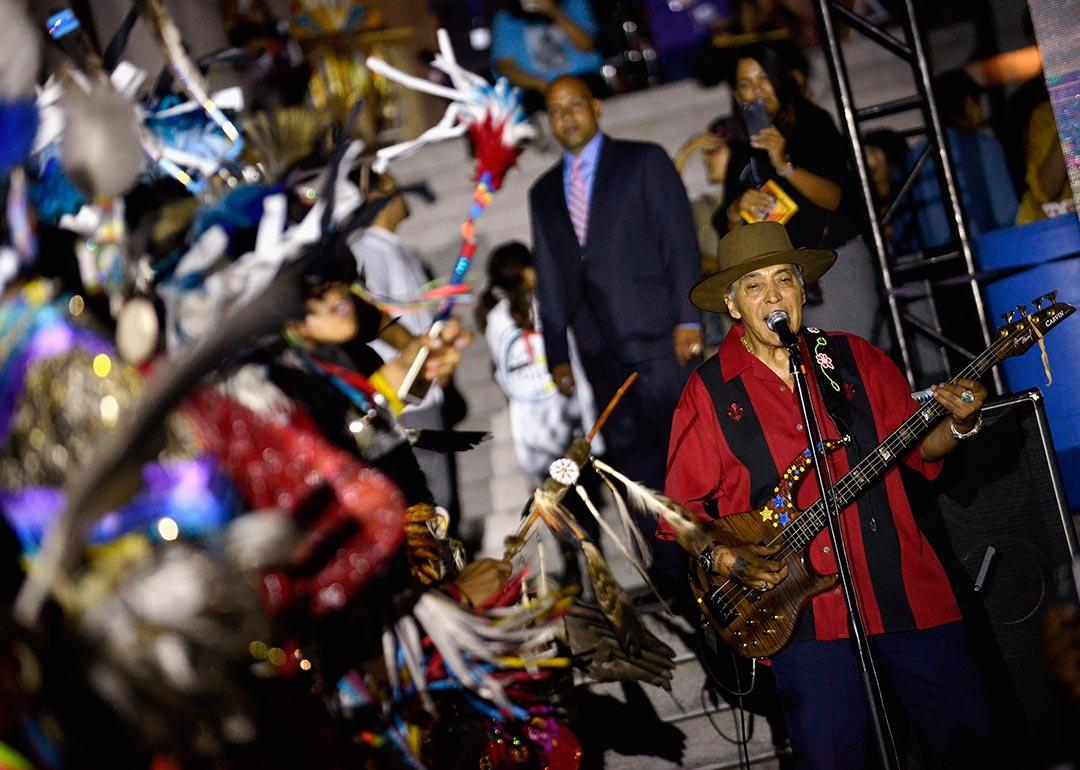
Columbus Day celebrations in the United States鈥攎eant to honor credited with "discovering" the New World鈥攁re almost as old as the nation itself. The , on the 300th anniversary of his landing. But since the 1990s, a growing number of states have begun to replace Columbus Day with Indigenous Peoples Day鈥攁 holiday meant to honor the culture and history of the people living in the Americas both before and after Columbus' arrival.
spoke with Susan C. Faircloth, an enrolled member of the Coharie Tribe of North Carolina and professor of education at Colorado State University, to learn the history of Indigenous Peoples Day and what it means to American education.
First, why is Columbus Day a problem?
For many Indigenous peoples, Columbus Day is a controversial holiday. This is because Columbus is . His arrival led to the .
When did Indigenous Peoples Day come about?
In 1990, 鈥攃urrently the state with the in the U.S.鈥攂ecame the first state to officially recognize , commonly referred to as Indigenous Peoples Day in other parts of the country.
More than a now recognize Indigenous Peoples Day. Those states include Alabama, Alaska, Hawaii, Idaho, Iowa, Louisiana, Maine, Michigan, Minnesota, New Mexico, North Carolina, Oklahoma, Oregon, South Dakota, Vermont, Virginia, and Wisconsin.
How does Indigenous Peoples Day change things?
Indigenous Peoples Day offers an opportunity for educators to rethink how they teach what some have characterized as a "" story of the arrival of Columbus. This version omits or downplays the devastating impact of Columbus' arrival on Indigenous peoples. Indigenous Peoples Day is an opportunity to reconcile tensions between these two perspectives.
Research has shown that many when they teach history. I think this is true not only on Indigenous Peoples Day, but throughout the school year. Researchers have found that K-12 schools tend to teach about Native Americans as if they . By revising the curriculum to better reflect both past and current histories and stories of Native peoples, educators can more accurately teach students about their cultures, histories, and traditions.
Has there been any pushback?
Yes, the shift from Columbus Day to Indigenous Peoples Day has met resistance from communities across the country. In 2021, the local school board's decision to celebrate Indigenous Peoples Day in place of Columbus Day. Among other things, they cited lack of community input, failure to honor the legacy of Italian immigrants, and the need for a "more balanced picture of Columbus." In , the school board removed the names of all holidays from its calendar. Now the holidays are just referred to as "days off."
What resources do you recommend for Indigenous Peoples Day?
I would recommend "Lies My Teacher Told Me About Christopher Columbus" by sociologist and educator James Loewen. I would also recommend "" by historian Roxanne Dunbar-Ortiz. These books help illustrate both the impact of the arrival of Columbus on the Indigenous peoples of the Americas and the role of Indigenous peoples in the founding of the United States. This is information that is typically absent in K-12 schools.
Other resources are available from organizations such as the , , and . These resources include sample lesson plans, books, and videos that reflect the diversity of Native American peoples and tribes. For example, one lesson plan from IllumiNative provides opportunities for students to learn about Indigenous Peoples Day and at the same time explore ways to honor and protect the land, air, and water. Such lessons are important, as they address the ways in which conservation of natural resources is essential to the of Native nations.