
4 ways to feng shui your bedroom for better sleep
Feng shui is the ancient Chinese art of arranging your environment to harmonize the flow of energy, referred to as qi. The practice originates from ancient China’s Zhou dynasty and today it’s practiced all over the world. It’s rooted in the idea that your surroundings directly influence your well-being, and the bedroom is one area you should work on if you’re bringing feng shui into your home.
As the place where you rest, recover and reconnect with yourself or a partner, the bedroom plays a powerful role in your daily energy, both physical and emotional. Applying feng shui principles to your sleep space can do more than provide aesthetic balance. It can help provide deeper rest, greater calm and more aligned living.
Feng shui can seem complicated and overwhelming, especially if you’re directionally challenged, but it can be incorporated in ways that allow beginners to enjoy the benefits. In this article, explores this ancient art and teaches you four foundational feng shui bedroom tips that can help transform your space into one that promotes more .
Why Feng Shui Your Bedroom?
Alongside the kitchen and front entrance, the bedroom is considered one of the most important spaces of your home, because it is directly connected to your well-being. It’s the place where you’re most vulnerable: asleep, unconscious and recharging your energy for the day ahead.
A well-balanced bedroom feng shui layout can also contribute to emotional harmony, healthier and even physical vitality. By intentionally designing your space to allow energy to flow in a calm and supportive way, you’re reinforcing the idea that rest is the foundation for a more balanced life.
4 Feng Shui Bedroom Tips to Invite Calm, Connection and Better Sleep
Ready to shift the energy in your sleep space?
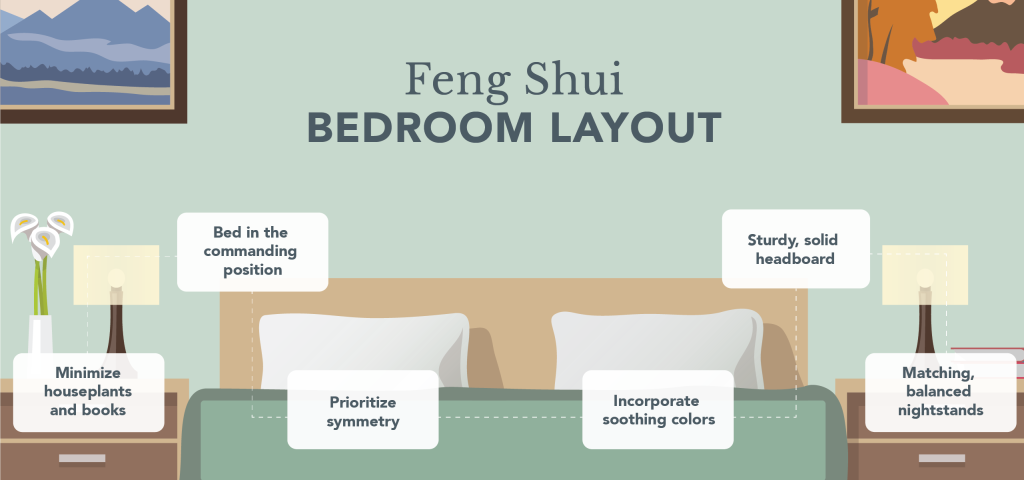
Start with these four foundational feng shui bedroom practices that can help promote balance, connection and a deeper sense of rest.
1. Position Your Bed for Balance and Protection
In feng shui, the placement of is everything. As the most important piece of furniture in the room — and the one most closely connected to your personal energy — its position can influence how supported and secure you feel while you sleep.
One of the most essential feng shui bedroom layout rules is placing your bed in the command position. This means positioning it so that you can see the bedroom door without being directly in line with it. From a feng shui perspective, this setup offers a sense of control and safety that helps the nervous system relax.
A few more key tips for a supportive bedroom feng shui bed position:
- Avoid placing your bed under windows, which are considered energetically unstable.
- Steer clear of overhead beams, which are thought to create pressure or “cutting” energy.
- Use a solid headboard placed against a sturdy wall to anchor your energy while you sleep.
- Add matching nightstands and lamps on both sides of the bed to create symmetry and balance — especially helpful for fostering harmony in .
- Skip mirrors that face the bed. In feng shui, mirrors can bounce energy around and disrupt sleep.
By positioning your bed intentionally, you create a space that looks balanced but feels grounded — making it easier to unwind and recharge each night.
2. Choose Natural, Non-Toxic Materials
At its core, feng shui is about living in harmony with nature — and that harmony starts with the materials you surround yourself with. In the bedroom, opting for more natural, safer and healthier materials helps maintain a clean and balanced energy flow that supports deeper, more restorative rest.
Feng shui emphasizes purity and energetic cleanliness, so synthetic or can feel out of alignment. They’re believed to hold stagnant qi and may disrupt your . materials like , organic wool and latex are ideal choices for a feng shui bedroom. These materials reflect the natural world and promote a sense of grounding and peace.
Good bedroom feng shui also values . Choosing mattresses and bedding made without , polyurethane foam or other helps create a space that’s both energetically and physically refreshing. And as a bonus, natural materials tend to be more , which is key to uninterrupted, high-quality sleep.
When you feng shui the bedroom, think beyond the layout. Consider what you’re sleeping on and the materials making up , too.
3. Declutter and Let Energy Flow Freely
In feng shui, clutter isn’t just an eyesore — it’s a sign of stuck energy. And in a space designed for rest and renewal, stagnant qi can quietly contribute to feelings of , overwhelm or mental fatigue.
A cluttered bedroom can disrupt your sense of peace, even if you don’t consciously register the mess. Under-bed storage is particularly discouraged in feng shui bedroom layout guidelines, as it can block the flow of energy during sleep. If you must store items under the bed, skip anything sharp, tech-related or emotionally charged. Things like old electronics, workout gear or stacks of paperwork can interfere with your qi and therefore also your body’s ability to fully recharge.
To encourage smooth, calming energy, keep pathways around your bed, nightstands and closet doors clear. This allows qi to circulate naturally and keeps your space — and your mind — at ease.
Pro-Tip: Keep an Electronic-Free Zone
Keep out of the bedroom as much as possible. TVs, laptops and emit active yang energy that directly counters the soft yin energy needed for deep rest.
4. Bring in Calming Elements and Personal Touches
Feng shui follows a set of design rules, but it also focuses on creating a space that supports your energy and feels like you. A truly aligned feng shui bedroom invites calm through intentional choices that reflect your values, soothe your senses and encourage relaxation.
Start with . In feng shui, soft, yin-inspired hues like muted blues, gentle greens and warm neutrals are ideal for sleep spaces. These tones promote a sense of tranquility and emotional ease. Bold reds, intense blacks or overly stimulating color schemes can feel too energetic for a restful bedroom.
Decor also plays a role in bedroom feng shui. Choose artwork or objects that symbolize peace, connection or dreams, and avoid anything that stirs up negative emotions like sadness or isolation. Lighting is another key element: Opt for warm-toned lightbulbs, add dimmers when possible and avoid harsh overhead lights in the evening to help your body wind down.
Natural materials and go a long way in supporting feng shui principles, too. While choosing your pieces, consider wood furniture, or cotton and handcrafted ceramics.
You might also add a small plant (like a peace lily or snake plant) for a dose of revitalizing energy — just don’t go overboard. Too many plants in the bedroom can tip the energetic balance toward yang and disrupt sleep.
And finally, don’t underestimate the power of scent. A few drops of calming essential oils like lavender, sandalwood or cedarwood can signal your brain that it’s time to relax.
Feng Shui Bedroom FAQs
Feng shui can feel a little mysterious at first, especially when you’re trying to apply it to something as personal as your bedroom. These frequently asked questions break down the basics in a clear, practical way, so that you can focus on creating a space that actually feels good to sleep in.
How Do You Pronounce Feng Shui?
Feng shui is pronounced fung shway. While the spelling can trip people up, the pronunciation is simple once you hear it, and knowing it can make conversations about the practice feel a little less intimidating.
What Is the Definition of Feng Shui?
Feng shui literally translates to “wind” (feng) and “water” (shui) in Chinese. The term refers to an ancient Chinese system of arranging spaces to align people with their surrounding environment, based on the belief that wind and water influence the flow of energy, or chi.
Which Way Should Your Bed Face in Feng Shui?
In feng shui, the ideal bed position is known as the “commanding position.” This means placing the bed so that you can see the door while lying down, without being directly in line with it. This setup is thought to promote a sense of security and ease, which can help your body relax at night.
What Is a Proper Feng Shui Bedroom Layout?
Here's a helpful diagram of a feng shui bedroom layout:
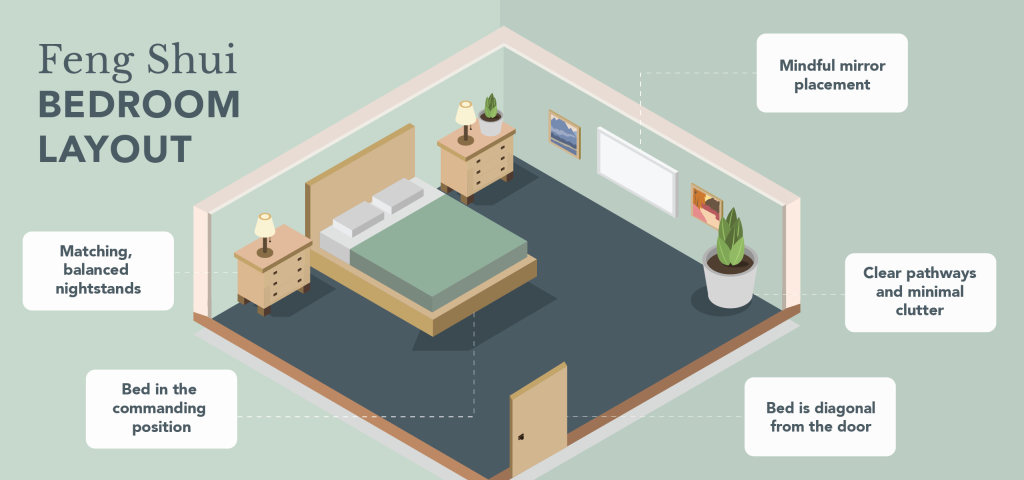
A proper feng shui bedroom layout places the bed in the “commanding position,” meaning it is positioned diagonally from the door so you can see the entrance without being directly in line with it. The bed should have a solid wall behind it for support, balanced space on both sides and two bedside tables if possible. Avoid placing the bed under a window, directly in line with the door or beneath exposed beams. The overall layout should allow for easy movement around the bed and keep pathways clear to support smooth energy flow.
Should a Feng Shui Bedroom Include Plants?
In feng shui, bedrooms are intended to support yin energy, which is associated with rest, quiet and restoration. Plants are considered a source of yang energy because they are living, growing and active. For this reason, traditional feng shui does not consider plants essential in the bedroom and often advises limiting them.
Bringing It All Together
You don’t need to completely redesign your space to experience the benefits of feng shui. Even small changes — like adjusting your bed placement, clearing out clutter or choosing more natural, breathable bedding — can start to shift the energy in your room and improve your sleep.
was produced by and reviewed and distributed by Â鶹ԭ´´.