
Can family caregivers get paid through Medicaid?
When a relative can no longer shower safely or forgets to take their medications, you may step in to provide care. As a , you may assist with bathing, dressing, and eating. These tasks are known as (ADLs). Caregivers may also help with (IADLs), such as cooking, cleaning, and shopping.
About serves as a family caregiver. That鈥檚 about 63 million people, with family caregivers spending helping their older loved ones.
, a platform for medication savings, outlines how you can through Medicaid. These programs go by different names depending on where you live, and rules and pay rates vary by state.
Key takeaways:
- All states and the District of Columbia pay family caregivers through Medicaid. But the rules, requirements, and payment rates vary.
- To qualify, the person receiving care must be eligible for Medicaid and need help with activities of daily living. Caregivers may need to meet state-specific requirements.
- Medicaid programs that pay caregivers include state plans and waiver programs. Some states exclude spouses and parents of young children from being paid family caregivers.
Which states pay family caregivers?
All states and the District of Columbia have at least one . But . Some allow payments to parents caring for children. Other states have strict limits on who can receive payment.
What is the average pay rate for family caregivers?
In , family caregivers can earn as much as $26 per hour, while in others, the pay is around $16 per hour. The Bureau of Labor Statistics reports that earned nearly $17 per hour in 2024.
Family caregiver pay rates vary significantly across the country. Factors that affect family caregiver rates include:
- Location: States and cities with a higher cost of living usually pay more.
- Type of caregiving program: Pay may differ depending on whether the caregiver is compensated through Medicaid, a state waiver program, or private arrangements.
- Level of care needed: Caring for someone with more complex medical or daily living needs may lead to higher rates.
- Training and qualifications: Caregivers with specialized skills or certifications may earn more.
- State budgets: States decide how much to allocate for caregiving services, which directly affects pay rates.
- Provider type or structure: Some states pay different rates depending on whether care is provided through an agency, managed care plan, or directly by a family caregiver.
Medicaid payment rates for family caregivers may be different. A recent KFF report found that Medicaid programs pay around $18 per hour for . But many states had difficulty reporting their average hourly Medicaid payment rates. Some states mentioned challenges due to services being bundled and variation between waivers and state plans. Others use managed care plans that don鈥檛 share payment details with the state. This lack of transparency makes it difficult to understand what family caregivers actually earn through Medicaid.
Starting July 2026, their hourly Medicaid payment rates for different types of caregiving services. This includes homemaker services, personal care, home health aide services, and habilitation. If rates vary by provider type, geography, or other factors, states must report each of those rates.
Which states pay family caregivers the most?
The national average hourly rate for in-home caregivers is about $22 per hour. Alaska, California, Massachusetts, and Washington offer some of the highest average hourly rates 鈥� about $24 to $26 per hour. Below are the top 10 highest-paying states for family caregivers, according to data from .
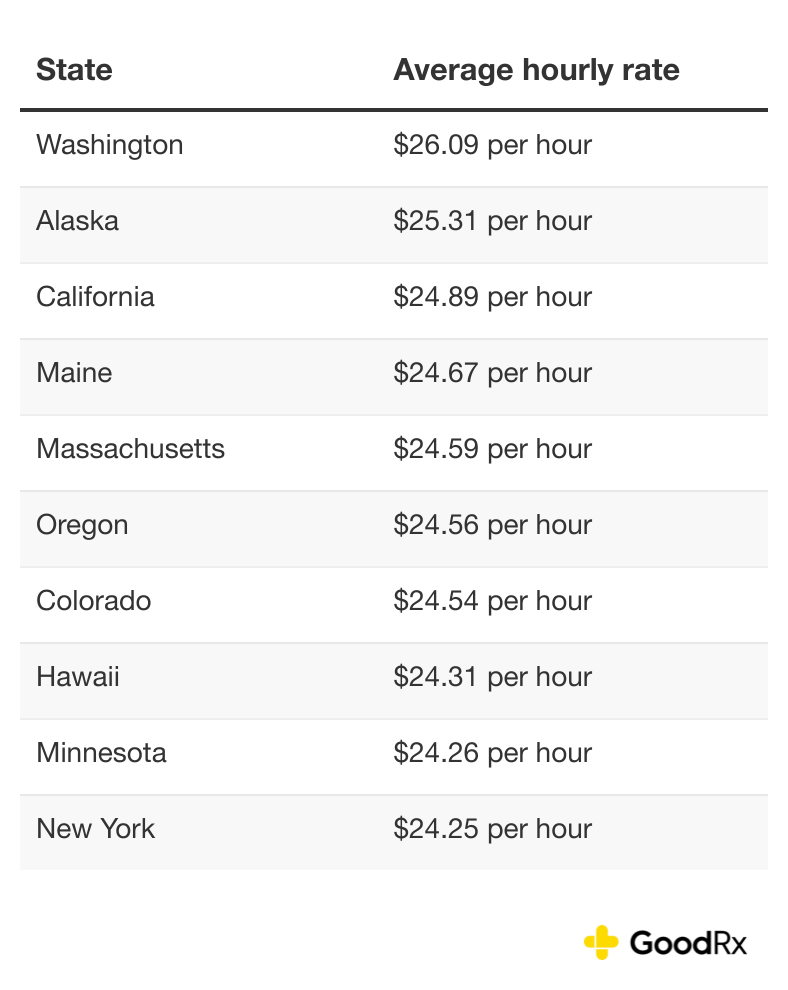
But these are general family caregiver rates and aren鈥檛 specific to Medicaid. Actual pay may be different depending on your state鈥檚 Medicaid program, cost of living, and level of care needed.
Who is eligible for Medicaid family caregivers?
To qualify, both the person receiving care and the caregiver must . Eligibility rules vary by state, but most states follow the same basic guidelines.
Eligibility requirements for the care recipient
The must:
- Receive Medicaid benefits
- Need help with ADLs and IADLs
- Meet their state鈥檚 criteria (people of any age generally qualify, as long as they have a , a chronic condition, or another health challenge that requires help with daily activities)
- Register with their state鈥檚 caregiver service (for example, in New York, people in the Consumer Directed Personal Assistance Program with a third-party service)
For the family caregiver
To qualify for payment, family caregivers may need to:
- Meet relationship requirements. Many states who are considered 鈥渓egally responsible鈥� for the person needing care. In Idaho, for example, can鈥檛 be paid caregivers for certain types of care.
- Pass background checks. For instance, in Washington state, a family caregiver must clear .
- Enroll in the state鈥檚 program as a care provider. In Michigan, for example, caregivers must provider enrollment application to join the state鈥檚 Home Help Program.
- Complete special training classes, depending on the state.
- Follow living arrangements rules. Some programs require the caregiver and care recipient to .
to see its eligibility rules.
Which Medicaid programs are used to pay caregivers?
States use different Medicaid programs to pay caregivers. Most programs let the person receiving care choose their own caregiver, which can be a relative. This is known as .
These programs are generally offered in two ways. Some are part of the regular Medicaid state plan. Others are waiver programs that allow states to provide services that aren鈥檛 included in Medicaid.
Here are some common Medicaid programs that pay family caregivers.
Home and community-based services (HCBS)
HCBS is . It鈥檚 available to anyone who qualifies for Medicaid and meets the care needs set by the state.
Under HCBS, the state creates a care plan for each recipient and may give them a budget to hire the caregiver they want.
Community First Choice (CFC)
CFC is a state plan option for people who need a high level of care but want to stay at home. It , like bathing, dressing, and eating.
If the state allows it, the person receiving care can choose a family member to provide these services.
Self-directed personal assistance services (PAS)
PAS can be offered through both regular state Medicaid and waiver programs. This program gives people more control over their care decisions.
Care recipients get a budget to buy supplies or . Recipients decide what training their caregiver needs and how much to pay them.
HCBS waivers
HCBS waiver programs stay at home. States decide who qualifies for these programs. For example, some waivers are for older adults only, while others are for people with specific diagnoses, like or .
HCBS waivers cover services like personal care, homemaker services, and adult day care. Many let the person receiving care choose their caregiver.
Structured family caregiving
Structured family caregiving is a waiver program that pays family members to provide 24-hour care and supervision at home. In states where it鈥檚 offered, the .
Caregivers receive training and support to help with caregiving tasks. The program also includes .
Paid family caregiver programs go by different names depending on the state. Every state offers to pay family caregivers, though most states use waiver programs.
Because states decide how many people can participate in waiver programs, availability is limited. When programs are full, new applicants may be placed on a waitlist.
To find out which waiver programs are available, . You can also contact your Medicaid office or .
What is foster care for adults?
Adult foster care is a for people who need help with daily tasks but not full-time medical care. It鈥檚 often used by older adults or those with disabilities who want to live in a family-style home instead of a facility.
Care is usually provided in the caregiver鈥檚 home, with 24-hour supervision and help with ADLs and IADLs. This setup differs from regular family caregiving, in which care happens in the recipient鈥檚 home.
Each . States decide who qualifies and how homes operate. Some states allow family members to be paid caregivers for relatives in adult foster programs. The number of residents per home is often limited to five or fewer. Medicaid may help pay for foster care for adults but doesn鈥檛 cover rent or meals.
The bottom line
All states and the District of Columbia have at least one Medicaid program that pays family caregivers. But the rules and pay rates vary by state. To qualify, the care recipient must receive Medicaid benefits and require help with daily activities. The family caregiver must enroll as a care provider and may require a certification.
States typically use Medicaid state plans or waiver programs to pay family caregivers, but waiver programs often have waiting lists.
was produced by and reviewed and distributed by 麻豆原创.