Newsom expanded free preschool. Now private daycares can’t afford to stay open
There were once so many children at Frisha Moore’s Elk Grove preschool that families filled up the waitlist. Now, one of her playgrounds and two classrooms sit empty because one key group of kids has stopped coming.
Dozens of families in recent years have opted not to enroll their 4-year-olds at Moore Learning Preschool & Childcare Center, she said. Instead, they’re putting their children in transitional kindergarten, California’s new public prekindergarten grade.
Even though she provides a full day of preschool, compared with transitional kindergarten that lasts only about 3.5 hours, Moore can’t compete: Public school is free. She hasn’t broken even in months and thinks about closing the preschool “every single day.” That would remove 91 licensed child care spots from the county, including 20 for children under age 2, for whom child care options are particularly scarce.
Transitional kindergarten’s expansion is one of Gov. Gavin Newsom’s signature educational achievements and a key part of his legacy on how California cares for its youngest residents.
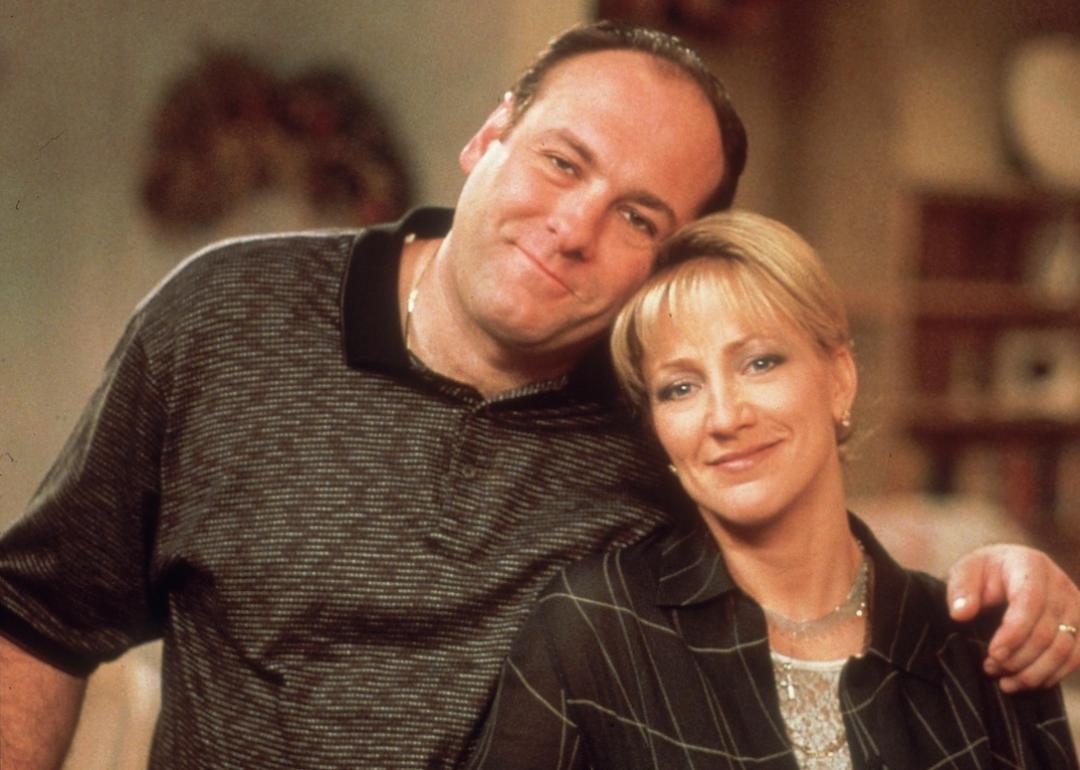
Early childhood advocates were delighted when he was sworn into office seven years ago, his arms around his . The first governor in decades to hold the office , he had promised to achieve universal preschool — publicly funded preschool for all families who want to enroll — and expand access to child care for working parents.
As he prepares to leave office, he is sure to tout those accomplishments. During his to lawmakers in January, he boasted of “the most significant expansion of child care in America.”
“It should be better known,” he told MS Now last month. “It’s not.”
Many advocates say his legacy on child care includes some unfulfilled promises, though the expansions have been substantial. Newsom has nearly tripled funding for subsidized child care and early childhood programs, including state-subsidized preschools and transitional kindergarten, from more than $5 billion in 2020 to .
His administration has funded 130,000 new subsidized child care spaces for low-income families and allowed private, in-home child care providers that receive the subsidies to unionize, which has led to health care and retirement funds for a low-wage, overwhelmingly female workforce.
No move has been more significant than the expansion of a free, public prekindergarten grade for all families regardless of income. The grade was available for a limited number of children for about a decade before Newsom’s administration began expanding it to all 4-year-olds four years ago. This school year, it was to all children who turned 4 by September.
Despite rocky rollouts in some school districts, parents who have enrolled their children in transitional kindergarten say it’s saved them a year of child care costs — from for that age — while better preparing kids for school and even allowing some students to be screened for special education services a year earlier. spoke with a dozen parents around the state who said the program was a positive experience for their 4-year-olds.
Melissa Chen and her husband, of San Jose, were paying $1,800 a month to send their son to day care, where she said he struggled to get along with others and hated naptime. Now her 4-year-old is making friends and thriving with an attentive teacher in the Berryessa Union School District, she said. They still pay for an after-school care program on campus, but it’s only about a third of the cost of private preschool.
“If anyone doubted that the state was going to be able to stand up an entire [traditional kindergarten] program in five years, you would never know it from how smoothly it’s gone for us this year,” Chen, an attorney, said.
But the rollout has also come with unintended consequences and destabilized the child care sector, which could make care harder to find for younger children.
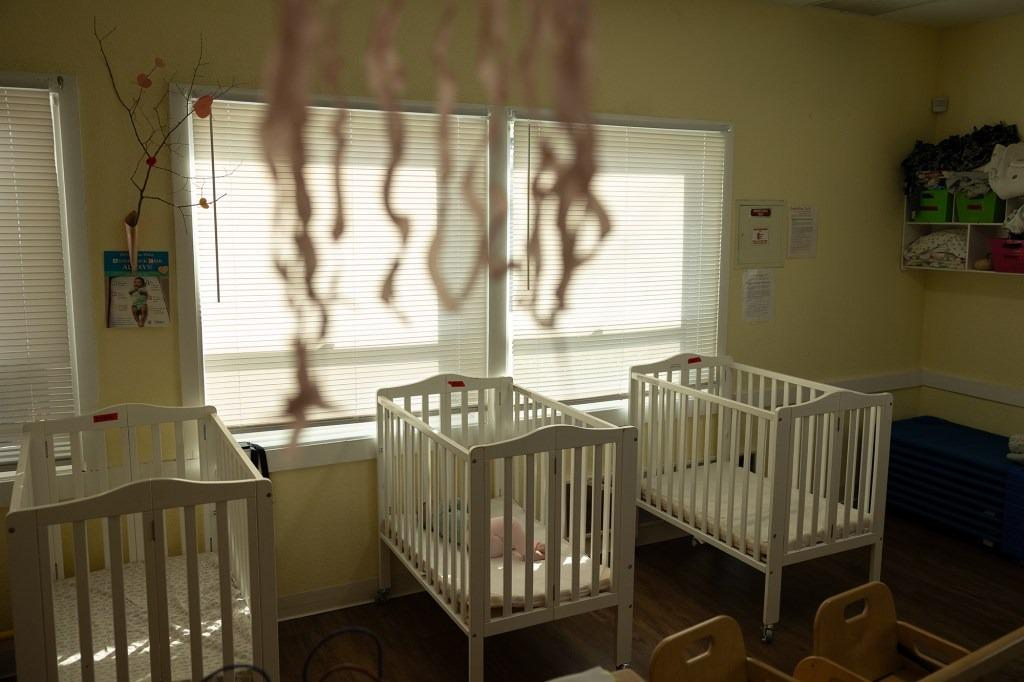
In Los Angeles County, a December found 167 preschools closed between 2020 and 2024 — a decline in child care spots that researchers attributed partly to the addition of the public school grade.
Private providers like Moore’s preschool operate with strict regulations and thin margins. The enrollment of 4-year-olds, who need less hands-on care, typically helps cover the higher labor costs of caring for infants, so shifting solely to serving younger children doesn’t always pencil out financially.
Whether Newsom can achieve his ambitious child care goals depends in part on whether people like Moore can afford to stay open.
“He’s done a hell of a lot” to allow more kids to get cheaper early childhood care, said Bruce Fuller, the Berkeley sociologist who authored the LA County report. “He’s also expanded a lot of pieces to the puzzle, without solving the puzzle.”
A patchwork of options
The U.S. has long lagged far behind other developed nations in public funding for child care and early childhood education.
But the benefits of preschool are well documented, both developmentally for children and . As middle-income families consider leaving California over crushing costs, making it easier to raise kids in a state with a declining child population is savvy politics, too.
Newsom prioritized child care early in his first term, appointing a cabinet member to work on the issue and commissioning a master plan, which recommended universal preschool for 4-year-olds and for income-eligible 3-year-olds.
“It was the first time we really had a governor coming into office that prioritized our issues,” said Donna Sneeringer, president of the in Los Angeles County, a nonprofit that helps families find child care. The center also runs its own preschools, some of them state-subsidized, and maintains a waitlist for low-income families waiting for subsidized care.
Unless they pay for preschool out-of-pocket, a cost that can easily surpass rent or a mortgage payment, working parents looking for child care face a patchwork of options. Low-income families can qualify for subsidized slots at state-contracted child care centers or receive vouchers for private preschool or child care providers. The state also funds preschool centers for kids from low- to middle-income families; federal funds pay for separate Head Start programs that are also income-restricted.
To achieve universal preschool, Newsom boosted some of those programs and more:
- He committed billions of dollars to permanently expanding transitional kindergarten.
- By enrolling more 4-year-olds in public schools, the administration hoped to free up spots for 3-year-olds in other preschools. It spent hundreds of millions of dollars to expand access to state-funded preschools and increased payments for 3-year-olds in that program to create an incentive for centers to enroll them.
- To give parents more child care options, the state has also added about 130,000 subsidized child-care spaces, both in contracted centers and in the form of vouchers, for low-income families with children of any age. That is still short of the 200,000 Newsom promised. Most vouchers go toward paying licensed family child care providers who care for children in their homes and often offer more flexible hours.
Other states have taken a different approach.
In Colorado, all children, regardless of family income, are eligible for at least 15 hours a week of free preschool the year before kindergarten; they can use it in a public school or at a preschool, day care center, or other provider. Vermont and Georgia similarly allow families to choose between local schools and private centers.
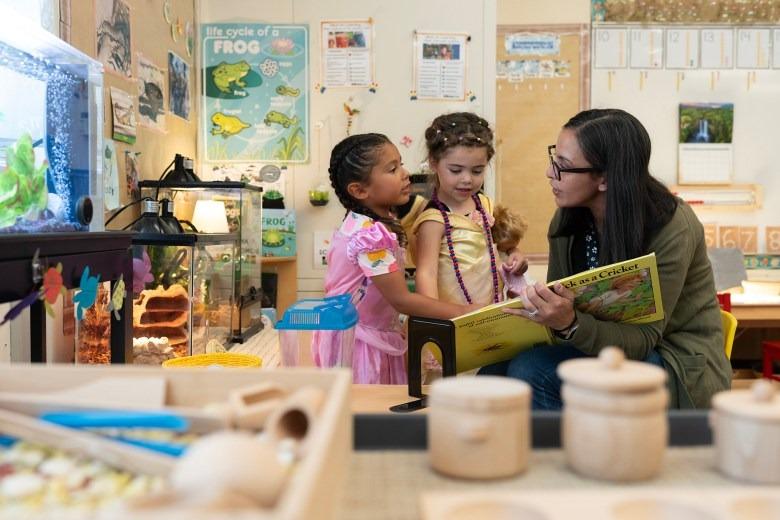
By contrast, California expanded only transitional kindergarten as the free option for all, while the other public options remain limited, both by family income and the number of slots available. In Los Angeles County alone, more than 20,000 families are eligible for subsidized care but haven’t gotten a spot yet, Sneeringer said. And those subsidies usually don’t fully cover costs, making it hard to stay afloat, providers say.
Placing the biggest expansion in public schools was a boon to school districts and the state’s powerful teachers’ unions: It boosted public school enrollment in a time of declining birth rates, leading to increased funding. And with record state budget surpluses during the COVID-19 pandemic, California was able to do it without touching other school funding. The ongoing cost of transitional kindergarten is about $3 billion a year; the state has also put $1 billion toward implementing the new program, including building improvements to accommodate younger kids.
Jessica Holmes, education program budget manager at the Department of Finance, said that approach was the only way to guarantee there would be spots for 4-year-olds statewide, even in areas where private child care providers are scarce.
“One structure that is consistent across the state is the school system,” she said. “Even in the most rural areas, we have schools.”
Holmes spoke on behalf of Newsom’s administration; a spokesperson for the governor declined to make him available for an interview.
Erika Jones, secretary-treasurer of the California Teachers Association, said it has helped families be part of local school communities earlier.
“Public schools are a beacon in the community, you build lasting friendships,” she said. “To start that and have that process from the beginning makes the most sense.”
But critics say the expansion doesn’t give parents enough options.
Middle- and upper-income families who were paying full fees had the most incentive to switch from private preschools to free transitional kindergarten, if it worked for their schedules. Middle- and lower-income families who get off the waitlist for a subsidized spot have more options, while tens of thousands of families remain on waitlists.
The public grade “is an incredible opportunity for many kids to have access to a preschool education,” Sneeringer said. “It doesn’t work for every family.”
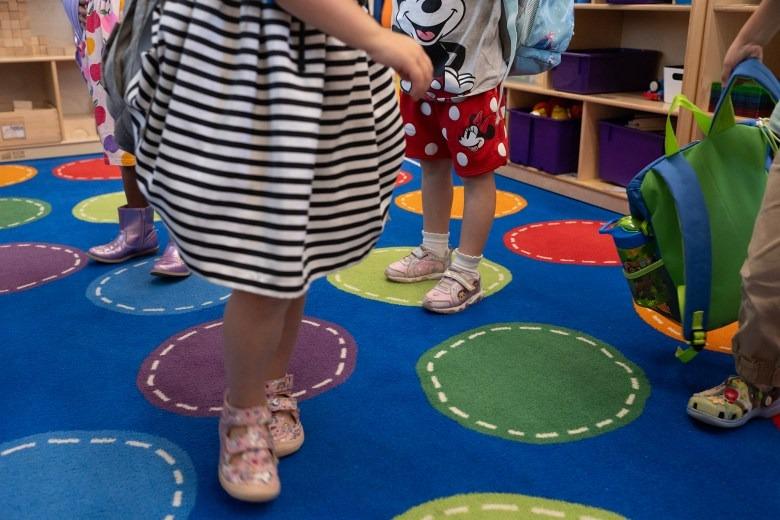
Many working families need alternative hours that only private child care providers can offer. School districts are required to give any enrolling 4-year-old a spot in transitional kindergarten, but not necessarily at the child’s nearest elementary school if there isn’t enough space, so some parents have been offered seats at schools that are too far. Four-year-olds vary widely in how ready they are for a school setting; some aren’t potty-trained or still need naps.
And though the state has also paid to expand free or low-cost after-school care, school districts vary in how they provide it. Some parents couldn’t enroll their students in transitional kindergarten because they couldn’t get a limited after-care spot.
Nearly 180,000 children statewide were enrolled in transitional kindergarten last school year. The Berkeley report on LA County found affluent families may be benefiting the most. From 2021 to 2024, enrollment growth in the county’s wealthiest areas was triple that in the poorest.
Private preschools forced to close
Holmes disputed the study’s conclusion that transitional kindergarten was contributing to private preschool closures, noting that it could have been driven by declining birth rates, too. And she said parents in income-restricted programs can choose between transitional kindergarten and certain subsidized providers.
One parent who has benefited from having options is Brittany Jackson, whose 3-year-old son attends preschool at Moore’s center in Elk Grove.
Jackson, a single mom who works an administrative job, was reluctant to enroll him in transitional kindergarten later this year. She worried it’s too early for her son to leave a play-based preschool for more formal schooling, and didn’t want to worry about finding after-school care. Because she receives a state-funded voucher that covers most of her son’s preschool fees, she can afford to keep her son with Moore for one more year.
“The way they speak and handle situations when things come up, it’s very much in alignment with how I parent,” she said.
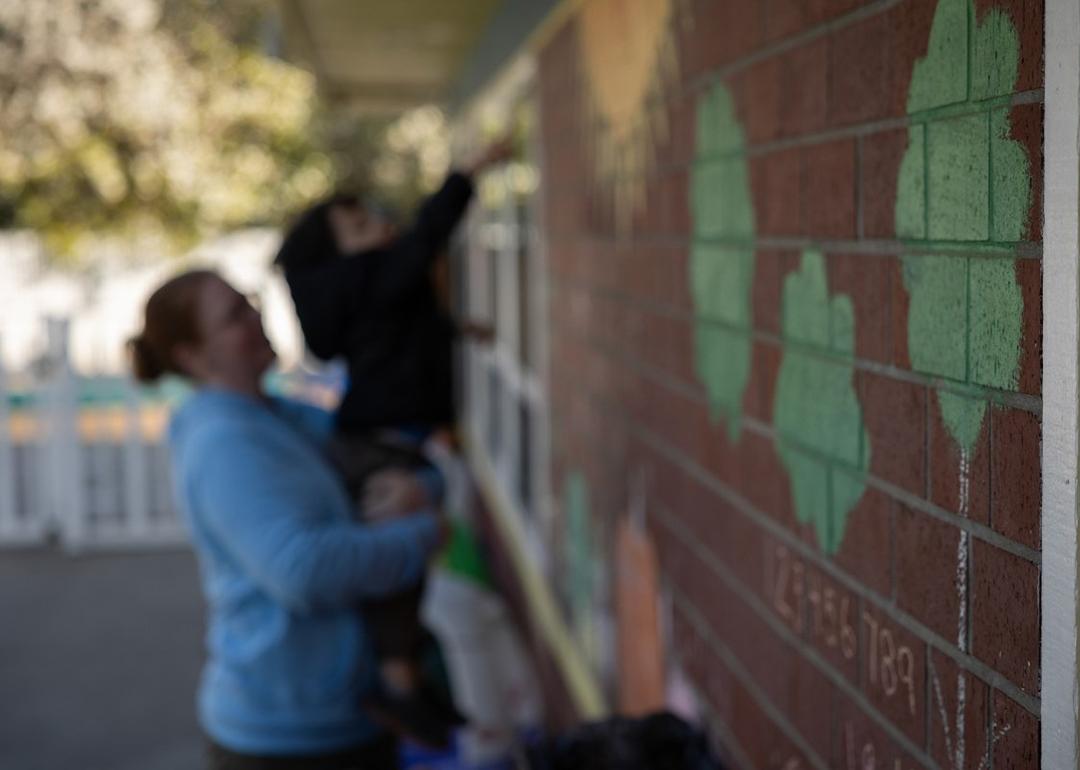
On a recent Friday morning, Jackson’s son, sporting a Spider-Man sweatshirt, picked flowers with a friend in one of Moore’s playgrounds. Their classmates whirled around them on tricycles, tinsel streaking their hair. After playtime, they gathered inside around teacher Kara Hannigan, who read from a picture book and prompted the children to act out each page with dramatic flair.
Moore started the center in 2017, when her own children were young. Her whole family chipped in to outfit the playgrounds and paint brightly colored illustrations on the walls.
Most of the families there are low-income and pay with vouchers, but state reimbursement rates don’t cover all the costs of running the place. She’s reluctant to raise fees on families who can barely afford it, and has instead cut staff, combining 3- and 4-year-olds into one class so she could still fulfill state-mandated adult-to-children ratios. The center is about 40% full. With small business loans unpaid, she can’t even afford to close.
Besides, she said, “this is like my second child.”
Patricia Lozano, director of Early Edge California, an advocate for transitional kindergarten, acknowledged the state must do more to ensure abundant options for all parents and keep private centers like Moore’s open to serve younger children.
One idea is to require school districts to partner with private centers to offer child care outside of transitional kindergarten hours, which some school districts already do. She and other advocates are also pushing Newsom to honor his commitment to fund more vouchers.
Any such proposal would come too late for Shilpa Panech, who owned a preschool for 13 years in San Ramon, caring for children between the ages of 6 months and 6 years.
Panech supported Newsom’s promises of universal preschool. She thought it would look the way it does in other states, where families could choose a free program at school or at her center.
Instead, Panech watched the enrollment of 4-year-olds at her once-full preschool dwindle from 24 to one. She considered expanding infant care but found the staffing costs and licensing requirements prohibitively expensive. Her family was draining its savings and accumulating debt to make payroll.
Last month, she helped the 30 remaining enrolled families find other day cares, and closed the doors on Panache Enfants. It eliminated 72 licensed child care spots from Contra Costa County.
“Nobody gets into this industry necessarily to make money,” she said, tearing up. “We’re in it because we love the kids and their families.”
By then, Panech had also started a second career teaching elementary school, and had the unique view of watching things unfold simultaneously in local public schools. The transitional kindergarten classes and after-care programs she saw, she said, were “fantastic.”
“I think this was wonderful,” she said. “I think this is something our country needs, our state needs. It’s important for families to be able to afford child care and to be able to go out and work. For private providers, I wish it would have been more gradual. I wish there would have been more opportunities.”
was produced by and reviewed and distributed by Â鶹ԭ´´.