was produced by and reviewed and distributed by 麻豆原创.
8 expert weight loss tips for women over 40
As you approach middle age, you may notice that it's getting harder to zip up your jeans and your clothes are feeling a little too tight, especially around your belly. Unfortunately, this is normal. that women gain an average of 1.5 pounds per year during the menopause transition, largely due to a decline in estrogen levels.
Decreasing estrogen levels , typically moving away from the hips and thighs to accumulate around the abdomen, Christine Maren, D.O., a board-certified physician who specializes in women's health and hormones, tells .
"Estrogen also plays a crucial role in blood sugar regulation, so as it declines, we often become more insulin-resistant. Changes in hormones can also impact , which affects and can make it harder to lose or maintain weight."
Lifestyle plays a big role too. "Women over the age of 40 tend to exercise less consistently, suffer from poor sleep, and have elevated stress levels鈥攊t's a time in many women's lives where they are prioritizing others," says Marjorie Nolan Cohn, M.S., R.D., registered dietitian and clinical director of Berry Street.
While your changing reflection may be what's motivating you to research weight loss for women over 40, there are health implications beyond aesthetics. Excess weight in the abdomen, sometimes known as , is an indicator of deeper metabolic issues and comes with health risks, like increased risk for , insulin resistance, type 2 diabetes, hormone-related cancers, , sleep apnea, and , adds Maren.
Even though is common, it's not inevitable, and experts say shedding pounds is possible with a few smart diet and lifestyle tweaks.
1. Cut Back Calories
Estrogen plays a significant role in regulating your , or BMR, or the number of calories you burn at rest. As estrogen levels go down in your 40s (and beyond), your BMR goes down with it.
Because BMR accounts for of your daily calorie burn, as it drops you need fewer calories. that during perimenopause, your BMR goes down by up to 250 to 300 calories per day. Meaning: If you don't cut back on calories, you gain a little under five pounds per year.
You don't have to swear off all the foods you love. Reducing portion sizes and choosing low-calorie, nutrient-dense foods most of the time goes a long way.
One way to cut back? . In a 2022 study in , researchers found that an 8-week intermittent fasting plan helped obese pre- and post-menopausal women lose six to nine pounds.
2. Eat Well
You've likely heard the phrase "a calorie is a calorie," which implies that it doesn't matter where calories come from, as long as you're staying within recommended ranges. But this is antiquated advice, and research shows since different types of foods are metabolized differently.
is especially helpful for weight loss after 40, says Maren. "Many women I work with in their 40s and 50s are under-eating protein and restricting calories. Our body hears: Resources are scarce, hold onto fat for survival." You also need protein to maintain , which declines by 3 to 8 percent every decade after the age of 30.
Aim for 0.8 to one gram of protein per pound of ideal body weight, spread across three substantial meals, says Maren.
As for other , it depends on your situation. "Active women with good muscle mass often need more healthy, . If there's insulin resistance (which is carbohydrate intolerance), you might rely more on healthy fats for energy," she says.
Some other :
- Focus on whole, nutrient-dense foods like vegetables, lean meats, eggs, whole grains, legumes, nuts, and seeds, which fill you up with fewer calories.
- Cook at home, where you can control ingredients and portions.
- Avoid 鈥攖hey're engineered to make you eat more, says Maren.
- Eat regularly to keep your blood sugar stable.
3. Reduce Sugar and Alcohol
Sugar and alcohol are both calorie-dense but nutritionally void. This alone can lead to weight gain. But it's not just about the calories. Sugar and can also disrupt sleep and exacerbate stress and , leading to a negative cycle that makes it difficult to lose weight.
In a 2024 study in , researchers also reported that a higher added sugar intake was associated with an older in mid-life women. In other words, sugar may increase the rate at which your . Alcohol also contributes to metabolic issues.
The goal isn't perfection鈥攅njoying or sugar is fine as long as you eat healthy, most of the time.
4. Get Enough Sleep
Poor sleep is a dealbreaker for weight loss, but women in perimenopause often struggle with due to declining hormone levels. To get as many hours of uninterrupted, restorative sleep as possible, Cohen recommends practicing good :
- Turn off electronic devices at least 30 minutes before bed
- Reduce caffeine and
- Practice relaxing activities, like yoga or meditation, before bedtime
- Get blackout curtains
- Use earplugs or a white noise machine to block out ambient noise
- Set a sleep schedule鈥攚ake up and go to bed at the same time every day, even on the weekends
Depending on the individual, Maren says supplements like melatonin or might also help.
5. Exercise
Instead of only prioritizing weight loss, Maren says your mid-life era is about focusing on . "This means gaining muscle while losing fat, rather than just seeing the number on the scale go down," she says.
Women start to lose lean muscle at the age of 30. This can contribute to weight gain since muscle tissue is metabolically active and helps burn calories even at rest. can significantly slow your metabolism, or BMR, according to Maren.
Strength training is crucial at this life stage, and Maren recommends three to five heavy sessions per week. "While you burn fewer calories lifting weights than doing cardio, you'll build muscle that makes your body more and regulating blood sugar 24/7," she says.
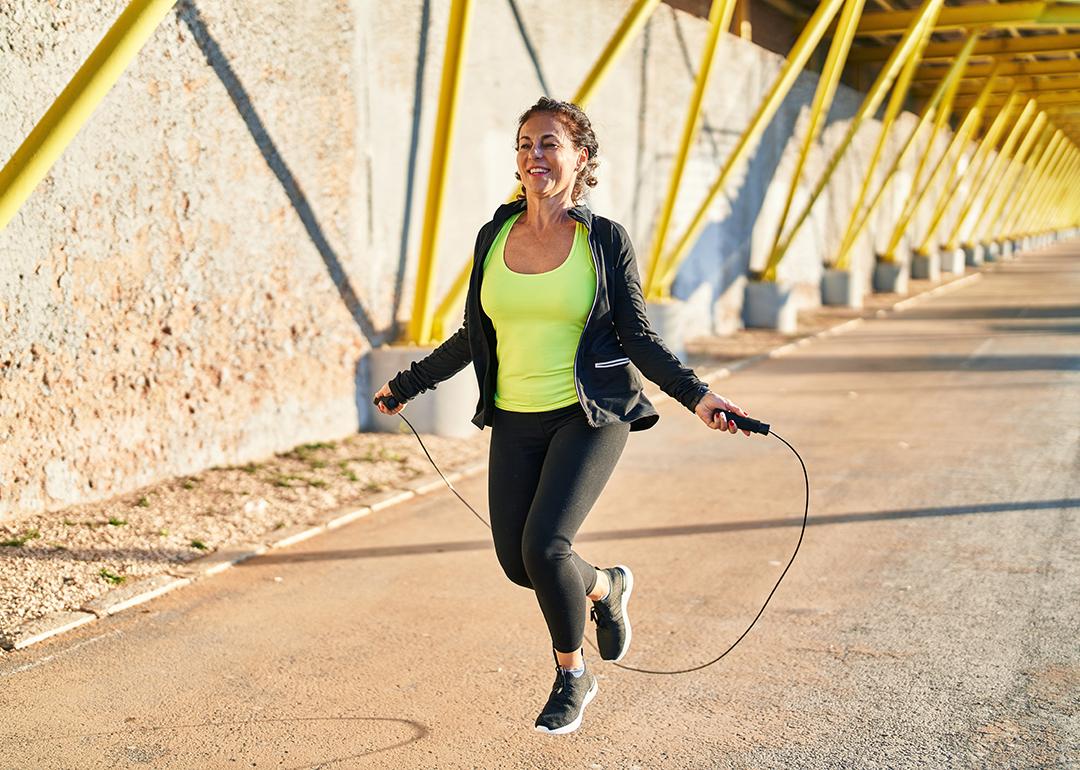
Complement resistance training with short , which increases your calorie deficit. Aim for at least 150 minutes of moderate-intensity activity per week.
In addition to structured workouts, like taking the stairs instead of the elevator or parking far from store entrances can have compounding effects that make a big difference in your weight.
6. Manage Stress
As you age, your body becomes less resilient to stress. That's a problem because stress causes chronically , an adrenal hormone that can make it harder to lose weight. "High cortisol levels increase appetite and cravings, especially for high-calorie foods rich in sugar and fat. It also promotes fat storage, particularly around the abdomen, reduces insulin sensitivity, and disrupts sleep," says Maren.
To control stress, Maren recommends focusing on like meditation and deep breathing.
Keep in mind that . For example, intense exercise is also considered a stressor. If your body is already in a chronically stressed state, it may make more sense to try lower-intensity workouts like or steady-state cardio and resistance training over high-intensity cardio circuits.
Other stress-relieving techniques to try:
- Listen to calming music
- Engage in a fun hobby
- Make an effort to spend time with family and friends
- Avoid work and business communication outside of your working hours
- Get regular massages
- Practice progressive muscle relaxation
7. Hydrate
improves energy levels, enhances your workouts, and even helps with honoring your hunger and fullness cues, says Cohn. Sometimes, you may get what you think is a hunger signal, but it's dehydration.
As you age, you might have to be a little more intentional with your fluid intake since hormonal changes can decrease your thirst, prompting you to drink less.
Maren recommends drinking the equivalent of half your body weight in ounces of water daily, ideally between meals. That means if you weigh 180 pounds, you'll want to drink 90 ounces of water.
Drink clean, filtered water rather than tap. Endocrine-disrupting chemicals, like PFAS, found in tap water can further exacerbate hormone changes and even speed up the .
While electrolytes can be helpful, Maren says they're not essential. If you want to try an electrolyte powder, stick to one that doesn't contain any sugar, artificial sweeteners, or flavors such as the unflavored LMNT.
8. Improve Gut Health
Gut health becomes especially important during perimenopause as hormone changes can negatively affect your microbiome. Recent research suggests your , including your ability to lose weight.
Focus on as a starting point, says Maren. Fiber is fermented by gut bacteria, creating byproducts called short-chain fatty acids (SCFAs) that positively alter your gut microbiome and can help with weight management and insulin control.
Maren also suggests considering digestive enzymes, as enzyme production often declines with age. Digestive enzymes help break food down into smaller, absorbable compounds, which can lead to improved digestion and less gas and bloating. (Of course, any underlying should be addressed with a practitioner.)
Fortunately, many lifestyle changes that help manage weight, like , managing stress, getting better sleep, and staying hydrated, also contribute to a . You may also want to try:
- Taking probiotics
- Eating more prebiotic-rich foods, like garlic, leeks, onions, Jerusalem artichokes, and bananas, which feed the good bacteria in your gut
- Consuming a wide variety of plant-based foods
- Limiting processed foods