A closer look at the rise in jewelry spending led by middle-aged consumers
This story originally appeared on Jewel360 and was produced and distributed in partnership with 麻豆原创 Studio.
A closer look at the rise in jewelry spending led by middle-aged consumers
The COVID-19 pandemic hurt many industries, but one category shined: jewelry.
Overall jewelry sales increased nearly 38% in 2021 to $94.2 billion, according to the . Consumers nearly doubled their spending, laying out an average of $136.33 on jewelry in 2021, compared to $65.04 in 2020, the Bureau of Labor Statistics reported.
Using , analyzed the jump in average U.S. consumer spending on jewelry in 2021, largely driven by middle-aged adults. Expenditures were converted to 2021 dollars using annual average CPI values.
After a year of lockdowns, travel restrictions, and COVID-19 stimulus payments, consumers saw the allure of fine jewelry. A 2021 survey by industry group found 39% of respondents bought more jewelry because they were at home more. Giving gifts of fine jewelry replaced marking special occasions with experiences, and people became more interested in jewelry's longevity and legacy potential.
The work-from-home trend also inspired jewelry purchases. The Plumb Club's survey found 41% of respondents wanted jewelry they could show off on video calls.
As couples resumed having weddings, jewelry purchases increased. In 2020, the to 1.27 million, according to The Wedding Report. Recovery began in 2021, with 1.93 million weddings as couples who postponed their celebrations rescheduled them.
While some of this spending growth is inflationary, the jewelry category experienced lower inflation rates than other consumer categories. In 2021, jewelry's 9% inflation rate was lower than other consumer categories like gas (50%), meat (15%), furniture (14%), and new vehicles (12%), according to the.
One element keeping jewelry prices in check was the price of gold. for the year, per the World Gold Council, even with . Diamonds were also sought after. Industry analyst Edahn Golan reported that prices from the lowest bottom point in July 2020.
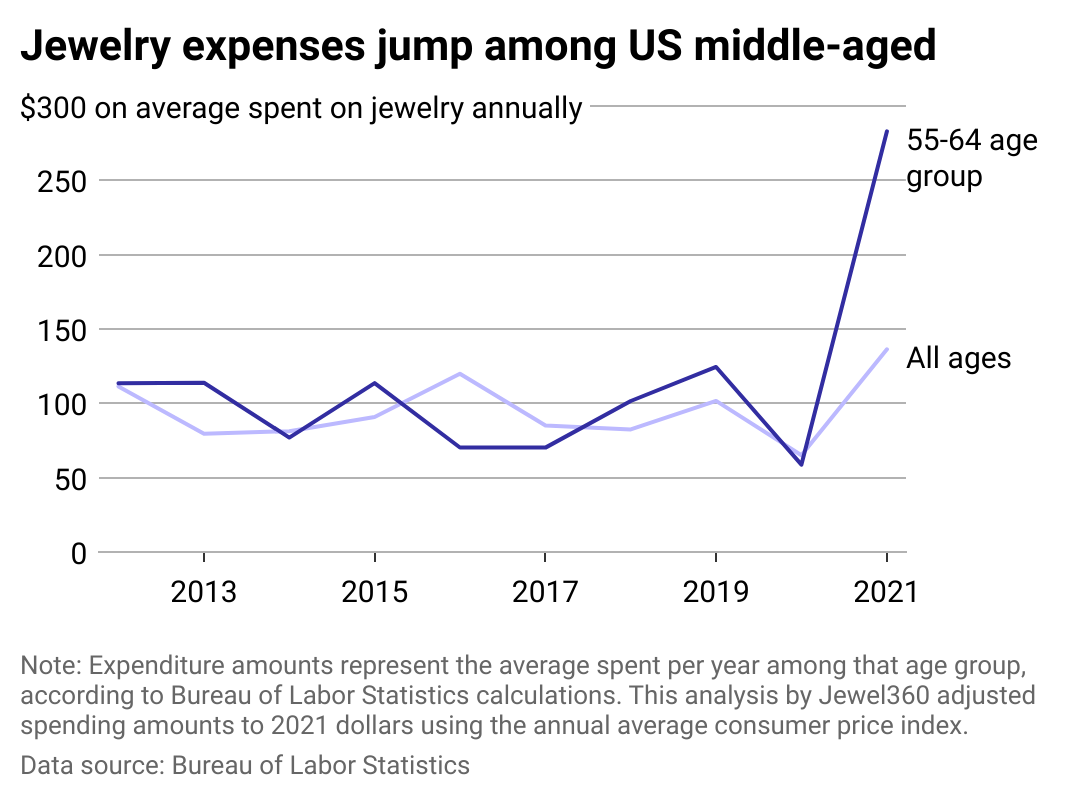
After dipping amid the pandemic, jewelry sales spiked鈥攅specially among middle-aged Americans
Historically, middle-aged people typically 鈥擡dahn Golan suggests this can be attributed to the fact they're generally at the height of their earning power.
Those with pre-tax incomes of $200,000 or more didn't feel as many economic effects from the pandemic, and they spent the most on jewelry, dropping an average of $4,153 per household in 2021, according to BLS' Consumer Expenditure Survey.
For some, jewelry purchases made during and following the peak of the COVID-19 pandemic may have served as a way to comfort themselves. Edahn Golan noted a trend in increased in the years after 9/11 and the 2008 economic crisis. Sales since the pandemic have also .
Story editing by Jeff Inglis. Copy editing by Kristen Wegrzyn.