How a gang tattoo removal program is helping people start fresh
How a gang tattoo removal program is helping people start fresh
When people walk into the Clean Slate tattoo removal clinic at the University of California San Diego, they carry more than just ink on their skin. Many are justice-impacted adults — people with histories of incarceration, probation, or parole — trying to shed a visible reminder of a past they’ve already worked hard to leave behind.
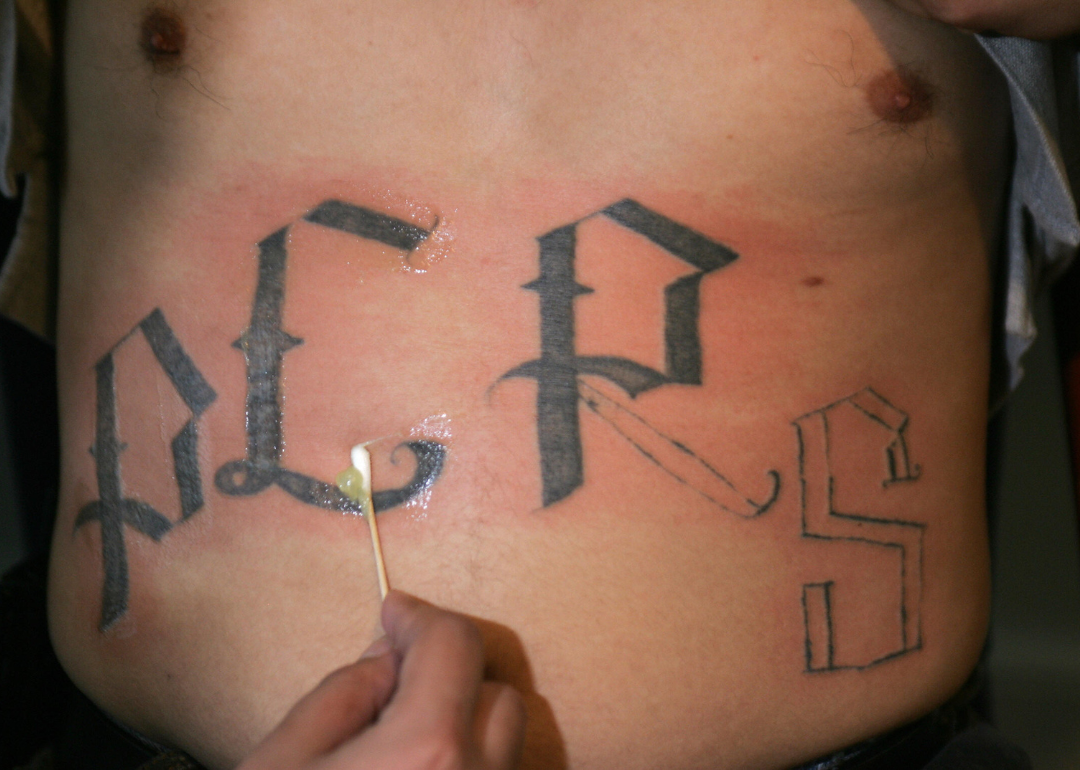
Some arrive with gang tattoos on their faces or hands that expose them to violence. Others want to swap a back-of-the-house job for a promotion that puts them in front of clients. Still others simply want their outer self to reflect the transformation they’ve made in their lives.
For the past decade, has helped them do just that. One laser pulse at a time. tells the story of how the organization started and how it positively impacts the lives of its clients.
The idea for Clean Slate began not in California, but across the border in Mexico. Victoria Ojeda, professor at UC San Diego’s School of Public Health and Human Longevity Science, launched a small pilot in Tijuana around 2011. At the time, tattoo culture in Mexico was more conservative than it is today.
“The goal there was to test: Does providing tattoo removal for [the migrant community there] help increase employment, decrease police contact, reduce stigma?” says Ojeda. “We saw some success — the promise of employment and reduced stigma. Those were really great indicators.”
There’s always something distinct about a prison tattoo or a gang tattoo compared to something you might get out in the community, explains Ojeda, although she adds that even tattoos that aren’t technically gang-related could be misread, bringing unwanted scrutiny.
The pilot was short-term but promising. Colleagues on the U.S. side quickly took notice. “They said, ‘Wow, it would be amazing if you can bring this to San Diego because there’s a big need,’” Ojeda remembers. “Although tattoos have become more normalized, folks who have what are considered anti-social images or text marked on their bodies are not always viewed positively. Couple this stigma with an individual who is released from jail or related to a gang, and you have a negative perception that may create problems for persons who are re-entering society.”
That need was underscored when she discovered that San Diego residents were driving three hours north to Los Angeles, waiting months or years to access tattoo removal services at , the largest gang rehabilitation and reentry program in the country, founded by Father Gregory Boyle. Homeboy runs one of the busiest free tattoo removal clinics in the world, removing more than 50,000 tattoos each year.
“The question was, why don’t we have this in our community? People should not have to leave and drive three hours,” Ojeda says.
By 2016, Clean Slate opened in San Diego, drawing on lessons from both the Tijuana pilot and Homeboy Industries.
Unlike commercial tattoo parlors, Clean Slate is not open to the general public. Instead, it specifically serves anyone over 18 with a history of incarceration, probation, or parole. Most clients are referred by probation or parole officers, though self-referrals are also accepted.
The clinic runs once a month on Saturdays to accommodate participants’ busy lives. “Knowing that people are struggling hard to meet court requirements, probation requirements, and then work or go to school, we couldn’t just say, ‘Our clinic is only on a Friday during the day,’” Ojeda explains.
The work is painstaking. A small, inch-wide tattoo might take a few removal sessions. A full sleeve can take years. Some clients have been returning monthly for three years or more.
Adding to the challenge is the fact that Clean Slate currently operates with only one functioning laser, paid for with California state funding. “That really limits our ability to treat more people,” Ojeda says. The waiting list hovers around 30 clients but to add another professional laser machine would cost about $200,000.
Despite the bottleneck, the clinic serves more than 50 unique clients per year. That’s modest compared to Homeboy’s volume, but Ojeda emphasizes one advantage: sustainability.
“We’ve never had the program funded. It’s always been on a volunteer basis,” she explains. “What enables that sustainability is our medical school. We have a residency training program in dermatology, so even if I don’t have funding, we have a perpetual stream of collaborators.”
As a result, Clean Slate is more than a community service. It’s also a training ground for dermatology residents and medical students.
Since 2023, every session includes a supervising faculty dermatologist, residents who operate the laser and medical students who help with intake, education and follow-up. how to build rapport, explain procedures and counsel patients about aftercare.
“What’s really nice for them is to see the process of the fading process, how the treatment evolves over time,” Ojeda says. “Many of the students have their eyes set on dermatology. So this is going to make them more competitive for a residency.”
But Ojeda stresses the deeper value: “One of the things we were trying to do is to really normalize this patient population to our providers, so they understand the context of people’s lives. Some of them have expressed interest in starting similar programs after residency.”
Ann Nguyen, a third-year medical student who has been volunteering with Clean Slate since 2023, emphasizes the importance of “giving people a second chance. Dermatology is not only a cosmetic specialty, but skin issues are the first thing people notice in themselves and others.”
For clients, the benefits are profound, though not always immediately visible. Tattoo removal is slow and sometimes incomplete. But UC San Diego surveys show consistent improvements in confidence, self-image and employability.
“Once they start this tattoo removal process, it changes their own perspective on themselves, giving them confidence and self-esteem,” Ojeda says. “Many say they’re aligning their outer self with their inner self. They’ve made a lot of transformation, and now their external is matching all of that change.”
Nguyen often thinks of one of her first clients, a man with facial tattoos. “He felt people were judging him and he wasn’t able to get good jobs.” After attending the clinic over two years, he was promoted and “felt more comfortable going outside and being around people,” Nguyen says. She hopes to do similar work in her professional future, “using dermatology for a community we don’t always think of.”
At a commercial clinic, tattoo removal can cost upwards of $100 per square inch. For a sleeve or a chest tattoo, the price runs into the thousands, which is well out of reach for most of Clean Slate’s clients, who are often juggling rent, car payments, and family responsibilities.
Even when hidden under clothing, tattoos can still cast a long shadow. Some clients remove tattoos on “private skin” — places invisible to others — because they symbolize a painful past or a broken relationship.
For others, the impact is more public and practical. One client that, once his tattoos began to fade, people would approach him and “actually say hello,” adding: “They treat me with respect and no longer make me feel unwelcome.” Another shared: “When I go to court, they notice that I’m making a change in my life.”
Employment outcomes can be equally striking. A participant moved from kitchen work into a front-of-house restaurant role. Another secured a job at a hospital and began training to become a nurse.
Ojeda sees this ripple effect as critical in a city where the cost of living leaves little margin for error. “San Diego is such an expensive community that everybody’s looking for ways to elevate their income,” she says. “And this can make the difference between a survival job and a career.”
With minors sporting tattoos, and a 162% higher risk of rearrest within 12 months compared to their tattoo-free peers, according to a study by Rutgers University, Clean Slate is more than a program. It’s a second chance.
“They’re all waiting together, seeing that their peers are making progress and doing something,” Ojeda explains. “Sometimes going through that process can be isolating, but knowing you’re part of a cohort of people all making these changes together — that’s powerful.”
Ojeda has watched participants return month after month, balancing work, school and family commitments, while steadily investing in themselves. “By the time they come to my program, they’ve already been doing a lot of other things,” she says. “It’s really admirable.”
In February 2026, Clean Slate will celebrate its 10th anniversary. Ojeda hopes to expand capacity, ideally with another working laser, and to help replicate the model beyond San Diego.
The vision, she says, is simple but powerful: To align outer appearances with inner transformations, while training the next generation of doctors to serve all communities with empathy and respect.
“It’s a low price to pay if it helps people really be independent, productive, [and have] meaningful lives and strong relationships with their friends, families and employers,” Ojeda says.
For Clean Slate’s clients, the fading ink is more than cosmetic. It’s a visible sign that they are, in every sense, getting a fresh start.
was produced by and reviewed and distributed by Â鶹ԭ´´.