How much time Americans really spend on laundry and why it matters
Laundry seems like a small chore, but the time really adds up. Americans spend , over an hour a week, and more than 62 hours a year. This means that almost three full days a year are spent on sorting, washing, drying, and folding. This data, pulled from the American Time Use Survey (ATUS), shows that laundry takes up more time (and energy) than most people realize.
In this article, breaks down who鈥檚 doing the most laundry, how habits vary by age and gender, what it all says about our daily lives, and the toll it takes on time and the environment.
By the numbers: ATUS data reveals America's laundry habits
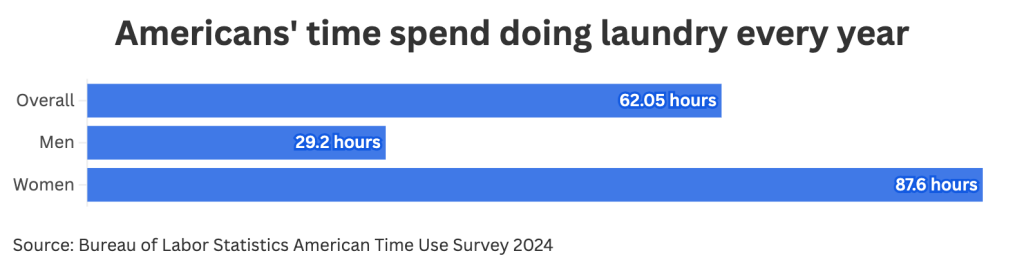
The gender gap is clear: Women, on average, spend over 87 hours doing laundry yearly, while men clock just over 29 hours. Non-employed people also , showing how work status shapes household routines. With most households doing and each load taking , laundry remains a surprisingly big drain on time and energy.
The environmental and economic impact
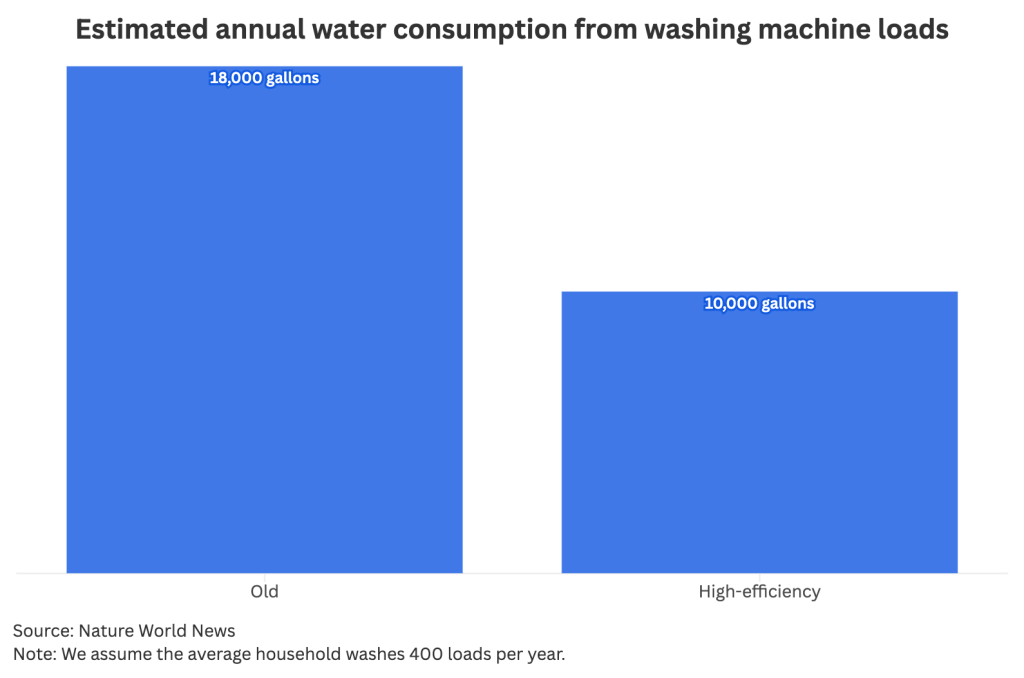
Laundry isn鈥檛 just a time sink 鈥� it鈥檚 a serious resource drain. According to the National Park Service, the average household uses . Older machines can use up to 45 gallons per cycle, while high-efficiency models cut that down to 14鈥�25 gallons, says Nature World News. when you're doing 400 loads a year.
Laundry takes a toll on energy, too. According to the American Cleaning Institute, goes to heating water. Dryers account for about 6% of a home鈥檚 total energy use. One hot wash-and-dry cycle emits 7.2 pounds of carbon dioxide, adding up to 179 million metric tons of emissions each year in the U.S.
Financially, Procter & Gamble estimates that detergent alone can run . Switching to cold water and Energy Star appliances and cut emissions .
Peak hours and energy grid impact
Laundry uses up water and also strains the power grid. According to the American Society of Civil Engineers, happens during peak energy hours, accounting for 1.6% of household electricity use during those times.
Smart laundry tips to save time, energy, and money
Small changes in how you do laundry can seriously cut back on water use, energy bills, and wasted time. Here鈥檚 how to make your laundry routine smarter and more efficient.
Technology upgrades
- Choose Energy Star washers. They use .
- Go front-load. These use .
- Upgrade to high-efficiency models. .
Behavioral changes for efficiency
- Wash with cold water. in energy use.
- Air dry when you can. Cuts laundry鈥檚 .
- Run full loads. You鈥檒l save time and resources.
- Pre-treat stains. Prevents repeat washes.
Time-saving strategies
- Group similar fabrics. Less sorting before and after.
- Wash during off-peak hours. Lowers costs and grid strain.
- Keep machines clean. Boosts efficiency and avoids rewashes.
- Follow fabric care. Clothes last longer, so you wash less often.
The changing landscape of American laundry
Laundry routines aren鈥檛 just about time 鈥� they鈥檙e shifting with social trends and post-pandemic life. Two big changes stand out: more balanced household roles and new habits shaped by remote work and family life.
Gender role evolution
Housework is evening out. According to NBC News, since 2003, to chores. The gender gap in housework shrank .
Post-pandemic changes
COVID-19 changed how we clean. Laundry became more frequent and flexible. .
Making laundry more sustainable
Laundry uses a lot of water and energy, but small changes can make a big difference. Smarter schedules, efficient appliances, and better habits all help cut down waste and costs.
Smart scheduling
- Use off-peak hours. Early morning or late evening runs lower your utility bill and ease grid strain.
- Sort smart. Grouping by fabric and soil level avoids overwashing.
- Batch process. Doing laundry on set days saves time and energy.
Equipment investment
- Smart sensors. Adjust water levels automatically.
- Heat pump dryers. Cut drying energy use in half.
Reclaiming time through smart laundry practices
Laundry takes up more than 62 hours a year for the average American, but with a few easy changes, you can shorten that time. Washing in cold water, air drying, and using efficient machines can save hours, lower your bills, and reduce energy and water use. It doesn鈥檛 take much to make a difference. Smarter laundry habits don鈥檛 just save time 鈥� they make the whole routine cheaper, greener, and much less of a hassle.
was produced by and reviewed and distributed by 麻豆原创.