Running 5 minutes a day can add 3 years to your life
Running is one of the world’s most popular workouts, for good reason. It’s free, it’s simple, and it delivers near-instant payoffs: a better mood, a clear head, a calmer mind. But its biggest benefit may be one you won’t feel right away — a longer, healthier life.
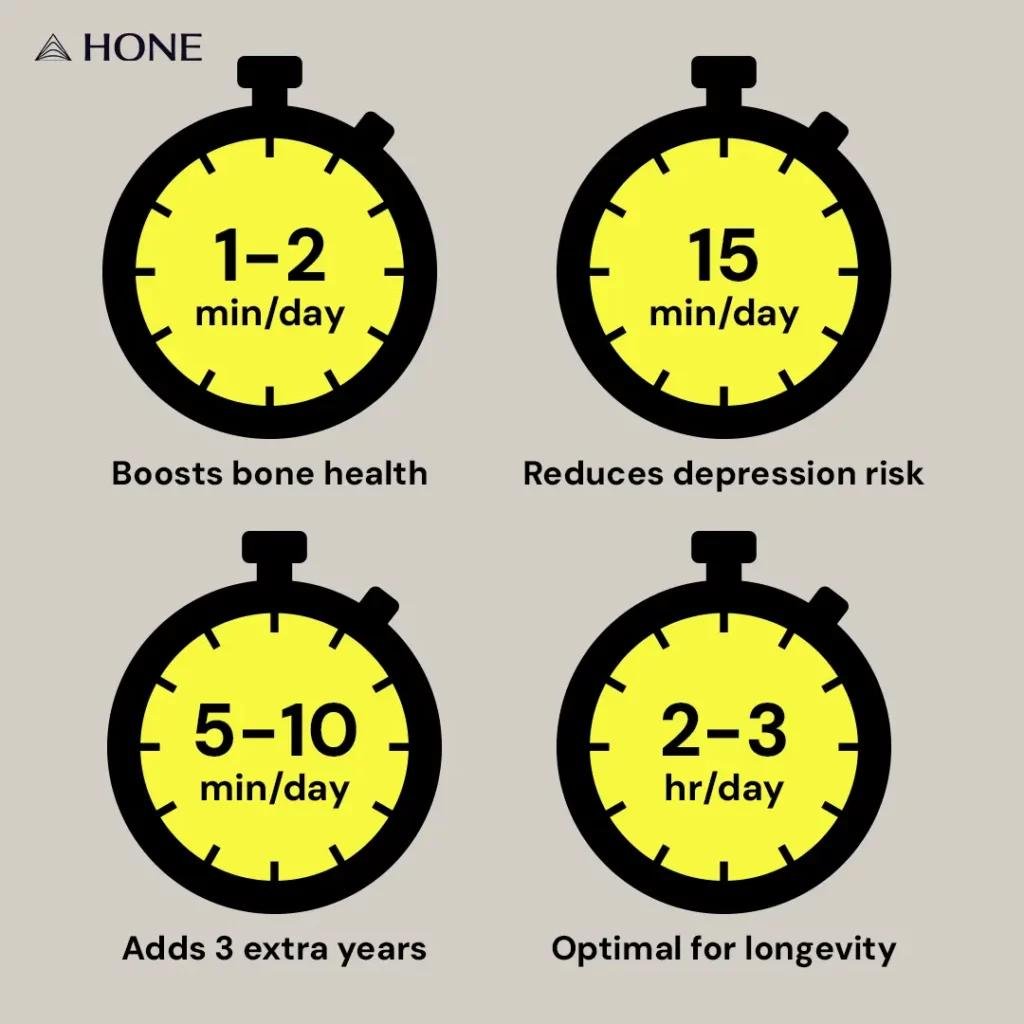
Just five to 10 minutes a day of low-intensity running (think: a pace less than 6 mph) can extend your life expectancy by three years, compared with not running at all, reports. This was first reported in a landmark of more than 55,000 adults over a 15-year period. That finding has been reinforced by a number of follow-up studies connecting to lower mortality risk, improved cardiovascular health, and better .
Running, like other forms of , is often called a “,” says Candice Knight, M.D., a longevity-focused integrative physician. “It’s linked to better outcomes across the board, from lower rates of and certain cancers to improved immune function and lung capacity.”
The best part: You don’t have to strive for marathon-level fitness to reap the rewards.
Do Runners Live Longer?
Research has found that runners tend to live longer than non-runners. A published in the British Journal of Sports Medicine found recreational runners had a 27% lower risk of all-cause mortality compared to non-runners, regardless of age, sex, or underlying health conditions.
You don’t need to go far or fast to benefit. A published in The Journal of the American College of Cardiology suggests running just a few times per week, for a total of around two to three hours, is optimal for longevity.
How Running Increases Longevity
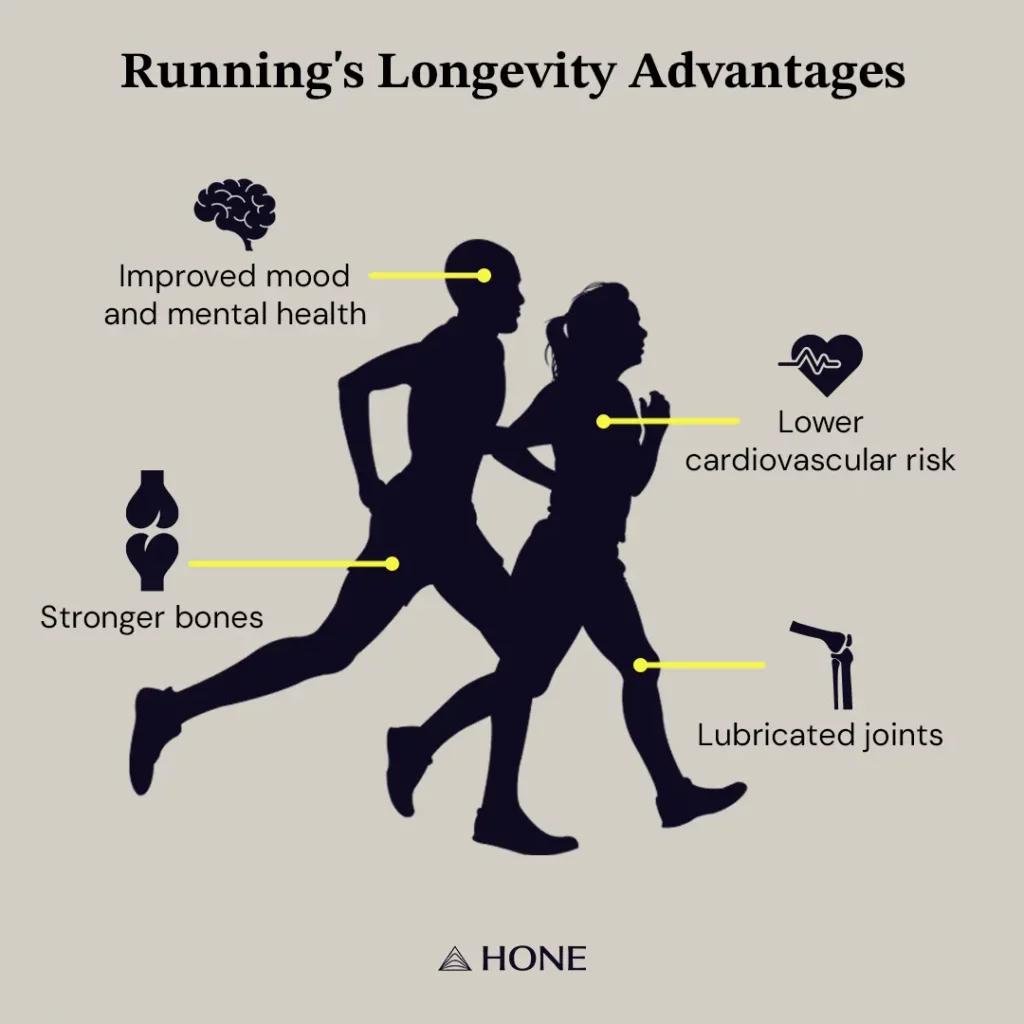
Running is a full-body investment in aging well. From reducing to boosting mood, here’s how a regular running habit can .
Reverses arterial aging
Regular running and improves circulation, key factors for reducing the risk of heart disease, the leading cause of death for both men and women.
As people age, arteries (the blood vessels that carry oxygen from the heart to the rest of the body) tend to stiffen. The aorta, the body’s main artery, is especially prone to becoming less elastic. “Aortic stiffness is linked to hypertension and heart disease, says Knight. “Making the aorta more elastic again can ease the workload on the heart and improve blood flow.”
A in the Journal of the American College of Cardiology suggests running can do just that. Researchers found that novice marathoners significantly reduced aortic stiffness and , effectively lowering their “arterial age” by about four years.
“Essentially, months of produced benefits comparable to what we’d expect from certain blood pressure medications,” says Knight, “but achieved through exercise alone.”
This research puts a number on something experts have long suspected: “Consistent endurance training can , making your heart and vessels more youthful,” says Knight.
Reduces chronic disease risk
In addition to cardiovascular benefits, running enhances , lowering the risk of type 2 diabetes and metabolic syndrome. It also reduces the risk of major killers like stroke, diabetes, and cancer.
“Regular exercise like is linked to better outcomes across the board,” Knight says. “Over the long term, these benefits translate into a significantly lower risk of premature death.
Once you start your running routine, picking up the pace every once in a while could further slash your risk. , faster paces were associated with a lower prevalence of chronic health conditions, independent of total exercise volume and fitness level. For example, compared with the least fit men, the fittest men had a 62% reduction in the prevalence of hypertension, a 67% reduction in high cholesterol, and an 86% reduction in type 2 diabetes.
Strengthens bones
Running is a high-impact, weight-bearing activity — one of the best defenses against osteoporosis, a bone-weakening condition that affects one in two women and one in four men over the age of 50.
“Your bones react to the impact forces of running by becoming stronger and denser,” Knight explains. “It’s a classic ‘use it or lose it’ scenario.”
She notes that regular running in early and midlife is an that helps build up a reserve of bone mass. Continuing to run slows the rate of bone loss that comes with aging. In older adults, even or brisk walking can help preserve bone density and reduce the risk of fractures.
Case in point: A found that just one to two minutes per day of running in pre-menopausal women and slow jogging in postmenopausal women is associated with better bone health.
Lubricates joints
Despite what you may have heard, running won’t . A published in the Journal of Orthopaedic & Sports Physical Therapy showed recreational runners were actually less likely to develop than sedentary people or .
“The constant low-to-moderate impact of running may by nourishing it and keeping ,” explains Knight.
Improves mental health and mood
Running is a natural mood booster and that can — the healthy, functional years of your life. “Mental and play a huge role in how long and how well we live,” says Knight.
and are associated with higher mortality risk, and running helps combat both. “By keeping your mood up and mental health in check, running helps break that link,” Knight notes.
Regular aerobic that it’s considered a front-line therapy for mild depression and . And according to a , running for just 15 minutes (or walking for an hour) a day reduces the risk of major depression. A commissioned by the footwear brand Asics shows the powers of a runner’s high for . It found that after four months of regular exercise, previously sedentary individuals saw a collective 44% increase in confidence and a 43% . These findings, along with those analyzed in a , continue to bolster the relationship between running and mental health.
“Running increases neurotransmitters like and norepinephrine, which are the same targets of many ,” says Knight.
Get Started
Think it’s too late to take up running? Think again. Your body can adapt and improve its strength and aerobic capacity at any age. And if you’re looking for an all-in-one , running is a great place to start.
“While no one exercise can provide every aspect of fitness, running is definitely a strong contender,” says exercise physiologist Janet Hamilton. “It’s a natural movement, doesn’t require special equipment beyond a decent pair of shoes, and can be done most anywhere and at any time of day. It can be modulated to lower or higher intensity easily, so it can work the entire spectrum of cardiorespiratory fitness.”
If you’re lacing up for the first time (or first time in a long time), here are a few of Hamilton’s top tips for making your running habit stick.
Respect the process
“Start from where you are, not where you think you should be,” says Hamilton. “Building your fitness is a physiological process that takes place on a . You’re building all sorts of infrastructure to support what you want to do, and that stuff doesn’t happen overnight.”
If you’re not currently running, start with a walking program, says Hamilton. Aim to build up to 10 miles a week without discomfort. Then, add short intervals of easy running — say, one minute of running followed by four minutes of walking. Do this for at least a week, and then gradually increase the run segments and decrease the walk segments.
Some people stay at the same ratio for a few weeks, and that’s totally fine, Hamilton says. “Don’t try to rush the process or you’ll end up injured.”
Invest in good shoes
Head to your local running store if you don’t know where to start. (Hint: If a shoe feels comfortable on your foot, it’s probably a good match.)
Track your mileage and aim to replace your shoes every 300 to 500 miles or about every six months, depending on how often you run.
Stick with it
If you have to take a training break because of a family emergency or work commitment, . “You don’t gain fitness overnight and you won’t lose it overnight,” Hamilton says.
The key, she says, is consistency over perfection. “You’re making an investment here, and much like the compound investing that comes with dividends being reinvested in your savings. The payout grows with time.”
was produced by and reviewed and distributed by Â鶹ԭ´´.