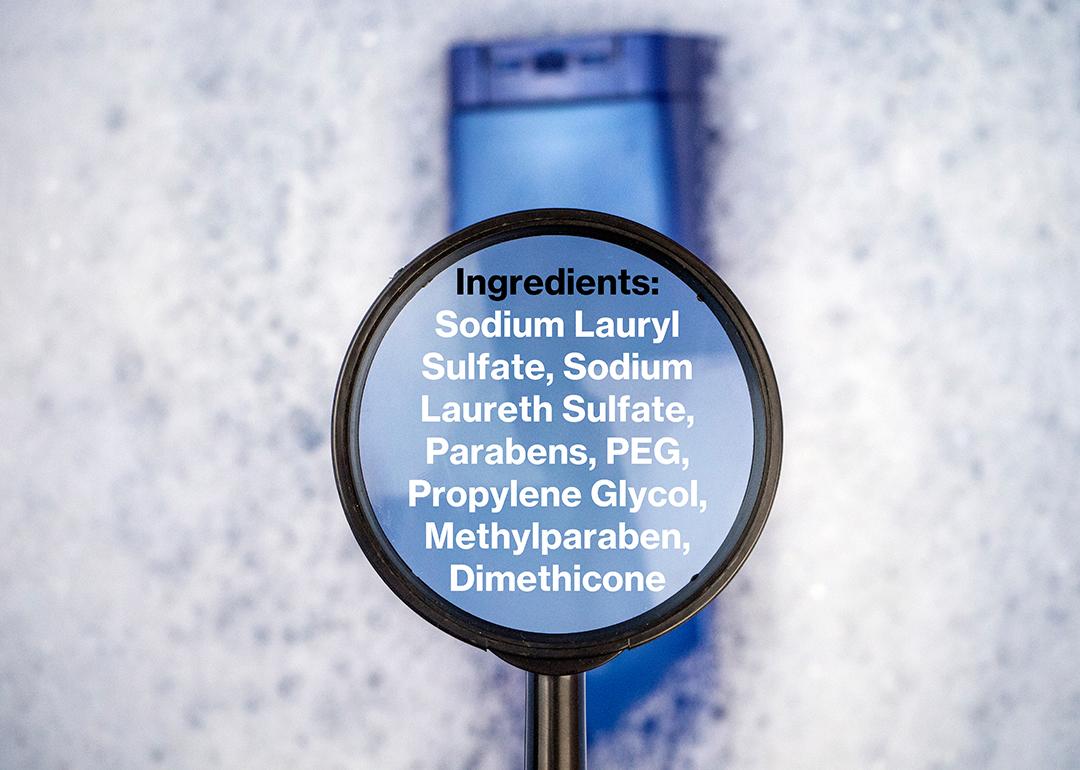
The toxic ingredients lurking in everyday skincare
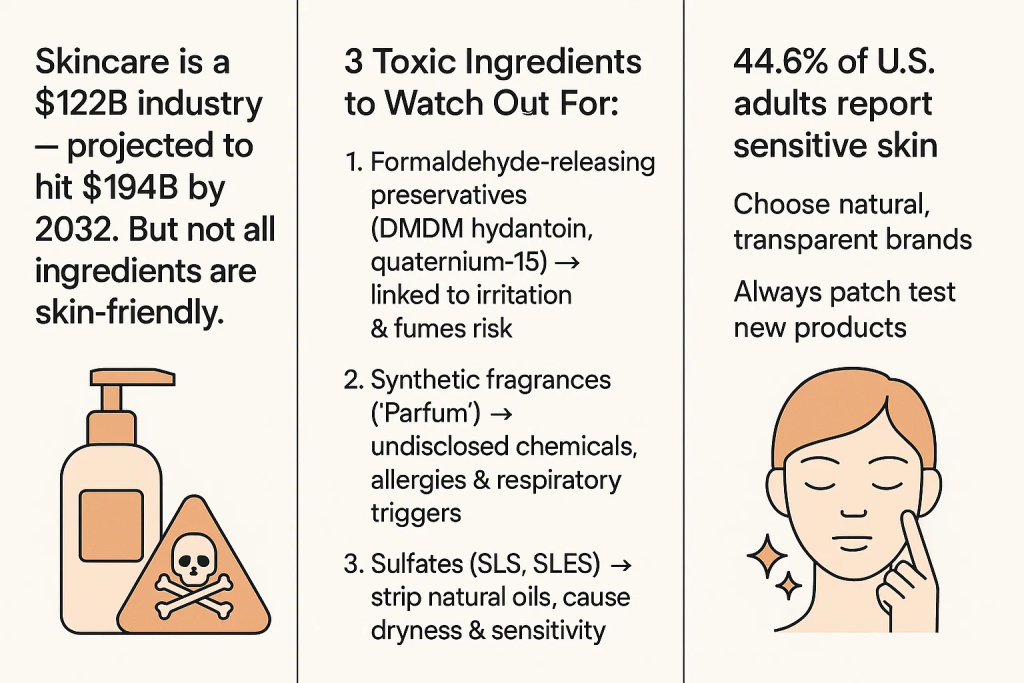
Skincare used to be self-care, but nowadays, it鈥檚 a $122 billion empire (projected to hit $194 billion by 2032). No wonder every celeb, influencer, and their mom is launching a 鈥渕iracle鈥� serum or essence (what even is the difference?).
Since , if you鈥檝e got followers, you鈥檝e basically got a brand. The problem? In the rush to sound exotic and cutting-edge, some companies (even the established brands) cut corners on safety. That means you could be slathering your face with ingredients that aren鈥檛 exactly spa-day safe.
Used occasionally, they鈥檙e harmless. But twice a day, every day? That鈥檚 another story. But don鈥檛 worry; an informed buyer holds all the power. Here, discusses the toxic ingredients lurking in everyday skincare.
3 Ingredients to Avoid in Your Skincare (and Why)
1. Formaldehyde-Releasing Preservatives (FRP)
Many beauty products use ingredients that gradually release small amounts of formaldehyde ( by the International Agency for Research on Cancer) over time to prevent microbial growth.
This may sound scary, but when used as preservatives in skincare products, these compounds are relatively safe even with consistent exposure. They can cause skin irritation or allergic reactions in people with sensitive skin.
So, if your skin is easily disturbed, it鈥檚 best to avoid ingredients like DMDM hydantoin, imidazolidinyl urea, and quaternium-15.
The main concern is . This can happen with hair straightening formulations or keratin treatments that use heat as the application method. Some nail products may also release toxic fumes during application.
2. Synthetic Fragrances ("Parfum" or "Fragrance")
The category of fragrances is particularly problematic because companies are not required to disclose the specific ingredients in each scent. Each formulation is considered a trade secret and is usually kept confidential.
Scent is because it鈥檚 tightly intertwined with our emotions and memories. This is why fragrances are used in almost all beauty products, not just perfumes, deodorants, or colognes. You鈥檒l find them in body lotions, face creams, shampoos, shower gels, body scrubs, and even products marked as fragrance-free.
So, why is your lotion smelling nice a bad thing?
The scent in itself is not an issue. The problem arises when you don鈥檛 know what chemicals were used to create it. That gentle rose fragrance in your hand lotion you love so much may, in fact, be a combination of several dozen or even hundreds of chemicals.
The primary concern with fragrances is that they can trigger skin allergies, irritation, and respiratory issues. And, since the exact ingredients are not disclosed, you have no way of knowing what's causing your reaction.
3. Sulfates
Ingredients like sodium lauryl sulfate (SLS) and sodium laureth sulfate (SLES) are surfactants used to create a foamy lather in cleansers, shampoos, and body washes. Their job is to remove oil and dirt from your skin or hair, but they also take away natural oils, leaving the skin dry and weakening its barrier.
When used in small doses, sulfates don鈥檛 tend to cause harm, but if used in excess or on sensitive skin, they can cause irritation, dryness, and even acne. If the skin is too sensitive, it may lead to inflammation or aggravate existing conditions.
Other Ingredients
Depending on which side of the internet you land, you鈥檒l find a long list of scary ingredients that may or may not be harmful. In reality, most of these ingredients are deemed safe to use with regular application on normal skin.
The ingredients that were indeed deemed unsafe are on the and are not allowed in any commercial skincare products.
How to Find the Right Skincare for You
Skin is a living, breathing organ that evolves as you age. If you鈥檙e able to use all sorts of serums and scented lotions in your 20s and 30s, it鈥檚 not a guarantee that things will stay the same in your 40s and beyond.
The secret to choosing the right products is to aim for brands that focus on using natural ingredients that your skin can understand.
Extra tip: Always do a patch test when you introduce a new product in your skincare routine, and pay close attention to how it interacts with your other products. This is especially important if you have a routine that involves three or more steps.
In Summary
Skincare is not about how many products you apply to your skin every day. It鈥檚 about paying attention to what works, reading the labels, and educating yourself on what various ingredients do. Be smart about how you choose your products, and your skin (and wallet) will thank you.
was produced by and reviewed and distributed by 麻豆原创.