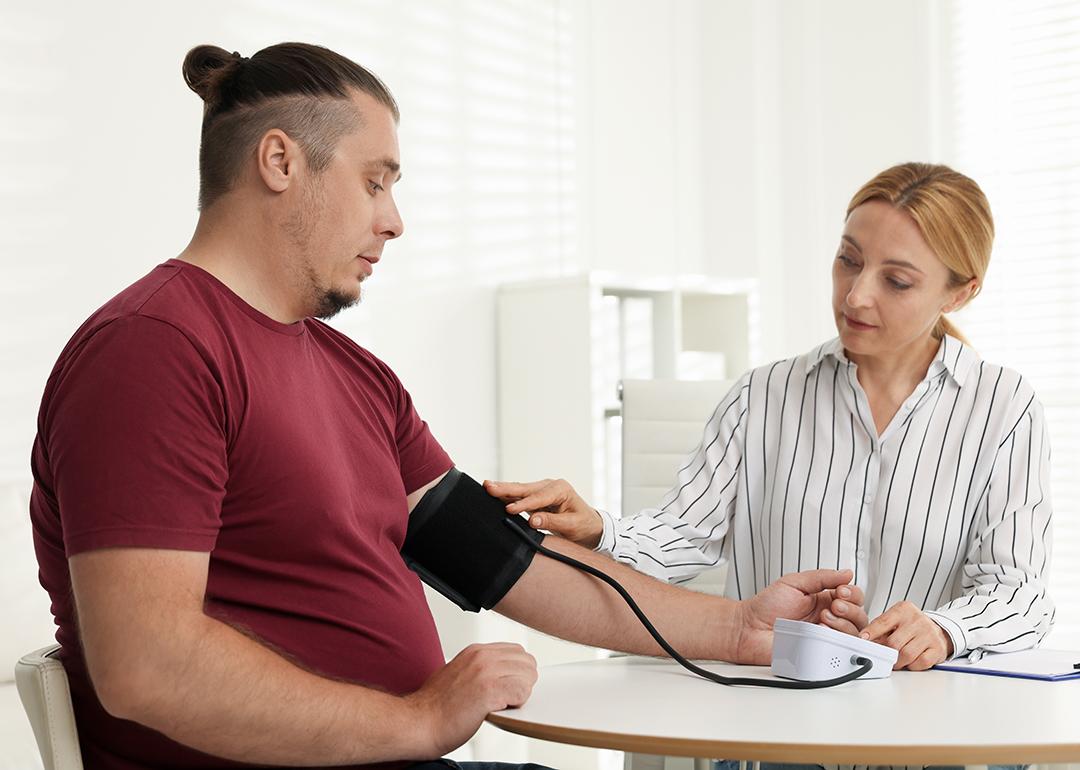
Are GLP-1s good or bad for your blood pressure?
Are GLP-1s good or bad for your blood pressure?
Glucagon-like peptide-1 (GLP-1) receptor agonists are a class of medications that were initially approved to treat Type 2 diabetes. But since their discovery, the of GLP-1s has expanded.
GLP-1s are now FDA-approved to treat many conditions, including , , and . Some of these medications can also help with and health.
There鈥檚 a growing number of , including:
- Semaglutide (, , and )
- Dulaglutide ()
- Liraglutide ( and )
- Exenatide ( and )
- Tirzepatide ( and )
- Orforglipron ()
Some of these medications are given as injections, and others are taken by mouth.
With so many new medications and ongoing research, it can be difficult to keep track of all the possible uses of GLP-1s.
If you鈥檙e prescribed a GLP-1, you may want to know whether it鈥檚 safe to take if you have other conditions, like high blood pressure. So, , a platform for medication savings, looked at how GLP-1s affect blood pressure and overall heart health.
Key takeaways:
- GLP-1 medications have been shown to have benefits on cardiovascular health. But they鈥檙e not FDA-approved to treat hypertension (high blood pressure).
- GLP-1s are safe to take if you have high blood pressure.
- GLP-1s may lower blood pressure by facilitating weight loss and by acting on the kidneys and blood vessels.
How do GLP-1s work?
GLP-1 medications mimic (GLP-1), a hormone made in the gut. These medications bind to the same receptors in the body, which allows them to produce similar effects. They act on GLP-1 receptors to increase insulin production, slow gastric emptying, and help curb appetite. That鈥檚 why these medications are so useful in treating Type 2 diabetes and obesity.
GLP-1 medications also work on GLP-1 receptors in other parts of the body. For instance, in the kidneys, these receptors help regulate how much sodium is reabsorbed or excreted in the urine. These receptors also play a role in the and help support . GLP-1 medications can interact with these receptors, which can lead to positive kidney and heart health effects.
Are GLP-1s good for your blood pressure?
Yes, there鈥檚 evidence that GLP-1 medications can have a positive effect on blood pressure.
Weight loss can help . So, by facilitating weight loss, GLP-1s can lower blood pressure. But weight loss alone doesn鈥檛 account for all of the cardiovascular benefits of GLP-1s.
There are other ways that GLP-1 medications can impact blood pressure:
- Reduced sodium intake: People taking GLP-1s may end up eating less salty foods because they eat less overall. Lower blood pressure is one benefit of a .
- Direct action on the kidneys: GLP-1 medications to the kidneys to release more sodium into the urine. As sodium leaves the body, blood pressure can go down.
- Relaxing blood vessels: GLP-1s can also activate receptors on cells inside blood vessels, causing them to vasodilate (relax). And this effect has been shown to .
Are GLP-1s approved to treat high blood pressure?
GLP-1s aren鈥檛 FDA-approved for treating high blood pressure. That means that your healthcare team won鈥檛 prescribe these medications specifically to treat high blood pressure.
But some GLP-1 medications are FDA-approved to reduce the risk of , such as heart attack and stroke, in certain people with Type 2 diabetes or obesity. These approvals are based on studies showing that GLP-1s can improve several factors that affect heart health, including blood sugar, weight, and blood pressure.
This means you might still be prescribed a GLP-1 to support your heart health. And, as your overall health improves, your blood pressure may come down, too. So, although GLP-1s aren鈥檛 used specifically to treat high blood pressure, they can still have a positive effect on it.
Can you take GLP-1s if you have high blood pressure?
Yes, GLP-1s are safe to take if you have high blood pressure. In fact, these medications may help lower blood pressure through their overall effect on weight and metabolism.
But GLP-1 medications . You may not be able to take a GLP-1 medication if you have:
- A personal or family history of medullary thyroid cancer
- Multiple endocrine neoplasia syndrome type 2 (MEN 2)
- A history of (serious allergic reaction) to GLP-1 medications
- A history of or
You shouldn鈥檛 take GLP-1s if you鈥檙e .
How do GLP-1s affect your heart rate?
GLP-1s can cause an in some people. The change is usually small, only . But some GLP-1 medications may have a on heart rate than others.
Researchers are still studying why this happens. One possibility is that GLP-1s activate the sympathetic nervous system, which can raise the heart rate. Another is that they act directly on the heart鈥檚 natural pacemaker, called the .
Even though GLP-1 medications may increase heart rate slightly, there鈥檚 that they increase the risk of (irregular heart rhythms).
Frequently asked questions
What causes high blood pressure?
For most people, a leads to high blood pressure. Your age, genetics, and overall health all play a role in your blood pressure. Your diet and activity level can also increase the risk of developing high blood pressure.
Can you take GLP-1s with blood pressure medication?
Yes, you can take glucagon-like peptide-1 receptor agonist medications (GLP-1s) and blood pressure medications at the same time. There are no known interactions between these two types of medications.
If your blood pressure improves over time while you鈥檙e taking a GLP-1 medication, your healthcare team may need to lower your blood pressure medication.
Can you take GLP-1s if you have heart failure?
Yes, many people with heart failure can take GLP-1 medications. In fact, GLP-1s can be helpful for people with (HFpEF). Your healthcare team can help you determine whether GLP-1s are safe for you.
The bottom line
Glucagon-like peptide-1 receptor agonist medications (GLP-1s) aren't FDA-approved to treat high blood pressure. But they can still help improve blood pressure through their effects on weight, blood sugar, and heart health. Most people with high blood pressure can safely take GLP-1 medications. If you鈥檙e considering a GLP-1, your healthcare team can help you understand how it fits into your overall health plan and what benefits you can expect.
was produced by and reviewed and distributed by 麻豆原创.