
How does the VA support the nearly half of veterans who are 65 and older?
This story originally appeared on Foothold Technology and was produced and distributed in partnership with 麻豆原创 Studio.
How does the VA support the nearly half of veterans who are 65 and older?
Despite a decrease in the number of veterans, the Department of Veterans Affairs today than it did 20 years ago, according to expenditure reports from the organization.
In addition to the VA substantially expanding its benefits, veterans are trending older as the overall number of veterans declines. VA data suggests that while the about 34% between 2023 and 2048, the number of veterans older than 85 will grow by 31% between 2021 and 2024. In addition, more veterans are claiming compensation benefits and using VA medical care than ever before. The VA has also expanded its benefits substantially.
Most recently, the 2022 Promise to Address Comprehensive Toxics Act broadened health care and benefit eligibility for those exposed to toxins and hazards during military service. This move was accompanied by a major outreach campaign that increased claims. As a result, the VA paid out a record $150 billion in compensation and pension benefits last year and provided veterans with a record 116 million medical appointments. Even before the most recent surge, the number of veterans enrolled in the VA's health care system grew by more than 1 million between 2006 and 2022.
Like all senior Americans, older veterans have higher rates of disabilities and health conditions than other adults鈥攂ut for vets, these trends are even more distinct. Most older veterans served in or at the time of the Vietnam War, which exposed them to Agent Orange and other herbicides, which have since been linked to many severe health conditions. As these veterans have aged, the VA's medical bills have climbed in step.
utilized data from the and to analyze tax-funded VA spending and examine how it has added benefits while accommodating the growing share of older veterans. The most recent VA data covers fiscal year 2022, which runs through September of that year, and doesn't portray the major investments made last year.
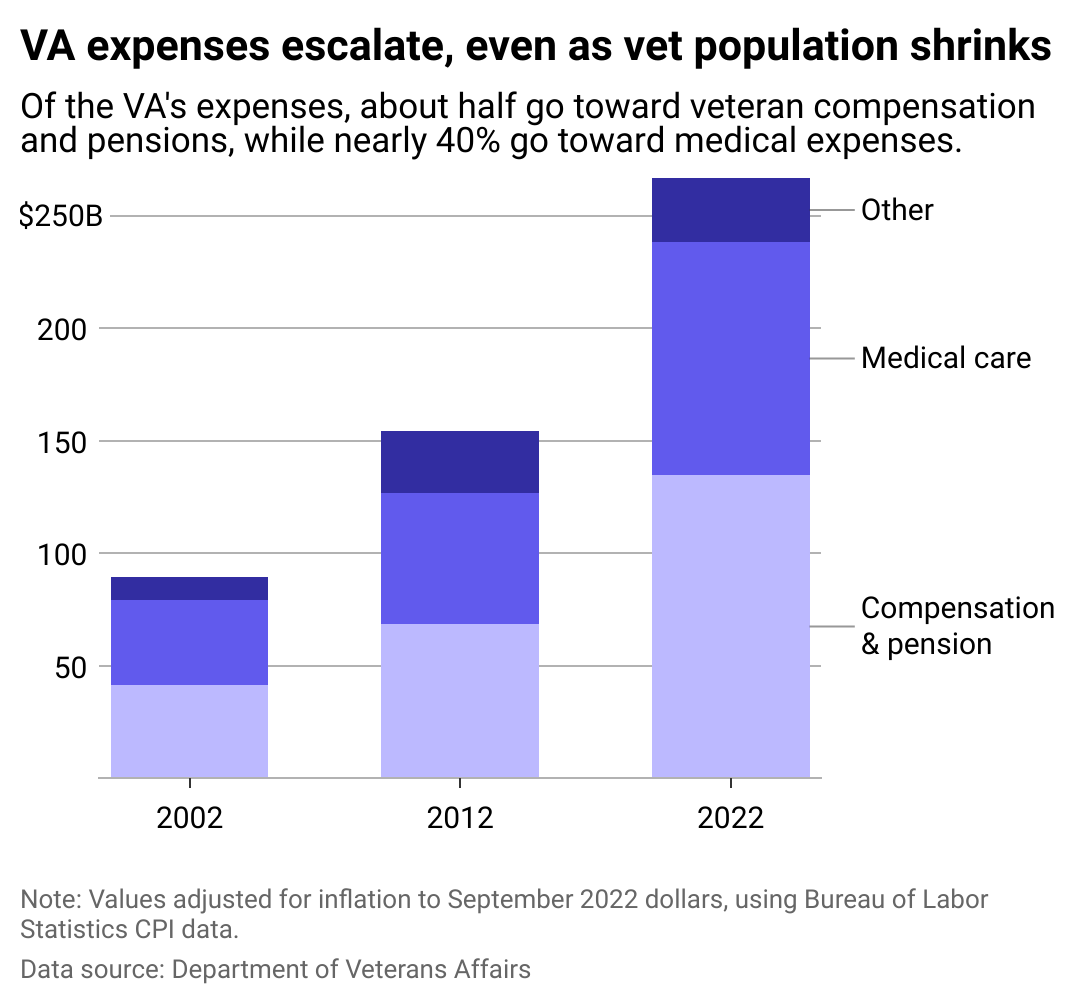
VA expenses are up鈥攁nd expected to keep growing
After steady growth over the past 20 years, VA expenditures surpassed $266.7 billion in 2022. The agency received a in 2023, including record-high discretionary funds.
The largest expense category is compensation and pensions, which largely represent monthly payments to retired service members and their families. The share of , in particular, has nearly tripled over the past two decades, as has the average annual benefit paid out to those veterans, according to a Standford Institute for Economic Policy Research analysis.
Disability compensation is paid to veterans with disabilities and medical conditions that were caused or worsened during their service, and new research has broadened eligibility criteria. For instance, veterans with diabetes who were exposed to Agent Orange are now eligible for disability compensation, as researchers identified the herbicide as a risk factor for the disease.
Medical care is the other dominant VA expense. About 38% of veterans are enrolled in VA health care鈥攚ith slightly higher rates among those over age 65. Health benefits through the VA are typically more affordable for veterans. They have diversified in recent years, particularly in maternal and reproductive health care. The VA has also grown mental health services, including emergency medical care for veterans in suicidal crises.
These health care expansions have been vital, as the VA reports that veterans enrolled with the VA have than those who are not.
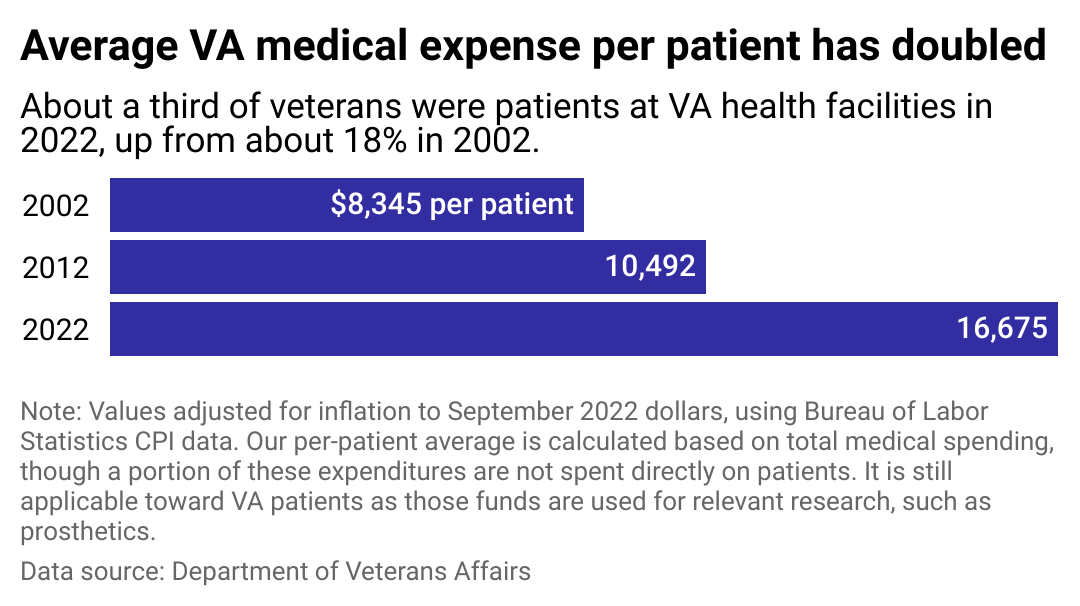
An aging population requires additional medical care
were 65 years or older in 2021, compared to about 17% of the general population, Census Bureau data shows. This age group accounts for as older adults tend to develop health conditions and disabilities that require costlier care. For veterans, those trends are even more pronounced. For instance, about a third of the general 65-plus population is disabled, while about 42% of veterans in that age bracket are disabled.
More than 100 VA medical centers have for aging veterans by participating in the official Age-Friendly Health Systems movement. This movement centers around older patients' care preferences, including end-of-life care, using medications that don't interfere with elders' priorities, retaining mobility, and preventing or managing common mental health conditions that come with age, like depression and dementia.
Participation in the VA's medical program has grown along with the rising number of older veterans. Paired with rising health care costs more generally鈥攖he from 2002 to 2022鈥擵A expenses ballooned as the organization provided veterans with the health care necessary to maintain or improve their quality of life.
Despite the rise in expenditures, costs will ebb as the number of living veterans from major military campaigns鈥攊ncluding World War II, Korea, and Vietnam鈥攄ecreases overall. Today, the U.S. military has about 1.3 million active-duty troops鈥攄own from about 3.5 million in 1968. Over time, this decline should temper VA spending, even while retaining or improving the quality of care and benefits for surviving veterans.
Story editing by Nicole Caldwell. Copy editing by Kristen Wegrzyn.