10 states where new businesses are most likely to turn into employers
This story originally appeared on altLINE and was produced and distributed in partnership with 麻豆原创 Studio.
10 states where new businesses are most likely to turn into employers
Nearly 434,000 people applied for business applications nationwide in April 2023, according to data. Of them, only about 1 in 3 were deemed likely to become employers.
Small businesses are the nation's most common enterprises and employ nearly half of private workers, according to the Census Bureau. But the evolution from an idea to a successful business is grueling. Launching a company involves conducting research, finding gaps in the existing product market, finding ways to solve common problems, securing funding, and seemingly endless paperwork. Often it demands foresight, risk, and connections to the right people.
What's more, laws and regulations . Starting a business can look entirely different depending on where you try to open a shop, and expanding across state borders can prove challenging.
Using , found the 10 states where the largest share of business applications was deemed likely to become employer firms. The Census Bureau identifies likely employers based on specific characteristics of applications, including hiring plan outlines or operating in certain industries. All data points are for April 2023.
Wyoming has the lowest percentage of applications likely to become employers, even though it traditionally has the highest rate of small business applications per capita. Wyoming's regulations , and the low cost of forming a business there makes this a popular option for small businesses. The per capita applications, then, are inflated by applications from out-of-state. Additionally, with particularly low barriers to entry, many of those with underdeveloped ideas may incorporate and ultimately fail to succeed or become employers.
On the other hand, many states that ranked highly in their share of potential employer applications had relatively or extremely low rankings for total business applications and applications per capita. In other words, though they had fewer applications, those applications were more refined than in other states.
Other commonalities between the states include business-friendly tax policies, ample funding access, and government support.

#10. South Dakota
- Percent of business applications considered likely to become employers: 34.4%
- Total business applications: 899 (Rank: #48)
- Business applications per capita: 9.9 per 10,000 residents (Rank: #35)
The South Dakota economy is durable. According to the , the state GDP continued to grow in 2020 by about 1.6%, while the national GDP suffered the consequences of COVID-19 and fell by 2.8%. And when the national hit 14.7% in April 2020, South Dakota's remained significantly lower, at 8.8%.
The Governor's Office of Economic Development also provides an for entrepreneurs to access extensive business funding opportunities鈥攐ften one of the most significant barriers startups face.
What's more, the Tax Foundation ranked South Dakota's Business Tax Climate as the , trailing only neighboring Wyoming.

#9. New Hampshire
- Percent of business applications considered likely to become employers: 34.5%
- Total business applications: 1,240 (Rank: #44)
- Business applications per capita: 8.9 per 10,000 residents (Rank: #44)
have grown rapidly in New Hampshire. Over 2,000 new businesses form each month, on average鈥攕ignificant for the ninth least-populous state in the nation. The state has a devoted Department of Business and Economic Affairs, which provides resources for entrepreneurs to , relocate to New Hampshire, , and more.
New Hampshire has a compared to other Northeast and coastal states, giving residents more power to invest in their business ideas. New Hampshire was also considered to have one of the top in the country, according to a Tax Foundation analysis.
#8. Rhode Island
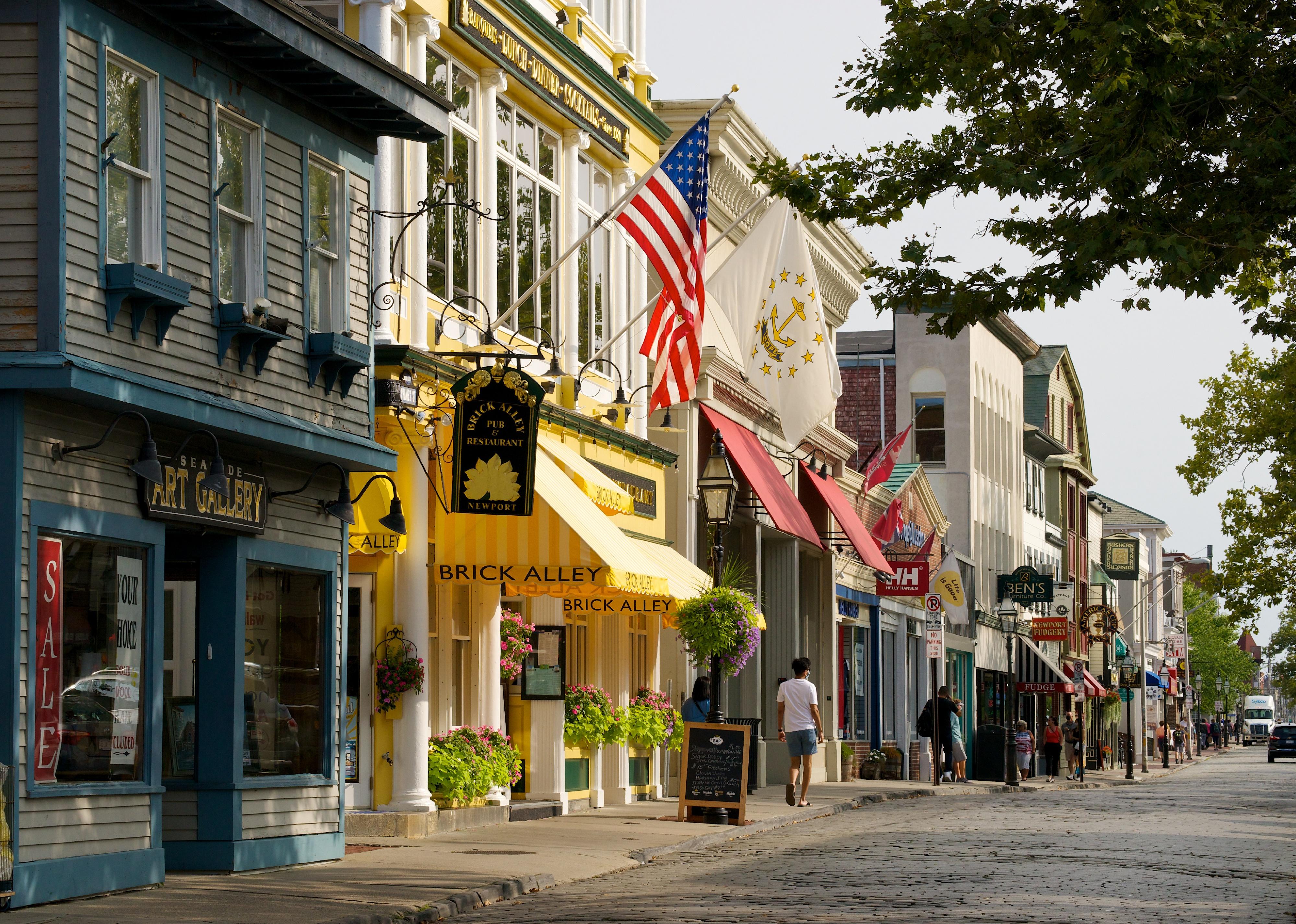
- Percent of business applications considered likely to become employers: 35.3%
- Total business applications: 917 (Rank: #47)
- Business applications per capita: 8.4 per 10,000 residents (Rank: #49)
Despite ranking near the bottom of CNBC's list, a larger-than-most portion of Rhode Island's applications evolve into employer firms. Over half of Rhode Island's private workforce is 鈥攑utting it above the national average. It also saw the nationally from 2017 to 2022. Its banking, education, insurance, and health care industries rake in the most revenue.
provides a range of services to small businesses, from start-up assistance to international trade to relocation services. Businesses also benefit from being within range of Boston, and their combined statistical area is a leader in .

#7. Vermont
- Percent of business applications considered likely to become employers: 35.8%
- Total business applications: 617 (Rank: #51)
- Business applications per capita: 9.5 per 10,000 residents (Rank: #39)
Three in five of Vermont's private workers are employed by a small business鈥攖he third-highest rate in the nation, according to an analysis of . A small state, Vermont's gives its entrepreneurs a strong community to lean on as employees and customers. Vermont's startups to the economy in their first year of operation.
Though small, Vermont has its , in addition to . The state files a per capita and has a to guide the growth of artificial intelligence and other technologies.

#6. Florida
- Percent of business applications considered likely to become employers: 36.4%
- Total business applications: 58,260 (Rank: #1)
- Business applications per capita: 26.2 per 10,000 residents (Rank: #3)
Florida is a major travel destination with a recovering from the pandemic. But its top sectors for GDP include real estate, health care, professional/scientific/technical services, and retail and wholesale trade.
Construction, in particular, has been fueled by by long-distance movers. People are moving to Florida, among other states, to enjoy a lower cost of living, lower taxes, and warmer weather than other major metropolitan areas. They're bringing business ideas and successfully converting them into employer firms. Florida was also ranked fourth-best in the nation for its .

#5. Maine
- Percent of business applications considered likely to become employers: 36.9%
- Total business applications: 1,300 (Rank: #43)
- Business applications per capita: 9.4 per 10,000 residents (Rank: #42)
Maine's natural resources鈥攁 combination of forests, coastline, and farmland鈥攁re the basis for its : agriculture and forestry, natural sciences, clean energy, and outdoor recreation.
While financing is typically one of the most significant hurdles for businesses looking to launch operations, have an easier time through the state's regional banks, investors, and grant opportunities. Easier capital access means companies can hire sooner in their development and quickly integrate into the small-town culture.

#4. Illinois
- Percent of business applications considered likely to become employers: 39.5%
- Total business applications: 12,641 (Rank: #7)
- Business applications per capita: 10.0 per 10,000 residents (Rank: #33)
Illinois as a headquarters for the Fortune 500, serving as a home base for 35 of the nation's top companies. Located centrally in the U.S., Illinois is a , as well as real estate, finance, and professional/technical services.
While the state , its LLC taxes are lower, allowing smaller entities an easier start. The Illinois government recently to attract businesses and develop industrial sites, but the state also saw notable in 2022.

#3. Massachusetts
- Percent of business applications considered likely to become employers: 40.4%
- Total business applications: 5,964 (Rank: #22)
- Business applications per capita: 8.5 per 10,000 residents (Rank: #47)
Massachusetts has a high cost of living and a high cost of doing business. But as a host to over 100 universities and medical facilities, it's also a hub for research and ideas with a local population of eager student interns and recent graduates to draw on. Plus, the area is home to many , helping startups acquire financing to get operations in motion.

#2. California
- Percent of business applications considered likely to become employers: 41.4%
- Total business applications: 43,163 (Rank: #2)
- Business applications per capita: 11.1 per 10,000 residents (Rank: #25)
California has the highest GDP in the nation and the highest population (by about 10 million heads). As the primary technology hub of the U.S., California houses many startups launched by former Big Tech employees, plus owners of the myriad service businesses that fuel the machine.
Innovation draws funding, and California business owners have easy access to much of it: The San Jose-San Francisco-Oakland and Los Angeles-Long Beach Combined Statistical Areas both for venture capital fundraising activity in 2022, with the Bay Area cashing in at #1.
Investment funding allows companies to hire faster鈥攑rior to earning revenue, at times鈥攃reating a more direct line from a business application to the employer. But as recent rounds of tech layoffs have shown, that's not always for the better.
#1. New York
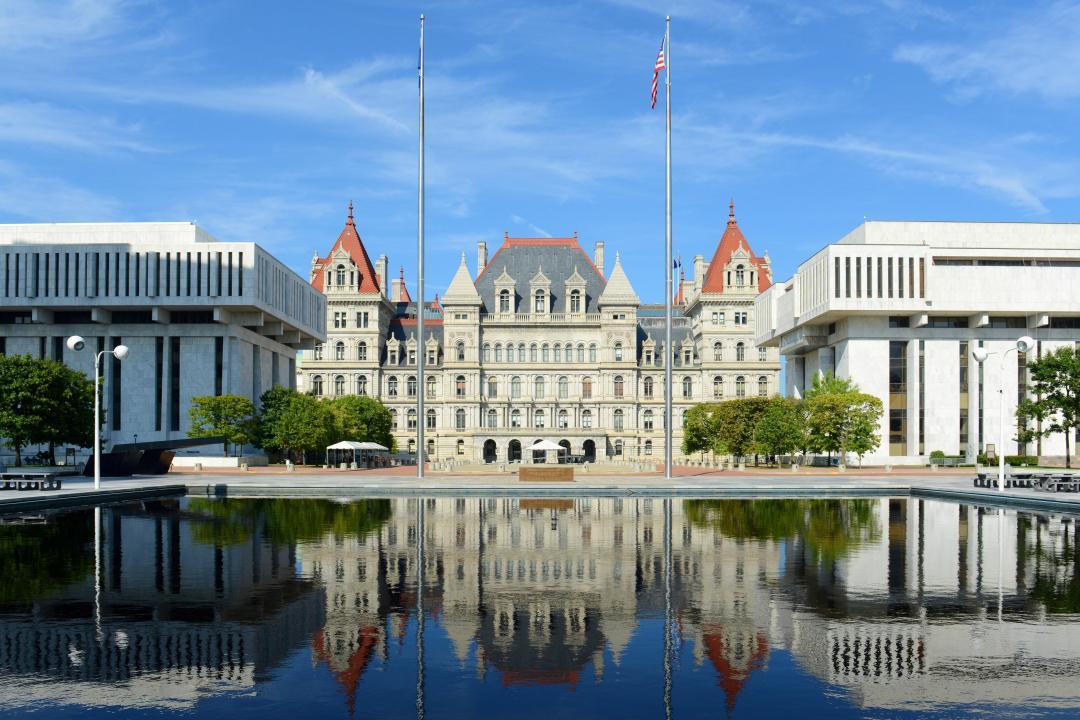
- Percent of business applications considered likely to become employers: 43.3%
- Total business applications: 24,764 (Rank: #4)
- Business applications per capita: 12.6 per 10,000 residents (Rank: #19)
New York is the center of U.S. business. Home to the most populous U.S. city, there are thousands of minds, many drawn by jobs and opportunity, itching to make something of themselves and create something new. There are also plentiful venture capitalists seeking to fund the next big thing.
However, New York's high cost of living, means that establishing a business can be more complex than elsewhere. New York entrepreneurs must be more deliberate than most when applying for business licenses. Those same challenges become benefits when the founders reach the finish line with extensive business plans and have the capacity to become employers at higher rates.
Story editing by Jeff Inglis. Copy editing by Kristen Wegrzyn. Photo selection by Paxtyn Merten.