From pandemic essential to the new normal: How QR codes rose to prominence
This story originally appeared on Flowcode and was produced and distributed in partnership with 麻豆原创 Studio.
From pandemic essential to the new normal: How QR codes rose to prominence
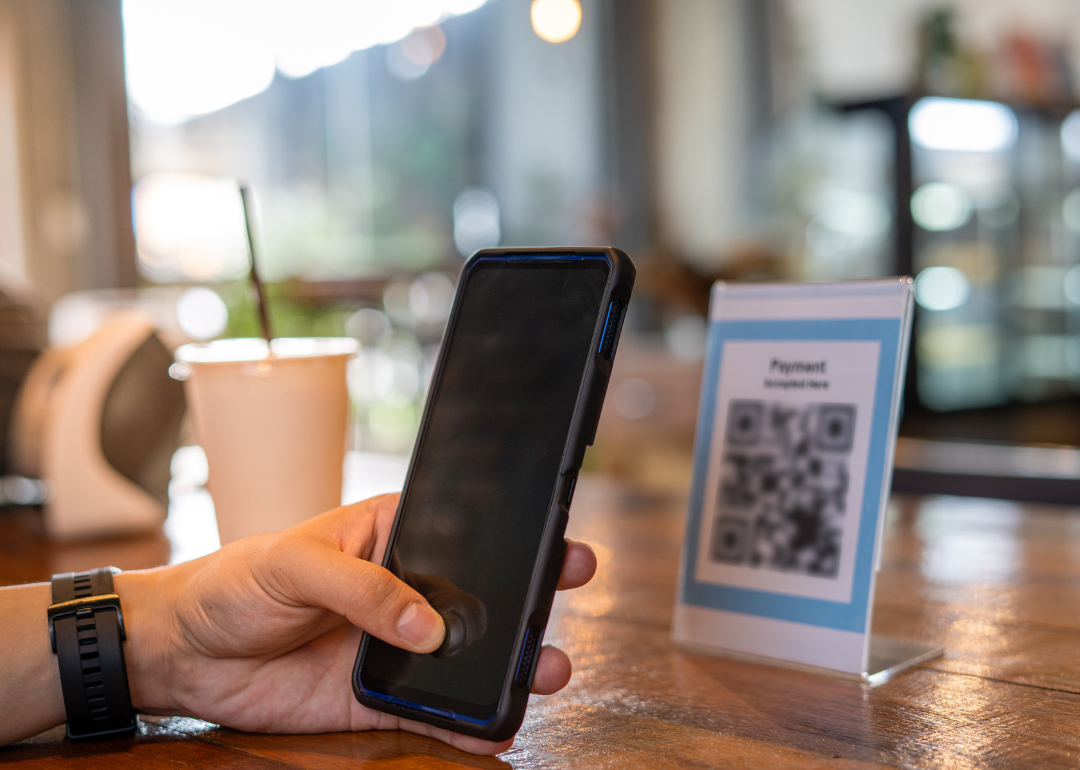
The COVID-19 pandemic gave black-and-white-speckled QR codes their moment in the spotlight鈥攐ne many hospitality industry professionals predicted would fade in the coming years.
To better understand how QR codes rose to popularity, analyzed data from and information from news coverage and industry reports to identify why QR code use is sticking around like never before.
The QR code鈥攕hort for "quick response," based on how much information it can store compared to a standard bar code鈥攈as its origins in Japan. The technology was invented in 1994 by Denso Wave, now in the world. Primarily used for logistics at the time, the company has since used the codes to track the production and movement of its auto parts through the supply chain.
Today, the technology is seemingly omnipresent in certain industries like hospitality, thanks in part to the massive business disruptions and public health guidance after the onset of the COVID-19 pandemic. Businesses scrambled to enforce social distancing and touchless interactions, and academics believe the pandemic forced humans to adopt new tech like video conferencing and QR codes at an increased rate of 10 times the usual uptake.
"If COVID-19 did not happen, some technologies would be adopted in the next decade, not now," , a researcher studying QR code adoption at the University of South Carolina.
As the pandemic wore on, leaving the house for food or entertainment almost certainly means using QR codes still. By September 2020, 47% of consumers in the U.S. and U.K. agreed or strongly agreed that , according to one survey of more than 3,000 consumers.
But even though it has permeated business operations today, customers are more open to using QR code technology in certain settings than others. Quick-service restaurants and more casual establishments have become a perfect match for customers, whereas diners seem to expect more traditional service from human workers at higher-end dining establishments, researchers have found.
Aiding the uptick in adoption are major smartphone manufacturers deciding to include QR code reader capabilities in their native camera applications. Apple with iOS 11, and Android has included the feature the same year. Before then, a smartphone user needed to download a specific third-party application to interpret the code. But afterward, simply pointing the camera at a code in public has opened the technology up to even more users who may have never gone so far as to seek out additional software.
COVID-19 supercharged QR code adoption
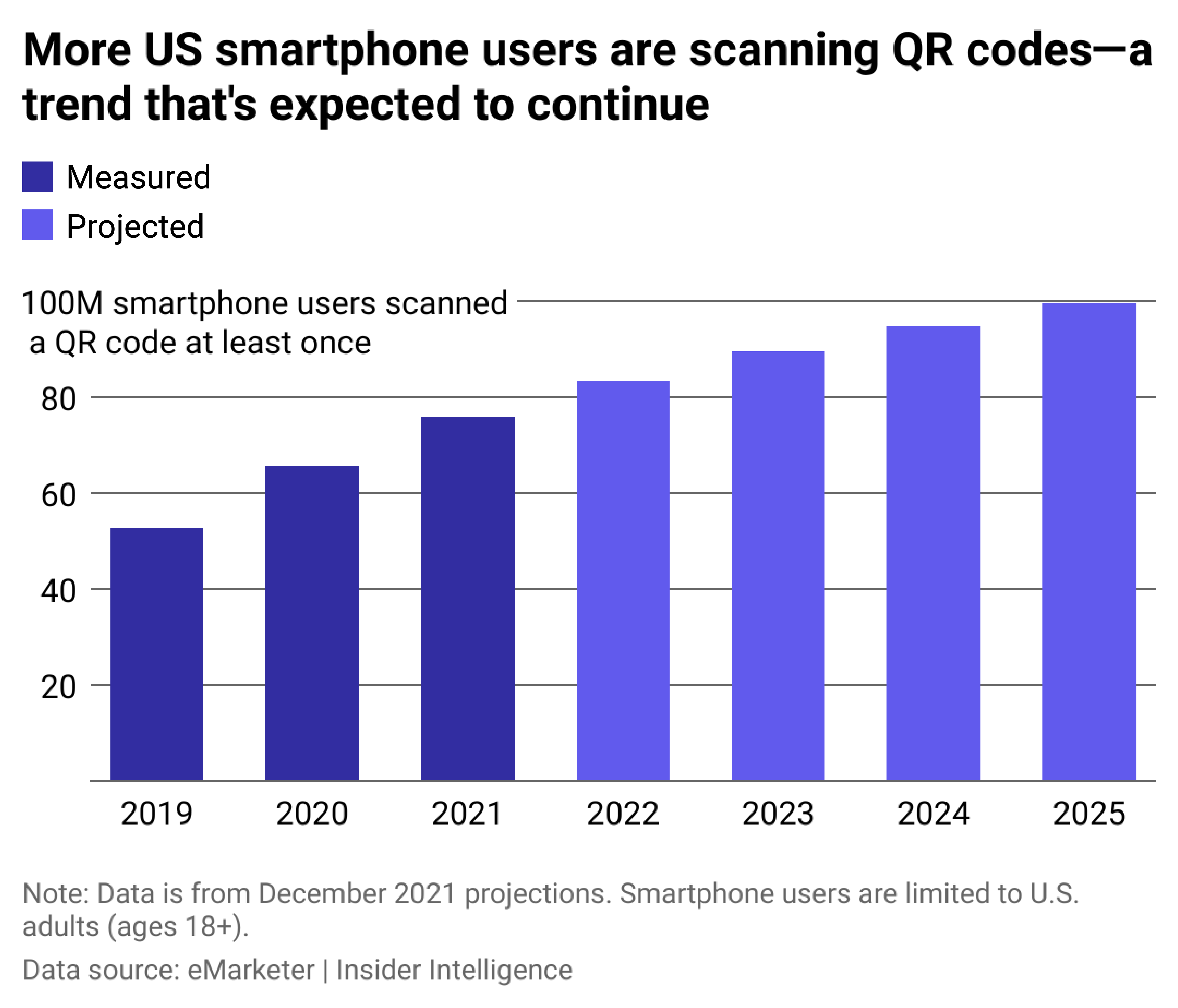
About 100 million American adults, or 40% of the population over 18, are expected to have interacted with a QR code at least once in their lifetime by 2025, according to Insider Intelligence projections.
To the naked eye, QR codes appear as a varied mishmash of black and white squares. Behind the pattern, however, can be anything from a restaurant menu to web-hosted software coded to pull personal data from your phone. Experts have pointed to the and advise consumers to be aware. Every new technology comes with its own risks, but the benefits of QR code adoption have allowed it to spread well past retail stores and restaurants.
Major airports鈥攊ncluding JFK, O'Hare, LaGuardia, Newark Liberty, and Philadelphia International鈥攐ffer travelers food delivery directly to the gate with the scan of a QR code. Popular boy band BTS utilizes the technology in their biography to direct fans to video and music extras to complement their life stories. QR codes even grace the back of product bottles, making reordering easy
Meanwhile, old habits die hard for some customers, who have said they after many pandemic restrictions on businesses lapsed, the New York Times reported in May 2023. It remains to be seen whether customer sentiment changes again, or if the technology's convenience and ubiquity are just the beginning of QR codes becoming an inherent part of the consumer experience.
Story editing by Jeff Inglis. Copy editing by Paris Close. Photo selection by Lacy Kerrick.