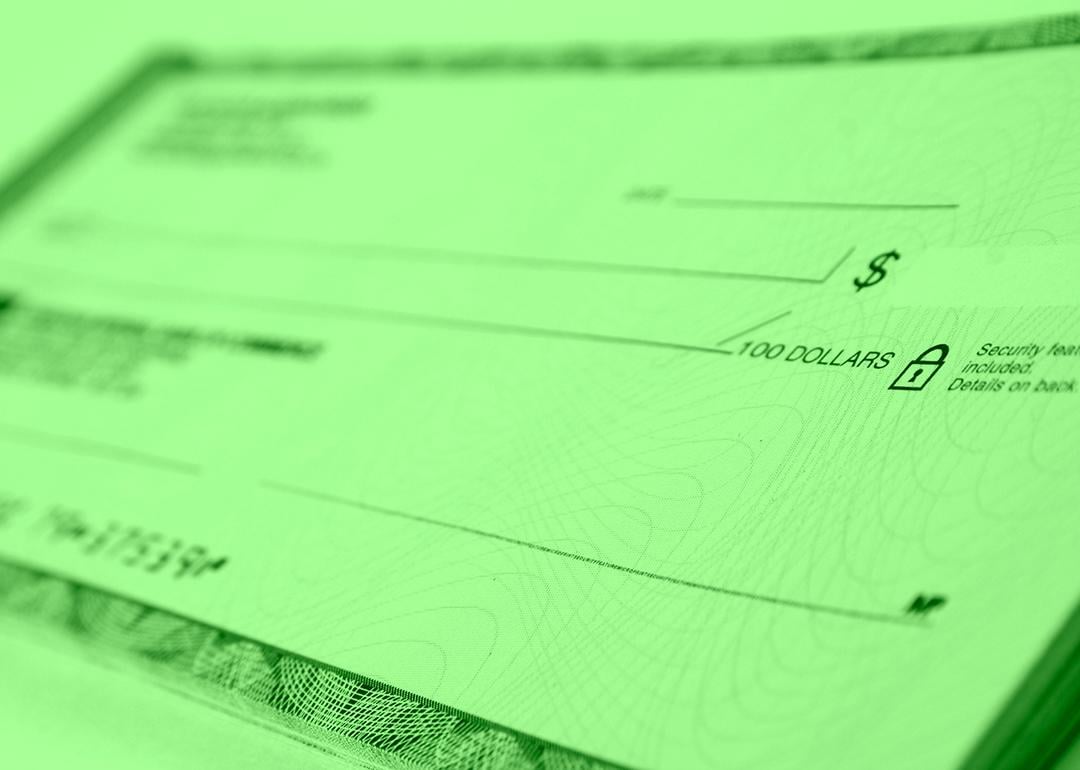
What is check kiting? The viral "money glitch" that's actually fraud
was produced by and reviewed and distributed by 麻豆原创.
What is check kiting? The viral "money glitch" that's actually fraud
Unlike an innocent-as-apple-pie springtime kiting sesh, check kiting is no walk in the park鈥攗nless you believe less-than-informed advice from the wrong influencers, who've convinced their followers that what they call a "money glitch" is an easy path to free cash. Turns out, check kiting isn't just an old-school trick that predates influencers by decades, it's actually fraud, and very much illegal. shares the lowdown to help avoid the viral hype, and stay on the right side of the law.
What Is Check Kiting?
This shady bit of financial trickery existed when "viral" was just a medical term, long before TikTok was a sparkle in a developer's eye. So what is check kiting in the first place?
As the name implies, was more commonplace when writing checks鈥攖hose mysterious and ancient, signed official notes that instruct financial institutions to move a specific amount of money from one account to another鈥攚as more of a thing. Also known as flagging, check kiting is the act of passing, or "floating," checks between a few banks or bank accounts. The kiter typically holds two bank accounts and writes a bad check, meaning a check that the associated account doesn't have the funds to cover, from one of their accounts to a second of their accounts. During the time it takes for the check to process or clear ("float time," which can sometimes take multiple days), they take funds from the second account and deposit them into the first, often repeating the process to kite even more money.
In the broadest sense, the defines check kiting as "drawing checks on an account in one bank and depositing them in an account in a second bank when neither account has sufficient funds to cover the amounts drawn," thus creating an artificial balance.
Kiting died down a bit as the popularity of checks dwindled, and as more banks implemented shorter float times to cut back on the practice, but it's on the rise again in 2024, this time with slightly more contemporary trappings.
The Viral Hype
What's old is new again on , and this year, the old thing that's new is鈥攗nfortunately鈥攃heck kiting. Late this summer, numerous TikToks and other social media influencers began sharing what they called a "money glitch," or even an "infinite money glitch." All you have to do, they said, is write and deposit a large check to yourself, then withdraw an amount that doesn't exceed that check's sum, usually from an ATM (which is not only convenient but also conveniently avoids contact with bank tellers). The "trick" works because while banks have largely reduced those aforementioned float times, most still allow account holders to withdraw at least a portion of a "floating" check before it clears.
While TikTok-famous check-kiting may not have gone quite as viral as brat girl summer or lip-synching battles, the "money glitch" got popular enough to incite action from Chase Bank, which publicly warned its customers that check kiting is not a neat little trick to make money, it's flat out fraud.
Check-Kiting Variants
As banking systems and con artists alike evolved, check kiting has spawned quite a number of . What is check kiting nowadays? Turns out it can be quite a few different things, including these popular flavors of fraud:
- Circular kiting is another name for the most stock standard variety of check kiting. In the vanilla version of check kiting, one person uses multiple different accounts at different banks鈥攚hether using the same or different names鈥攁nd floats checks between them to produce unauthorized credit.
- The infinite kite takes a little more effort, as it uses checks that feature the address of one bank and the routing number of another. The goal here is to get two banks sending the same check back and forth between each other, as each bank fails to recognize the routing number. But of course, the amount on the check has already been credited to the kiter before the theoretically endless loop begins.
- Closed account kiting floats the check against a bank account that no longer exists, using the float time to receive illegitimate funds before the check is denied.
- Retail kiting is when a kiter writes a bad check to make a retail purchase, but before said check clears, they write a second check that includes a cashback payment. That cash is deposited, allowing the first check to clear. Rinse and repeat.
- Credit card kiting exists in more of a gray area than check kiting, but it's still sketchy. Credit card kiters first take a cash advance from a card, then use that cash to pay off their balance and avoid interest charges.
- Corporate kiting is less of a TikTok trend and more of a large-scale financial scam. Here, corporations that don't have limits on how much immediate credit they receive from deposits deposit bad checks and withdraw whatever cash they can immediately as the check floats. So, just like regular circular kiting, but on a much, much larger scale.
Other Common Check Frauds
Check kiting getting a glow-up on TikTok didn't come out of nowhere. In fact, various types of check fraud have been on the rise since the which saw a spike in mail-based fraud, in which thieves targeted , government aid, and other checks. By 2023, check-related fraud had racked up an $815 million annual price tag and in the United States.
Outside of check kiting (but often adjacent to it), typically involves creating wholly counterfeit checks, falsely altering existing checks, or forging signatures. Nowadays, and check kiting can occur on person-to-person payment apps, via wire transfer, or at the ATM. Here are just a few of the most that aren't check kiting:
- Check forgery occurs when someone forges their own name on a check written out to someone else. Garden-variety check fraud, this one.
- Altered checks, similarly, are a wider category of check fraud in which bad actors change any information on the note, including the amount or name of the payee. This can be done by analog or digital means.
- Check theft also involves forgery, but the difference here is that someone steals a paper check, and without altering that check, forges the signature of the person to whom the check is written.
- Identity assumption is a form of identity theft in which fraudsters use the ill-gotten data of a bank account holder鈥攖hings like their bank account number or social security number鈥攁nd use that private info to pose as the payee. In some cases, this can result in another form of fraud known as account takeover.
Stay Smart on Socials
Taking what you hear online with a hearty grain of salt is the safest path. Just think of this: have encountered phony information masquerading as legitimate news on social media. And if you think you're immune to the wiles of bogus claims on the internet, think again鈥攁 shocking 10% of those same Americans have unknowingly shared false information online. With that in mind, it's little wonder check kiting caught on again in the post-online era, lifted up by social media virality.
And as a general rule, you can't always take what people claim at face value.