This story originally appeared on Giggster and was produced and distributed in partnership with Â鶹ԭ´´ Studio.
15 iconic director-screenwriter partnerships
Motion pictures are a collaborative art by nature, but the vision arguably starts with the screenplay as the blueprint for the entire project. The director ultimately brings that idea into the real world and onto the screen. Though often considered the primary or singular genius or author, the director’s artistry entwines with that of the writer—and arguably the cinematographer and the rest of the crew.
There’s a fusion of imagination when screenwriters and directors work together, resulting in some of the best and most iconic cinematic masterpieces ever made. To exemplify this collective brilliance, surveyed film history and highlighted 15 unmissable director-screenwriter partnerships. To qualify, the pair had to make at least three features together.
Some duos stayed in their writing and directing lanes, some just wrote together whereas others directed, and some were on both sides of the writing-directing fence. Most of the partnerships on this list feature duos who eventually went their separate ways, even after working together for decades, such as sibling forces Joel and Ethan Coen and Lilly and Lana Wachowski. Other pairs listed here collaborated on debut films or early on in their careers, marking a distinct style that’s decidedly linked to one another.
Discover 15 of the most prolific director-screenwriter partnerships below.
Peter Jackson and Fran Walsh
Married with two children, director Peter Jackson and screenwriter Fran Walsh have co-produced and collaborated on motion pictures since they first met in the 1980s. Their first collaborations were known for campy gore, including the Muppets-gone-wild-themed “Meet the Feebles” and the horror film “Dead Alive.”
Jackson and Walsh also co-produced and co-wrote the acclaimed “Lord of the Rings” trilogy, considered a technical marvel for its use of computer-generated imaging, or CGI, in adapting J.R.R. Tolkien’s fantasy novels. They co-wrote the trilogy with Philippa Boyens and with Stephen Sinclair on just the second entry.
In 2003, Jackson and Walsh both shared Academy Awards for “The Lord of the Rings: The Return of the King” for Adapted Screenplay and Best Picture. Jackson also won for directing, while Walsh also shared the Oscar for Best Original Song. The pair first drew critical success with the true-crime thriller “Heavenly Creatures” in 1994 and have since collaborated on 2005’s “King Kong” and “The Hobbit” trilogy.
Danny Boyle and Alex Garland
Danny Boyle directed “The Beach” in 2000 starring Leonardo DiCaprio, and though the film was poorly reviewed and DiCaprio’s performance panned, the adaptation of Alex Garland’s acclaimed 1996 novel would give way to a fruitful partnership between Boyle and Garland. Soon after, the duo collaborated on 2002’s “28 Days Later,” which inaugurated a zombie film renaissance, inspiring the 2007 sequel “28 Weeks Later,” TV’s “The Walking Dead” series, and countless other entries in the zombie genre.
“28 Days Later” introduced fast-moving zombies, which are equally as terrifying as the other humans in the apocalypse. Boyle directed with Garland writing the script and Cillian Murphy starring. The trio worked together again on 2007’s sci-fi thriller “Sunshine,” in which a space crew attempts to reignite the dying sun. Garland wrote his directorial debut, 2014’s “Ex Machina,” while Danny Boyle directed 2017’s “T2 Trainspotting,” a sequel to his 1996 hit.
Akira Kurosawa and Hideo Oguni
Japanese auteur director Akira Kurosawa collaborated on several iconic classics with the prolific screenwriter Hideo Oguni, but their first film was the critically acclaimed “Ikiru,” which follows an aging bureaucrat who vows to change his life after a terminal diagnosis. Kurosawa co-wrote the screenplay with Oguni and their frequent collaborator Shinobu Hashimoto.
In addition to “Throne of Blood,” “The Hidden Fortress,” and several other action-adventures and historical dramas, the two collaborated on the iconic and influential 1954 martial arts classic “Seven Samurai,” also co-written with Hashimoto. Set in post-feudal Japan in the late 1500s, “Seven Samurai” perfected a now-familiar plotline featuring brave, rogue fighters protecting an isolated community. It was notably remade in the U.S. as “The Magnificent Seven” in 1960 and again in 2016, with all three Japanese writers receiving a “based-on” credit for both. The duo’s final collaboration was 1985’s acclaimed epic “Ran,” co-written with Masato Ide and loosely based on Shakespeare’s “King Lear.”
Lana and Lilly Wachowski
The sibling team responsible for the iconic “Matrix” franchise with its 21st-century themes around identity, technology, and systemic oppression, co-wrote the first three films in the series, with just Lana Wachowski directing the fourth entry, 2021’s “The Matrix Resurrections.” “The Matrix” is known for its thrilling visual design and innovative action sequences. The two debuted with 1996’s “Bound,” a retooling of a noir crime thriller that centers on a gangster’s moll (Jennifer Tilly) and her girlfriend (Gina Gershon) in a tense doublecross of the men who usually win.
After the huge success of “The Matrix” trilogy, the pair wrote and directed “V for Vendetta,” “Speed Racer,” “Cloud Atlas” (with Tom Tykwer), and “Jupiter Ascending,” the latter of which, while visually striking, came across as overblown, convoluted sci-fi and was a critical and financial flop. However, they both collaborated on the first season of the TV series “Sense8,” acclaimed for its rich storytelling and radical approach to empathy in its tale of humans connected from across the globe.
Martin Scorsese and Paul Schrader
Travis Bickle, the archetype of the psychotic loner played by Robert De Niro in “Taxi Driver,” was imagined by screenwriter Paul Schrader and brought to life with Martin Scorsese’s gritty, striking direction. The two collaborated on four films, including “Raging Bull”—again, with DeNiro in the starring role, this time as the real-life boxer Jake LaMotta. Both “Taxi Driver” and “Raging Bull” are stylish, visual dramas known as masterpieces of Scorsese’s early career.
The two changed gears with 1988’s controversial “The Last Temptation of Christ” starring Willem Dafoe as a very human Jesus struggling with divinity. Its revisionist take on biblical stories sparked protests and bans from Christian groups. The pair’s latest collaboration was 1999’s “Bringing Out the Dead,” starring Nicolas Cage as a Manhattan paramedic, the film’s philosophical narrator, ruminating on saving lives while answering calls for gunshots and drug overdose victims.
“Bringing Out the Dead,” while far less iconic than Scorsese and Schrader’s other films, received decent reviews. Among its stars include John Goodman, Patricia Arquette, Queen Latifah, Ving Rhames, and Marc Anthony, as a strung-out, suicidal drug addict.
Jason Reitman and Diablo Cody
Diablo Cody won the Best Original Screenplay Oscar in 2008 for “Juno,” her debut script and director Jason Reitman’s second feature film. “Juno” follows a pregnant teenager giving up her baby for adoption, but the sentimental premise was made with wry humor and a sense of realistic cool; Elliot Page played the teen, with Jennifer Garner as the adoptive mom. Cody and Reitman also collaborated on “Young Adult” and “Tully,” both starring Charlize Theron and both centering on the experience of pregnancy and motherhood.
The pair’s films present female experiences in unglamorous, authentic modes. In “Young Adult,” Theron plays a young adult novelist who finds herself returning to her hometown and making a play for her ex-boyfriend now that he is married with a newborn. “Tully” explores the psychological impact of the final weeks before and after labor and delivery in a mother’s life. Cody’s scripts are body-centered, looking at the physical details of her character’s experience, completed by Reitman’s realistic tone and pacing that captures everyday life with wit and respect for despair and sadness.
Billy Wilder and I.A.L. Diamond
Garnering 10 Academy Awards nominations, “The Apartment” is considered a classic of American cinema. Director Billy Wilder co-wrote the witty, poignant script with I.A.L. Diamond; together, they won the Oscar for Best Screenplay, with Wilder also taking home Best Picture and Best Director Oscars. The pair’s collaborations created film dialogue known for breezy humor with acerbic commentary just under the surface.
The two co-wrote “Some Like It Hot,” with the final exchange between Jack Lemmon and Joe E. Brown celebrated as some of the best lines in a film ending ever. The two are known for ironic romances with wry dialogue that turns convention on its head. Some of their more well-known Hollywood hits are “Love in the Afternoon,” “Irma la Douce,” and “Kiss Me, Stupid.”
Joel and Ethan Coen
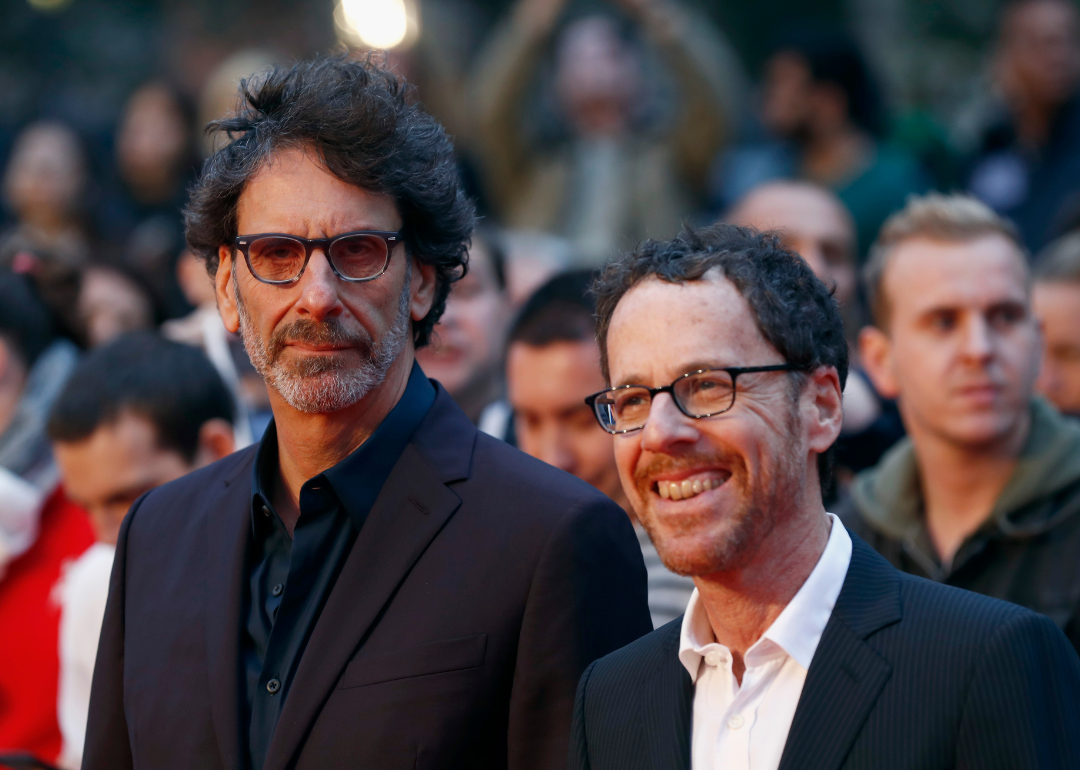
Though Joel Coen was often credited singularly as director, both he and his brother, Ethan, co-wrote, co-produced, and co-directed their long oeuvre of American masterpieces starting with their acclaimed debut, “Blood Simple,” in 1984. Their next collaboration was the stylish comedy “Raising Arizona,” with Nicolas Cage as an ex-con longing to be an adoptive dad; the film’s themes mixed the sentimental and the humorously depraved.
Their sixth feature was the now-classic crime thriller “Fargo,” for which Frances McDormand (spouse of Joel) won a Best Actress Oscar and the brothers won Best Screenplay. The film’s focus on normal people caught up in corruption is a frequent theme also seen in “No Country for Old Men,” “True Grit,” and “The Ballad of Buster Scruggs.” The Coens films often delve into criminality with humor and irony alongside a stoic visual style that captures subtle details of average lives.
The pair also won the three top Oscars (for writing, directing, and Best Picture) for the 2008 Western “No Country for Old Men.” 2021’s acclaimed “The Tragedy of Macbeth” marked the first major solo effort between the two, with just Joel writing and directing.
Krzysztof Kieślowski and Krzysztof Piesiewicz
When director Krzysztof Kieślowski died in 1996, his longtime screenwriter collaborator Krzysztof Piesiewicz , falling into crisis after losing one of its greatest directors. The pair met over their interest in a documentary on the justice system—Piesiewicz was a lawyer in his lifetime.
The two made several films together as well as “Dekalog,” a 10-part cinematic TV series, before creating the acclaimed “The Double Life of Véronique,” starring Irène Jacob as two women who look the same and somehow lead entwined lives. They are best known for the “Three Colours” trilogy—encompassing “Blue,” “White,” and “Red”—released in succession in 1993 and 1994. The trilogy gets its name from the colors of the French flag and explores entangled stories with themes about equality and liberation.
Frank Capra and Robert Riskin
Robert Riskin wrote a series of successful plays in the 1920s before making his way to Hollywood with a successful career in screenwriting. Riskin was known for witty dialogue that seemed natural and breezy in its use of popular slang. Riskin’s most well-known efforts were directed by Frank Capra. Their first collaboration was the newsroom-set comedy “Platinum Blonde,” which introduced themes around class, motifs they’d return to again and again in romantic comedies.
Their most famous film is the classic comedy “It Happened One Night,” with its influential love-hate romantic plot in which a socialite and news reporter are thrown together, finding themselves falling for each other despite initial conflict and vast differences. The film won the top five Academy Awards: Best Picture, Best Director, Best Actress, Best Actor, and Screenplay Adaptation. Riskin was especially skilled at adapting novels, including the bestseller “Lost Horizon,” now considered one of Capra’s best films.
Federico Fellini and Tullio Pinelli
Tullio Pinelli worked with Federico Fellini across four decades, including both his debut feature film, “Variety Lights,” and his last, 1990’s “The Voice of the Moon.” While Tullio wrote the scripts for several major Italian films, including the popular comedy “Amici miei,” he also wrote or contributed the story to Fellini’s best-known masterpieces. Tullio first trained as a playwright, so when he began to write for motion pictures, his talent was giving dramatic structure to Fellini’s more surreal fantastical bents.
Tullio co-wrote “The Road” and contributed to the story for “Nights of Cabiria,” both starring Giulietta Masina in lead roles in dramas that focused on the often harsh experience of women in a culture structured around objectification and harm. Pinelli wrote and collaborated with Fellini (along with Ennio Flaiano) on his masterworks—“La Dolce Vita” and the autobiographical ode to movie-making “8½,” starring Marcello Mastroianni as a director immersed in his memories as he creates his next film.
Wes Anderson and Owen Wilson
1996’s “Bottle Rocket,” co-written by Owen Wilson and Wes Anderson, was first a short film and later made into a feature film. It launched the careers of actor Wilson and brother Luke, as well as auteur director Anderson. “Bottle Rocket” was a small, independent film that drew critical attention to Anderson’s wry, eccentric style. He’s known for surreal whimsy in a visual style that’s funny in its detachment from heartbreak.
The two also co-wrote Anderson’s second and third films, “Rushmore” and “The Royal Tenenbaums,” with Owen as part of the all-star ensemble cast in the latter. Anderson’s early works perfect his visual style as a chic ironist, but these films also use sharp, witty dialogue to discuss topics like depression, suicide, and loss. In “Rushmore,” an eccentric high school student stages plays, including an adaptation of the film “Serpico” and an elaborate Vietnam war melodrama, exploring themes of artifice alongside humorous emotionality.
Alejandro González Iñárritu and Guillermo Arriaga
Guillermo Arriaga was a successful novelist before partnering on three films with Alejandro González Iñárritu early in the director’s career. Arriaga wrote the screenplays for Iñárritu’s first three major films, “Amores perros,” “21 Grams,” and “Babel.” The former, starring Javier Bardem, was a striking debut, earning critical acclaim while also being popular with audiences. Though the two continued to collaborate, , with Arriaga desiring a more substantial credit as co-creator for “21 Grams.”
The dispute came to a head during the release of “Babel,” in which Iñárritu along with members of the cast and crew published an “open letter” in a major Mexican magazine criticizing Arriaga for demanding sole credit for his work. Reportedly, Arriaga’s script for “Babel” underwent significant revisions. The pair parted ways with Arriaga writing and directing 2008’s “The Burning Plain.” Since then, Iñárritu won back-to-back Best Director Oscars for 2015’s “Birdman or (The Unexpected Virtue of Ignorance),” for which he also won Best Picture and Best Original Screenplay, and 2016’s “The Revenant.”
Ang Lee and James Schamus
Ang Lee and James Schamus collaborated on Lee’s first six of seven feature films across a dozen years, the lone exception being 1995’s “Sense and Sensibility,” which was adapted from Jane Austen’s novel by actress Emma Thompson, who also starred and won an Oscar for her writing effort. Before and after this romantic drama, Schamus wrote a series of highly acclaimed films directed by Lee, including their 1992 debut, “Pushing Hands.” Their next efforts also featured Asian characters and immersed audiences in intimate family milieus with themes of love and tradition.
Both co-wrote the scripts along with Neil Peng on “The Wedding Banquet” and Hui-Ling Wang on “Eat Drink Man Woman.” They followed these efforts with the 1970s-set tragic drama “The Ice Storm” and the Western “Ride with the Devil.” The pinnacle of their collaboration was the iconic “Crouching Tiger, Hidden Dragon,” known for its gorgeous martial arts choreography. Their collaborations, characteristic of Lee’s works, jumped between genres as with the superhero movie “Hulk,” which sadly had a middling critical and box office performance, likely due to the duo’s new take on the green hero and multiple co-writers and revisions.
Vittorio De Sica and Cesare Zavattini
Screenwriter Cesare Zavattini, who penned “Some Ideas on the Cinema,” in 1952, a treatise on neorealist theory, worked with several major Italian directors including Luchino Visconti and Federico Fellini. Zavattini is best known for the Vittorio De Sica-directed masterpiece “Bicycle Thieves,” a classic of world cinema known for its heart-wrenching story about a desperate, out-of-work dad searching for a stolen bike with his young son in tow.
The collaborations between de Sica and Zavattini produced some of the major masterpieces of Italian neorealism, a political and aesthetic movement aimed at eliciting empathy in audiences by creating a sense of real life using a documentary-like style. Some of their post-World War II works include “The Gates of Heaven” and “Miracle in Milan.” 1946’s “Shoeshine” focuses on children caught up in a failing juvenile system, while 1952’s “Umberto D.” followed an elderly man adrift and desperate with no social support to help him survive. De Sica and Zavattini’s partnership created a deeply evocative emotional cinema intended to portray the authentic suffering of everyday people.