This story originally appeared on Giggster and was produced and distributed in partnership with Â鶹ԭ´´ Studio.
25 of the best cinematographers in film history
The cinematographer’s role is more than merely operating the camera. Through a combination of lighting expertise, a thoughtful composition of shots, decisions about what film stock to use or when to shoot digitally, and choosing how saturated or muted colors will look on screen, cinematographers create the texture and set the mood of the film. It’s through their intervention that audiences experience the director’s vision of what the film is. Cinematography dictates not only what viewers see on screen, but how they see it.
Just as the task of a cinematographer—or director of photography, as they’re otherwise called—can be to render and capture beauty, it can also be to convey a sense of unease in a film. They’re equally as essential to making the experience of watching a movie tangible in such a way that audiences feel at one with the film, as with on the Italian summer-set drama “Call Me by Your Name.” Greig Fraser and his team, in contrast, created depth in the shadows, employed dark undertones, and even used older camera lenses to of Bruce Wayne’s Gotham City in 2022’s “The Batman.”
Many cinematographers have specialties—be it their use of light manipulation or dynamic camera movements—and much can be learned about their unique styles from examining their bodies of work. researched cinematography history and put together a list of 25 of the best cinematographers of all time. Guided by sources like the American Society of Cinematographers’ in cinematography, the list leans heavily toward the 20th century, but it includes some more recent greats as well.
Read on to learn more about how these cinematic visionaries have created some of the most legendary movies ever made.
Maryse Alberti
French cinematographer Maryse Alberti got her start as a still photographer on the set of porn films in New York and ventured into the film industry by convincing the cinematographer on the small-budget film “Vortex” to let her assist him on set. From there, Alberti worked her way up to director of photography on 1990’s “H-2 Worker,” a documentary about poor working conditions in the Florida sugar cane industry, which earned her a Sundance Film Festival award for cinematography, and “Carol” director Todd Haynes’ 1998 David Bowie-inspired glam rock film “Velvet Goldmine.”
Alberti is known for her stylistic, multi-genre range. She’s worked on documentaries, including Martin Scorsese’s “No Direction Home: Bob Dylan,” fiction films as diverse as the “Rocky” spinoff “Creed” and M. Night Shyamalan’s “The Visit,” and even television shows, including several episodes of Shonda Rhimes’ “Inventing Anna” miniseries. As a result of her documentary and fiction work, is based in realism, giving her fiction work an observational, almost documentarian tone.
John Alcott
John Alcott started out as a clapper boy (the member of the film crew who holds the slate in front of the camera) and eventually worked his way up to a crewmember on Stanley Kubrick’s “2001: A Space Odyssey,” where he stepped in as lighting cameraman when Kubrick’s cinematographer had to leave partway through. After “2001,” Alcott became a regular collaborator of Kubrick’s, working on three more films with him: “A Clockwork Orange,” “Barry Lyndon,” and “The Shining.” He won an Oscar for his work on the period drama “Barry Lyndon,” which critics called groundbreaking for its innovation in —a feat that took months of Kubrick and Alcott testing different lenses and film stocks before eventually settling on a lens developed for NASA to use in the Apollo moon landings.
He also helped innovate (a camera stabilizer mount that allows for smooth, hand-operated camerawork) in “The Shining.” Certain scenes, such as the hedge maze and the tricycle shots in the hallway, utilized the Steadicam in ways that made the camera as dynamic as what was unfolding in front of it, allowing for different movements and vantage points than audiences had previously seen.
Michael Ballhaus
Michael Ballhaus was a German cinematographer who worked extensively with Rainer Werner Fassbinder, Martin Scorsese, Francis Ford Coppola, Paul Newman, and many others on over 100 films. Of his seven-film collaboration with Ballhaus, the cinematographer “gave me back my sense of excitement in making movies” during a slow point in his career.
Ballhaus was known for his , having famously said, “If it’s a movie, it’s got to move.” His shots were innovative and distinctive; he pioneered the 360-degree tracking shot, otherwise known as an , in the ’70s while working on a Fassbinder film, and it quickly became a fixture in his—and many others’—films. His most famous works include “Good Fellas,” “Gangs of New York,” “The Departed,” “The Fabulous Baker Boys,” and “Broadcast News.”
Michael Chapman
Known for his cinematography work on “Raging Bull,” “Taxi Driver,” “The Fugitive,” and 1978’s “Invasion of the Body Snatchers,” Michael Chapman worked as the camera operator on “Jaws” and “The Godfather” before developing his own distinctive style. When discussing his approach to cinematography, Chapman noted that his , and that part of the joy of the craft was the moments of improvisation and making in-the-moment decisions. He also said that beautiful visuals can be “,” especially when urban decay or violence are being portrayed. In films like “Taxi Driver,” that grittiness is captured in the use of , which pop out of the darkness to create a sort of sinister vibrancy.
Roger Deakins
A regular collaborator of the Coen Brothers, Roger Deakins’ cinematography credits include “The Big Lebowski,” “The Shawshank Redemption,” “O Brother, Where Art Thou?,” “No Country for Old Men,” and in the 2010s, “Sicario” and “Blade Runner 2049,” among many others. Deakins’ were influential to the development of his style and ethos around cinematography; when first graduating from film school, his inspirations included observational filmmaker Frederick Wiseman. But he eventually turned toward fiction filmmaking when he started to have ethical questions about the nature of documentary work. His multi-genre experience lends his shots a , which is counterbalanced by deep intentionality around the composition. He’s also known for the way he uses light and shadows to create depth within the frame while using only minimal color.
Caleb Deschanel
Caleb Deschanel has been nominated for the Best Cinematography Academy Award six times and is best known for his work on “The Black Stallion,” “The Right Stuff,” “The Passion of the Christ,” and “The Patriot.” He’s also occupied the director’s chair, heading up “Trains,” “Crusoe,” “The Escape Artist,” and several episodes of “Twin Peaks.” Deschanel is known for his , which he employs in markedly different ways in his films to create very different effects: diffused in “Being There,” and in “The Natural.”
More recently, Deschanel worked on Jon Favreau’s 2019 remake of “The Lion King,” which . Unlike live-action films, which utilize some degree of computer-generated images, “The Lion King” was filmed within a completely computer-constructed virtual reality set. Deschanel was responsible for bringing real-world cinematography techniques to the pre-animated landscape in order to lend an air of reality to the manufactured images.
Caleb is also the father of actresses Zoey and Emily Deschanel.
Ernest Dickerson
After establishing himself as Spike Lee’s director of photography on , “Joe’s Bed-Stuy Barbershop: We Cut Heads,” Ernest Dickerson went on to work on Lee’s first six feature films. Known for his , he got inventive in films like “Do the Right Thing” to render a sense of the oppressive, New York heat by using color. Dickerson is also known for his work on John Sayles’ “The Brother From Another Planet” and has made a name for himself for filming Black life, often using tinted lights and colorful backgrounds. Additionally, he works as a director, often in the horror genre, and has directed many of his own horror films, as well as episodes of “The Man in the High Castle” and the short-lived TV series “The Purge.”
Robert Elswit
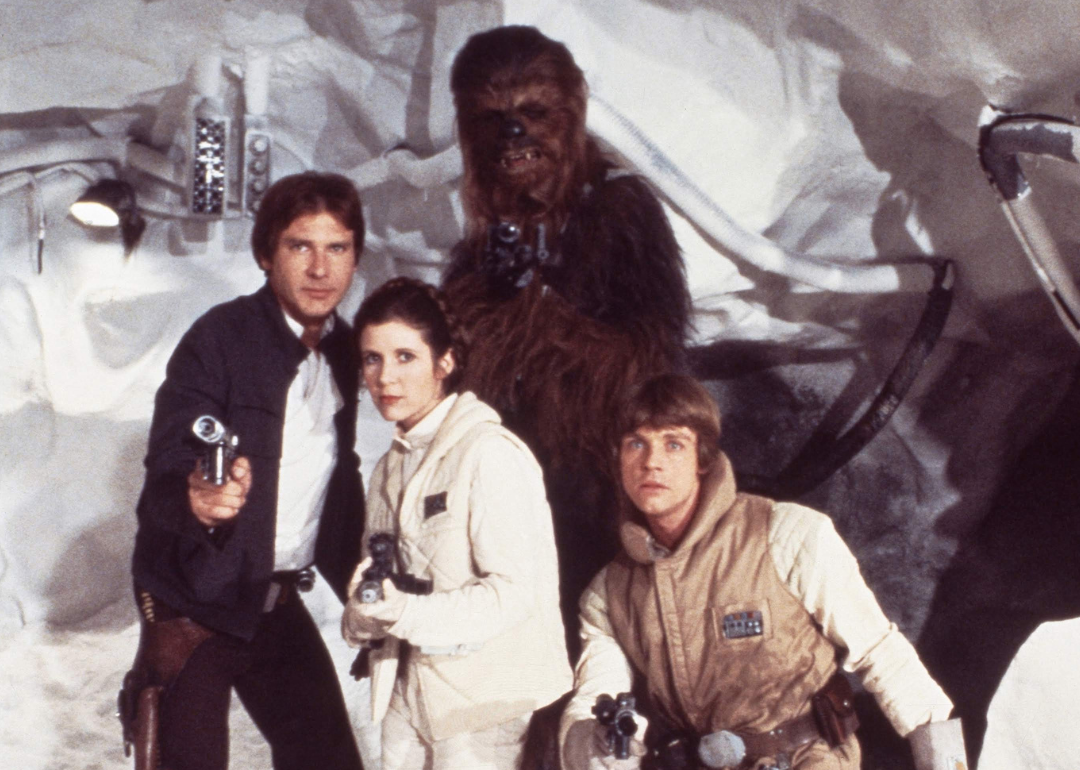
Robert Elswit is perhaps most well known for his six-film collaboration with Paul Thomas Anderson. Together, they made “Inherent Vice,” “Magnolia,” “Boogie Nights,” and “There Will Be Blood,” for which Elswit won an Oscar. Before working as a cinematographer, Elswit was a on “E.T. the Extra-Terrestrial” as well as “The Empire Strikes Back” and “Return of the Jedi” of the Star Wars film franchise. He’s also been the director of photography for 2021’s “King Richard” and 2014’s “Nightcrawler.”
Elswit is known for his stylistic range, long takes, and resourcefulness when filming, using existing conditions to heighten the aesthetic of the film. In “Nightcrawler,” for instance, only in places that were already lit by existing light sources, since there wasn’t a budget for elaborate lighting. In doing so, he was able to capture a seediness that was crucial to the tone of the movie.
Conrad Hall
In films like “In Cold Blood,” “Butch Cassidy and the Sundance Kid,” “American Beauty,” and “Cool Hand Luke,” Conrad Hall became famous for capturing moments some might have previously considered mistakes, and elevating them to the status of great cinema. Hall was known for risk-taking and identifying “” moments, pushing the boundaries of cinematic norms at the time and encouraging major studios—where “perfection” was ideal—to expand their ideas of what could be considered good filmmaking. In “Cool Hand Luke,” in particular, Hall experimented with lens flares and shooting night scenes in low light, rather than manufacturing unconvincing nighttime atmospheres in bright light as was conventional during the 1960s.
Darius Khondji
Iranian French cinematographer Darius Khondji has worked with David Fincher, Bernardo Bertolucci, Alan Parker, Roman Polanski, Sydney Pollack, Woody Allen, and many others, earning him a reputation for his adaptable yet highly controlled style. Khondji has worked on films ranging from the Safdie brothers’ “Uncut Gems” to Bong Joon-ho’s “Okja,” and Woody Allen’s “Midnight in Paris” to several Madonna music videos.
Khondji has as “an animal hiding in the shadows that’s going to come out eventually, that’s going to show part of its face or body as it emerges from the shade.” His philosophy that the aesthetic of the film is something to be discovered rather than decided upon is part of what makes him the chosen collaborator of directors across varied genres.
Ellen Kuras
The first woman to receive the American Society of Cinematographers’ Lifetime Achievement Award, Ellen Kuras was the director of photography for “Eternal Sunshine of the Spotless Mind,” “Personal Velocity,” and many documentaries, including “David Byrne’s American Utopia,” the Fran Lebowitz miniseries “Pretend It’s a City,” and her own directorial debut, “The Betrayal - Nerakhoon.” Her work is defined by images that , focusing instead on how she can illuminate aspects of the characters in unexpected ways. She has said that her approach to filmmaking was influenced by her interest in sculpture and tangible art as a child, which informed the way she thinks about light, shadow, and color.
Edward Lachman
Edward Lachman is the cinematographer behind many films known for their extraordinary visuals—from Todd Haynes’ “Carol” and “Far from Heaven” to Sofia Coppola’s “The Virgin Suicides.” He is adept at strategically employing rich colors and lighting to intensify a film’s mood, as evidenced by the in “The Virgin Suicides,” and the warm pinks and cool greens of “Carol.”
Haynes, who Lachman has worked with on several films, as more “like a painter … than any other cinematographer I’ve ever met” because of his tendency to think about form, color, and abstract emotionality before the concrete elements of the story or scene. Another of his collaborators, colorist Joe Gawler, has remarked upon Lachman’s encyclopedic knowledge of lenses, filters, and techniques throughout film history, a knowledge that calls into being moods and aesthetics from limitless time periods and places.
Emmanuel Lubezki
Mexican cinematographer Emmanuel Lubezki has won three Academy Awards for Best Cinematography—for 2013’s “Gravity,” 2014’s “Birdman or (The Unexpected Virtue of Ignorance),” and 2015’s “The Revenant,” respectively—making him the . Lubezki is famous for his collaborations with director Alfonso Cuarón, during which he pioneered several techniques, including using innovative camera rigs to capture a roadside ambush in “Children of Men,” and finding a sense of naturalism on a virtual zero-gravity film set for “Gravity.” And for “The Revenant,” Lubezki and director Alejandro G. Iñárritu decided to film the wilderness movie , which prolonged the shoot by several months but provided a sense of authenticity vital to the film’s survival themes.
Rachel Morrison
Rachel Morrison made history as the first woman to be nominated for the Academy Award for Best Cinematography for her work on Dee Rees’ 2017 film “Mudbound.” She’s also known for her work on Ryan Coogler’s films “Fruitvale Station” and “Black Panther.” In “Fruitvale Station,” Morrison opted for , a nod to the film’s subject matter: the police murder of Oscar Grant, which was filmed on a cellphone. She describes her style as “,” which concerns both portraying characters’ subjectivities as well as using natural lighting and coloring. For “Mudbound,” Morrison researched the photographs of Dorothea Lange and other Depression-era photographers and documentarians, picking up on the gritty, high-contrast quality of those works to lend the visuals a historical, dramatic feel while still shooting digitally.
Robby Müller
Dutch director of photography Robby Müller was known as the “” because his innate ability to use natural light, as well as space and composition, some critics said, was akin to the way master painters like did in their works. Müller was against the use of “camera acrobatics” in film, favoring an unobtrusive gaze that did not make itself known to the viewer. He was best known for his work on “Paris, Texas,” “Summer in the City,” “Coffee and Cigarettes,” “Dead Man,” “Breaking the Waves,” and “Dancer in the Dark,” and for his collaborations with Lars von Trier, Wim Wenders, and Jim Jarmusch.
Asakazu Nakai
Japanese cinematographer Asakazu Nakai worked with several acclaimed Japanese filmmakers including Mikio Naruse, Yasujirō Ozu, and Kon Ichikawa. He is most famous for working on legendary director Akira Kurosawa’s most celebrated films, including “No Regrets for Our Youth,” “Ran,” and, most illustriously, “Seven Samurai.” Nakai is known for his ability to work sensitively with , blending with long, still shots, and imbuing dialogue scenes with a sense of motion using a range of techniques, including to cast flickering shadows on the actors’ faces.
Sven Nykvist
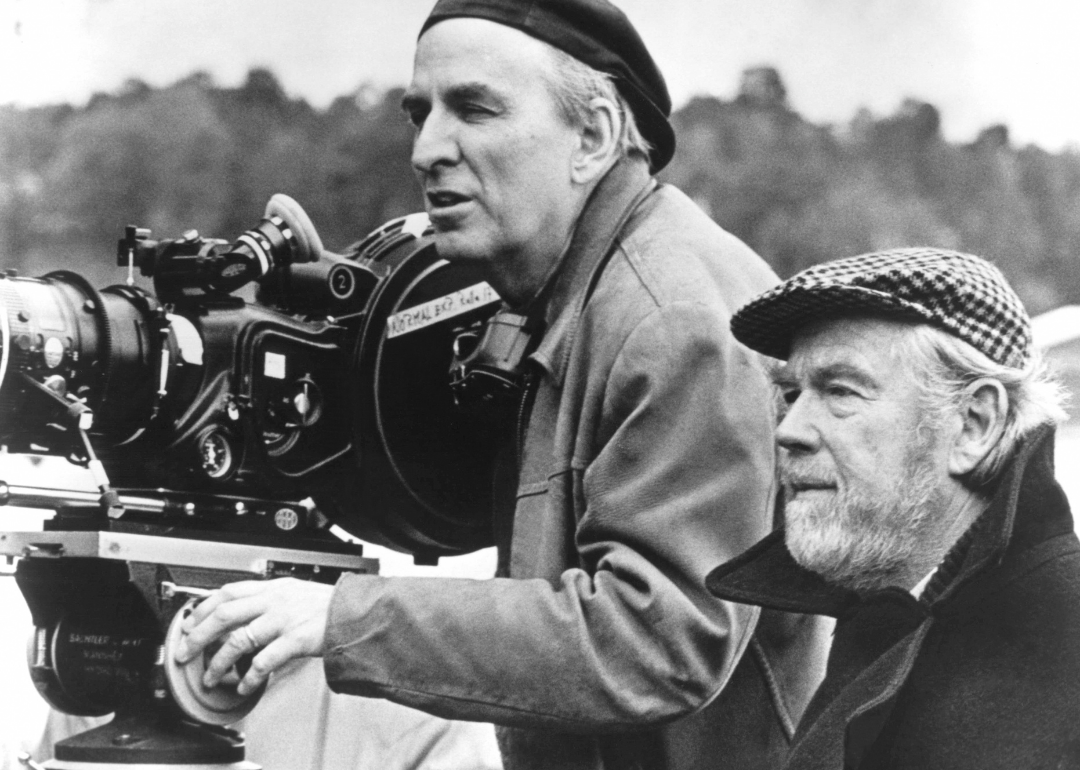
Swedish-born cinematographer Sven Nykvist collaborated with Swedish filmmaker Ingmar Bergman for 25 years, . After their first film together, the 1960 medieval allegory “The Virgin Spring,” won Bergman his first Best Foreign Film Oscar, the two began their long-term working relationship. Nykvist became known for his moody use of natural light, of which he made something of a study, and for his unobtrusive, yet probing camerawork, which featured groundbreaking close-ups that elucidated the emotionality of characters in new ways. Later in his career, Nykvist worked on films in other parts of Europe and the U.S., including several Woody Allen films, Nora Ephron’s “Sleepless in Seattle,” and Lasse Hallström’s “What’s Eating Gilbert Grape.”
Robert Richardson
Robert Richardson has been the cinematographer of choice for Quentin Tarantino, Martin Scorsese, and Oliver Stone over the course of his long career. Richardson has worked on “Kill Bill,” “Django Unchained,” “Inglourious Basterds,” “Once Upon a Time… In Hollywood,” “Hugo,” “Shutter Island,” and countless other films. He is known for his use of bright colors and dynamic camera movements tailored to the tone of each specific film and director—ranging from “” in “Hugo” to quick brutality in “Kill Bill.” His is also notable; he’s shot everything from the dark, ominous world of “Shutter Island” to the romantic travel film “Eat Pray Love.” Richardson has won three Best Cinematography Oscars, for “Hugo,” “The Aviator,” and “JFK,” respectively.
Vittorio Storaro
Italian director of photography Vittorio Storaro as “writing stories with light and darkness, motion and colors.” Storaro is well known for his work with filmmaker Bernardo Bertolucci on films including “Last Tango in Paris,” and “The Last Emperor,” as well as for collaborations with Francis Ford Coppola and Warren Beatty.
Famous for his particular color selection and lighting, he received acclaim for his work on “Apocalypse Now,” for which he designed much of the look, including the . Storaro said his decision to detach the film from realism or naturalism was an intentional choice to make it not resemble television reporting. He also subverted norms around using darkness and light as visual metaphors; he framed culture and civilization as darkness as a way of implicitly critiquing it, and had Marlon Brando emerge from it.
Gregg Toland
Gregg Toland was the cinematographer behind Orson Welles’ “Citizen Kane,” John Ford's “The Grapes of Wrath,” and William Wyler’s “Wuthering Heights.” He believed the film’s story should dictate the way it was visually presented, but that the camera should be subtle enough not to distract viewers from what was happening on screen. His reputation for who was opposed to the predictable filmmaking of the Hollywood studio system of the 1930s and ’40s was what drew Orson Welles to choose him to work on “Citizen Kane.” According to Welles, “Toland was the best director of photography who ever existed.” Together, the two innovated several now-ubiquitous film techniques, including , distorted camera views using broken mirrors and glass, and a scant—but dramatic—use of extreme close-up.
Haskell Wexler
Known for his work on “Who’s Afraid of Virginia Woolf?,” “In the Heat of the Night,” “Bound for Glory,” “One Flew Over the Cuckoo’s Nest,” and “America, America,” Haskell Wexler was known for , which impacted which films he chose to work on, as well as how to film them. He was an outspoken critic of the U.S. government, which led him to work on several documentaries in the 1970s and ’80s on subjects ranging from the North Vietnamese Communists to the Weather Underground—a radical group trying to overthrow the U.S. government—to Nicaragua’s Sandinistas. The FBI even opened a file on Wexler, whose political leanings labeled him “potentially dangerous.” Wexler was also an innovator of camera techniques; “Bound for Glory” was the first feature to use the Steadicam, and he was credited with inventing the handheld running shot during the film “A Face in the Rain.”
Gordon Willis
Gordon Willis is the legendary cinematographer behind all three Godfather films, Woody Allen’s “Annie Hall” and “Manhattan,” “All the President’s Men,” and many other iconic films. Nicknamed the “Prince of Darkness” by fellow director of photography Conrad Hall, Willis was acclaimed for his mastery of and use of shadows, particularly in the Godfather film trilogy and “All the President’s Men.” He also became known for his ability to express moral and psychological complexities visually. Despite his status as one of the most influential cinematographers of all time, as well as his work on six films that collectively garnered 39 Oscar nominations and 19 wins, Willis was never nominated for Best Cinematography.
Robert Yeoman
Robert Yeoman has served as cinematographer on each of Wes Anderson’s live-action films, including 1996’s “Bottle Rocket.” He is known for his , including meticulously symmetrical compositions, use of wide-view, anamorphic lenses, bright colors, and . His longtime collaboration with Anderson has made him a master of executing Anderson’s highly stylized vision, which eschews naturalism in favor of controlled, mediated scenes. Yeoman has worked on other indie films including “Drugstore Cowboy” and “The Squid and the Whale.”
Freddie Young
British cinematographer Freddie Young worked on over 130 films but is with David Lean. Together, they made “Lawrence of Arabia,” “Doctor Zhivago,” and “Ryan’s Daughter,” all of which won Academy Awards for Best Cinematography. “Lawrence of Arabia” came out to four hours long and was filmed on location in Morocco, Jordan, and Spain, and reportedly produced . It also of the American Society of Cinematographers’ top 10 milestone films in the art and craft of cinematography of the 20th century, likely for its stunning , artistic renderings of rippling shadows, and its famous transition from a lit match to the rising sun.
Vilmos Zsigmond
Hungarian American cinematographer Vilmos Zsigmond is best known for his work on “Close Encounters of the Third Kind,” “The Deer Hunter,” “The Long Goodbye,” and “Deliverance.” Zsigmond’s attention to lighting is perhaps his most famous contribution to filmmaking, and he described lighting films as an opportunity for “,” or creating a reality that is more emotionally heightened and more beautiful than reality itself. Zsigmond also plays with shadow, using it to create not only the look but the feeling of darkness in the viewer. His masterful lighting also came into play in filming the alien spacecraft in “Close Encounters.” In an effort to emulate the flashing and movement of a light show, Zsigmond brought in dozens of powerful lights.