25 movies with controversial casting choices
Studios and filmmakers often make decisions that upset or even alienate their audiences, even before the film has begun preproduction. Typically, such an occurrence happens in response to a film's casting, like when ; comic book characters are portrayed by actors who comics fans think do not align with the vision in their head; or a child actor plays a potentially traumatizing character.
These types of casting decisions can raise the ire of different communities, but Hollywood has a more storied history in controversial "whitewashing," or casting white actors to play a person of color. Emerald Fennell's February 2026 adaptation of "," starring Margot Robbie and Jacob Elordi, drew significant . Since the novel describes the character as "dark-skinned," accusations of whitewashing quickly followed the announcement.
On the opposite end of the spectrum, complaints of "forced diversity" have plagued many a Hollywood film in recent years. As soon as Christopher Nolan announced the cast list for his epic 2026 鈥攕tarring Lupita Nyong'o as Helen of Troy, Zendaya as Athena, and rapper Travis Scott as a bard, to name a few鈥攙itriolic tirades against Nolan and the film's cast cropped up across the internet, .
No matter the reason behind the controversy, responses from the actors themselves will vary. These embattled performers might drop out of a role swiftly following criticism, but oftentimes they will not, and that decision can lead to hampered box office returns due to angered audiences.
麻豆原创 sifted through articles, news blasts, and web archives to compile a list of 25 of the most prickly casting choices dating back almost 70 years鈥攆rom John Wayne's infamous depiction of "yellowface" in "The Conqueror" all the way to Sia's widely criticized decision to cast an actress who is not autistic to play an autistic character in "Music."
Read on to see 25 of the most controversial casting choices in movie history.
Ghost in the Shell (2017)
When Scarlett Johansson was cast to lead the live-action film adaptation of the beloved manga series "Ghost in the Shell," there was an outcry over the whitewashing of this originally Japanese character. Though the adaptation's plot concerns the mind of a Japanese woman placed into the body of a white woman (Johansson), fans of the manga still felt the casting was insensitive.
Director Rupert Sanders, however, based on the simple fact of her world-renowned popularity. Ultimately, bad press and criticized treatment of the source material created a box office bomb, and "Ghost in the Shell" in changing Hollywood's tradition of whitewashed casting. This would not be Johansson's last foray into controversial casting, however; in 2018, she was the subject of public scrutiny after being cast as a transgender man in the film "Rub & Tug," leading her to ultimately .
The Great Wall (2016)
Though it was helmed by an acclaimed Chinese director, that didn't stop "The Great Wall" from facing backlash over the casting of white actor Matt Damon as the lead in a film that takes place in Song dynasty China. Both director and , explaining that the film is a fantasy and not a rewrite of Chinese history, and Damon is only one of five heroes in the story鈥攖he other four being Chinese. In the end, that the role was indeed written for a Westerner, and the story is not about Damon "saving all of China."
The Danish Girl (2015)
Tom Hooper's biographical drama about the life of Lili Elbe, one of the first recipients of gender confirmation surgery, received a cold response at the casting of cisgender actor Eddie Redmayne to play the transgender Elbe. In 2015, while promoting the film, Redmayne while still skirting accountability. In a , however, he said he regretted taking the role. "I wouldn't take it on now. I made that film with the best intentions, but I think it was a mistake," he told the . That same year, Redmayne's "The Danish Girl" co-star Alicia Vikander said that while she thought Redmayne gave a great performance, she
Casino Royale (2006)
Though Daniel Craig's iteration of James Bond feels like a modern mainstay at this point, his casting as 007 was not warmly received back in the early aughts鈥攏ot just by Bond fans, but by the press as well. Many were opposed to a , traditionally played by actors of the tall, dark, and handsome variety.
While the next Bond actor to take the reins from Craig is still in contention鈥攚ith Denis Villeneuve attached to direct the next installment following Amazon's acquisition of the franchise鈥攍ongtime casting director of the series Debbie McWilliams looked back on Craig's casting, reflecting: "The press response was awful and I felt so sorry for him, but in a funny kind of a way I think it almost spurred him on to do his damnedest to prove everybody wrong."
Nina (2016)
"Guardians of the Galaxy" actress for portraying legendary singer Nina Simone in an eponymous bio-drama about her life. The objection to Salda帽a's casting came down to Salda帽a being a lighter-skinned Afro-Latina actress playing a darker-skinned Black woman.
To emulate Simone, Salda帽a not only had to wear a prosthetic nose and fake teeth, but she donned makeup to make her skin darker, leading to accusations of colorism. Simone's daughter, , saying: "My mother was raised at a time when she was told her nose was too wide, her skin was too dark." Salda帽a admitted in 2020 that she should not have taken on the role.
The Lone Ranger (2013)
Although Johnny Depp, a white actor, claimed to have Cherokee ancestry, that wasn't quite enough for audiences to not take him to task for donning "redface" as the Indigenous character Tonto in Disney's film adaptation of "The Lone Ranger." that he "consulted with native leaders" in preparation for the part and was even adopted into the Comanche Nation as an honorary member back in 2012. While Tonto is already considered something of a Native caricature, producer that the Native American community supported the film鈥攂ut all the bad buzz was enough for the film to flounder at the box office.
The Hunger Games (2012)
A book series with as passionate of a fan base as "The Hunger Games" was bound to receive some quibbles when the film adaptation was first announced, and though Jennifer Lawrence's portrayal as Katniss Everdeen has since gone on to become iconic, that Lawrence shouldn't have gotten the part. In Suzanne Collins' original novel, Katniss is described as having "dark hair, olive skin, and gray eyes," traits not typically associated with someone of Lawrence's complexion. Though intentionally vague on Collins' part, some fans felt that it offered the opportunity for a nonwhite actress on film鈥攁n opportunity that director Gary Ross blatantly ignored.
Aloha (2015)
In Cameron Crowe's "Aloha," Emma Stone plays Allison Ng, an Air Force pilot of Hawaiian and Chinese heritage鈥攖he only problem is, Stone is neither of these. Stone and Crowe received widespread backlash for whitewashing, though Crowe the intentional choice of casting, explaining that Allison's character, having a small portion of Hawaiian and Chinese backgrounds, was meant to be frustrated that she did not look like either ethnicity. Still, Crowe offered a sincere apology for the frustration he caused, even if it wasn't enough to save ticket sales. several times for taking on the role, saying in a 2015 interview that she has become more aware of the "insane history of whitewashing in Hollywood" since the scandal.
The Godfather Part III (1990)
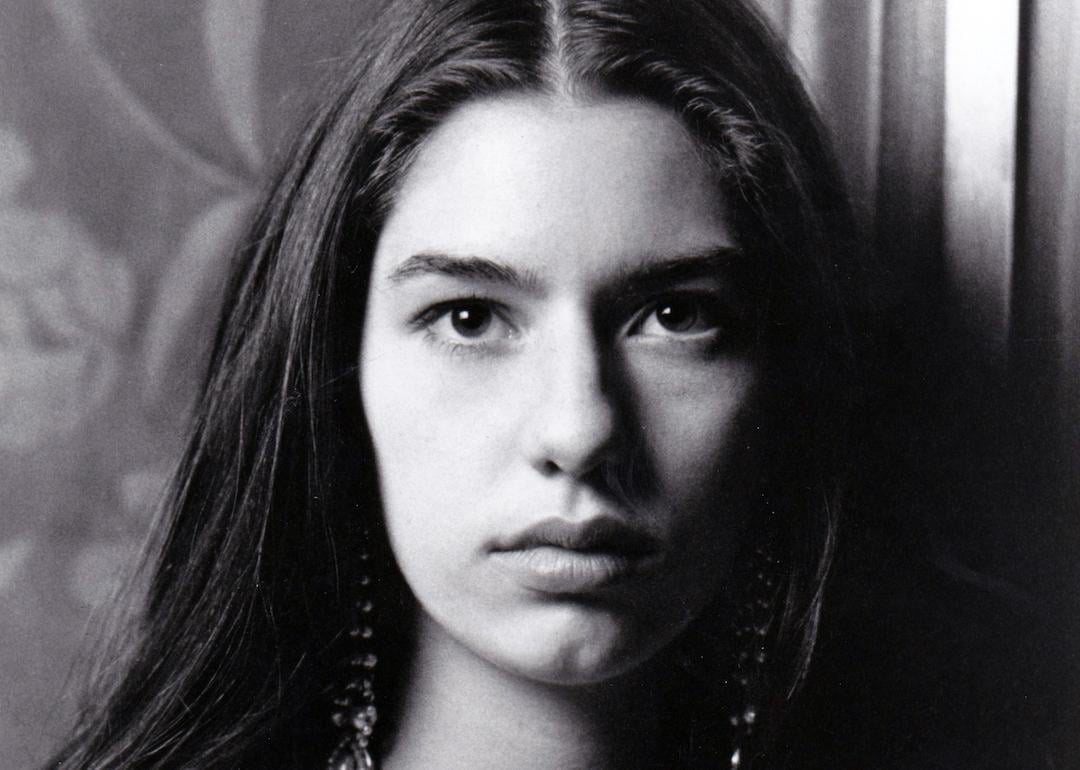
Three decades later, Francis Ford Coppola's daughter Sofia鈥攏ow a renowned director鈥攊s unkindly remembered as having been the worst part of the third installment to "The Godfather" trilogy. Critics at the time immediately lambasted the teen for her amateurish turn as Mary Corleone.
Sofia replaced Winona Ryder after the latter , and though Francis Ford Coppola was offered some , he chose his daughter because he felt that she looked the age he intended for the character. While partly an act of nepotism, it was ultimately a mad-dash decision: Sofia wanted to help her father, who she felt was "under a lot of pressure." In a 2020 interview with The New York Times, the younger Coppola said, "It , so I wasn't crushed. I had other interests. It didn't destroy me."
Ghostbusters (2016)
Back in 2016, the all-female reboot of "Ghostbusters" was met with skepticism by those who perceived it as an IP-milking gimmick; however, this was overtaken by an outcry from zealous fanboys, who felt the "sanctity" of the original, male-led films was being desecrated. Taking over the roles played iconically by Bill Murray, Harold Ramis, Dan Aykroyd, and Ernie Hudson were Kristen Wiig, Melissa McCarthy, Kate McKinnon, and Leslie Jones. Successful women in comedy in their own right, the fanboys led a vicious online backlash that bloomed into a full-on culture war; some feel that to come.
The Super Mario Bros. Movie (2023)
The announcement of "Guardians of the Galaxy" and "Parks and Recreation" star Chris Pratt helming the iconic role of the red-clad plumber in the new animated Super Mario Bros. film was met with a fair share of skepticism from social media. Many felt that Pratt to do Mario's trademark Italian accent鈥攕adly, that low bar couldn't even be cleared when the trailer dropped and the movie Mario's voice didn't sound like video game Mario; it sounded like Pratt. Though Pratt and the film's director defended the decision, some still felt it was .
Iron Man (2008)
It's practically unfathomable to imagine the role of Tony Stark played by anyone other than Robert Downey Jr. at this point. But over a decade ago when the first "Iron Man" film was in the works, many in the industry felt he wasn't up to the task. This was because Downey was on the outs in Hollywood at the time due to his past struggles with addiction, and then-Marvel Studios president to prove why Downey was perfect for the role. Ultimately, that fight paid off in dividends, and now the name Iron Man is inextricably linked to Downey and the multibillion-dollar Marvel Cinematic Universe franchise.
Prince of Persia: The Sands of Time (2010)
Passing over an actor of Iranian descent to put Jake Gyllenhaal in the role of the titular Prince of Persia had bad optics in the public, and "Prince of Persia: The Sands of Time," based on the video game of the same name, was lambasted for the . Nearly a decade later, Gyllenhaal reflected on taking the role as one that he "learned a lot from." In an in 2019, Gyllenhaal said: "You're bound to slip up and be like, 'That wasn't right for me,' or 'That didn't fit perfectly.' There have been a number of roles like that. And then a number of roles that do."
Taxi Driver (1976)
In Martin Scorsese's classic masterwork "Taxi Driver," tween Jodie Foster portrayed Iris, a child sex worker in 1970s New York City. While a role that has grown to be iconic in Foster's lengthy oeuvre (and garnered her an Academy Award nomination for Best Supporting Actress), there were debates and criticisms at the time over the ethics of putting a child in such an intense role. Foster that she underwent "extensive psychological tests" with a UCLA psychiatrist to ensure playing Iris would not leave her traumatized; in the end, Foster reflects on the film fondly, saying: "I was very proud to be in it."
Dallas Buyers Club (2013)
While not the only , director Jean-Marc Vall茅e's decision to have Jared Leto, a cisgender male actor, play the role of an AIDS-stricken transgender woman in "Dallas Buyers Club" is a choice that has only gone on to sour further in the public memory. At the time, Vall茅e insensitively revealed that he hadn't even considered casting a real trans woman because he believed there were no trans actors. Leto against criticism as well, and he ultimately received an Academy Award for his performance. But as over the years against letting cis actors play trans characters, it seems even more off-base now. The casting of "Dallas Buyers Club" was not the only aspect of the film that raised eyebrows; the protagonist was the real figure Ron Woodroof, who was depicted as straight and outwardly homophobic in the film, while the real Woodroof was reportedly not homophobic and perhaps bisexual, leading to accusations that the film played on stereotypes for a .
Breakfast at Tiffany's (1961)
Easily one of the most notorious casting choices in history, and not for any good reason, the decision to let Mickey Rooney don yellowface makeup in 1961's "Breakfast at Tiffany's" has gone down in filmmaking infamy. Rooney's performance as Mr. Yunioshi sees the late comedy titan wearing false buck teeth, taped eyelids, and doing an exaggerated Japanese accent.
While it may have been funny to audiences at the time, it's been overwhelmingly acknowledged as an unfortunate marker of Hollywood's racist past. In the present day, , while the "Centennial Collection" physical release features a documentary about the role from the perspective of Asian American performers. Even Rooney himself over taking the role near the end of his life. In 2022, a streaming platform fully , sparking discussions over censorship and whether offensive art should be viewed within its historical context.
A Mighty Heart (2007)
While that any makeup was used to darken Angelina Jolie's skin, that didn't stop the accusations of blackface against the actress when she chose to portray the part-Afro-Cuban journalist Mariane Pearl. Nevertheless, Jolie's skin did appear more tan to better match the light-brown-skinned Pearl. While the film received widespread criticism for this casting choice, Pearl herself defended Jolie, stating in a 2007 that she had personally asked Jolie to play her: "She put her whole heart into it, and I think she understood why we should do this movie. We had something to say that we knew we should say together."
The Conqueror (1956)
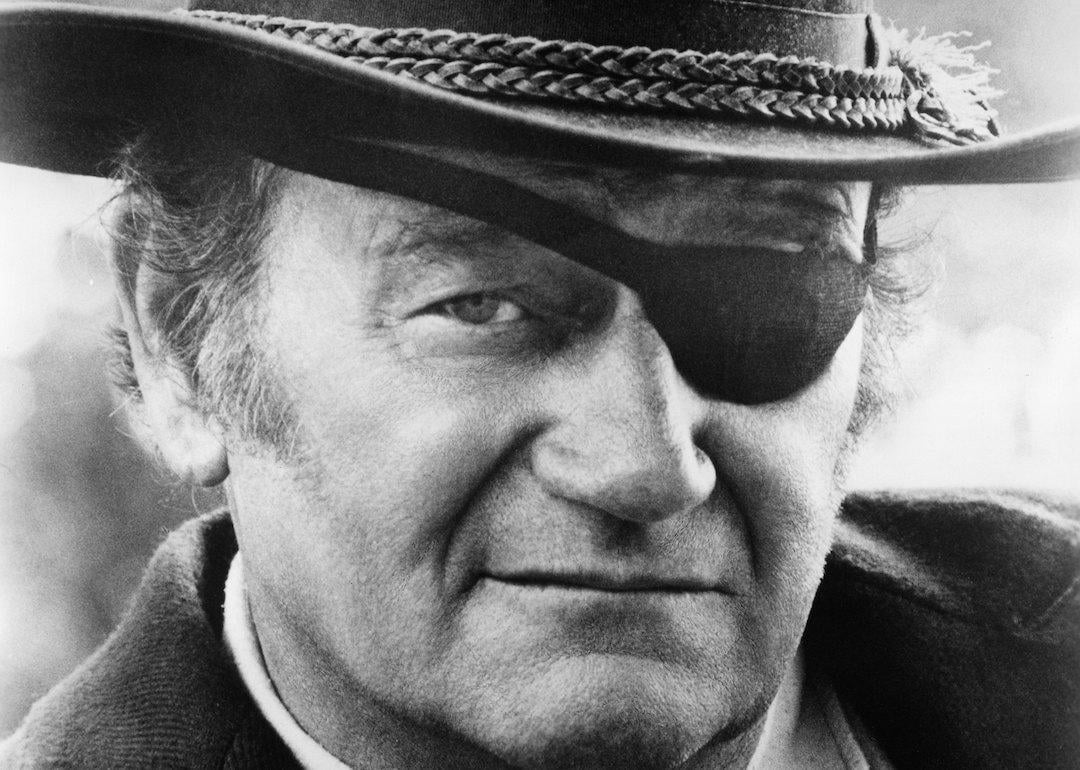
While few might have taken issue with on-screen Western icon John Wayne donning yellowface back in 1956, the decision to have Wayne portray the ruthless, titular conqueror Genghis Khan in Dick Powell's film has certainly not aged well. Still, the film was at the time: it was such a box office disaster that it bankrupted studio RKO Pictures. The movie was also filmed near a nuclear testing site, and many believe that led to a number of the cast and crew
Batman v. Superman: Dawn of Justice (2016)
As has been seen before time and time again, superhero fans are particularly protective of their comic book characters and are wont to express passionate responses鈥攑ositive, negative, or both鈥攖owards those who may be cast to play these characters on film and television. This was no more apparent than when Ben Affleck was announced to portray the Dark Knight in the DC films, starting with Zack Snyder's "Batman v. Superman: Dawn of Justice."
, Affleck said that he was "hurt" by the backlash, which included fan petitions to get him recast. Some of the pushback , which meant an older depiction of the beloved superhero. Ultimately, Affleck .
The Dark Knight (2008)
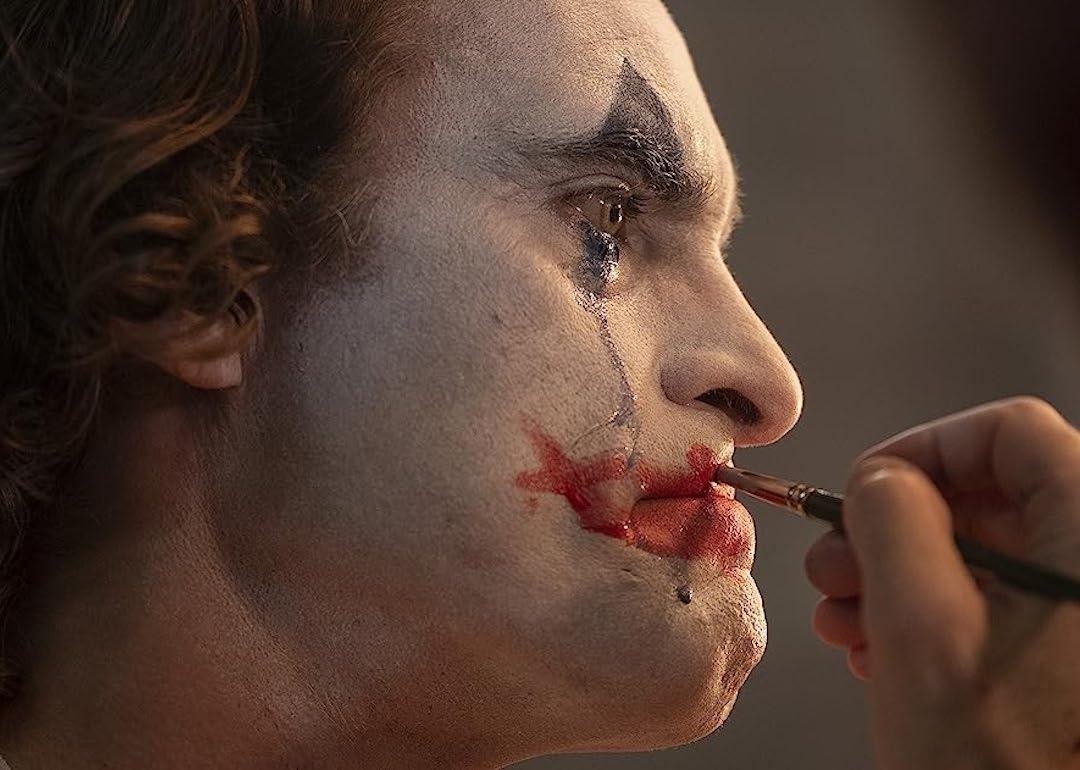
It's absurd to think that at one point Heath Ledger's Joker in "The Dark Knight"鈥攁 role that was awarded a posthumous Oscar and effectively became the reference point for all the portrayals of the Joker that came after it鈥攚as once met with extreme doubt. But when Ledger's casting became public knowledge, fans took to social media to call it a litany of derogatory things, including "the worst casting decision ever made."
As Jonathan, who co-wrote the screenplay, the director stuck to his guns despite the intense backlash and even some skepticism from Jonathan himself in casting the "Brokeback Mountain" star. Of course, the rest is movie history.
Music (2021)
Pop star Sia generated a in 2021 over her directorial debut "Music" due to casting her frequent collaborator Maddie Ziegler to play an autistic girl despite Ziegler not being on the autism spectrum herself. As with many recent shakedowns in Hollywood, there's been debate over whether able-bodied or neurotypical actors should be able to play disabled or neurodivergent characters, and the autistic character in "Music" was felt by many to be an offensive stereotype.
Sia handled the situation poorly, defending the casting and lashing out on Twitter, that the situation caused her severe mental distress; she has since issued an apology. A couple of years after the film's release, however, that she is, in fact, on the autism spectrum herself. Sia and Ziegler's unusual relationship has been the subject of public scrutiny for years prior to "Music," with critics expressing concern over Sia potentially .
The Dark Knight Rises (2012)
Comic book fans when "The Devil Wears Prada" actress Anne Hathaway was cast to play Selina Kyle, better known as Catwoman, in the conclusion to Christopher Nolan's "Dark Knight" trilogy. Comic book fan spaces can breed unfortunate prejudices, which were on display with the announcement of Hathaway's casting; sometimes fans feel entitled to how their characters鈥攅specially female characters鈥攍ook, and Hathaway didn't fit their fantasy. In the end, however, Hathaway's performance won over both fans and critics. The role turned out to be Hathaway's last before "Les Miserables," which touched off that would persist for years afterward.
The Last Airbender (2010)
M. Night Shyamalan's adaptation of the popular Nickelodeon cartoon , having been unanimously panned and disappointing at the box office more than a decade ago. Many would attribute the failure of "The Last Airbender" to its casting; in the cartoon, the characters are in a world influenced heavily by various Asian and Indigenous cultures, and Shyamalan cast mostly white actors in lead roles. Shyamalan did defend his "colorblind" casting, but the backlash from fans and film critics was swift and vicious, and the film tanked considerably.
Netflix's 2024 live-action series "Avatar: The Last Airbender" made in the first live-action adaptation, featuring a cast that more accurately reflects the diversity depicted in the original cartoon. The series was renewed for a second and third season shortly after its premiere.
Doctor Strange (2016)
Is giving a role that mostly amounts to a stereotypical Asian "mystic" caricature over to a white actor better than giving it to an Asian actor? That's the after the announcement that Tilda Swinton would be taking on the comic character of magic arts guru named the Ancient One, in the MCU's first "Doctor Strange" film. The character, portrayed as a Tibetan man in the comics, was reimagined as Celtic and androgynous. Swinton professed that the character in the film was not meant to be Asian, while co-screenwriter C. Robert Cargill cited an unwillingness to alienate Chinese markets; in the end, Marvel Studios president over the casting decision.
Pan (2015)
Since it was written in the early 20th century, the Indigenous characters in author J.M. Barrie's "Peter Pan" were never the most politically correct, as they were later visualized quite offensively in Disney's classic animated adaptation of the story in 1953. Still, Tiger Lily is meant to be a Native woman, and the choice to cast white actress Rooney Mara for her role in Joe Wright's "Pan" was met with widespread derision, even leading to a petition in protest that made the rounds on social media. While the casting, over taking the role.
Story editing by Chris Compendio. Copy editing by Tim Bruns.