The stories behind your favorite David Lynch movies
The stories behind your favorite David Lynch movies
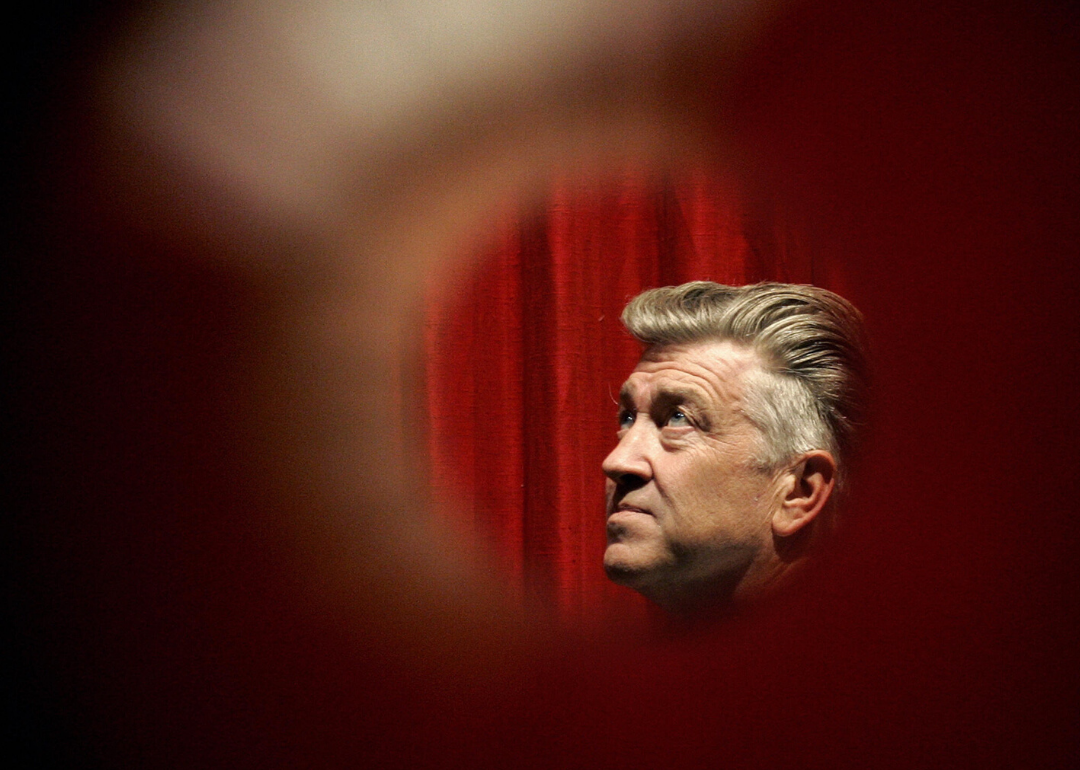
In David Lynch's 2018 biography-memoir hybrid "Room to Dream" (co-written with Kristine McKenna), the famous auteur explains how he felt his first film rather than "think it." Â鶹ԭ´´ is digging into the beautiful, often strange, stories behind some of your favorite David Lynch films.
Lynch's works are notoriously perplexing, but figuring them out isn't the point. The filmmaker offers audiences an experience of cinema and its possibilities that may prove transcendent and emotional. His films don't offer the popular popcorn-and-movie-going experience in which viewers simply sit back and watch the show. Instead, Lynch's movies immerse you—and it isn't always pleasant. For 1977 audiences piling into midnight screenings to view the epically strange "Eraserhead," watching was more akin to being caught somewhere between a boundless dream and tranquilizing nightmare. Viewers can't help but wonder what is all means; but Lynch wants his films to be by viewers, not figured out.
Lynch also occupies a unique place as an artist. His films are experimental and arthouse but also come out of the Hollywood industry and feature movie stars. While his first film was cult, low-budget, and little-seen, it still caught the eye of producers. His sophomore effort, "The Elephant Man," followed a traditional narrative but still held an artsy point of view and garnered a Best Picture Oscar nom. His third film, "Dune" was a big-budget studio production helmed by Hollywood bigwig Dino De Laurentiis.
Lynch's deeply original style is truly strange—but it's also alluring, watchable, and transfixing. Some of his stylistic signatures include surreal, eerie images rendered in high contrast black-and-white, or in rich, bright color palettes that saturate the screen. Characters go through extremes of despair and ecstasy. Narratives move toward the shocking and explicit. Visual details are dreamlike and hyper-surreal, while still linked to the grit of reality. His films obsess with the human body, its biology, blood, and skin, as evidenced in the sci-fi freakiness of skin conditions and the pain box in "Dune," and in the umbilical poetics of the "baby" in "Eraserhead."
Lynch's movies feature frequent recurring themes and obsessions that include the relationship between , as with Bobby Vinton's hit in "Blue Velvet," the Elvis songs in "Wild at Heart," and the ambient noises that inflect his films' soundtracks. Another crucial theme concerns the depravity right beneath society's surface. Read on for the stories behind the beautiful, weird, and often disturbing details in your favorite David Lynch films.
You may also like:
Eraserhead (1977)
Lynch’s first film was shot in black and white and at night over a five-year period, with a small production crew who worked in stables surrounding a mansion on the campus of the (where Lynch was a student).
Lynch “” to the stables, empty structures he used for production and sets and where he lived for much of the filming, after receiving equipment and a small budget from the film school. “Eraserhead” features baffling visuals that are arresting and grotesque in this hyper-surreal, science-fiction tale that belies conventional storytelling in its presentation of Henry, whose partner has a baby—a deformed, bizarro, oozing creature. In his memoir “Room to Dream,” Lynch writes that his first plan for the ending was to have “Henry being devoured by the demonic baby.”
The cult film is famously puzzling, and Lynch has claimed its most popular interpretations (fears around domesticity and fatherhood) have not aligned with . Instead, he offers it was inspired by the industrial, smokestack character of Philadelphia, or what he calls “the fringelands.” At the same time, he calls the strange work—which also features an addled creature called The Man in the Planet who pulls levers from afar—profoundly spiritual.
The Elephant Man (1980)
Lynch’s second feature secured Academy Award nominations for Best Picture and for Best Actor. John Hurt portrayed John Merrick, the Victorian-era man with severe physical deformities. The before each day of shooting. “Elephant Man” producers Jonathan Sanger and Stuart Cornfeld were drawn to Lynch’s “wild mind.” Lynch was struggling to get his second project, “Ronnie Rocket,” off the ground when he was offered to direct “The Elephant Man.” That offer came based on the striking originality of “Eraserhead” that showed clear genius within its unconventionality. The producers felt Lynch’s weird style would merge well with a script based on a true story that followed a traditional narrative set in a historical time period.
“Room to Dream” describes Lynch’s work creating the make-up for Merrick. He worked in a garage studio for 12 weeks as if a “mad scientist” to create the character’s look, but ultimately the masklike sculpture he devised couldn’t work. Lynch almost left the production out of devastation.
Dune (1984)
The big-budget “Dune” (adapted from Frank Herbert’s novel series) was famously lambasted by critics. Roger Ebert’s called it “an incomprehensible, ugly, unstructured, pointless excursion,” though it’s masterfully wacky when viewed from a .
“Dune”’s $40 million budget was matched by the immensity of the production, which included . As detailed in “Room to Dream,” there were 80 sets on eight soundstages, with desert locations shot in Mexico in 120-degree heat where a 300-person crew swept the sandy terrain in preparation.
Lynch’s auteurist style seemed to clash with the strictures of a Hollywood epic and he felt he’d sold out, eventually shaving a five-hour rough cut to two hours and 12 minutes. The film's strikingly original visuals collide with acting that was often stilted and vague voice-overs that confuse rather than illuminate the vast, multi-planet world of the year 10,191.
“Room to Dream” describes Kyle MacLachlan, who was chosen from a pool of hundreds to star in "Dune," as “Lynch’s onscreen alter ego.” The film represents MacLachlan's first movie and first role for Lynch.
Blue Velvet (1986)
Lynch listened to Shostakovich’s “No. 15 in A Major” while writing “Blue Velvet.” His third film famously opens with shots of white picket fences, perfect gardens, and schoolchildren walking home before diving into the darkness underneath the seemingly ideal surface. This theme, a signature in Lynch’s work, gets emblematized by an early shot of a moldy, severed ear covered in crawling ants and hidden in tall grass that appears normal until taking a closer look.
Lynch describes : the Bobby Vinton song from which the film gets its title, the idea of sneaking into a girl’s room, and the image of a severed ear in a field. Lynch explains that “it has to be an ear,” one that becomes “a ticket for the hero to go into another world.” Such a journey is always a descent for Lynch’s characters. They venture into the unconscious, and also into the dark underbellies that lurk just beneath comforting appearances.
Wild at Heart (1990)
In "Room to Dream," Lynch describes how seeing "The Wizard of Oz" as a child stuck with him. The 1939 classic is one of the most-referenced films in history, and Lynch made it a strong influence in his fifth film, a road movie called "Wild at Heart" that follows the sultry and rowdily in love Sailor (Nicolas Cage) and Lula (Laura Dern).
"Wild at Heart" makes allusions to "Oz" throughout, in dialogue and imagery. The strongest quotation comes at the film's ending, when Sheryl Lee as Glinda the Good Witch descends from the sky in a pink bubble and gives Sailor advice on love. The Oz-inspired "happy ending" was added at the request of producers, worried about the film's darkly violent tone, and in particular, one scene that had played terribly with test audiences, causing hundreds of viewers to walk out. The scene was cut from the theatrical release, but its content (extreme violence linked to sexual ecstasy) remains a part of the film's interest in the allure of derangement.
Twin Peaks: Fire Walk With Me (1992)
The 1990 “Twin Peaks” television series created a cult following and a cultural catchphrase, “Who Killed Laura Palmer?” before it was canceled after two seasons. Lynch then wrote a feature film script to serve as a prequel to the series but had a hard time getting the project off the ground. The TV series had an eerie quirk, but the film was full-force sordid. Audiences at the . The film was plagued by production problems, including Lynch’s co-creator on the series dropping out early and casting snafus like the popular television actors not wanting to be a part of the motion picture ( most notably among them Lara Flynn Boyle and Kyle MacLachlan).
The without MacLachlan’s involvement since the script focused on his FBI agent character. Lynch rewrote the script with two new agent characters (played by Chris Isaak and Kiefer Sutherland.) Eventually, , but the film was considered a flop.
Lost Highway (1997)
Since starring as the iconically haired Henry in “Eraserhead,” Jack Nance was in every Lynch movie except for “The Elephant Man” even though Lynch had wanted him for that film's leading role. The actor died while “Lost Highway” was in post-production, devastating Lynch, who found in Nance a star charisma overlooked by conventional Hollywood. To this day, Lynch laments his favorite actor didn’t get to see the final version. Nance’s death was ruled a , though Lynch disputes that version of events, thinking it was accidental—there had been an altercation and Nance died much later.
Nance has a small role as a car mechanic in the neo-noir mystery, which is filled with Lynch signatures, namely a convoluted plot mixed with an arresting visual style and unusual soundtrack. Lynch found Nance to be a singular actor who gave off an unmatched feeling he hasn’t found since. He also noted that even if he’d had unlimited resources for “Eraserhead,” he’d have still cast Nance in the lead role.
The Straight Story (1999)
David Lynch calls “The Straight Story”—a G-rated, Disney Studios movie about an elderly man who rides a lawnmower 240 miles to visit his ailing brother—“ .” Lynch’s frequent collaborator, Mary Sweeney, co-wrote the script. While Lynch seemed an unlikely director for a movie that was straightforward and sweet, the film has a tense dread underneath due to the serious health problems of both older brothers.
The ending sequence of "The Straight Story" fuses intense sadness with deep heart swell. In “Room to Dream,” Lynch calls this his favorite scene in the film and remarks on the naturalness of the performances between Richard Farnsworth (Alvin) and Harry Dean Stanton (Lyle) as the brothers. He also comments on the natural, outdoor lighting. Lynch remarks: “The light was just beautiful and the sun was right on [Alvin] and he calls out to Lyle and the second after he did that the sun goes behind the mountain. If we’d been seconds later we would’ve missed that completely. We were so lucky to get that.”
The ending reunion between the two is a true tearjerker, but one that doesn’t feel unearned or sentimental, but rather natural and all too fleeting to capture.
Mulholland Drive (2001)
The glorious, technicolor style of “Mulholland Drive” infuses its mystery with nostalgia and references to classic Hollywood cinema. The film’s beautiful shot compositions and arresting visuals express the familiar Lynchian theme of darkness beneath surface glitz.
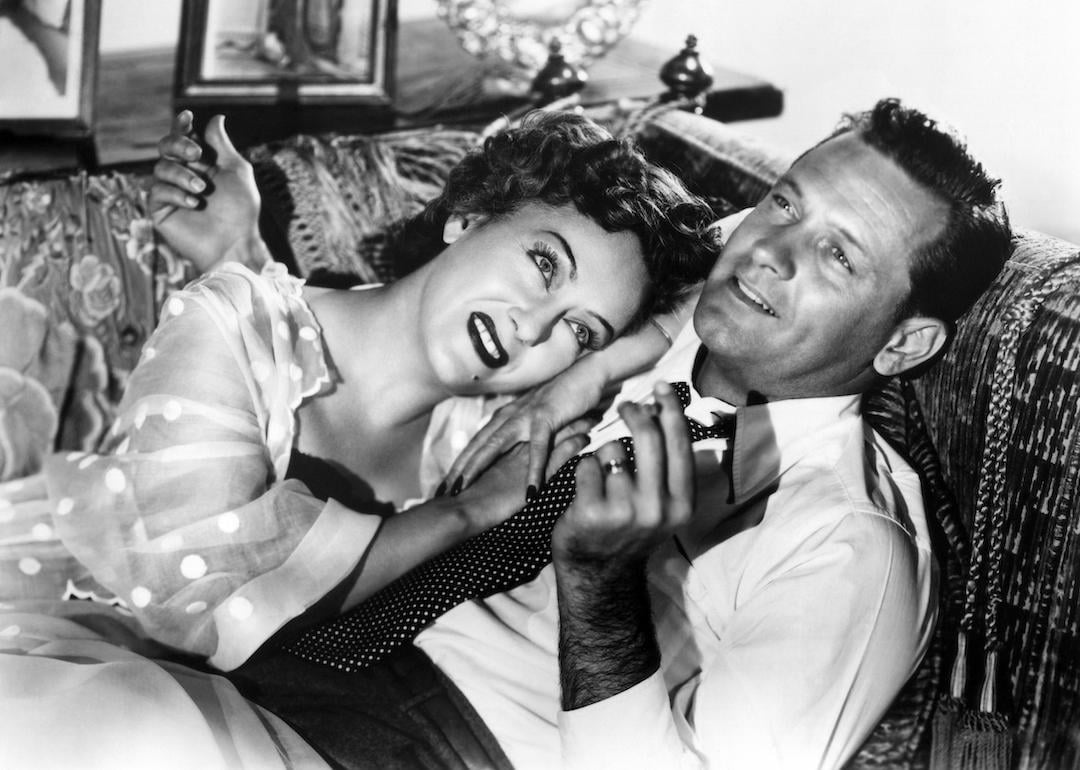
Billy Wilder’s 1950 film noir, “Sunset Boulevard” was a major influence on Lynch’s story about a woman with amnesia and an aspiring actress caught in a surreal, labyrinthine nightmare. The film references “Sunset Boulevard”’s scathing critique of the film industry, especially through the discarded actress Norma Desmond and displays of bleak decrepitude such as with its opening corpse in a pool and monkey funeral. “Mulholland Drive” directly references a shot of Paramount Studios that was in the earlier film.
The film also references Rita Hayworth in the “Gilda” film poster in its exploration of the harmful “” of Hollywood actresses. Hayworth’s was similar to the two at the center of “Mulholland Drive’”s complex and harrowing mystery.
Inland Empire (2006)
In addition to feature films, Lynch is known for his short, experimental art films which often use innovative form and structure. "Inland Empire" stars Laura Dern as an actress immersed in the character she's playing in a film. Lynch shot the surreal, highly experimental film with a handheld digital camera and without a completed script over a three-year period.
The film is notable for incorporating Lynch's 2002 web series "Rabbits" as part of the narrative. Characters watch the show and interact with the set, and the "Rabbits" sequences are some of the most haunting and compelling in the larger film. The rabbits are played by actors (in heavy suits and masks) who were also in "Mulholland Drive," including Naomi Watts.
"Inland Empire" incorporates most footage from the original series but rearranges it by adding lines, and altering the timeline. The rabbits exist in a sitcom-like livingroom set and speak in cryptic, clipped dialogue accompanied by a canned laugh track. In "Room to Dream," Watts describes the experience of performing in the suit while being hot and unable to see due to the heavy rabbit headpiece. She says of Lynch: "I'd hear him saying, 'Okay, Naomi, finish your ironing and go out of the room.' I'd start walking and bump into a wall and he'd say through his bullhorn, 'Not that way, Naomi, turn right; go to your right, Naomi.' I said, 'David, I can do this voice later and you can get one of your assistants to actually wear the suit in the scene,' and he said, 'No, it has to be you in there.'"
You may also like: