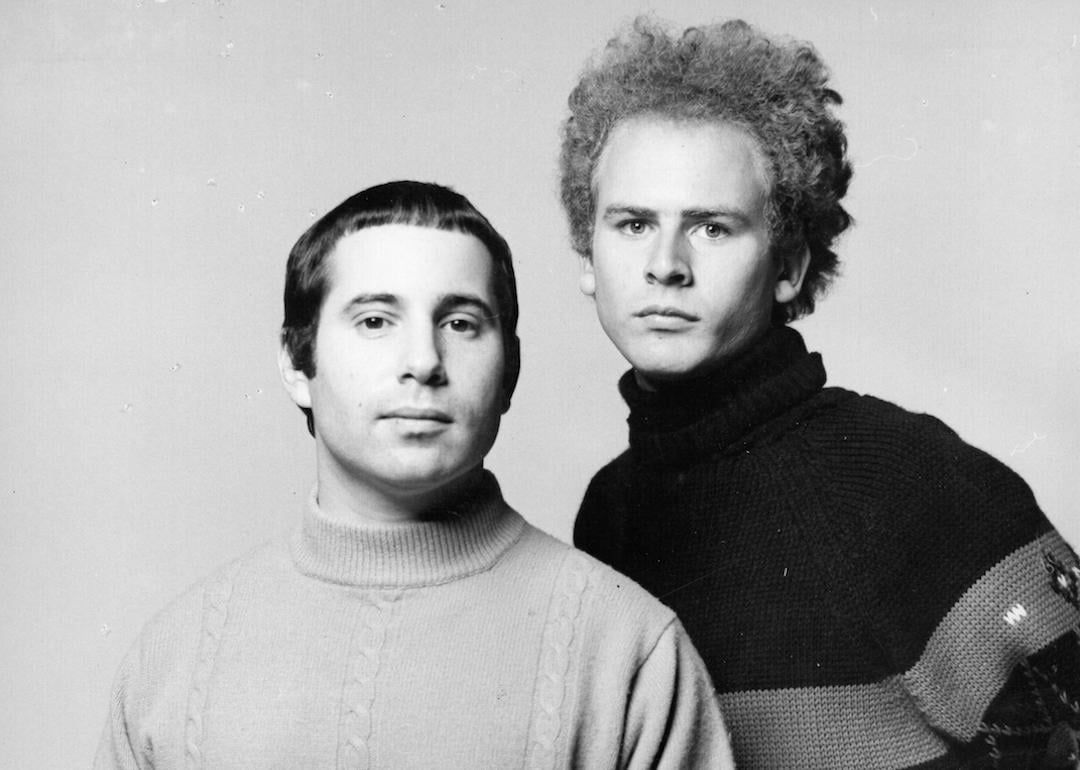
20 infamous band feuds from the '60s and '70s
Take musical groups full of big egos and even bigger hair, put them in two decades , and you have a recipe for some pretty gnarly fights. delved into 1960s and 1970s music history to uncover the backstage conflicts and behind-the-scenes drama of some of the era's most iconic bands, using information from interviews, memoirs, and news sources.
The conflicts range from silly鈥攕ee The Who's Roger Daltrey growing impatient at how long it took to film a promo, leading to 鈥攖o serious, like Johnny Ramone's .
While some squabbles resolved fairly quickly, others lasted for decades鈥攕everal remain unsettled. Many groups survived the fallouts, like Fleetwood Mac through the messy web of divorces, breakups, and affairs members engaged in throughout the early '70s. For others, these disputes spelled out the beginning of the end for some of the era's most iconic bands.
Read on to learn about the backstage arguments and grudges between your favorite musical acts.
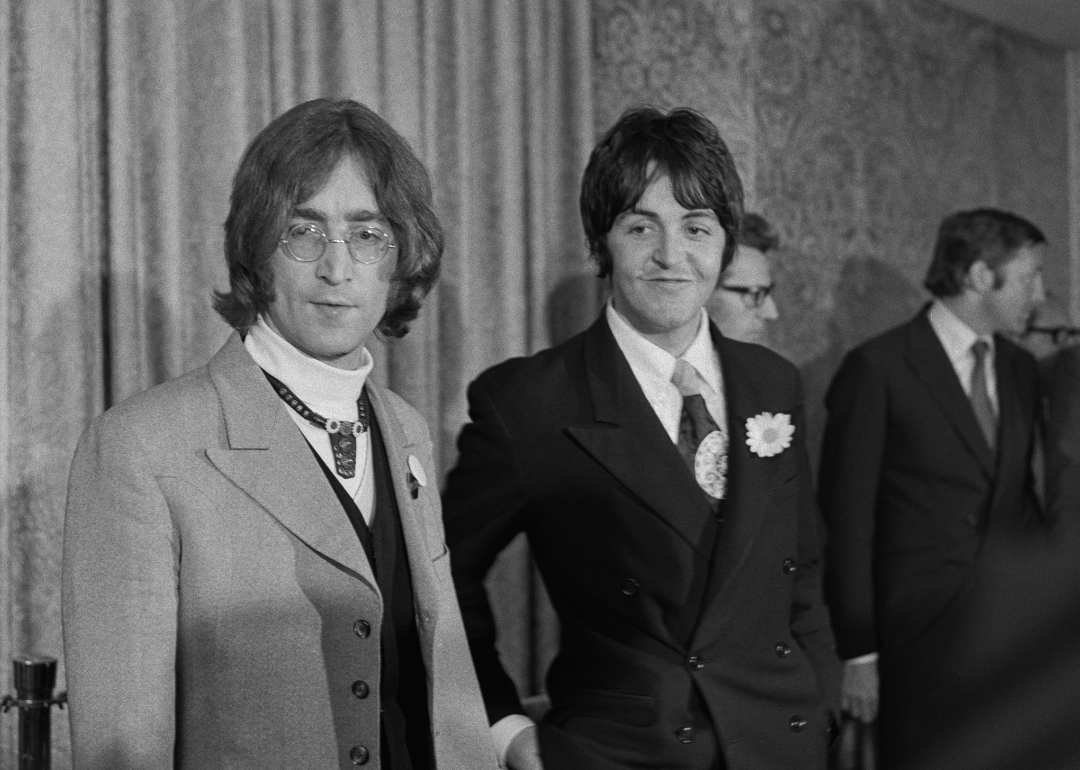
The Beatles: John Lennon vs. Paul McCartney
John Lennon and Paul McCartney helmed history's most successful band as songwriting partners from the moment they met in 1957, but the two had major differences behind the scenes, both in personality and creative instinct.
While McCartney was and took painstaking care in writing songs, Lennon was more erratic and experimental. This, among many other differences between all four band members, led . That same year, McCartney went so far as to to legally end their professional partnership, which sparked a public back-and-forth between him and Lennon.
In a 1971 Rolling Stone story, Lennon , "I pretty damn well know we got fed up of being sidemen for Paul." McCartney responded by sneaking in some thinly veiled strikes at Lennon on his 1971 album "Ram," , "Too many people preaching practices" and "You took your lucky break and broke it in two." While the pair a few years later, they remained relatively distant until Lennon died in 1980.
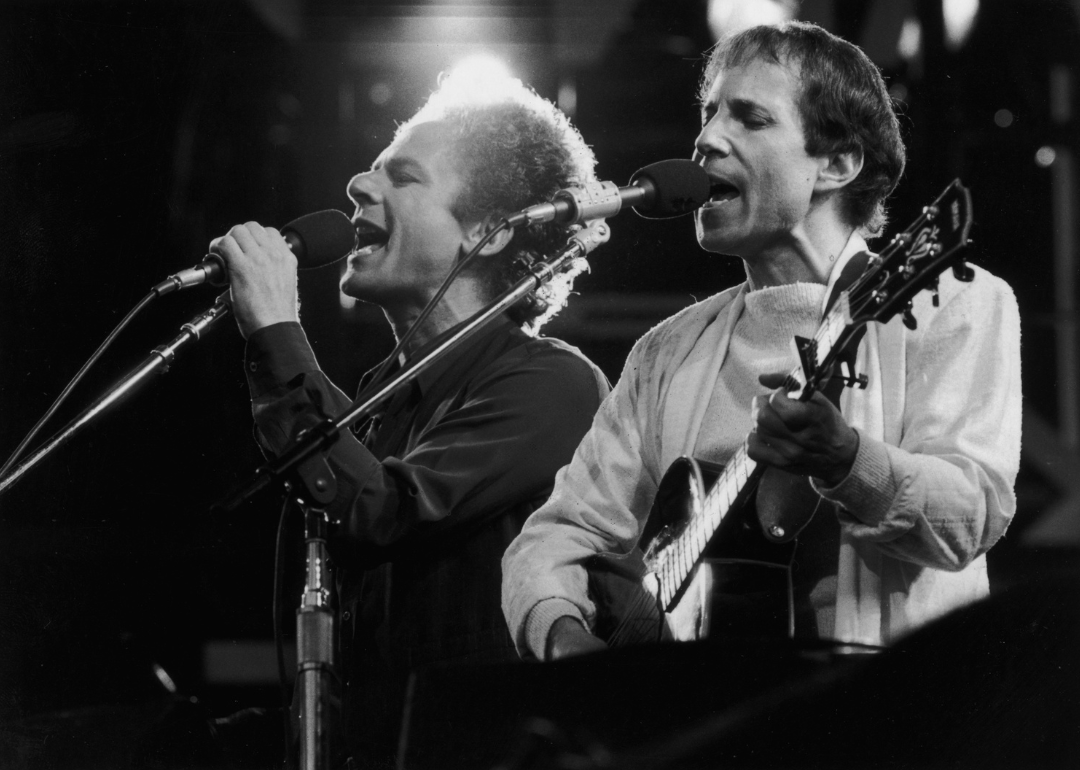
Simon & Garfunkel: Paul Simon vs. Art Garfunkel
The animosity between Paul Simon and Art Garfunkel began even before they hit it big, during the earliest years of their act. After they started working together in 1957, Simon signed a solo deal on the side, which Garfunkel felt betrayed by and would hold a grudge against for decades.
After a decade of nationwide success for the duo, this and other grievances would boil to a head when, in 1969, Garfunkel traveled to Mexico to film a role in a screen adaptation of "Catch-22." By November, Garfunkel had agreed to another film, leaving Simon feeling left behind. The two went on to produce one last album, "Bridge Over Troubled Water," and decided to part ways after.
In his 2017 memoir, Garfunkel , "The friendship was shattered for life. 鈥� I never forget, and I never really forgive," while Simon about his lack of trust in Garfunkel in the wake of the Jazz Fest in New Orleans. In his 2018 biography "Paul Simon: The Life," Simon told Hilburn: "[Garfunkel] let us all down. I was tired of all the drama. I didn't feel I could trust him anymore."
However, emotions have shifted in the intervening years鈥擥arfunkel told The Times in a November 2024 interview that he and Simon had for their past rift. The reconciliation started with a chance encounter with Simon's eldest son, Harper Simon, in the hallways of New York's Pierre hotel, for his hurtful 2015 comments to the English Press. In an April 2025 interview with People, he went even further, even teasing the . "I have always loved my partner, and I know that is reciprocal," Garfunkel said. "Reunion? It is a significant question. Paul and I will keep talking. We may give it a try and see where it leads. You never know."
Simon launched his "A Quiet Celebration Tour" in early 2025, performing solo. As of early 2026, while the two have reconciled personally, no reunion performances have been announced.
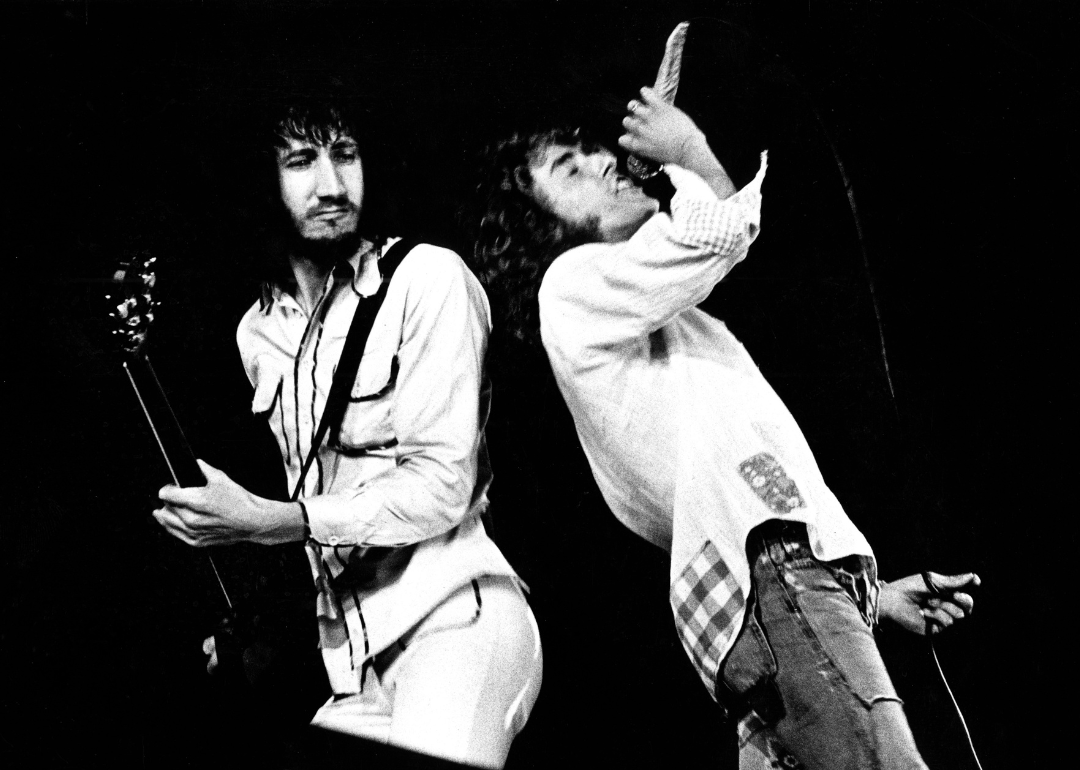
The Who: Pete Townshend vs. Roger Daltrey
The Who achieved widespread acclaim in the late '60s and early '70s, but by 1973, guitarist Pete Townshend and frontman Roger Daltrey had accumulated some resentment. That year, while filming a slow-moving promotional video for their upcoming Quadrophenia tour, Daltrey recalled Townshend "."
The confrontation escalated into a physical fight, according to Daltrey. In 1975, : "We've become a golden oldies group. 鈥� I can tell you that when we were gigging in this country at the early part of this year, I was thoroughly depressed." In response, Daltrey gave the same magazine months later, saying, "The Who wasn't bad. It wasn't quite as good as we could have been, but it was because Townshend was in a bad frame of mind about what he wanted to do. And he didn't play well." The squabble was quickly resolved, with the pair collaborating with the band on an album and tour within the same year.
But The Who has since multiple times over the past few decades. In May 2024, Townshend told MOJO that the group but in October of the same year, he stated that he and Daltrey and that a reunion would be next to impossible.
Never say never, though. Throughout 2025, The Who completed that saw Daltrey and Townshend share a stage together across North America one final time.
The Rolling Stones: Mick Jagger vs. Keith Richards
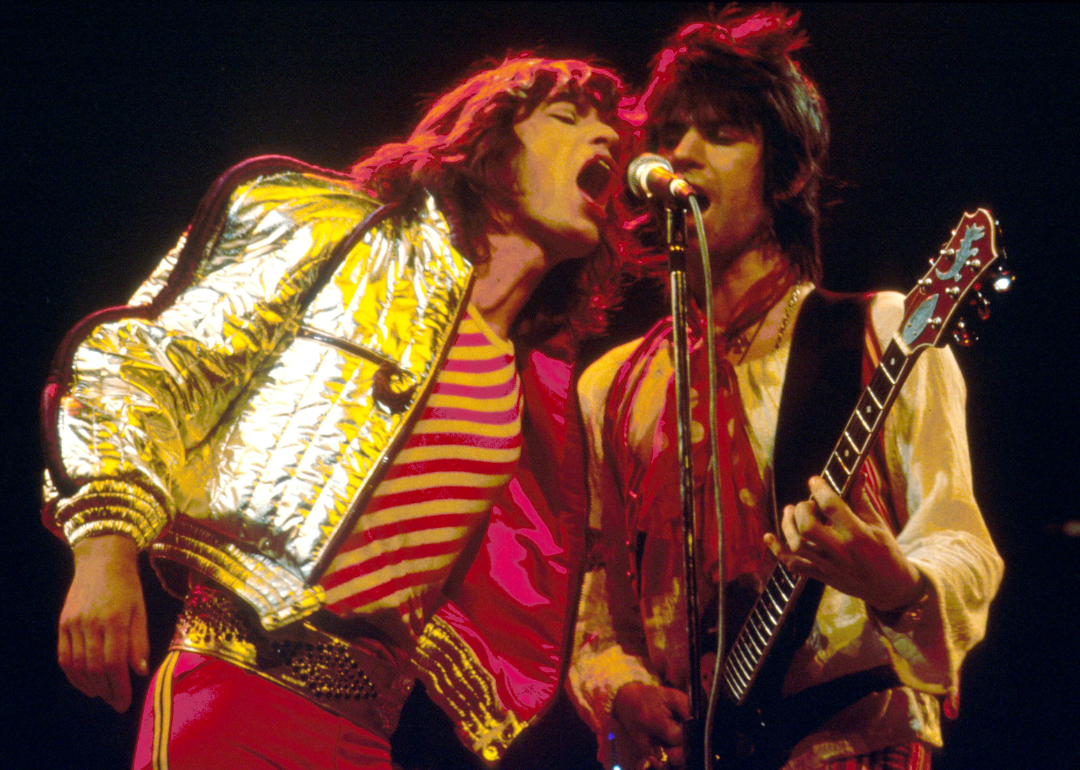
The battle of the Rolling Stones frontmen , when Keith Richards' narcotics addiction had grown so bad that he went on trial and was forced to sober up. In the years before, Mick Jagger had taken control of the group, away from the drug-addled Richards, but once the latter stopped using, he wanted his fair share of power back.
On the 1980 song "All About You," Richards sang of Jagger, leading the two to all but stop speaking by the following year: "Well if you call this a life/ Why must I spend mine with you?/ If the show must go on/ Let it go on without you/ So sick and tired hanging around jerks like you." Just as the band was preparing to go on tour to promote their album "Dirty Work," Jagger informed them by written letter that he was deciding to focus on his solo career instead.
Although it took several years, the two rock powerhouses did eventually reconcile, and today the Rolling Stones remain the , touring together and for their latest album, "Hackney Diamonds."
Crosby, Stills, Nash & Young
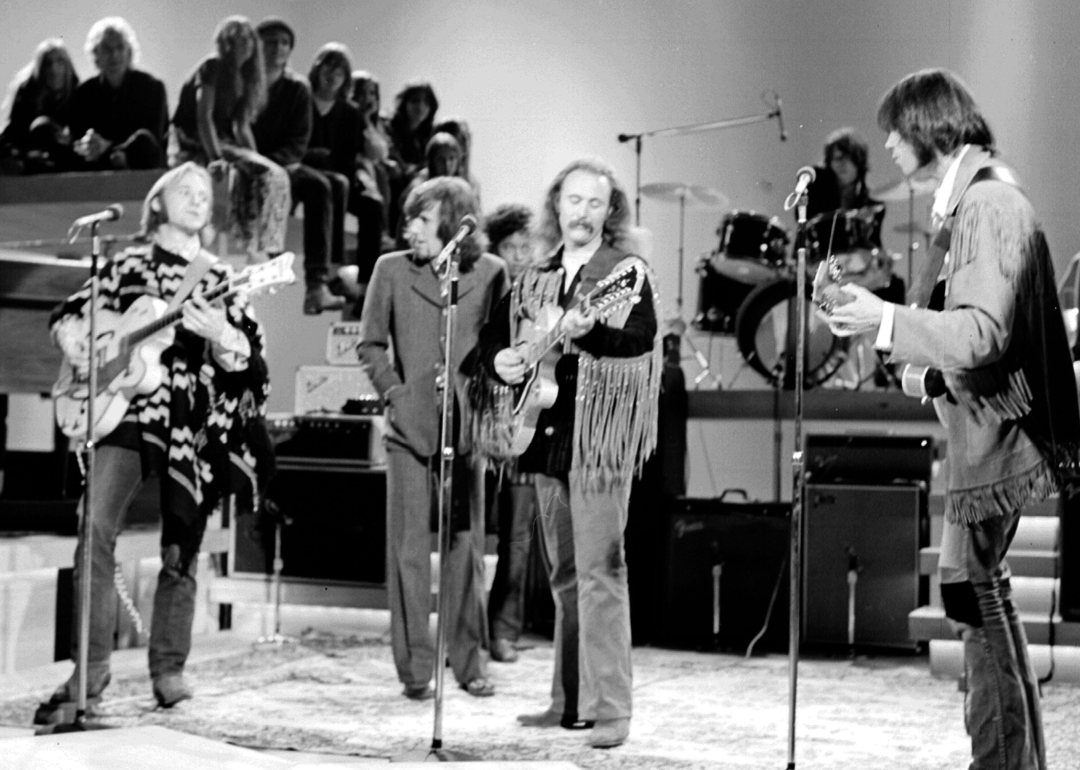
Neil Young and Stephen Stills' conflicts lasted over several years, spanning not one but two iconic '60s and '70s bands. When they first joined in 1966 to form Buffalo Springfield, Stills was considered the most prominent member and used his position to mock Young's singing abilities publicly during concerts. Additionally, he had little sympathy for the latter's struggle with epilepsy, which in front of crowds.
Once they joined the supergroup Crosby, Stills, Nash & Young, nearly every member had some sort of contention for the other. Crosby and Graham Nash had no longer been on speaking terms. Stills continued giving Young a hard time, while Young and bandmate David Crosby butted heads as well, with Crosby Young's then-girlfriend Daryl Hannah a "predator." After releasing the critically acclaimed "D茅j脿 Vu" and , the group broke apart immediately following the final show.
The group has since come apart and broken up again over the decades but remains mostly on contentious terms, with Crosby that he didn't anticipate a reunion of the group again. Crosby in January 2023, and in October 2024, Nash of a reunion without him. However, days later, Stills stated that "" for the three remaining bandmembers to perform together again, citing the upcoming election as a possible catalyst. "At this point, it's not about would we get together. Should we, is the important question," Stills said. In October 2024, the group released an archival recording from their early days together. Despite speculation, no SNY reunion has occurred as of early 2026.
The Kinks: Ray Davies vs. Dave Davies
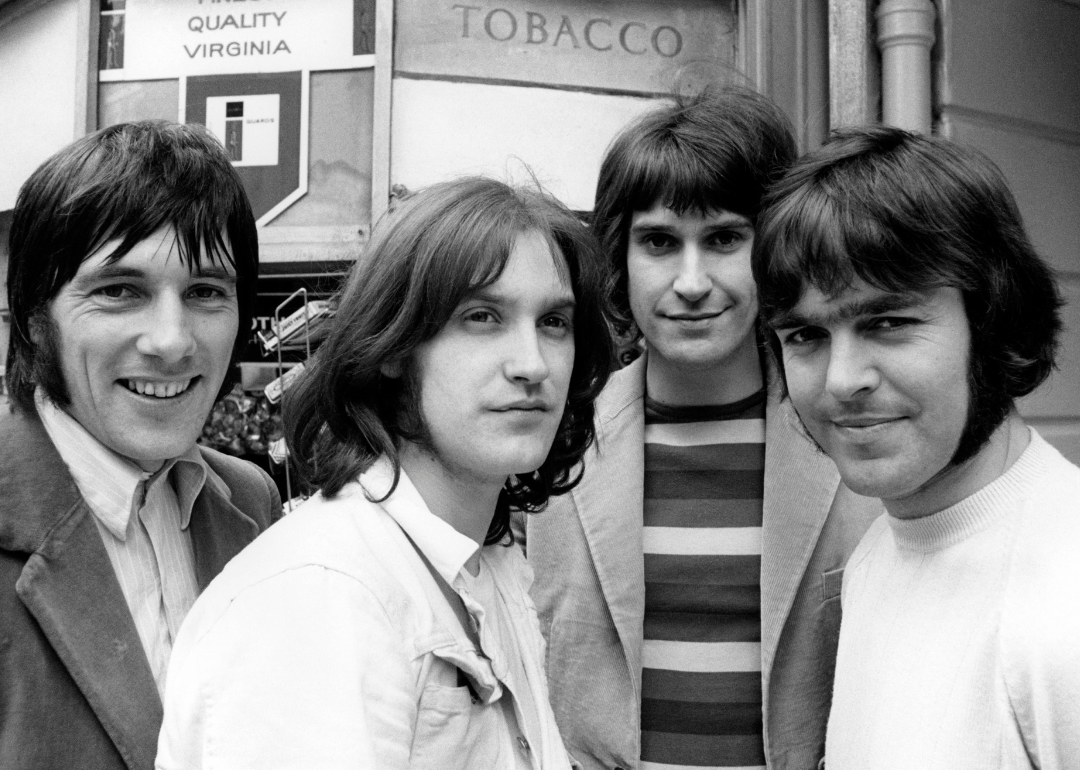
Like their later counterparts鈥攂rothers Noel and Liam Gallagher of Oasis, which they're often compared to鈥攖he Kinks' Ray and Dave Davies' disagreements began with their sibling rivalry. In 2010, , "We were battlers. 鈥� But the very thing that makes a band special is what ultimately causes it to break up." The same year, : "I think Ray has been happy for only three years in his life. 鈥� And those were the three years before I was born."
Throughout the Kinks' pinnacle in the '60s, the brothers constantly fought, whether onstage, in the studio, or at home. Despite their differences, the band managed to stay together until 1996.
Jeff Beck vs. the Yardbirds
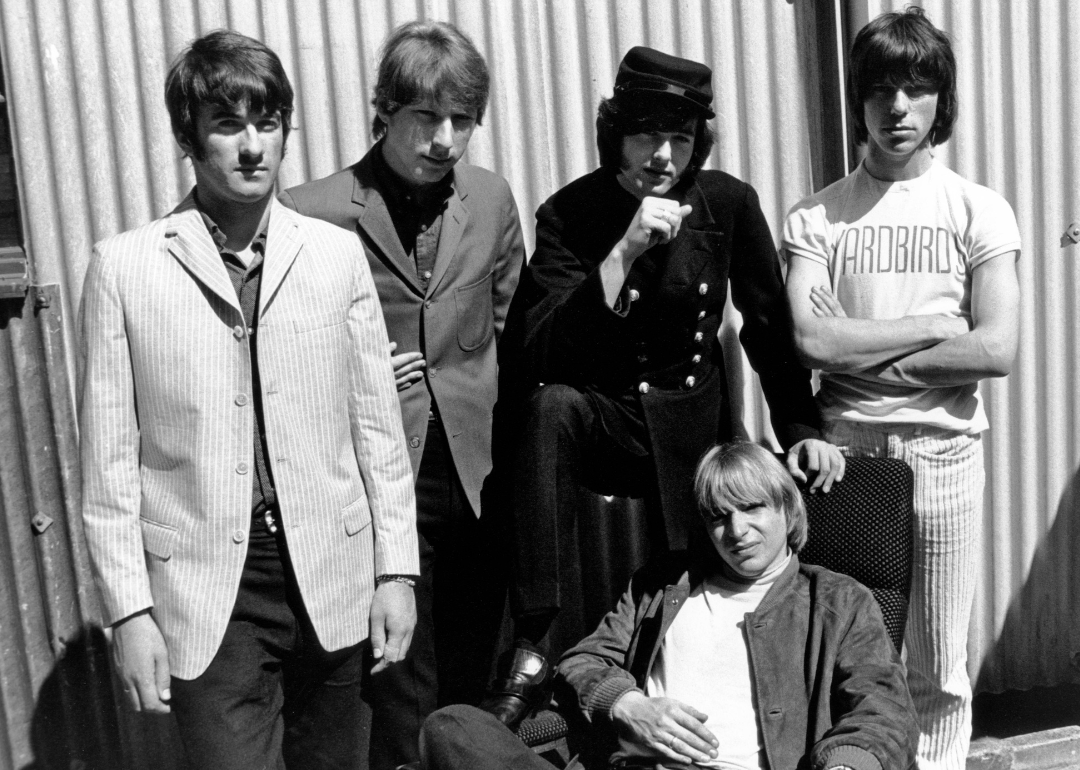
Jeff Beck squandered his opportunity as a replacement guitarist for Eric Clapton in the Yardbirds when he invited his friend Jimmy Page to join the band in 1966.
Page's presence made it easier to boot Beck out of the band when he with the group's move toward a pop sound in favor of more experimental music. Things came to a head in late 1966, when Beck became frustrated after a string of back-to-back tour engagements across the U.S. He left the band soon after, and in his absence, Page moved up to lead guitar before debuting Led Zeppelin years later.
Although Beck went on to have a successful career in his own right, he seemed to harbor resentment for years, in his 1992 acceptance speech during his induction into the Rock and Roll Hall of Fame, "Someone told me I should be proud tonight, but I'm not, because they kicked me out. They did!"
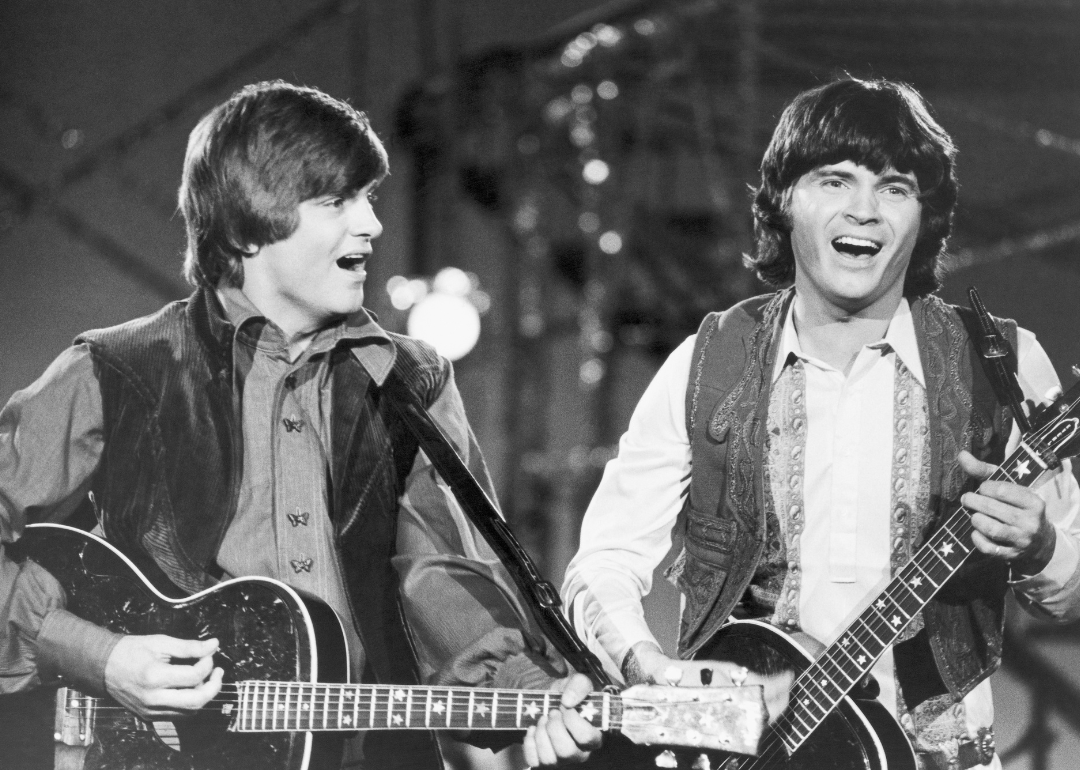
The Everly Brothers: Don Everly vs. Phil Everly
"Never do business with family" seems to apply to rock 'n' roll as much as any other industry, as the Everly Brothers proved early on. Tensions between the brothers culminated in a heated confrontation during a 1973 Knott's Berry Farm performance in Buena Park, California.
Don was in his cups at the time, causing a Knott's manager to halt the show mid-gig. Phil tossed his guitar to the ground and stormed offstage in frustration, leaving Don to to the audience, "The Everly Brothers died 10 years ago." The duo didn't perform together again for an entire decade, eventually .
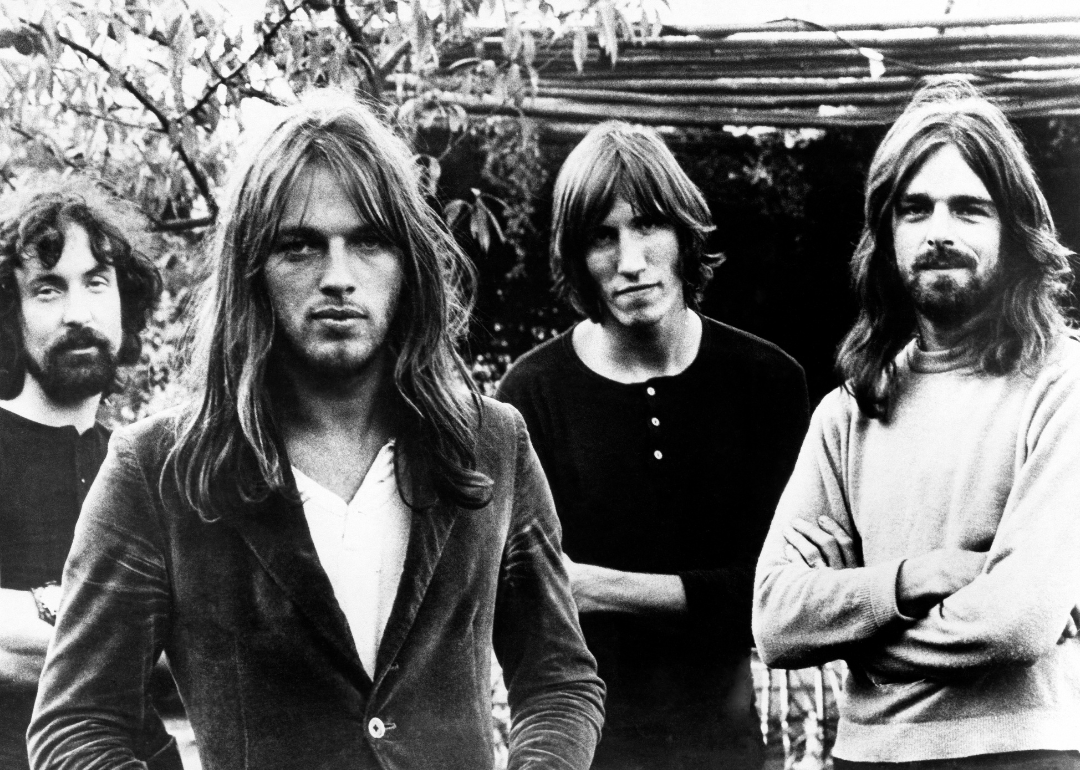
Pink Floyd: David Gilmour vs. Roger Waters
Although 1979's "The Wall" was one of Pink Floyd's most iconic albums, its production was marred with conflict.
David Gilmour was frustrated with Roger Waters, and attempted to dominate creative direction. Waters, on the other hand, claimed his bandmates were stifling his talent, in 1987: "There was no point in Gilmour, Mason or Wright trying to write lyrics. Because they'll never be as good as mine. Gilmour's lyrics are very third-rate."
Touring for "The Wall" and producing the follow-up album "The Final Cut" in 1983 only saw increased divisions between Waters and Gilmour. When Waters eventually left the band in 1985, Gilmour objected to his desire to dissolve the band entirely. He continued to record with Nick Mason and Richard Wright as a trio, prompting Waters to .
Pink Floyd continued as a trio for a few years of calm. The band eventually reunited for performances with the original lineup in 2005, and Waters admitted that he in 2013. However, the feud between Waters and Gilmour over Waters' political beliefs, with Gilmour telling The Guardian in an October 2024 interview that he "tend[s] to steer clear of people who actively support genocidal and autocratic dictators."
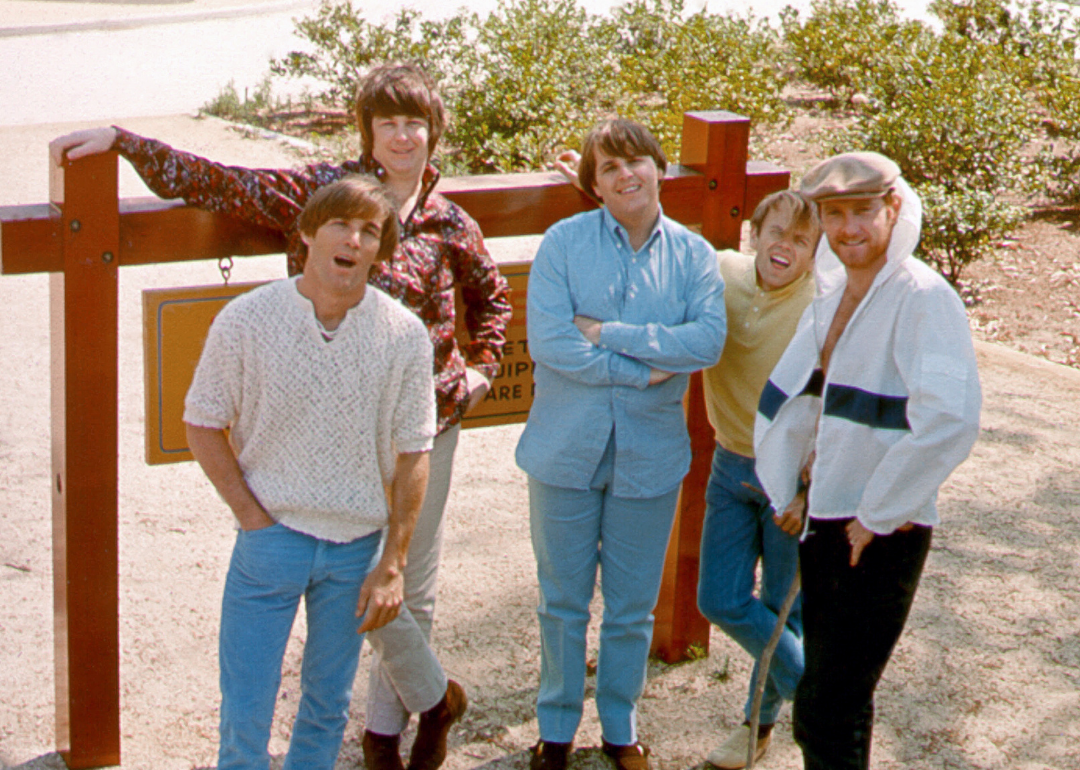
The Beach Boys: Mike Love vs. Brian Wilson
The Beach Boys' two major eras鈥攖heir start as a happy-go-lucky surf pop group and later development into a more innovative, musically complex sound鈥攁re well-known now. Still, it wasn't a unanimous group decision.
Cousins Brian Wilson and Mike Love of "Pet Sounds," with the former pushing for a fresh sound and the latter strongly opposed to the new, psychedelic leaning. Later, Wilson , "Don't f鈥攚ith the formula!"
Love also took issue with Wilson's reputation as the group's primary songwriter, , one of which gained Love co-writing credits to some of their most popular songs, including "California Girls" and "I Get Around." In his 2016 autobiography, Love wrote: "There was always the perception that my cousin Brian did all the writing as well as the producing and stuff like that. That was not true. I was the co-author of so many big hits."
After deaths, substance abuse, and mental health struggles put distance between all of the band members over the years, Love to use the Beach Boys' band name in 2008. But whatever strife remained between them ended for good when Wilson on June 11, 2025. The next day, Love appeared at the 2025 Songwriters' Hall of Fame induction ceremony, where he told People, "I think what it is, is Brian's with us tonight. I can . You know, we co-created these great songs together, and so we're inseparable really in life and afterlife too, so, I do really feel his presence and, yeah, I've known him all his life."
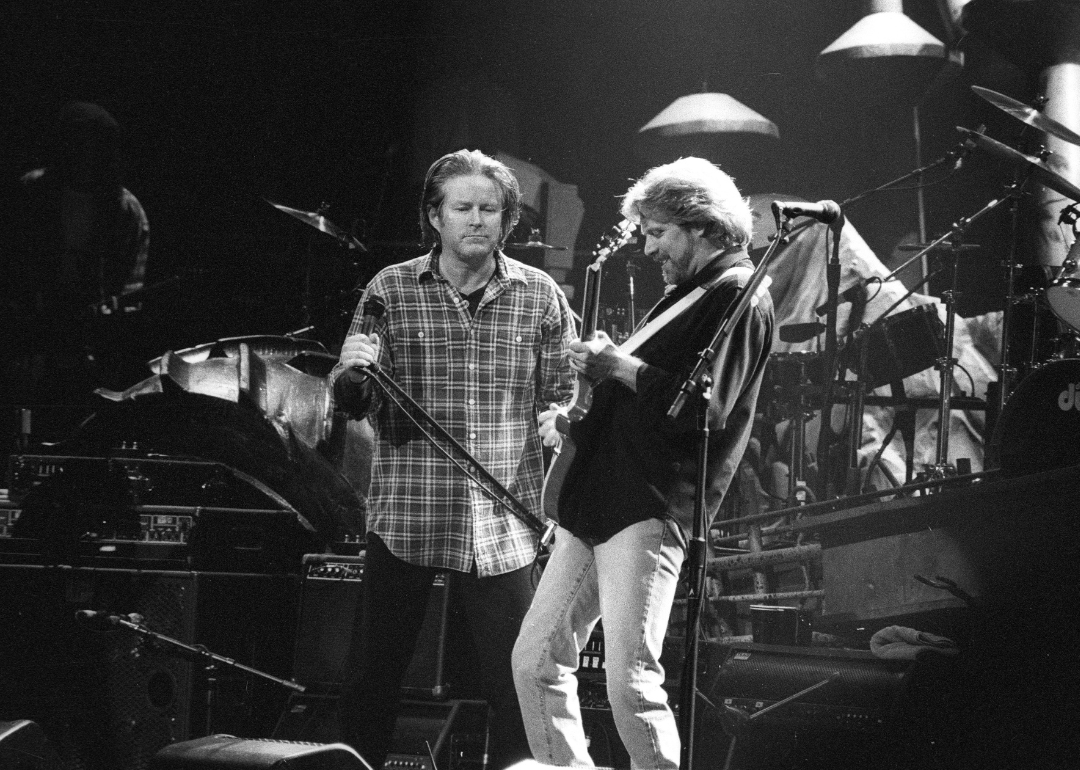
Eagles: Don Felder vs. Don Henley
The Eagles are one of the most notoriously contentious bands in contemporary music, and one of their biggest hits was at the center of a firestorm. During the 1976 production of "Hotel California," guitarist Don Felder tried his hand at vocals, but his bandmates were less than enthused with his performance and had lead singer Don Henley re-record the song, .
Felder's tension with Henley intensified during sessions for their next album, "The Long Run," when he to Henley and bandmate Glenn Frey as "the Gods." The band splintered apart after Frey and Felder had a during a 1980 concert. They reunited in 1994 for a new album and tour, but Felder and Henley once again came to blows over Henley's higher paycheck, leading Felder to be in February 2001. Felder , and their distaste for one another has continued through the years.
For Felder's part, however, the feud is now behind him. In a May 2025 interview with Sirius XM host Eddie Trunk, he said of his bandmates, "There are times here and there along the way that we bump into each other, and about it 鈥� One of the things about writing my book [2008's "Heaven and Hell: My Life in The Eagles"], it was a very cathartic process and was very liberating, it set me free to realize I don't want to carry that stuff with me for the rest of my life."
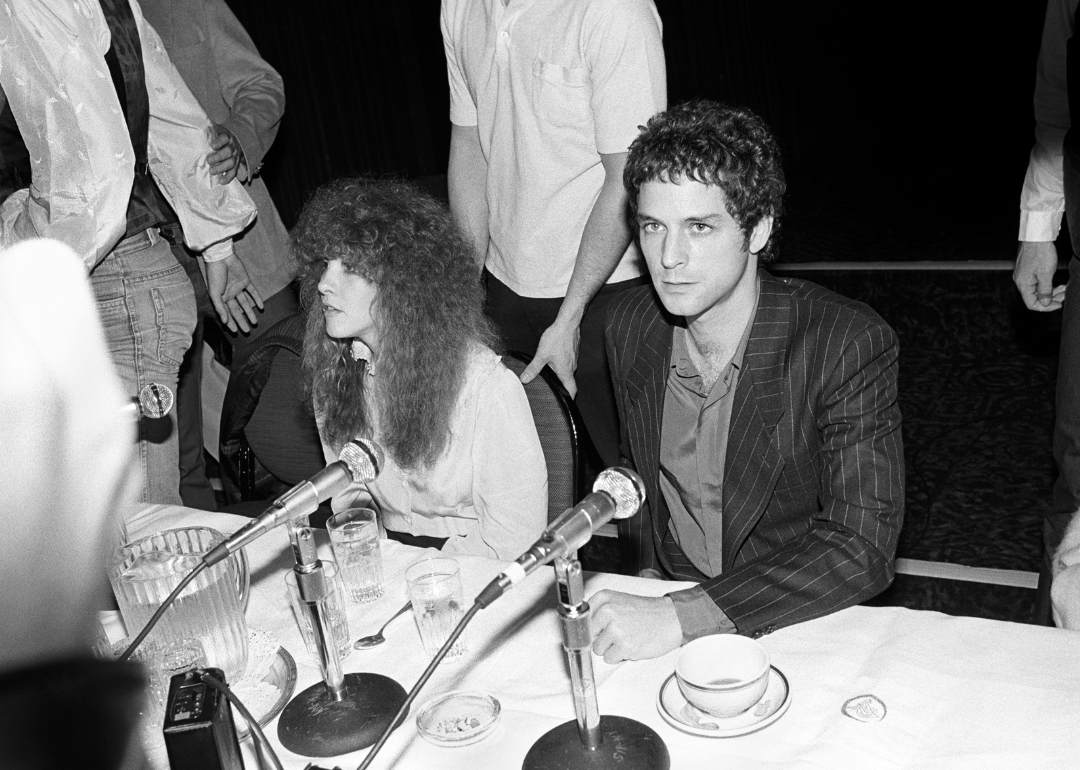
Fleetwood Mac: Stevie Nicks vs. Lindsey Buckingham
Stevie Nicks and Lindsey Buckingham were already on rocky terms when they were invited to join Fleetwood Mac in 1974. They had spent years beforehand performing as the duo Buckingham Nicks and were in a relationship marred by their battling strong personalities.
However, the opportunity to join the band was too good to pass up, and Nicks : "OK, this is what we've been working for since 1968. And so, Lindsey, you and I have to sew this relationship back up. We have too much to lose here."
Even so, they broke up during the production of the band's seminal album "Rumours" in 1976, which Nicks described as "," adding, "He and I were about as compatible as a boa constrictor and a rat." Several of the album's most acclaimed songs are famously between Buckingham and Nicks battling out each's perspectives on their failed relationship, including "Go Your Own Way," "Never Going Back Again," and "Dreams."
Despite the conflict between the former couple鈥攁nd Nicks' 鈥攖hey remained musical collaborators for decades after "Rumours" released, both temporarily leaving the band to pursue solo careers before returning. In 2018, when Nicks denied Buckingham's request to delay Fleetwood Mac's tour schedule to accommodate his solo work, Buckingham was fired from the band for a seemingly final and permanent time. He subsequently for his termination.
Despite their colorful history, Nicks and Buckingham continue to put their music first. In July 2025, the two announced they were reissuing their sole album as a duo, which had been out of print for over 50 years. The album was released on Sept. 19, 2025, marking their first collaboration in years and a significant thawing in their relationship.
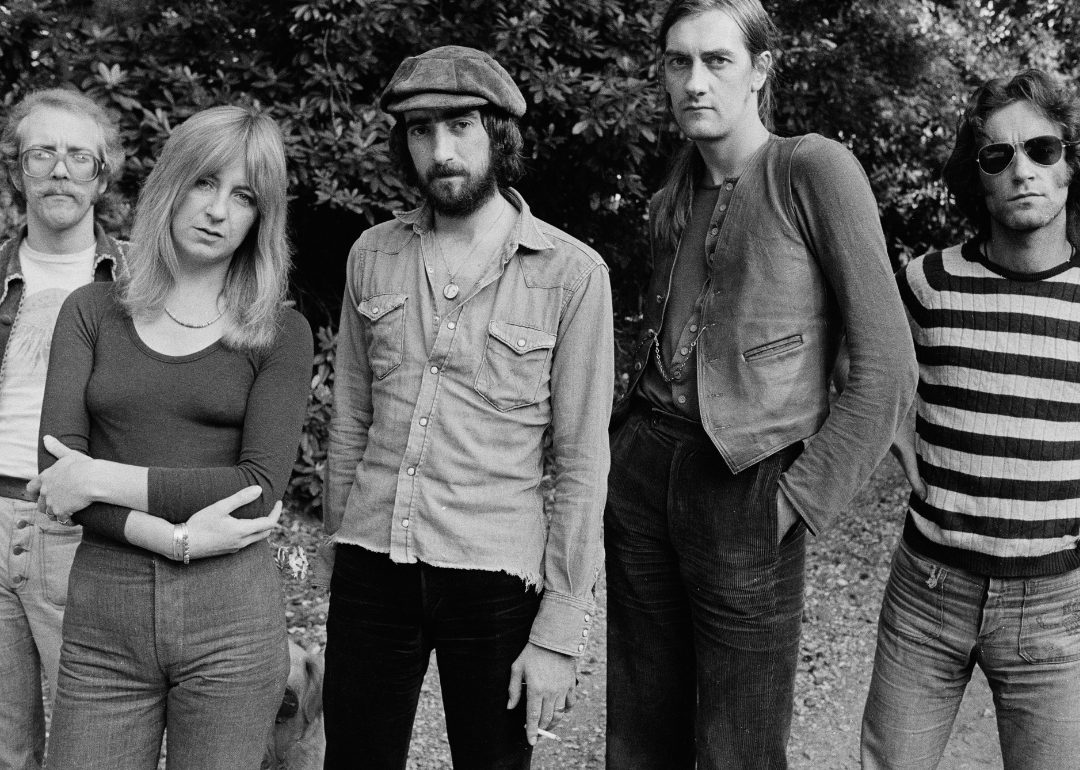
Fleetwood Mac: John McVie vs. Christine McVie
Although Stevie Nicks and Lindsey Buckingham were perhaps the most well-known, they were just one of three couples enduring major falling-outs during the production of "Rumours."
At the same time, drummer Mick Fleetwood was with his wife, Jenny, as were bandmates John and Christine McVie. Christine described being too close for comfort with her former spouse while working together, witnessing John's drinking allegedly turn him into "." She said she began an affair with the band's sound engineer "for [her] sanity."
Still, despite the web of on-and-off relationships among band members, Fleetwood Mac remained resilient: "Rumours" became .
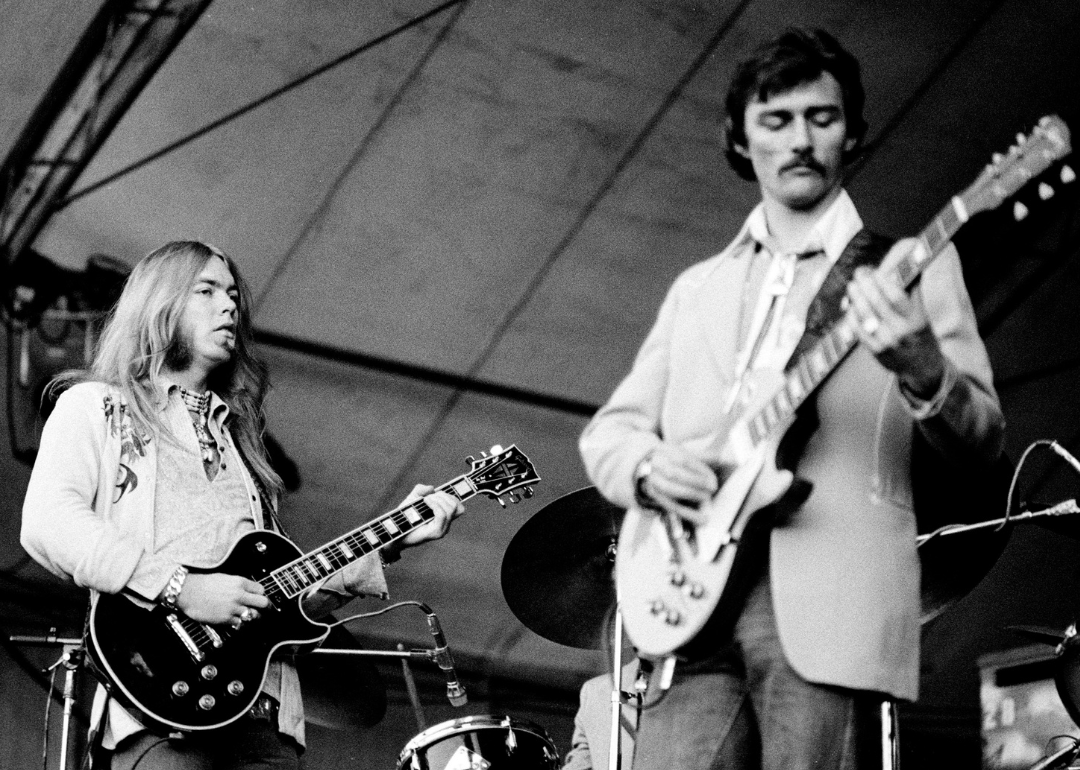
The Allman Brothers Band: Gregg Allman vs. Dickey Betts
Guitarist Dickey Betts was a behind the scenes, frequently trashing hotel rooms, brawling with cops, and getting arrested. He first entered the band in 1969, but his heavy drinking and wild antics didn't fare well with lead singer Gregg Allman. Their differences caused the group's disbanding in 1976, with Betts stating in an interview with Rolling Stone, "There is no way we can work with Gregg again. Ever."
The band subsequently reunited in 1979, broke up again in 1982, and came together once more in 1989. But the final straw came in 2000, when the band had finally had enough of Betts' heavy drinking and permanently kicked him out of the group.
Gregg Allman passed away in 2017 and Betts in 2024, though the pair did shortly before the former's death.
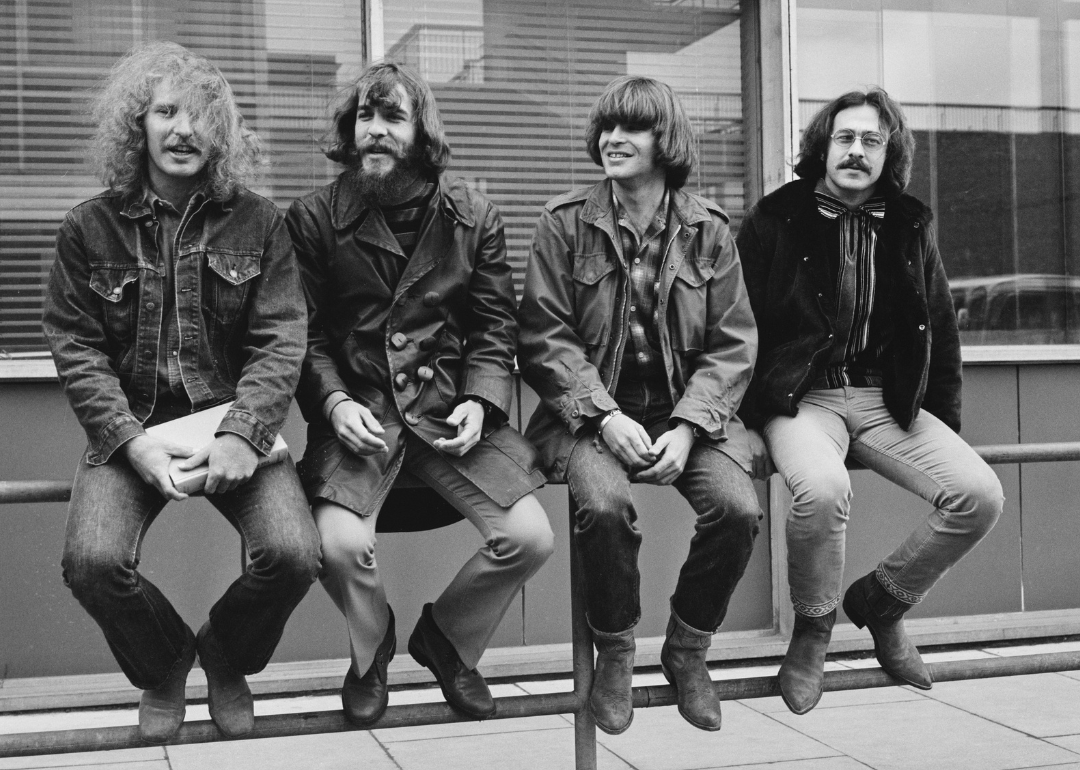
Creedence Clearwater Revival: John Fogerty vs. Tom Fogerty
Creedence Clearwater Revival's work was astoundingly prolific, encompassing seven albums between 1968 to 1972 alone. However, lead singer John Fogerty felt it wouldn't have been possible without his oversight.
His overbearing personality led his brother and bandmate Tom Fogerty to . The entire band disintegrated the following year, with other members also dissatisfied with John's level of creative control.
The two brothers never fully reconciled, with John The Guardian in 2000: "The best I can say in Tom's case is he was the older brother, and the younger brother had a lot more talent; therefore, he was jealous even to a greater degree than the other two in Creedence Clearwater Revival."
In an interview in the August 2025 issue of Parade, John again reflected on the feud. "I or even figure out what Tom was thinking鈥攊f indeed his thoughts were cohesive or understandable at that time," he said. "I'm pretty sure he was upset and confused鈥攁nd I don't mean that in any demeaning way; I was upset and confused during those times, too鈥攃ertainly not like an adult would process all that stuff."
In January 2023, Fogerty regained the rights to his groundbreaking CCR music catalog after decades of legal battles with his former label. In August 2025, he released "Legacy: The Creedence Clearwater Revival Years," re-recording many of his classics with his sons, marking a new chapter in his relationship with the music that had caused so much pain.
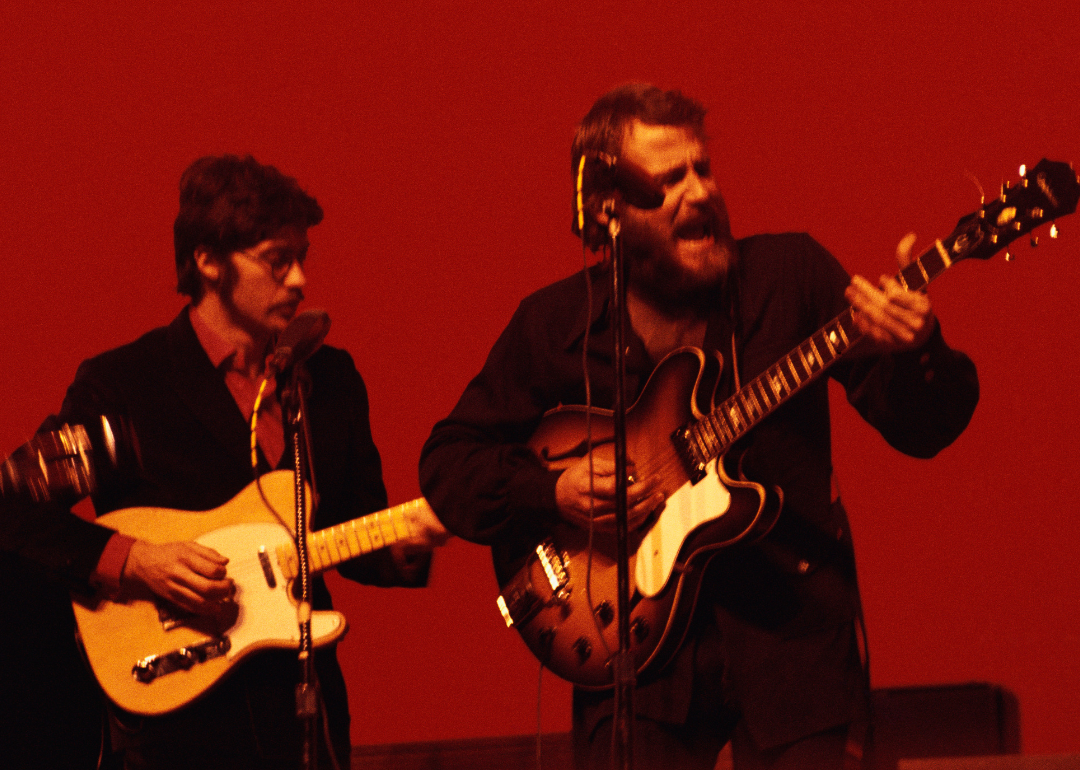
The Band: Levon Helm vs. Robbie Robertson
Members of the Band鈥攌nown as the Hawks up until 1963鈥攚ere as eclectic in personalities as they were in musical styles, leading to heavy strife throughout their peak during the '70s.
In particular, Levon Helm grew to resent Robbie Robertson's gradual dominance over the group's songwriting, positing that he falsely claimed to be the sole songwriter to get a higher paycheck. By 1976, Robertson suggested they play one final farewell concert, to be documented by Martin Scorsese in what would later become "The Last Waltz." However, Helm took issue with the film positioning Robertson as the central figure of the Band, "the biggest f----- rip-off that ever happened to the Band."
Robertson only sought to set their differences aside .
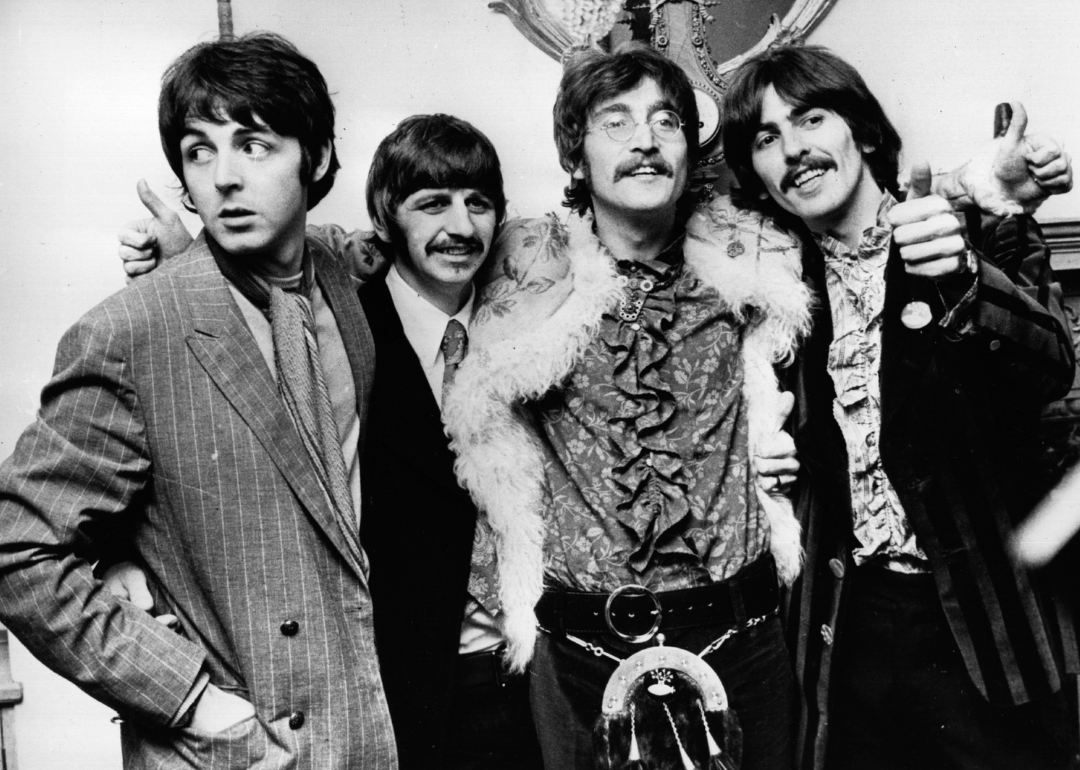
The Beatles: George Harrison vs. Paul McCartney
It's no secret Paul McCartney and John Lennon were the double figurehead of the Beatles, something lead guitarist George Harrison reportedly came to resent. In 1967, during sessions for "Sgt. Pepper's Lonely Hearts Club Band," . During , Harrison became so irate over McCartney's overbearing direction that he 鈥攐nly to rapidly return.
In the 2015 book "George Harrison: Behind the Locked Door," Harrison's then-wife, Pattie Boyd, remembered: "They would tolerate each other, but I think George basically didn't like Paul's personality. 鈥� Like a little brother, he was pushed into the background. He would come home from recording and be full of anger. It was a very bad state that he was in."
After the Beatles broke up in 1970, Harrison finally had the freedom to release his first solo album, "All Things Must Pass," largely comprising .
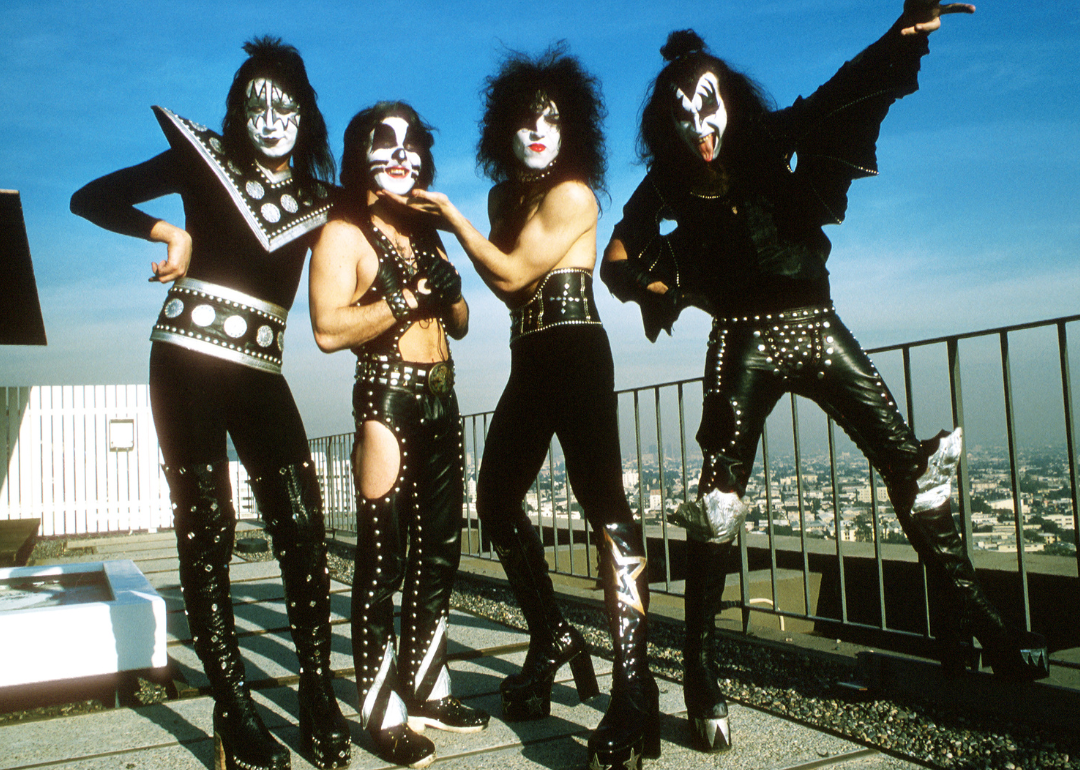
Kiss: Gene Simmons and Paul Stanley vs. Ace Frehley and Peter Criss
The original 1973 lineup of the heavy metal foursome was more of two twosomes, with Gene Simmons and Paul Stanley believing they took the band's success more seriously than hard-partying Ace Frehley and Peter Criss.
By 1978, Frehley and Criss both leading to a short break before giving it another go by producing four Kiss solo albums released that September. However, this did little to improve relations. Stanley recalled a tense onstage argument between him and Criss over the latter's cocaine-muddled drumming performance in his 2014 memoir "Face the Music: A Life Exposed." In 1980, Criss was booted from the band, with Frehley following in 1982 after a lackluster commitment to Kiss' next album.
In a 2019 interview, : "Ace and Peter 鈥� were in and out of the band鈥攆ired鈥攖hree times. For drugs, alcohol, bad behavior, being unprofessional 鈥� they weren't carrying their load. You can't be in a car with two flat tires. It's not going to go anywhere."
The tensions between the original members persisted for decades, but in the final years, signs of reconciliation emerged. Simmons spoke more graciously about his former bandmates in 2025. In a February 2025 episode of "," Simmons praised Frehley and Criss as being integral to Kiss' success. He said the same in April 2025, when he appeared on Rick Rubin's "Tetragrammaton" podcast. "I'm , who even today can't enjoy the fruits of their labor," he shared. "They were equally as important as Paul and myself in the formation of the band and those first few years鈥攖here's no question about it. It was a four-wheel-drive vehicle."
Frehley, meanwhile, has spoken favorably of Simmons and Stanley, referring to them as "" in a March 2024 interview. In September 2025, Frehley told Guitar World he was open to reconciliation and that he was over Paul Stanley's negative comments from years past. "Jealousy can make you say some stupid things," he said, dismissing his former bandmate's words.
Tragically, any hopes for a full reunion ended when , at age 74 from injuries sustained in a fall at his home. His family said in a statement: "We are completely devastated and heartbroken. The magnitude of his passing is of epic proportions, and beyond comprehension."
In a final act of reconciliation, Simmons, Stanley and Criss all attended , reuniting to lay their former bandmate to rest. Simmons and Stanley saying they were "devastated" by Frehley's passing. "He was an essential and irreplaceable solider during some of the most formative foundational chapters of the band and its history," the two said. "He is and will always be a part of KISS' legacy."
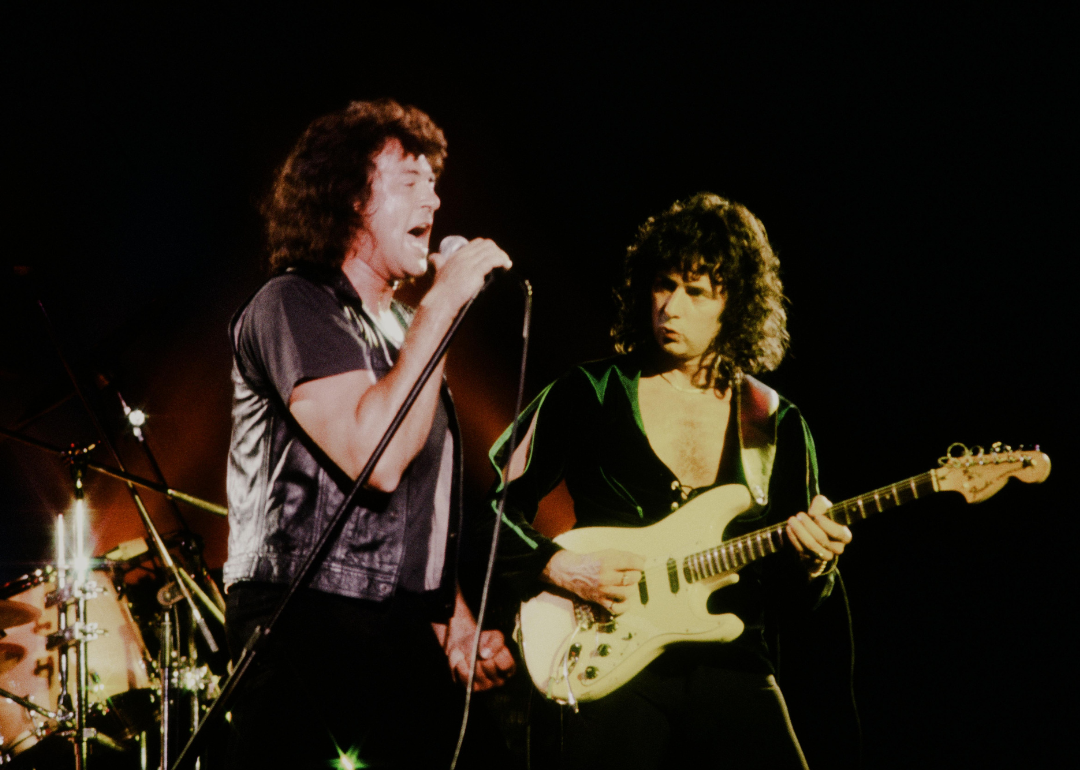
Deep Purple: Ian Gillan vs. Ritchie Blackmore
In 1973, Deep Purple saw one of its greatest successes with the release of "Smoke on the Water"鈥攂ut behind the scenes, mainstream success may have driven a wedge between singer Ian Gillan and guitarist Ritchie Blackmore. Though it was unclear exactly why at the time, Gillan abruptly departed the band that same year.
In a , Gillan hinted that the band's increasing "commercialism" caused his exit, recalling: "[Blackmore] had an ear for the more popular stuff. And it was very successful. But I thought it couldn't survive, because it was planting itself in a fashion, and fashions come and fashions go."
Deep Purple disbanded entirely in 1976 before reuniting in 1984, which included Gillan and Blackmore. However, Gillan grew with Blackmore's dominance and metal-leaning musical preferences. In 1993, Blackmore quit Deep Purple鈥攖his time for good鈥攊n a , throwing a tantrum onstage and launching a drink at a cameraperson during a live performance. Blackmore left the band four shows after, leaving Deep Purple to finish a series of concerts in Japan planned that December without him.
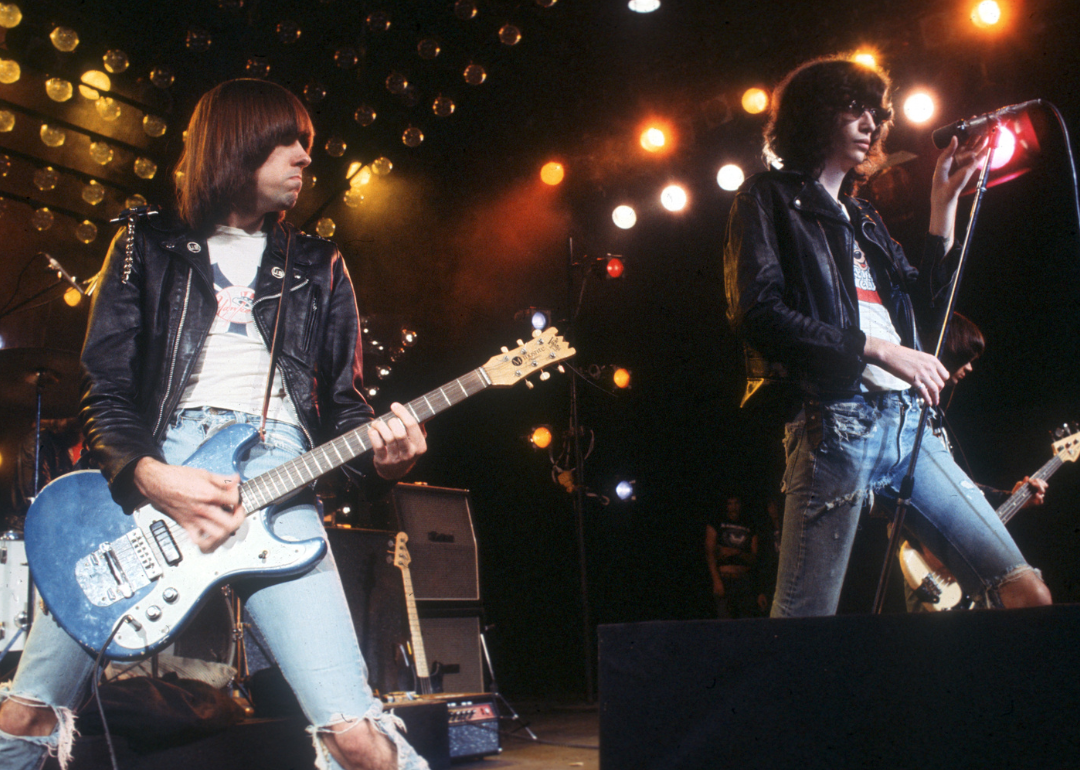
The Ramones: Johnny Ramone vs. Joey Ramone
Johnny Ramone (aka John Cummings) and Joey Ramone (aka Jeffrey Hyman) may not actually be related, but they fought like rival siblings just the same.
Rumor has it their constant bickering and estrangement from each other was largely due to the group's strenuous touring schedule and Johnny's military-strict oversight of the band, including for being late or not performing up to par.
Johnny met Joey's then-girlfriend Linda during recording sessions for "End of the Century," released in 1980, and the two allegedly began an affair, eventually marrying. It is speculated that Joey's song "The KKK Took My Baby Away" is aimed at Johnny for stealing his girlfriend.
Additional writing by Louis Peitzman. Story editing by Carren Jao. Copy editing by Paris Close.