Famous moments in music history from the year you were born
Famous moments in music history from the year you were born
Music has existed for centuries—in fact, research suggests that since primitive times—perhaps even before formal language was spoken, and some historians even believe that . Historians point to starting in the Middle Ages—pre-15th century—until the music of the 20th and 21st centuries. This is the music that likely influenced, and was influenced by, the society you grew up in.
Â鶹ԭ´´ has put together a list of 100 famous moments in music history between 1918 to 2017 using a variety of news outlets to source these iconic events. Scroll through to see which moment made music history the year you were born.
ALSO:
1918: The Berkshire Chamber Music Festivals
The first chamber music festival, created by "The Fairy Godmother of Chamber Music” —was held in in Pittsfield, Massachusetts, in September of 1918. featured the Berkshire String Quartet, also known as The Berkshire Chamber Music Festival ran from 1918 to 1924, then intermittently until the last in 1938. 1,284 new works were created as a result, attracting prominent composers and performers over those two decades.
1919: All the world's a stage
From , actors, stagehands, and musicians brought Broadway to a standstill after forming the Actors’ Equity and going on strike. On Aug. 22, 1919, the New York Tribune published a piece on the event: The and struggle of those in the theater industry instigated wider debates over cultural hierarchy and the meaning of work in the commercial entertainment industries.
1920: Take race out of recording
In the world of blues, jazz, and gospel, from 1920 to 1940, "race records”—music for and by the African-American community—led to the emergence of some of the most famous black artists in music history. Race records were only sold in and advertised to African-American communities. In 1920, black composer Perry Bradford convinced to record a blues singer Mamie Smith, which opened the door for Duke Ellington and Louis Armstrong.
1921: Matchless opera
One of the greatest operatic singers of all time, the "Matchless Opera Singer” Enrico Caruso, died in 1921. Caruso began his career in and added more than 500 songs to his repertoire over the course of his career. Nearly 100 years after his death, Caruso’s . In addition to being one of opera’s most famous singers, Caruso was a major player in the with his use of phonography. "The greatest tenor ever lived” was also in history to make his own recordings.
1922: BBC is created
BBC—the British Broadcasting Company, as it was originally called—was founded on Oct. 18 by a group of wireless manufacturers. Daily broadcasting by the BBC began in Marconi's London studio, 2LO, on Nov. 14, 1922. John Reith, a 33-year-old Scottish engineer, was appointed general manager of the BBC at the end of 1922.
1923: Bessie has the blues
Just two days after Valentine’s Day, "The Empress of Blues” Bessie Smith recorded "Downhearted Blues” and "Gulf Coast Blues,” selling more than 780,000 copies in six months and eventually selling more than 2 million. Smith performed in a style now known as "classic female blues,” a subgenre combining country folk blues and urban theater music. Smith was an integral part in spreading the popularity of blues music.
1924: Swing your partner round and round
—second only to the Grand Ole Opry in terms of influence on country-western music—debuts as a radio program on Chicago’s 50,000 watt WLS to broadcast weekly on Saturday evenings. The National Barn Dance helped Americans find leisure time during the Great Depression and set the stage for programs to follow.
1925: Not opera, opry
The longest-running live radio program in the world debuted on radio station WSM in Nashville. started in 1925 with radio announcer George D. Hay following a classical music program. Hay joked people had been listening to the grand opera, but now would have to settle for "the grand ole opry.”
1926: Swinging at the Savoy
opens in Harlem during a time of heavy racial segregation as one of the few—if not the only—to enforce a non-discrimination policy. published the headline: "Savoy Turns 2,000 Away On Opening Night–Crowds Pack Ballroom All Week.”
1927: CBS Network
was founded as a radio network, and went on to become one of the nation's most popular media outlets. CBS realized that large audiences would attract advertisers, so they offered programming free to affiliated stations in return for having a certain part of their schedules devoted to sponsored network shows. The network grew to from 22 stations in 1928 to 114 stations in a decade. By 1932, it was posting an annual profit of $3 million.
1928: Let's boogie woogie
was recorded in 1928, then released in 1929 by Clarence "Pinetop” Smith with Vocalion Records. This hit gave the genre its name, and would eventually evolve into rock and roll. The single would go on to be to be a standard track recorded by many other artists, and is sometimes considered the first rock and roll song.
1929: Zydeco in Louisiana
Louisiana was a featuring accordion music and Afro-Caribbean beats. Creole accordion player made the first zydeco recordings in 1929, laying the groundwork for the genre.
1930: Jazz dominates in the Depression
By 1930, the Great Depression was hitting hard with unemployment——and cities became crowded with those looking for work. Business and unemployment might have been down, but dance halls were packed as swing dancing became popular. Jazz became the dominant force at the start of the 1930s, and iconic and hugely popular debuted in London. The song was banned in the United States for nearly a year, owing to its sexual suggestive lyrics. Many artists performed the song over the years, and an astounding number of renditions made the charts in the 1930s and 1940s.
1931: Minnie moocher
Jazz singer Cab Calloway released in 1931, selling more than a million copies, launching his swing band into decades-long stardom and putting Harlem on the map for the This swing era song also became the theme for , and was inducted into the Grammy Hall of Fame in 1999.
1932: Radio City in the big city
opened in New York City at the peak of the Great Depression. The theater was place of renowned art and beauty, but also had a mission of social equality. It was a space where the average American could see quality entertainment at an affordable price—"a palace for the people." More than 300 million people have visited Radio City since its 1932 opening.
1933: NAACC for the people
In the 1930s, performing at an established concert hall was practically impossible unless you were famous. This prevented performances by up-and-coming artists. In light of this, composer Henry K. Hadley founded the —a nonprofit organization and one of the longest standing in history. The NAACC provided equal opportunity for the performance of new works by American composers—presenting more than 3,500 new musical works by 200 composers.
1934: Glyndebourne Festival
The Glyndebourne Festival—an opera festival founded and held at an English side country house in Sussex—held its first event. The festival was the brainchild of owner John Christie, who presented operatic performances and concert experiences that were "not the best we can do, but the best that can be done anywhere.” The festival and Christie’s ethos heavily influenced the world’s expectations for excellence in opera.
1935: Flash forward to four
Frank Sinatra’s career took off at 19 years old after joining Hoboken, New Jersey, singers . The group won a popular radio show’s talent competition in 1935, but Sinatra was the only group member with serious ambitions at a professional career. The band broke up, and Sinatra did just fine on his own.
1936: Billboard has the hits
Billboard Magazine of the week—the first of its kind. In was the first published music chart in history: "10 Best Music Records for the Week Ended Dec. 30.” We now know it as the
1937: Hey, Good Lookin'
Country music legend —known for hits "Hey, Good Lookin'" and "Your Cheatin' Heart"—made his debut at just 13 years old on Montgomery, Alabama's WSFA radio program. Williams started not long after he began performing locally. With the ability to sing without amplification in a full-throated style, Williams was soon on his way to fame and caught the attention of Nashville executives in the 1940s.
1938: Ella Fitzgerald gets her breakthrough
The "The First Lady of Song,” jazz legend got her big break when she released hit single in May of 1938. Originally a nursery rhyme, Fitzgerald’s catchy spin on the tune made it perfect for the 1930s swing era. Fitzgerald recorded the track alongside Chick Webb and His Orchestra for Decca Records.
1939: BMI
A pack of radio industry leaders started BMI—Broadcast Music, Inc.—after a 1939 meeting in September at the National Association of Broadcasters annual convention. The purpose of BMI was——to support artists and musicians while giving businesses a competitive source of licensing.
1940: Billboard ranks the sales
In the July 27 issue of Billboard, the magazine released its first chart ranking sales of recorded songs. Popular musicians Tommy Dorsey and Frank Sinatra ushered it in. Billboard’s "National List of Best Selling Retail Records” paved the way for seven decades and counting of Billboard tracking music success and popularity.
1941: Dreaming of a White Christmas
Crooner Bing Crosby had everyone dreaming of a in 1941 after the Christmas hit premiered on Crosby’s weekly NBC radio spot; it’s still a beloved Christmas classic. The track went on to become of the most successful singles in history, a top-seller until 1997 when it was surpassed by Elton John’s "Candle in the Wind.” "White Christmas” would show up year after year as a top hit on the charts for the next 20 years.
1942: Frank Sinatra wins over hearts
was easily the most beloved and famous big-band vocalist in the nation. In December of that year, Sinatra performed his first solo gig at the Paramount Theater in New York City. , spilling into Times Square to the frustration of its bustling locals. A 1943 Time article stated, "Not since the days of Rudolph Valentino has American womanhood made such unabashed public love to an entertainer."
1943: Oklahoma!
premiered on Broadway, and went on to set a record of 2,212 performances before its final curtain call more than 15 years later. The musical was considered a risk at the time, with no big-name stars, storytelling over spectacle, and a basis for plot on relatively obscure material. Broadway musicals had always started with a bang, but "°¿°ì±ô²¹³ó´dz¾²¹!” set a different stage when the curtain opened on a lone cowboy singing about corn and meadows.
1944: The Met meets Jazz
The Metropolitan Opera House—the Met—hosted its with performers including Louis Armstrong and Billie Holiday. The 10-piece swing ensemble, selected by Esquire magazine, shook the opera house’s walls.
1945: Back at it after WWII
Benjamin Britten's premiered in London just following Victory in Europe Day in a war weary-WWII, signaling the rebirth of British opera. Theaters were destroyed throughout the war, and concerts and entertainment were the least of Europe’s concerns for many years during its part in the battle against Nazi Germany.
1946: Royal Philharmonic Orchestra is born
(RPO) was born. Britain’s national symphony orchestra based in London was founded by Sir Thomas Beecham, who was its director until his death in 1961. The RPO made more than 250 recordings, and continues to make musical history. The RPO became the first symphony orchestra to own its own recording company in 1986.
1947: Rudolph the Red-Nosed Reindeer
You may know Dasher and Dancer from "A Visit from St. Nicholas"—the 1824 poem better known as "'Twas the Night Before Christmas." America had yet to meet Rudolph the Red-Nosed Reindeer; it was created as a marketing campaign for department store Montgomery Ward in 1939. The story was adapted in 1947 to become one of the most famous Christmas songs of all time. Gene Autry recorded which became a pop chart hit at #1.
1948: 33-⅓ LP
the first successful microgroove plastic in the form of the 12-inch, 33-⅓ LP—long playing—record. This was a huge upgrade, with its offering of 25 minutes of music per side versus the previous four.
1949: Records at 45 rpm
In March, RCA Victor releases its smaller, more durable 7-inch record as an upgrade to the 78 rpm shellac discs. The vinyls were fun, cute, and colorful with each genre of music having its own color. This made them an instant hit with the younger crowd.
1950: Patti Page triple threat
Top-charting, best-selling country pop artist had a running list of hits, but in 1950 "Tennessee Waltz” made music history when the single hit #1 on the pop, country, and R&B charts. Page is the first and only artist to have done so. "Tennessee Waltz” goes on to be recorded by other artists, and is adopted as one of Tennessee’s official state songs.
1951: Rock and roll is coined
was attributed with having coined the term "rock and roll” when he used it to describe the R&B records he played on his Cleveland radio station WJW. Freed wanted to open up rhythm and blues to a wider audience—it was still considered music for only the African-American community—and introduced the tracks with the tag of rock and roll to avoid the stereotype that often went along with the term R&B. Freed also helped coordinate the Moondog Coronation Ball in 1952, now considered the first rock and roll concert ever.
1952: UK on the charts
Billboard had been putting out weekly music charts in the United States since the 1940s, but the U.K. had yet to jump on that train. In the U.K., the popularity of a song was based on the sales of its accompanying sheet music. One of the founders of New Musical Express, Percy Dickins, decided to put out a chart based on record sales in 1952. Dickins did so by contacting 20 record stores around the country every week, tallying up their sales, and tracking their best-selling singles. The New Musical Express tracks list in its Nov. 14 issue.
1953: An unknown Elvis Presley gets his start
The King of Rock was still a nobody in 1953 as he walked into Memphis Recording Service to record his first A few hours later, he walked out with a 10-inch phonogram record for just under $4, and started his journey to rewrite the world of rock and roll.
1954: A big transition for music in a small way
In 1954, music listeners could, for the first time, take their music on the go. The was on shelves by Christmas, small enough to fit in your pocket and provide tunes wherever you went.
1955: Marian at the Met
to perform at the Met Opera. Anderson was in her late 50s when she appeared in Verdi’s "Un Ballo en Maschera,” making history.
1956: Thank you, thank you very much
Elvis Presley appeared on "The Milton Berle Show" for the second time. This time, he set his guitar aside to put every part of his being into a scandalous performance of hip-thrusting moving and grooving while he belted out his hit "Hound Dog.” The 21-year-old Presley had been touring for almost 18 months, and had released about two dozen singles by that time, but this was the moment he became the King of Rock and Roll.
1957: American Bandstand
In the summer of 1957, 67 ABC affiliate programs across the nation aired one of the most iconic shows of all time: The program opened on a set of high school gym bleachers with clean-cut teens dancing to the not so clean-cut "Whole Lotta Shakin' Goin' On." The 26-year-old New Yorker Dick Clark's show was based on the day's most popular music combined with the show's teen "regulars," dancing and modeling the latest fashion and hairstyles.
1958: Hot 100
Billboard launched its in 1958, forever changing how pop music was measured. The chart remains the go-to standard for music listeners and musicians alike more than 60 years later. Landing a #1 spot on Billboard’s Hot 100 is still a major goal for popular artists.
1959: The first Grammy Awards
The Grammy Awards were in Los Angeles by the National Academy of Recording Arts & Sciences (NARAS) with 28 prizes awarded. These winners included Ella Fitzgerald, Frank Sinatra, and the Kingston Trio.
1960: The King returns
Just five days before Christmas in 1957, into the U.S. Army. In March of 1960, and was discharged, having fulfilled his two-year commitment. Presley was met at the airport upon coming home by his future co-star Nancy Sinatra—her father also broadcasted a special variety show for Presley, "Frank Sinatra's Welcome Home Party for Elvis Presley." He spent his first two days back recording his new single in Nashville. More than 1.2 million people had pre-ordered it while he was still in Germany.
1961: Bob Seger begins
While attending high school in Ann Arbor in 1961, formed his first band, The Decibels. Joining Seger in the band were fellow Ann Arbor students Pete Stranger and H.B. Hunter.
1962: Debut show with a full bill of Beatles
—Ringo Starr, Paul McCartney, George Harrison, and John Lennon—play their debut show in 1962 at Hulme Hall in Port Sunlight for the local horticultural society's 17th annual dance.
1963: Mixtape magic
We may have never had the mixtape had it not been for the invention and release of in 1963. The device was released by Phillips at the Berlin Radio Show in Europe. Audio cassettes, or tapes, offered even more portability and were more cost-effective and less cumbersome than reel-to-reel recorders. People could record music without the need for training and expertise previously required.
1964: The Beatles set records on Ed Sullivan Show
Like other major events in history, most people alive at the time remember where they were and what they were doing A record-breaking 73 million tuned in that evening to see the Fab Four.
1965: He's electric!
Bob Dylan made his move out of acoustic folk and into the realm of electrified rock and roll with hit single Just five days later, Dylan appeared at the Newport Folk Festival with a Fender Stratocaster in-hand. Dylan set, belting out his new hit to booing from the audience. Dylan left the stage after just three songs, but reappeared at the end of the festival with a borrowed acoustic guitar to say farewell with "It’s All Over Now, Baby Blue….”
1966: The Stones are back with “Paint It Black”
In October 1966, The Rolling Stones released their fourth album, “Aftermath,” and the sitar-infused The song hit #1 on Billboard’s Hot 100, and stayed for two weeks. Other tracks from the album like “Mother’s Little Helper,” “Lady Jane,” and “Have You Seen Your Mother, Baby, Standing In The Shadow,” got plenty of attention and airplay as well.
1967: The Doors debut
In 1967, American rock band with the release of their first album in January, featuring the breakthrough single "Light My Fire."
1968: Walk the line in Folsom Prison
On Jan. 13, 1968, , a maximum security facility northeast of Sacramento, and greeted inmates with, "Hello, I’m Johnny Cash” to wild applause. Cash performed many prison concerts in his career, but the performance at Folsom was his most famous.
1969: Woodstock
The counterculture movement was still very much alive at the tail-end of the 1960s. opened on a dairy farm in Bethel, New York, in the summer of 1969, and more than 500,000 people attended. The epic three-day festival billed as "An Aquarian Experience: 3 Days of Peace and Music” would eventually be known as Woodstock, synonymous with the '60s and all the decade stood for. Sex, drugs, rock and roll, of course—but also peace, harmony, and a memorable burst of pop culture.
1970: The Beatles break up
At the close of 1970, each member of The Beatles released a solo album—in short, things weren’t looking good for the Fab Four. In a set of promotional interviews for his album, Paul McCartney contemplated The Beatles and with the band.
1971: The world loses Jim Morrison
Rock music and '60s and '70s pop culture figure Jim Morrison was found dead in his Paris apartment at the age of 27.
1972: Music is federally protected
In 1972, —including music recordings—were given federal copyright protection in the United States.
1973: Midnight gets special
On Aug. 19, a new TV program aired live as a special, drawing enough viewers that NBC decided to pick it up. Following "The Tonight Show,” which signed off at 1 a.m., was with 450 episodes aired between 1973 and 1981. The pilot episode featured host DJ Wolfman Jack, and music guests like Argent, War, The Everly Brothers, The Isley Brothers, Linda Ronstadt, Helen Reddy, John Denver, David Clayton-Thomas, Cass Elliot, and Harry Chapin. Over the run of the program, "The Midnight Special” saw legends like AC/DC, Aerosmith, The Beach Boys, Blondie, David Bowie, Cheap Trick, Jim Croce, the Doobie Brothers, Electric Light Orchestra, Fleetwood Mac, Peter Frampton, Genesis, Billy Joel, and Elton John.
1974: Patti gets punky
1970s rock star Patti Smith records her cover of and becomes the "godmother of punk.” Her single was considered to the be the first punk rock release in music history.
1975: Bob Marley becomes king of reggae
Bob Marley began his reign as the king of reggae when his band The Wailers released their first hit single Marley remains a legend, and the first and only reggae artist to become a global icon.
1976: Dancing Queen for royalty
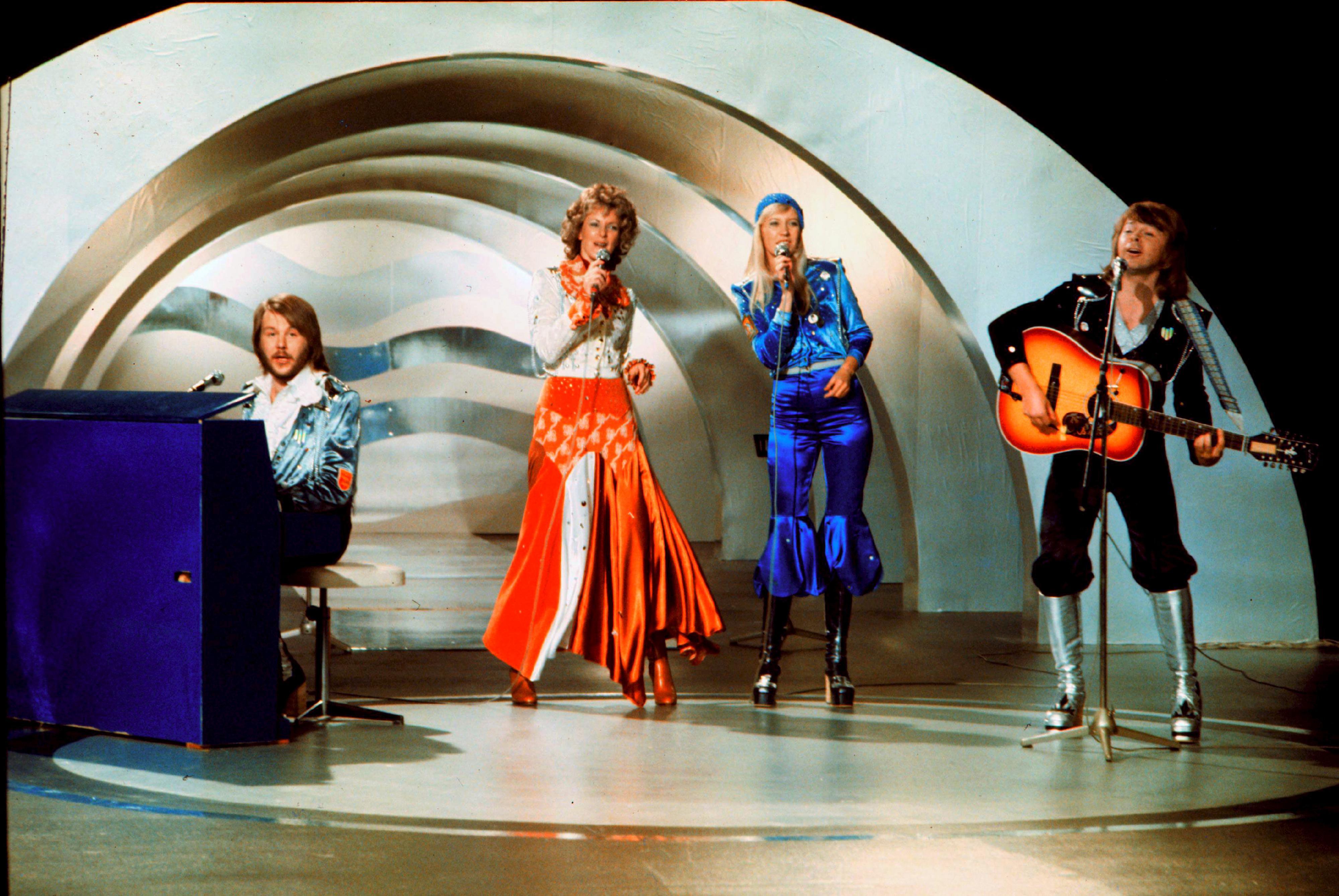
Swedish pop group ABBA in a performance for the pre-wedding gala of Sweden’s King Carl XVI Gustaf and soon-to-be Queen Silvia. The catchy song went on to be a worldwide hit.
1977: The death of a king
The hip-swiveling, pelvic-thrusting rock and roll heartthrob died just before departing on a national tour. Elvis Presley was found unconscious in his Graceland mansion, and underwent emergency resuscitation before passing away .
1978: Donna Summer scores
After having released two hit albums in 1977 and winning an Academy Award for Best Original Song, Donna Summer became the in a calendar year. Summer followed up with "Bad Girls,” which had two #1 singles.
1979: Sony's Walkman
—a portable tape player with headphones—sold more than 200 million units, and changed the way people experience music. The device even included a second jack, so two people could listen at once. The Walkman was first introduced in the United States as the "Sound-About,” but Sony eventually opted for Walkman—a play on the Sony Pressman, a cassette recorder the first Walkman prototype was based on.
1980: The world has changed
On Dec. 8, in front of his New York home. This moment shocked and disheartened the world, especially after it came out that his murderer, Mark David Chapman, was in fact a fan. In one of the last interviews before his death, Lennon said "The world is not like the Sixties...The world has changed.”
1981: Rap on the rise
Grandmaster Flash released ,” a rap mashup composed of snippets of popular artists. This was the first landmark single for rap music, and the first record to use samples.
1982: Blondie hits the brakes
, Blondie guitarist Chris Stein was diagnosed with a rare medical condition and the group went on hiatus. The band did get back together for a short-lived stint in 1997, recorded two more albums and was inducted into the Rock and Roll Hall of Fame.
1983: MTV gets a thrill
As the clock struck midnight on Dec. 2, 1983, Jackson further broke down racial barriers when his record-breaking hit was featured as a 14-minute music video—more like a mini-film. Jackson’s appearance on MTV paved the way for artists like Usher, Ne-Yo, and Kanye.
1984: CD players get portable
The first compact disc was manufactured in 1983, and offered a better-quality sound than audio cassettes. Sony revolutionized the way people listened and enjoyed music once more when the tech company introduced the , also known as a Discman.
1985: Madonna in a material world
Already a pop icon, Madonna launched into stardom after releasing her single and video for The single was an homage to Marilyn Monroe, particularly her 1953 film "Gentlemen Prefer Blondes,” and a parody of '80s consumerism.
1986: Rock & Roll Hall of Fame
The were inducted in New York City at the Waldorf Astoria Hotel. On Jan. 23, 1986, James Brown, Elvis Presley, Ray Charles, Sam Cooke, Little Richard, Chuck Berry, Fats Domino, Jerry Lee Lewis, Buddy Holly, and The Everly Brothers were the first of many to receive one of the highest honors in rock and roll music.
1987: Sign O' the Times
Taking a step back from his earlier music, Prince creates a mix of dance floor funk and social commentary: in 1987. The artist also hit mainstream pop with international hit "Purple Rain."
1988: Vinyl surpassed
The first CD player was sold in Japan in 1982. By 1986, CD players were outselling record players and in 1988, CDs began to outsell vinyls.
1989: MTV gets unplugged
"MTV Unplugged” debuted in 1989, featuring stripped-down acoustic performances from a diverse range of artists—more of a chill hang session than a live music show. "MTV Unplugged” gained widespread popularity when Paul McCartney released the recording of his Unplugged performance as an album. "MTV Unplugged” was then an effective platform for many popular '90s groups like Nirvana, as well as established artists seeking to reach a younger fanbase.
1990: Lip syncing Milli Vanilli
Dance duo Milli Vanilli was for misleading fans. The duo was discovered to have been lip syncing hits like "Girl You Know It’s True.”
1991: Hard-rock loses its Queen bee
Freddie Mercury, lead singer of Queen, at the age of 45. Mercury was an instrumental force in creating a dynamic genre of music that was part hard rock, pop, heavy-metal, cabaret, and opera.
1992: Teen spirit
Nirvana launched into the public eye, making their name with an anthem for Generation X. The track mixed metal and punk, and continues to echo through the ages with its angst and lead singer Kurt Cobain's iconic vocal transitions.
1993: A softer side of Nirvana
Nirvana frontman Kurt Cobain——appeared on in New York. Fans considered the performance to be a masterpiece of one of the decade’s most relevant bands. The Unplugged album was released after Cobain’s death and sold millions in copies, winning multiple Grammy Awards.
1994: Kurt Cobain takes his last bow
Just a year after Nirvana’s widely acclaimed acoustic performance, in his home. This marked the first time the addiction and mental health issues that often accompanied rock superstardom was fully recognized by the public. Cobain had been synonymous with his generation, and was an essential part of the rock and punk scene in the '80s.
1995: Grateful Dead loses Garcia
After struggling with health issues for more than a decade, Grateful Dead frontman at the age of 53. His legend lives on, as the Grateful Dead continues to perform around the world.
1996: Hey, Macarena!
Anyone born in the '90s knows the moves to this Spanish-language rumba that took American pop charts by storm. started its record-setting run in the summer of 1996, and spent more time on the Billboard Hot 100 than any other track in history: 60 weeks.
1997: Spicing it up
1997 was ruled by British quintet . Their debut album, "Spice," took #1 on the Billboard 200. Scary, Baby, Ginger, Posh, and Sporty Spice were the embodiment of coolness and girl power in the late '90s, selling more than 7.5 million copies just in the United States. The group spent 105 consecutive weeks at the top of the pop charts, and took home the Billboard Music Award for Album of the Year. Spice Girls merchandise was everywhere, and the fivesome did it again later that year with "Spice World," which they followed up with a feature film.
1998: Sinatra passes away
Frank Sinatra at 82 years old in 1998, having continued to make million-dollar recordings until the mid-'90s. He was a frequent collaborator with the Rat Pack: Sammy Davis Jr., Dean Martin, Peter Lawford, and Joey Bishop. Sinatra was also a film icon, appearing in 58 movies and musicals.
1999: Merger madness
Universal and Polygram—two of the major '90s recording labels— to become Universal Music Group (estimated to own 25% of the global music market). In the process, more than 3,000 employees were laid off, and record labels were gutted. More than 200 bands were dropped, including most of the rock groups.
2000: Napster
Napster was in his uncle’s garage. A download service that offered free music to its 100 million users, Napster changed music accessibility as the world knew it. A court ruling filed by music industry executives eventually forced the company to shut down.
2001: Apple releases its first portable music device
Apple released its , taking the MP3 player mainstream. The 2001 iPod utilized a scroll wheel to access what was then considered to be a huge collection of music files: 5-gigabyte and 10-gigabyte capacity. The device went on to make digital music significantly more popular than CDs.
2002: American Idol debuts
An American reality TV series featured aspiring singers competing for a recording contract and a shot at superstardom was destined to be a smash hit. Fox's became one of the most-watched shows in the United States, and ran until 2016 when it took a temporary hiatus, then returned on ABC. A set of three judges—originally Paula Abdul, Randy Jackson, and Simon Cowell—traveled around the country in search of talented 16 to 24 year olds who could make the cut.
2003: Losing Johnny Cash
The world mourned one of its most beloved musicians when at 71 at Nashville’s Baptist Hospital. The Country Music and Rock and Roll Hall of Famer died from complications related to diabetes. His music partner-in-crime and wife June Carter had passed away shortly before.
2004: Usher has some confessions
Usher : 1.1 million copies flew off the shelves in its first week. "Confessions” hit #1 on the April 10 Billboard 200, where it held fast for nine weeks. The album’s intimate tone and exploration of heartbreak appealed to a wide audience. The album had four #1 hits on Billboard’s Hot 100—"Yeah!," "Burn," "Confessions Part II," and "My Boo."
2005: Underwood on the up and up
In its fourth season, "American Idol” dubbed . She went on to prove them right, becoming one of the most successful musicians in American history. Underwood has sold more than 65 million records internationally, and has received a showering of honors including seven Grammys, 14 Academy of Country Music Awards, and 17 Country Music Television Awards. Underwood is also the first and only female artist to ever win back-to-back Entertainer of the Year from the ACM Awards.
2006: iTunes' billionth
Apple announced that its was downloaded and purchased from iTunes: Coldplay’s "Speed of Sound.” The one billionth song downloader, Alex Ostrovsky, was awarded a 20-inch iMac, 10 fifth-generation iPods, and a $10,000 iTunes gift card. Apple also created a scholarship in his name to commemorate the milestone.
2007: Led Zeppelin's final show
In December, their first concert in 27 years, and their last concert of all time at London's O2 arena. The band came to an abrupt end when drummer John Bonham died in 1980.
2008: Britney back on top
Britney Spears set a record for biggest jump when her single jumped from #96 to #1 on Billboard’s Hot 100 in just one week. This was Spears’ first #1 hit in the United States since her debut song "Baby One More Time.” Her 2008 single broke another record when it was downloaded 286,000 times in a week: the largest number total from a female artist to date.
2009: The world loses the King of Pop
Just weeks before performing a series of farewell concerts, Michael Jackson was found —later established to be . The death of the King of Pop rocked the world, and , but he changed the world of popular music over the course of his life.
2010: Lady Gaga fashions meat
wore an ensemble entirely made of to the VMA Awards. Her video for "Bad Romance” won Video of the Year, and her outfit won little approval and lots of attention. She later said the move was in protest of the military’s "don’t ask, don’t tell” policy.
2011: Amy Winehouse passes away
in her London apartment after years of erratic behavior, drug use, and arrests. Only two months after being booed off the stage, Winehouse died of a drug overdose at age 27, like music legends Jimi Hendrix, Janis Joplin, and Jim Morrison.
2012: Saying goodbye to Whitney Houston
Pop legend and diva at the Beverly Hilton Hotel. Houston was one of the best-selling artists in the world throughout the 1980s and '90s, and won six Grammys and 22 American Music Awards—more than any other female in history. Houston was renowned for her powerful voice, and served as inspiration for several generations of musicians from Mariah Carey to Jennifer Hudson.
2013: Country music legend dies
Country music legend at the age of 81 in Nashville. Jones had more than 140 Top 40 country hits, including "White Lightning,” "Walk Through This World With Me,” and "He Stopped Loving Her Today.” Jones also had 14 #1 hits. "If we could all sound like we wanted to, we’d all sound like George Jones” sang fellow country star Waylon Jennings in "It’s Alright.”
2014: Swift doesn't play nice with Spotify
Taylor Swift , upsetting her fans and leaving the streaming service begging her to come back. Swift explained that file sharing and streaming shrink album sales, and that free or virtually free songs are at odds with what music really is: valuable art. While this sounds like nothing for a musician like Swift, this royalty model—even at just 1% per stream—would likely result in millions of dollars.
2015: Apple wants to join the stream
Apple launched its , kicking off a three-month free trial to compete with Spotify and broadcast radio. The service was also offered for PC and Mac computers via iTunes.
2016: Two pop music icons gone
The world mourned two pop music legends in 2016: and . Bowie—fashion, performance, and pop star for more than four decades—lost his battle with cancer at the age of 69. Just three months later, Prince was found dead from an accidental overdose at the age of 57.
2017: Rock icon Chuck Berry passes away
paired his charisma and magnetic dance moves with a powerful voice that hit the heart of teens. Berry became a rock and roll icon during a time of change within the industry, and went on to influence countless other musicians.
2018: Childish Gambino's 'This is America'
Donald Glover dropped Childish Gambino's controversial "This is America" music video on May 5, 2018, the same night he hosted "Saturday Night Live" and performed the song on the show. The four-minute video tackles dozens of themes while juxtaposing unsettling imagery of gun violence and mass shootings in America with , a gospel choir, and numerous references to racial oppression and American history. The video got almost 13 million views .