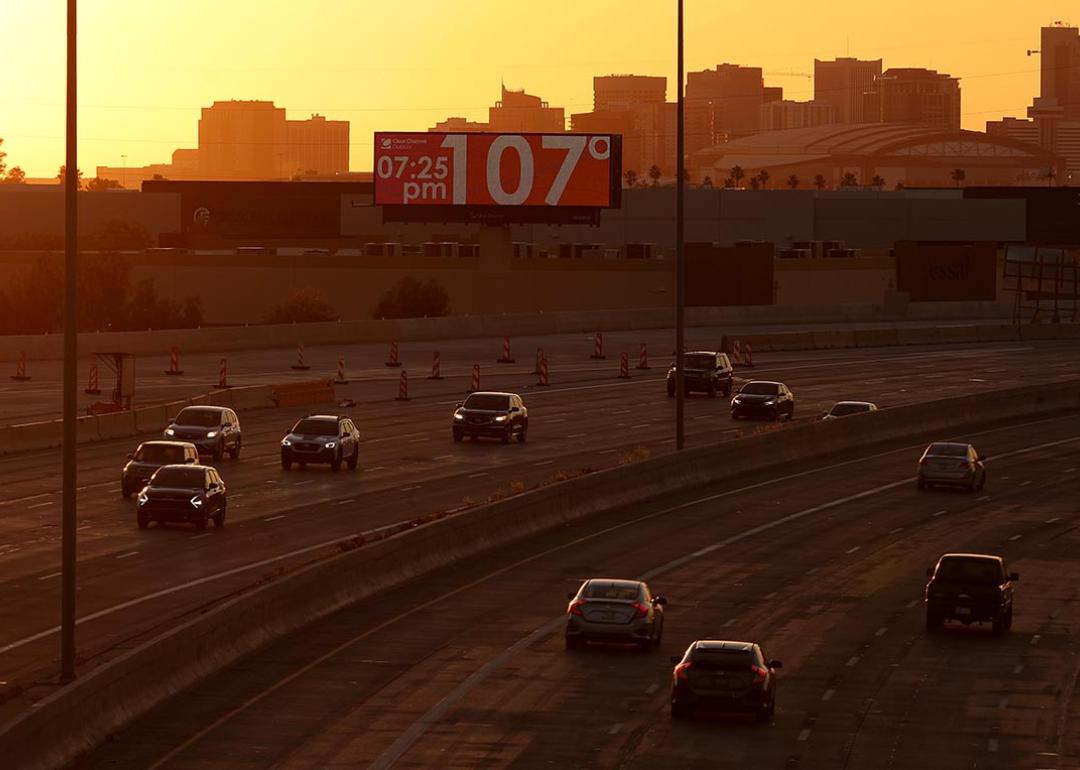
The 10 hottest cities in the US, ranked by temperature
The 10 hottest cities in the US, ranked by temperature
2024 was the in human history. Heat waves affected of the country, and July clocked in as the . In fact, from 2023 through 2024, there were 14 consecutive months of record-breaking temperatures. This isn鈥檛 a new trend, either: The 10 warmest years on record during the past decade.
That鈥檚 not to say that hot weather isn鈥檛 enjoyable. Heat can be a welcomed change from the gloomy and of the winter. But as hot temps become increasingly dangerous, it鈥檚 important to be aware of where the heat is most intense.
As we head into another potentially record-breaking summer, has compiled a list of the hottest cities in the U.S. to help. Whether you鈥檙e heat-averse and looking for places to avoid, or a sun-chaser searching for your next home, read on to see which cities top the list鈥攁nd how to stay safe in a warming world.
How we measure the hottest cities
To determine the 鈥渉ottest鈥� cities, Redfin ranked U.S. cities with populations over 100,000 based on their average summer temperature. This way, we account for cities with hotter summers and cooler winters, rather than favoring tropical places that are warm year-round. We also included each city鈥檚 average annual temperature, though it didn鈥檛 factor into the rankings.
An average summer temperature combines a city鈥檚 average daily high and low temperatures from June-August. An average annual temperature combines a city鈥檚 average daily high and low temperatures from January-December.
What are the hottest cities in the US?
1. Phoenix
- Average summer temperature: 93.7掳贵
- Average annual temperature: 75.4掳贵
- Record highest temperature: 122掳贵 (1990)
Phoenix is the hottest city in the U.S. The city gets so hot because of its location in the Sonoran Desert, year-round sunshine, and the . And it鈥檚 only getting .
2024 was the in the city鈥檚 history. Phoenix experienced an with temperatures reaching at least 100掳F, shattering the previous record of 76 days set in 1993. This extreme heat stretched into October and produced with temperatures above 110掳贵鈥攎ore than triple the city鈥檚 average of 21 days.
A new reality is forcing the city to adapt to unbearable summer heat. include the use of cool pavement鈥攁 pavement coating that reflects sunlight鈥攁nd improving Phoenix鈥檚 . The city aims to cover 25% of the city with shade by 2030, using trees to naturally cool the environment.
2. Yuma, Arizona
- Average summer temperature: 92.8掳贵
- Average annual temperature: 75.9掳贵
- Record highest temperature: 124掳贵 (1995)
Officially the in the world, Yuma, Arizona, is the second-hottest city in the U.S. Located in the heart of the Sonoran Desert, the sees slightly higher daytime highs than Phoenix but cooler overnight lows (by about 2掳F), which is why its daily average temperature is lower.
Because it鈥檚 only 90 miles from the Gulf of California, Yuma also experiences more humidity than most desert cities, which can intensify heat stress and make temperatures feel even hotter.
Despite the summer extremes, Yuma remains a winter haven. Its warm, sunny winters attract part-time residents (snowbirds) each year. The region is its irrigated agriculture, and other cool-season crops that are hard to grow elsewhere during winter months.
3. Las Vegas
- Average summer temperature: 90.8掳贵
- Average annual temperature: 70.1掳贵
- Record highest temperature: 120掳贵 (2024)
An entertainment oasis in the middle of the Mojave Desert, Las Vegas is the third-hottest city in the country. Temperatures in Las Vegas are slightly cooler than Phoenix and Yuma, primarily because it鈥檚 farther north. However, it has , especially at night. An of 100掳F temperatures are anticipated annually by 2050.
Residents experienced this heat first hand in 2024 during a . In July, Sin City saw seven straight days with highs above 115掳贵 and three days topping 118掳F, both records. A temperature of 120掳贵 was recorded during this heat wave, which broke the all-time record by an .
The city鈥檚 rapid growth has added to the risk. Las Vegas鈥� metro鈥檚 population has , in part because it was a for people searching for warm, sunny weather.
4. McAllen, Texas
- Average summer temperature: 88.5掳贵
- Average annual temperature: 77.4掳贵
- Record highest temperature: 111掳贵 (2023)
McAllen is a melting pot of culture in the heart of the Rio Grande Valley, boasting the hottest summers in Texas. McAllen feels the heat because of its southern latitude, proximity to the Chihuahuan Desert, and warming influence from the Gulf of Mexico. This makes humidity a , compounding the effects of already extreme heat.
Like most cities in 2024, heat was on full display in McAllen. It , with 115掳贵 (what the temperature actually feels like) in early May. By July, they soared to a dangerous (100掳F with 81% humidity), and remained very high in August. Multiple long-lasting were to blame.
Texas as a whole has warmed exceptionally quickly, becoming the . Across the state, triple-digit heat has become the norm, with average temperatures now 6掳F鈥�12掳F above normal. In fact, in the past 10 years, there have been days of record-breaking heat than in a typical decade. 2025 looks to be .
5. Laredo, Texas
- Average summer temperature: 88.0掳贵
- Average annual temperature: 74.6掳贵
- Record highest temperature: 115掳贵 (1908)
Situated along the banks of the Rio Grande, Laredo, Texas, is the fifth-hottest city in the U.S. It experiences similar temperatures to its southern counterpart, McAllen, but with less humidity and slightly cooler summers. Laredo鈥檚 location on the hot, dry plains further from the coast leaves plenty of room for heat waves to take hold, though, so are more common.
Like most of Texas, Laredo saw a record-breaking summer in 2023, with July posting the in the city鈥檚 history. 2024 , as triple-digit heat returned for weeks at a time. Laredo already 100掳F days in Texas鈥攁n average of 78 and record of 鈥攁nd prolonged heat waves are , pushing the city to confront the growing risks.
6. Brownsville, Texas
- Average summer temperature: 86.4掳贵
- Average annual temperature: 76.2掳贵
- Record highest temperature: 106掳贵 (1984/2023)
Brownsville, Texas, is the sixth-hottest city in the country. Located on the Gulf Coast just north of Mexico and only a few hundred miles from the Chihuahuan Desert, Brownsville benefits from both warm winters and hot summers. While milder than inland cities in Texas, like Laredo or McAllen, Brownsville still faces serious heat risks.
Brownsville saw a in 2023, with an especially hot summer. This warmth continued in 2024, with heat waves gripping the Rio Grande Valley in the spring and through the summer. The entire Gulf Coast , in part because the Gulf of Mexico experienced temperatures.
The world鈥檚 oceans absorb of the heat from human-caused emissions. So as the Gulf , cities like Brownsville are increasingly vulnerable to long, dangerous heat events.
7. Tucson, Arizona
- Average summer temperature: 86.4掳贵
- Average annual temperature: 69.7掳贵
- Record highest temperature: 117掳贵 (1990)
Tucson, Arizona, known as the for its 10,000-year long native history, is the seventh-hottest city in the country. The city is situated in the Sonoran Desert and gets very hot, but it鈥檚 actually about 5 than Phoenix and sees nearly four more inches of rain. This is because the city sits about 1,500 feet higher in elevation and is nestled among five small mountain ranges.
In , Tucson logged two record-breaking days in a row鈥�111掳贵 and 112掳贵鈥攈elping that summer to become the . Abnormal warmth continued into the fall and winter, by humidity.
Summer monsoons are common, but they don鈥檛 always bring relief鈥攁nd flash flooding can follow intense heat. Fall and spring offer spectacular weather, but Tucson鈥檚 summers are becoming longer, hotter, and more dangerous.
8. San Antonio
- Average summer temperature: 85.4掳贵
- Average annual temperature: 71.1掳贵
- Record highest temperature: 111掳贵 (2000)
San Antonio is so hot because of its flat landscape, proximity to the warm and humid Gulf Coast, and heat waves from Mexico. The is also a major factor for nearly 90% of the population, in some cases raising temperatures by an additional 9掳F.
San Antonio鈥檚 heat was on display in 2024鈥攖丑别 hottest year in the city鈥檚 history. Blistering temperatures began in earnest in May, when the city saw a week of 95掳F+ days. Then, in June 2024, the heat index for an all-time high. To close out the summer, a heatwave in August pushed temperatures past 100掳F for a week.
Frequent extreme heat will likely become the norm in the near future; 100-degree days are now in San Antonio than they were 30 years ago.
9. College Station, Texas
- Average summer temperature: 84.5掳贵
- Average annual temperature: 69.4掳贵
- Record highest temperature: 112掳贵 (2000)
College Station,Texas, located between Austin, Waco, and Houston, has a fairly similar climate to all three cities. It鈥檚 less humid than Houston, a bit hotter than Austin, and warmer than Waco. Heat from the Gulf of Mexico and Mexico proper provide most of the warmth, made worse by frequent southerly (from the south) winds. The flat landscape means heat has no trouble flowing in.
As with most other Texas cities, College Station endured a scorching 2024. Warmth peaked in August, when heat indexes of led to nearly monthlong heat warnings and advisories.
10. Dallas
- Average summer temperature: 84.5掳贵
- Average annual temperature: 68.0掳贵
- Record highest temperature: 113掳贵 (1980)
Adjacent to Fort Worth, its football, cowboy culture, and hot summers. The heat comes from southerly winds from Mexico and the Gulf, leading to wet, muggy air that .
After a summer in 2023, Dallas saw more of the same in 2024. The city reached 107掳F in August and broke the 100掳F barrier . High temperatures lingered into the fall, continuing a trend of longer, hotter summers across North Texas.
What is the hottest place in the US?
Death Valley National Park is the hottest place in the U.S. The desert basin has an average summer temperature of 101.3掳F and an average summer high of 114.8掳F. In 2024, it recorded its , averaging 104.5掳F鈥攎ore than 3掳F above normal.
Not only is Death Valley the hottest place in the country, but it鈥檚 also seen the hottest temperatures ever recorded on Earth. The park hit , which is recognized as the hottest temperature in history (although this ). It鈥檚 also seen the world鈥檚 second-hottest temperature of 130掳F in and (unverified), and highs recently.
The desert because it sits ~280 feet below sea level and has some of the highest barometric pressure in the world. The nearby mountains also trap heat, acting as a furnace.
How are temperatures changing?
have surpassed 1.5掳C (2.7掳F), the threshold above which scientists say will trigger . While it won鈥檛 be official until that level is sustained over 20 years, we could in the new normal.
This record heat has fueled more鈥攖丑别 of extreme weather鈥攁long with stronger and more frequent , , and . Research shows that without major cuts to greenhouse gas emissions, rising temperatures will likely make some locations within the next 50-80 years.
Tropical and coastal areas face the greatest risk of unbearable heat due to their , which can lead to extremely high heat indices. This is why cities have the in the country, with close behind. In fact, 100% of properties in every city on this list have a .
How to prepare for extreme heat
As record-breaking temperatures become more common, it鈥檚 essential to take heat seriously鈥攅specially in the country鈥檚 hottest cities. Here are a few tips on how to stay safe when the mercury rises:
- Hydrate constantly: Don鈥檛 wait until you鈥檙e thirsty. Drink water regularly throughout the day, especially if you鈥檙e outside.
- Keep your home cool: Use fans, blackout curtains, and AC . Even a few degrees of improvement can make a big difference during a heat wave.
- Avoid peak heat: Stay indoors or in the shade between 10 a.m. and 4 p.m., when temperatures are usually the highest. Local authorities may provide more detailed recommendations. If you don鈥檛 have a way to , find a local cooling center or public space with air conditioning.
- Know the signs of heat illness: Dizziness, confusion, and rapid heartbeat can signal heat exhaustion or stroke. If you see anyone struggling with these symptoms, seek help immediately.
Methodology
This list contains average annual temperature data for cities with over 100,000 residents.
comes from the National Centers for Environmental Information () and its parent administration, the National Oceanic and Atmospheric Administration (). Average summer temperatures are a three-month average based on data from June-August 1991-2020. Average annual temperatures are a 12-month average based on data from 1991-2020.
was produced by and reviewed and distributed by 麻豆原创.