Canada produces a lot of oil. So does Venezuela. How does it all fit together?
Canada produces a lot of oil. So does Venezuela. How does it all fit together?
Politicians in Alberta like to claim credit, or cast blame, when it comes to the price of a barrel of oil. Low prices are Ottawa’s fault, or the previous government’s — its regulations or policy or ideology or some mishmash of all three. High prices are the result of prudent governance, of course.
In reality, Canada, and Alberta in particular, are at the mercy of global markets and global powers that are largely outside either’s control — stock markets, political upheaval, election cycles and war all impact the price. Not to mention the fundamentals of supply and demand.
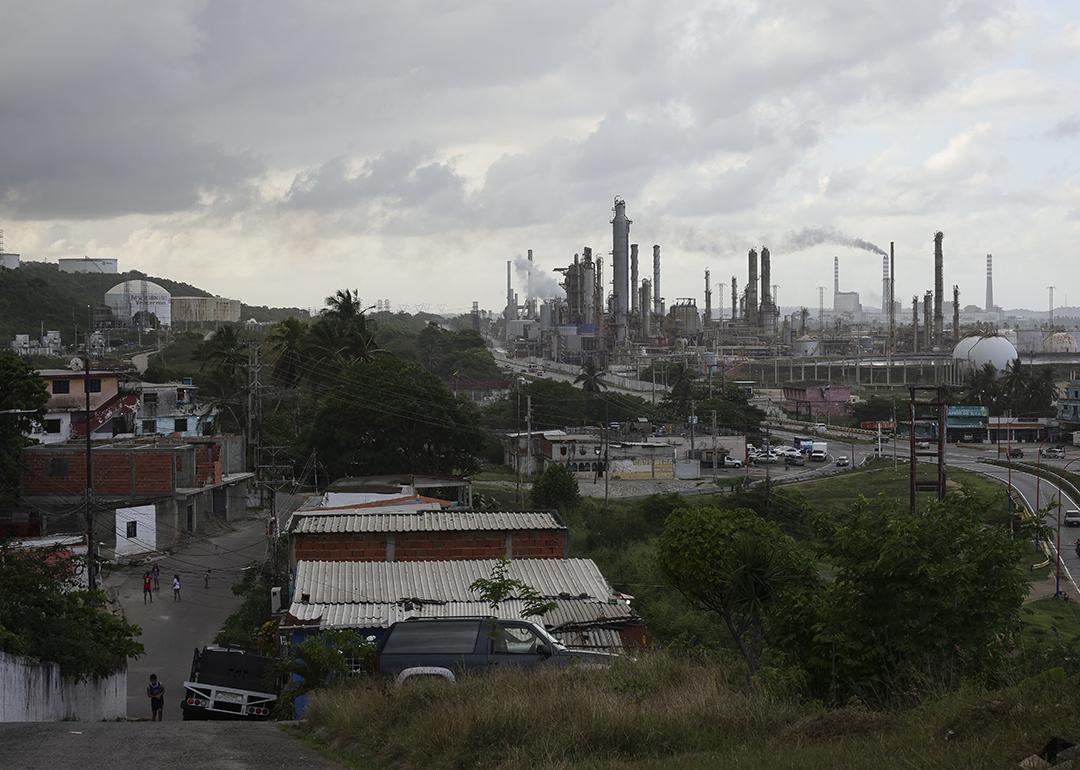
It’s why the U.S. attack on Venezuela, and assertion of control over its oil, is turning heads here in the north, and raising all sorts of questions about the future of Canada’s oil industry. Venezuela has the largest reserves in the world.
looks at how global oil markets work, and why Venezuela, in particular, is causing so much concern in Canada.
Real quick — how much oil do Canada and Venezuela produce?
As mentioned, Venezuela has the largest oil reserves in the world: estimated at 300 billion barrels.
By comparison, Alberta has 159 billion barrels.
But Venezuela’s rulers nationalized the oil and gas industry, kicking out all but one of the remaining U.S. firms in 2007 (Chevron remained under a special deal and ships small amounts to the U.S.) and , leaving its .
Meanwhile, Venezuela has been the subject of U.S. sanctions since 2019.
So it hasn’t been as big of a player as it could have been in recent years — and Alberta has been .
Supply and demand is the short answer here. If there’s a lot of demand for oil and not enough supply, the price goes up, or if there’s plenty of supply and not enough demand, the price goes down.
What’s supply? Well, say an oil-rich country like Saudi Arabia decides to flood the market. Prices go down. Remember the start of the COVID-19 pandemic, when a ? Saudi Arabia had flooded the market and demand was down as people stayed home.
Too much supply is , even before Venezuela was a factor. Prices have been depressed, although not dramatically, with — simply due to supply outpacing demand.
Demand is also forecast to decline, but there’s debate around when that will happen. The International Energy Agency, which a speedier drop in the coming years, revised its forecast to show across the globe, but it could decline sooner if governments take more action on reducing carbon emissions.
Regardless, oil producers are cautious, focused on reining in costs. In Canada, the major oil players aren’t looking at building big new oil projects and while wooing stockholders with dividends.
There are barrels, and then there are barrels — why are there different oil prices?
The price of oil varies across regions and across different types of oil.
In Canada, the biggest commodity is heavy oil from the oilsands, but there are also lighter varieties, the kind of crude that most people think about when they picture pumping oil out of the ground.
On Jan. 6, days after the U.S. attack on Venezuela, the price for a barrel of .
That spread is what’s known as the price differential, something that has been a major headache for Canadian producers in the past when there was a wide gulf between the two benchmarks.
That differential has shrunk in recent years, in part due to the construction of the Trans Mountain pipeline expansion, which allowed Canada to sell more oil on the global market rather than relying almost exclusively on the U.S. as a customer — a key driver of suppressed prices.
Prior to that, producers would sell oil at a discount to refineries in the U.S., which had plenty of supply and could afford to be picky, particularly as oilsands production surged.
the price differential could increase if sanctions on Venezuelan oil are eased and more crude oil starts to flow, potentially reversing the gains from the Trans Mountain expansion.
It’s also generally more expensive to pull oil sands out of the ground than, say, drilling a well over a known field of shallow reserves.
Going back to those refineries, it’s important to note that many U.S. refineries are set up to handle the heavy oil that Canada produces. There are the Midwest refineries that are full of Canadian crude, and the Gulf Coast refineries, which also handle a fair share of our northern supply.
And that’s where Venezuela comes in as a potentially significant factor.
With the recent attack and the rhetoric spewing from the U.S., there’s reason to believe that Venezuelan production could ramp up, albeit slowly and without a whole lot of private-sector enthusiasm.
Those Gulf Coast refineries in the U.S. are a short tanker trip across the Caribbean from Venezuela, which just so happens to have massive deposits of the same thick oil that’s produced in Canada’s oil sands.
So if that region dramatically increases production, Canadian crude will be pushed out. Significant production would also pour into the international market, which is currently oversupplied and expected to see a significant glut in 2026.
That would drive prices down around the world — a double whammy for Canada.
One thing that seems clear is that Venezuela will not be able to produce millions of additional barrels of oil overnight. The country’s infrastructure is in poor shape and its experts have fled to other countries.
to get on board and invest in the country, but that will require billions of dollars or more. It doesn’t appear as though many are too excited at the prospect.
There’s no guarantee of political or financial security in Venezuela which will make any company wary of pouring large sums into the area.
It’s an advantage Prime Minister Mark Carney highlighted while in Paris this week, saying Canadian oil is “clearly low-risk and low cost.”
So what?
While Venezuelan oil might not flood into the market overnight, the impacts of the attack are already being felt in Canada.
Politically, Alberta Premier Danielle Smith the prospect of Venezuelan oil means a new pipeline to the West Coast has to happen immediately — although there’s still no company that wants to build it.
Alberta has tied its fortunes to oil and gas prices, with nonrenewable resources forming the single-largest source of government revenue — 27% of all revenue in 2024-2025. So when the price drops, the government can , almost overnight. A one-dollar change in price means a $750 million swing.
Long-term, if Venezuela does come online with significant production, Alberta could be hit hard, impacting residents and government services. Oil and gas is also Canada’s most significant export.
On the flip side, the push for a new pipeline could lock in long-term dependence on oil and gas resources as the world transitions to electrification and political pressure could mean large sums of public dollars are pumped into supporting that infrastructure. Critics have warned of the real .
Even without the market impacts of Venezuelan oil, there is now also the first concrete example of a U.S. government — that’s increasingly seeking control over resources and economies in the Western Hemisphere — showing it isn’t averse to using its military power to achieve those ends.
Any country with valuable resources in this hemisphere is now potentially at risk from a country with more wealth and strength than any other in the world, and with seemingly few scruples about flexing its might.
That adds a level of uncertainty that could add to the cautious approach of Canadian oil producers, adding another layer to the economic repercussions of the current moment.
was produced by and reviewed and distributed by Â鶹ԭ´´.