This story originally appeared on Giving Assistant and was produced and distributed in partnership with 麻豆原创 Studio.
Here's how spending habits change with age
Ask which age groups are the biggest spenders, and a lot of finger-pointing may occur. Generational debates about who spends the most, who saves the most, and who is the most financially savvy have infected the cultural lexicon over the years, especially with how unpredictable the economy has been over the past couple of decades.
To take a closer look at the shopping trends of different age groups, compiled statistics collected by the that examined spending habits of Americans in 2020. Data were collected from surveys conducted by the BLS twice per year. The values are average spending per year per 鈥渃onsumer unit.鈥� A CU is generally a group of people related by blood, marriage, or adoption, but it also includes households where individuals living together are financially independent, and those living together and making financial decisions together.
The average income of CUs in all age groups was $74,949 after taxes. The mean expenditure of all CUs was $61,334.
Here鈥檚 the takeaway: People aged 35-44 were the highest spenders in the most categories, owning five out of 10 categories listed here. However, one thing to consider when looking at this reporting is the impact of the pandemic and safer-at-home and social distancing mandates, which were at their height at the time the data was collected. Several variables came into play, especially when looking at highly impacted industries like the restaurant and automotive industries.
Ready to let the finger-pointing begin? We kick off by examining which age groups dine at home. Prepare for some surprises.

Food at home
- Average annual spending in 2020 for all consumer units: $4,942
- Under 25 years of age: $2,604
- Age 25-34: $4,383
- Age 35-44: $6,202
- Age 45-54: $5,783
- Age 55-64: $5,076
- Age 65-74: $4,591
- Age 75 years and older: $3,632
When COVID-19 hit, the restaurant industry took a big hit. The reported a significant drop in sales in the majority of full-service restaurants: a total 36% drop in sales. Approximately 110,000 restaurants closed amid the height of the pandemic. The trend of dining at home may have also been spurred on by factors like food delivery services, ranging from meal kits and grocery delivery to prepared meal services and restaurant delivery. Cooking become more commonplace, with many finding more time for recipe experimentation while stuck at home.
A pre-pandemic 2017 survey by found 95% of 18-29-year-olds cook at home with about a third doing so three or four times a week. The 30-44-year-old counterparts cooked at home 92% of the time, with 28% of those instances occurring five to six times a week. As for ages 45-59, 93% cooked at home, with 29% doing so five to six times a week. The 60+ crowd came in at 92% with about a third of them doing so every day.
Overall, the survey found the older the age group, the more likely they are to cook at home.

Food away from home
- Average annual spending in 2020 for all consumer units: $2,375
- Under 25 years of age: $1,923
- Age 25-34: $2,665
- Age 35-44: $3,141
- Age 45-54: $3,000
- Age 55-64: $2,217
- Age 65-74: $1,696
- Age 75 years and older: $1,197
The pandemic deeply impacted restaurants with diners turning more toward their home kitchens. Several restaurants and food retailers expanded options for delivery and ordering in, with even convenience stores like 7-Eleven now offering delivery options. A found 39% of consumers feared for their health amid the height of the pandemic and relied on ordering in food to halt the risk of contagion.
This increase in demand for delivery impacted generations differently as ordering online became more widespread and normalized. Older generations were found to be of online ordering, which may account for their lower spending habits. Baby boomers specifically have been found to during the height of the COVID-19 pandemic.
Alcoholic beverages
- Average annual spending in 2020 for all consumer units: $478
- Under 25 years of age: $225
- Age 25-34: $481
- Age 35-44: $551
- Age 45-54: $547
- Age 55-64: $563
- Age 65-74: $462
- Age 75 years and older: $217
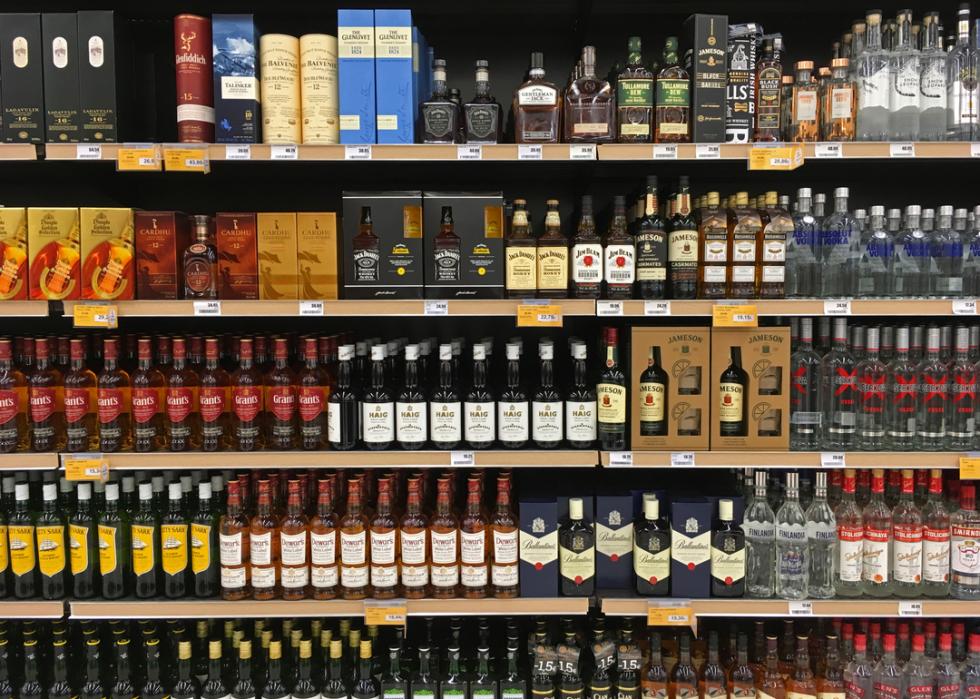
A common trend during the pandemic was increased alcohol consumption. researched drinking based on age ranges for 2020, finding ages 21-25 topped the list with 63% identifying as current alcohol drinkers. This age group also had the highest rate of binging at 11%. was age, and that high-frequency drinking increases as we age, but more risky behavior was more likely among those aged 20-30.
Looking at which drinks each generation gravitates toward, beer remains a favorite beverage amongst all ages, per a study. A shift in beer drinking noted by the study saw those under 67 moving toward craft beer.
Ages 21-36 tended to purchase wines on sale, the 37-48 crowd went for variety, with the 49-67 set leaning towards being oenophiles and purchasing based on a passion for wine. Spirits chosen by age groups saw ages 21-36 favoring vodka, 37-48 leaning towards rum, and 49-67 balancing between vodka and tequila.

Housing
- Average annual spending in 2020 for all consumer units: $21,409
- Under 25 years of age: $14,745
- Age 25-34: $21,220
- Age 35-44: $26,354
- Age 45-54: $24,425
- Age 55-64: $21,379
- Age 65-74: $18,492
- Age 75 years and older: $15,937
According to research from , a nonprofit that looks at data to support the well-being of U.S. workers and families, housing takes up the biggest category of spending across generations.
The reasons age groups purchase homes varies. A study by the found the primary reason for buying a home among all ages was simply desire. The secondary reason for ages 22-29 was a change in family situation, such as a marriage, birth of a child, or divorce. The secondary reason why those in the age range of 30-54 purchased homes was the desire for a larger home. As for ages 55-73, they wanted to be closer to loved ones. In the 74+ category, two secondary reasons for buying a home were neck-and-neck鈥攖o be closer to family and friends, and the desire for a smaller home.

Apparel and services
- Average annual spending in 2020 for all consumer units: $1,434
- Under 25 years of age: $1,164
- Age 25-34: $1,703
- Age 35-44: $2,010
- Age 45-54: $1,884
- Age 55-64: $1,208
- Age 65-74: $960
- Age 75 years and older: $617
Price tags aren鈥檛 the only differences in how generations shop. In 2015, cited a study from Accenture that predicted millennials, approximately ages 24-39, would spend $1.4 trillion by 2020. Per, which provides businesses industry data, a third of that $1.4 trillion will go to retail purchases. Enter COVID-19, which had the anticipating the global fashion industry鈥檚 growth slowing 3-4% below 2019 stats. What MGFI forecast in terms of consumer shifts: 70% of consumers would be taking their fashion cues from social media, which points to younger spenders.
NPD did a deep dive into two markets highly targeted for their shopping habits, ages 18-24 and 25-34. The 18-24 age group spent more money on beauty products, with ages 25-34 purchasing more accessories. Sportswear drew more of the 18-24 crowd, with the 25-34 embracing parenthood and heading to children鈥檚 clothing stores.

Transportation
- Average annual spending in 2020 for all consumer units: $9,826
- Under 25 years of age: $7,300
- Age 25-34: $10,277
- Age 35-44: $12,617
- Age 45-54: $12,316
- Age 55-64: $10,287
- Age 65-74: $7,676
- Age 75 years and older: $4,205
The automotive industry has been on a wild ride since COVID-19 struck. In April 2020,. With in-person restrictions making visits to dealerships difficult, many buyers went online for their purchases. Still, there was the issue of supply versus demand, with supply chain issues and microchip shortages adding to the delays. And with fewer people commuting to work, the necessity for owning a vehicle was not as great for many.
Another that sprang out of this was used car sales. Ages 35-44 were the highest spenders in this category with an average annual spend of $3,573. For car rentals, the 45-54 age group came out on top here, spending on average $952 annually.
Despite limitations in terms of access to vehicles, use of public transportation didn鈥檛 climb either, potentially due to COVID-19 restrictions. The age group that took public transportation the most was 35-44, spending an average of $335 for the year. During 2020, though, some positive changes also began, including a in electric vehicles.

Health care
- Average annual spending in 2020 for all consumer units: $5,177
- Under 25 years of age: $1,350
- Age 25-34: $3,320
- Age 35-44: $4,579
- Age 45-54: $5,465
- Age 55-64: $5,684
- Age 65-74: $6,695
- Age 75 years and older: $6,627
The pandemic saw the public vacillating on how to approach health care. studied information from the National Health Expenditure and Centers for Medicare and Medicaid Services, revealing health spending and consumption tripled from past averages, reaching $4.1 trillion. This was a 9.7% increase from 2019 to 2020.
Many chose to skip or postpone doctor visits and elective surgeries to avoid exposure to COVID-19, leading to a decline in the use of health services by 8.4%. Despite this, health care prices rose by 2.5%. The highest spenders on medical services were ages 45-54 with an annual average of.

Pets
- Average annual spending in 2020 for all consumer units: $690
- Under 25 years of age: $382
- Age 25-34: $672
- Age 35-44: $873
- Age 45-54: $590
- Age 55-64: $1,010
- Age 65-74: $597
- Age 75 years and older: $266
Stay-at-home orders amid the pandemic led to a rise in pet adoptions and purchases. reported on stats provided by the. What they found in 2020: 鈥淢ore than 23 million American households鈥攏early 1 in 5 nationwide鈥攁dopted a pet during the pandemic.鈥�
Beyond the annual average spending mentioned above, the studied expenditures on toys, hobbies, and playground equipment. Who were the luckiest dogs (cats, ferrets, etc.)? Those adopted by the 35-44 age group, who spent $1,163 on average for pet toys over the course of 2020.

Education
- Average annual spending in 2020 for all consumer units: $1,271
- Under 25 years of age: $2,264
- Age 25-34: $1,148
- Age 35-44: $1,114
- Age 45-54: $2,611
- Age 55-64: $1,259
- Age 65-74: $416
- Age 75 years and older: $497
Education was impacted greatly during COVID-19, with most classes being conducted online throughout 2020. With the enactment of President Joe Biden鈥檚 Executive Order on Supporting the Reopening and Continuing Operation of Schools and Early Childhood Education Providers, the national mission of ensuring every student in America receives a high-quality education in a safe environment was put into play. The undertook a study on how COVID-19 deepened 鈥渄ivides in educational opportunity across our nation鈥檚 classrooms and campuses,鈥� disparities that existed pre-pandemic.
In 2020, the conducted a Household Pulse Survey focusing on education costs for homes with school-age children. A stand-out concern was a digital disparity with online learning, with 85% of families with household incomes of $100,000+ using online resources, compared to 76.5% of families with incomes of $50,000-$99,000, and 65.8% of families with incomes less than $50,000.