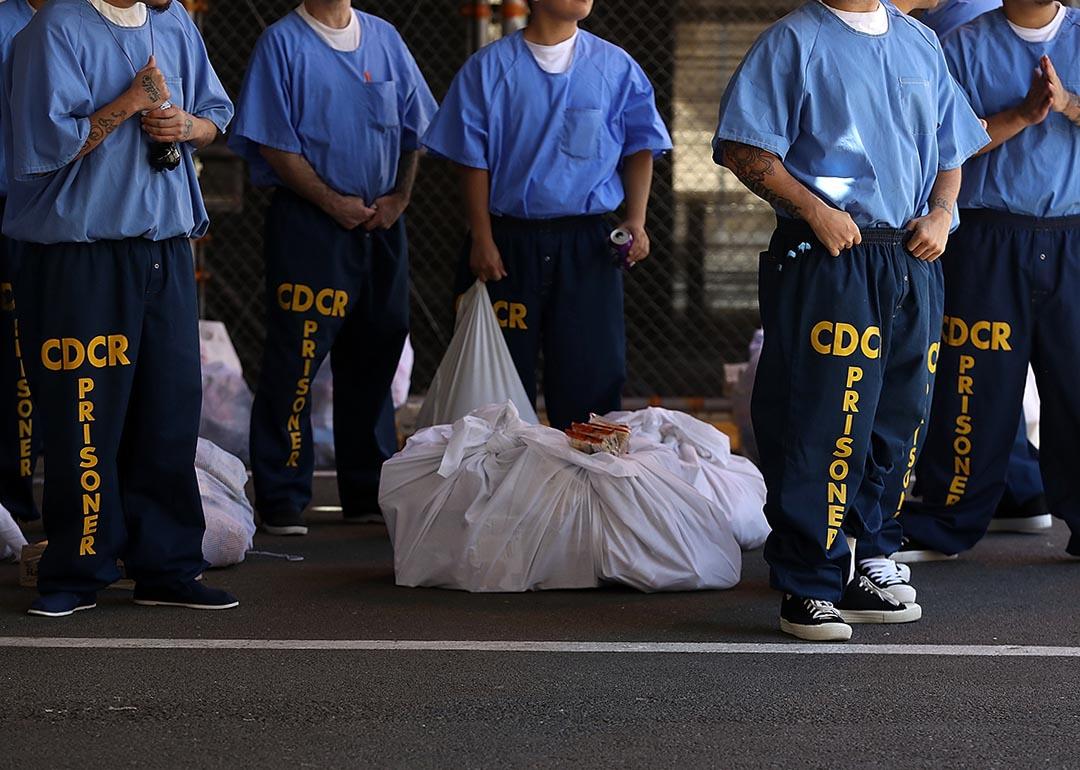
How efforts to cut long prison sentences have stalled
was produced by , a nonpartisan, nonprofit news organization that seeks to create and sustain a sense of national urgency about the U.S. criminal justice system, and reviewed and distributed by 麻豆原创 Media.
How efforts to cut long prison sentences have stalled
When a 2016 California law made it possible for Lance Gonzalez to shorten his prison sentence by completing more rehabilitation programs and education, he hit the ground running.
Gonzalez KQED reported this week. He taught classes, worked as a mentor, and earned seven associate degrees.
His efforts seemed to pay off. Under the law, the state corrections department awarded Gonzalez enough time credits to move up his first parole hearing from 2028 to 2023. He was granted parole on his first try鈥攁 rare feat.
As Gonzalez was planning for his first hours as a free man last spring, a lawsuit pulled the rug out from under him, reports. In May, a judge agreed with the Criminal Justice Legal Foundation鈥攁 conservative nonprofit organization鈥攖hat the corrections department didn't have the authority to advance parole for people serving life sentences. The state has appealed the ruling.
Meanwhile, sentenced to life before 1990 to be eligible for parole .
The two stalled efforts in the Golden State are indicative of a tension visible across the country, as reform efforts aimed at paring back long sentences resistance from victims' rights groups and a .
The time people spend in prison generally got longer during the 1990s with the rapid adoption of opportunities for incarcerated people to earn parole part-way through a sentence.
Wisconsin is characteristic of the changes in sentencing in many states. Before 1997, people convicted in Wisconsin were eligible for parole after serving 25% of their sentence and were . After 1997, .
Even as the state reduced arrests and prosecutions during the 2000s, there was no "release valve," experts told Wisconsin Watch, causing the number of people incarcerated to continue to grow, even as fewer people were sentenced. At present, the state's prison population is 5,000 people over capacity.
A few years after Wisconsin's 1997 sentencing law passed, Gawaine Edwards was convicted of and armed robbery at age 23. Under the law, Edwards isn't eligible for release for another 12 years, when he will be 57. Last week, Edwards told Wisconsin Watch that in a prison that isn't offering legitimate rehabilitation or educational programming.
Truth-in-sentencing laws can also limit how people seek rehabilitation programming in prison. As "When I ask young inmates about behavioral change, they often respond, 'Why should I?' Without incentives, they see no reason to change."
According to a July report from Stateline, this year鈥攂ills that allow courts or parole boards to reevaluate long sentences鈥攂ut most have failed.
One that bucked the trend was a new law in Oklahoma that allows domestic violence victims convicted of crimes to apply for resentencing .
More general second-look legislation is often opposed by some victim advocacy groups, which argue that the bills rob people affected by crime of closure. A second-look effort in Virginia led to earlier this year, before the bill was postponed to next year.
"The impact鈥攊t's with us every day," whose son was killed during a cell phone sale. "Why have a justice system if we're going to circumvent these decisions," he said of the sentences imposed, "and try to come back and let these people get out of jail?"
An unrelated good-time credit law did go into effect in Virginia last month, leading to the release of more than 800 people from state prisons. The law roughly tripled how much time off their sentences incarcerated people can earn for good behavior.
Other states may be going the other way. This November, voters in Colorado will decide whether people convicted of violent crimes should be required to serve at least 85% of their sentence before being eligible for parole or reductions for good behavior. Currently, that number is 75%.
And as of Aug. 1, virtually under laws passed by the legislature earlier this year. A related new law also reduces the ability to earn credits for good behavior. Prison policy experts predict that the changes will .