
From parchment to pixels: A brief history of medical records
This story originally appeared on DocBuddy and was produced and distributed in partnership with 麻豆原创 Studio.
From parchment to pixels: A brief history of medical records
Humans have long had the urge to document our experiences. The first cave painting dates back to . Unsurprisingly, medical records became a key part of human history as the first healers, scholars, and physicians attempted to record their experiences with sickness, illness, and death.
Cave paintings in southwestern France from as long as 17,000 years ago show a man attacked by an animal鈥攕omething historians argue is the .
Of course, medical record-keeping looks significantly different today, thanks to several dramatic shifts as humans developed new technologies. analyzed research from the and other sources to illustrate how health data keeping has evolved throughout the ages, from the earliest pictograms and hieroglyphics to paper books used primarily for education to today's electronic health records.
Medical record-keeping remains a vital component of health care today. For each hour physicians spend with patients, they spend 鈥攁 trend that has led to and even physicians leaving medicine altogether. Electronic health records are also a major target for cybercriminals, as they can use data to steal patients' identities as well as for phishing scams.
Looking back at the history of medical records provides not only a sense of the field's history, but also a glimpse of what the future might hold.

Pictograms, cuneiform, and hieroglyphics
Other than cave paintings depicting violent injuries, the oldest medical records used early forms of writing, such as cuneiform and hieroglyphics. Ancient Egyptians recorded histories of illness and injury with hieroglyphics for educational purposes; the oldest found papyrus manuscript
Other Egyptian papyri document used to treat ailments.

Unsystematic parchment and paper documents
Known as the father of medicine, the ancient Greek physician Hippocrates of Kos inspired the Hippocratic oath doctors take today and influenced medical records with his Corpus Hippocraticum. The compilation of around 70 medical scripts, written between the fifth and fourth century B.C.E., included .
The knowledge inscribed in the Corpus Hippocraticum spread across Europe through influential early physicians like Galen of Pergamon, who lived in the first century C.E. and created health records for educational purposes. Islamic physicians Rhazes and Ibn Sina also documented their treatments in medical records in the Early Middle Ages, as did the Jewish scholar Maimonides in the 12th century C.E.
Systematic paper documentation
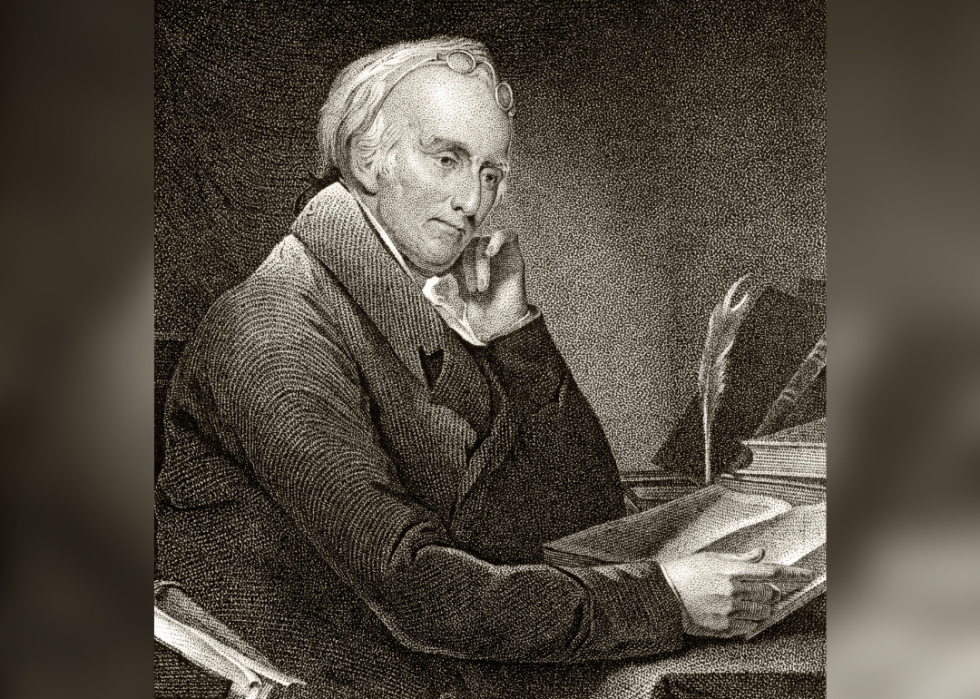
Although the Renaissance ushered in an era of , medical records didn't advance beyond scholarly writings into documented systems until the late 1700s. The American physician Benjamin Rush compiled copious patient notes into a and also wrote the first psychiatric textbook.
During the 18th century, early medical schools like the Charit茅 in Berlin and the H么tel-Dieu in Paris also began documenting treatment plans and patient information for medical research.
Databases, treatment diaries, and patient data
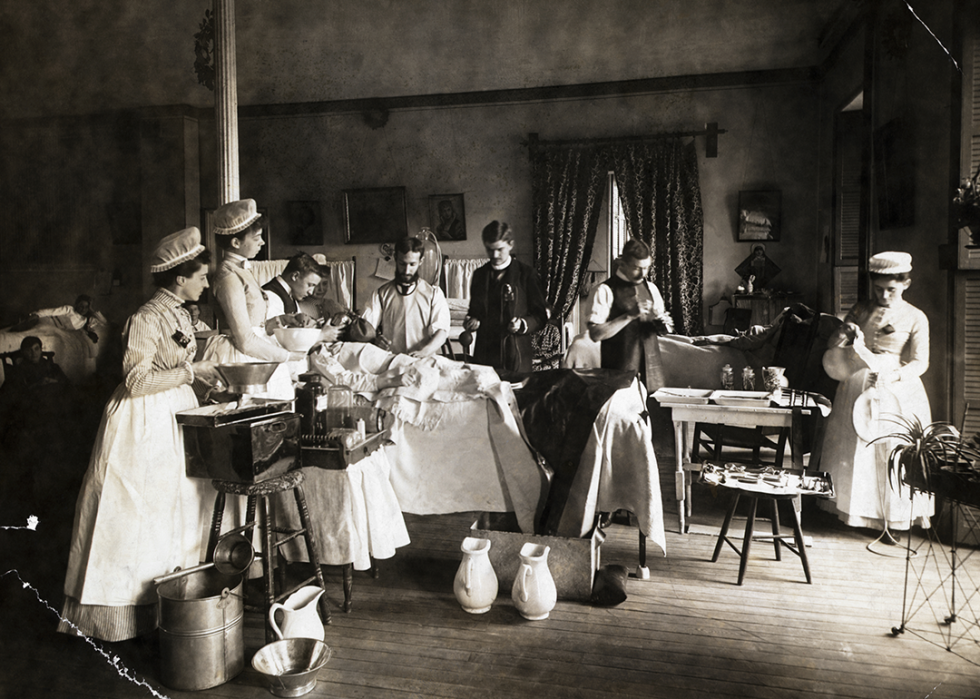
In 1793, New York Hospital began keeping patient records in the Book of Admissions and the Book of Discharges, and about a decade later, the New York state's government decreed that home doctors should also document treatments. Although the first records varied in quality鈥攁nd included many scribbled notes without much detail鈥攖hese efforts were the first patient records system kept in America.
By 1850, four hospitals in London, England, and Ontario, Canada, began in the first databases鈥攁 shift that marked the beginning of the transition to modern medical databases. The number of medical records rose steadily throughout the late 19th and early 20th centuries as medicine became more specialized.
In 1911, the United Kingdom passed a law about medical records standards for social insurance, and in 1928, the American College of Surgeons established the Association of Record Librarians of North America to create standards for medical record-keeping in U.S. hospitals.

Electronic health records
By the 1960s, most health data was transcribed using punch cards鈥攁 time-consuming process, but one that allowed patient records to be used for later study and research. Paper documentation continued to be health care providers' main form of patient records until the early 2000s.
In 2009, the federal Health Information Technology for Economic and Clinical Health Act pushed medical facilities to transition to electronic medical records, and by 2019, .
Today, many health care experts hope recent technological advancements like blockchain, cloud computing, and even artificial intelligence will make electronic health records more secure, as well as easier to access for physicians and patients alike.
Story editing by Jeff Inglis. Copy editing by Kristen Wegrzyn.