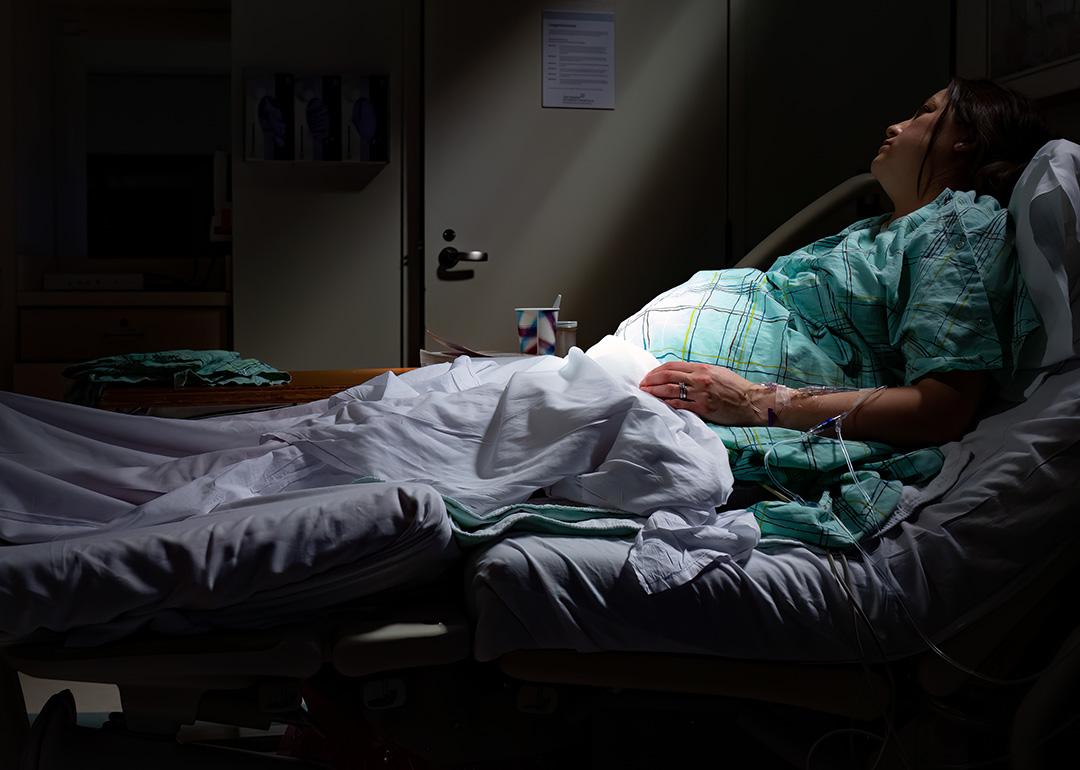
These states have investigated miscarriages and stillbirths as crimes
was produced by , a nonpartisan, nonprofit news organization that seeks to create and sustain a sense of national urgency about the U.S. criminal justice system, and reviewed and distributed by 麻豆原创.
These states have investigated miscarriages and stillbirths as crimes
In late March, police in southern Georgia who had a miscarriage after a witness reported seeing her place the fetal remains in a dumpster.
The coroner in Tift County determined from a naturally occurring miscarriage, but some legal experts consider the arrest a bellwether for the criminal suspicion that surrounds pregnancy loss in many states in post-Roe America.
previously examined 鈥攁nd where it occurs鈥攃an mean the difference between a private medical issue and a criminal charge.
Nationally, federal data shows that about 20% of pregnancies end in a loss, but only a small number are investigated as crimes. In several states, a positive drug test after a pregnancy loss can result in criminal charges for the mother, and even prison time.
Prosecutions related to pregnancy appear to have increased since the Supreme Court decision that overturned Roe v. Wade in 2022, according to Pregnancy Justice, a nonprofit that advocates for the legal rights of pregnant people. In the first year after the Dobbs decision鈥攆rom June 2022 to June 2023鈥攖here were at least 210 pregnancy-related prosecutions, researchers for the group found.
Here are some states where miscarriages and stillbirths have been investigated by the criminal legal system in recent years:
Alabama
Alabama has a broad "chemical endangerment of a child" law allowing prosecutors to charge someone for drug use during any part of a pregnancy, whether the mother delivers a or a .
The Marshall Project's that more than 20 women had been prosecuted after a miscarriage or stillbirth in Alabama. Some of the harshest sentences resulted in cases where a fetus was stillborn and the woman went to trial.
The examining nationwide prosecutions related to conduct associated with pregnancy, pregnancy loss or birth in the first year after the Dobbs ruling found that nearly half of the cases .
Arkansas
Arkansas is among several states that still make it a crime to . Such laws date back to the 17th century, and were intended to shame and accuse women of crimes if they were pregnant and unmarried.
In 2015, walked into a hospital with a plastic bag containing the remains of her stillborn fetus and ended up going to jail鈥攁nd eventually prison. She was accused under the concealment law.
A jury originally convicted and sentenced Bynum to six years in prison. Later, an that the jury shouldn't have been allowed to hear evidence that Bynum ingested medications to induce labor before the stillbirth or had previously had abortions鈥攂ecause the charge was that she had concealed the pregnancy, not tried to end it. While pregnant, Bynum had planned to quietly let a friend adopt the baby, and she eventually pleaded guilty to a legal violation for the attempted adoption.
California
In 2022, the state passed a law banning investigations and prosecutions of pregnancy loss.
But prior to that law, at least two California women had for stillbirths that prosecutors had alleged were related to drug use.
had served nearly four years of an 11-year sentence before a judge ruled her plea agreement鈥攖o a charge of voluntary manslaughter of a fetus鈥攚as .
That only happened after the case of garnered international outrage. Becker was charged with "murder of a human fetus" in 2019, but the case was and led to Perez's case getting a second look. Anger about the prosecutions of both women in state law, to avoid punishing "people who suffer the loss of their pregnancy."
Georgia
At least one woman who had a miscarriage has been arrested under a state law that makes it a crime to conceal a dead body, .
On March 20, police in Tifton, Georgia, issued a that a dead fetus had been found in a dumpster at an apartment complex, after an ambulance was called for a woman who was found bleeding and unconscious. The next day, the Tifton Police Department announced it had arrested the woman who miscarried that fetus, accusing her of one count of concealing the death of another person and one count of abandonment of a dead body.
It's unclear whether will pursue the criminal charges despite the coroner's ruling that the miscarriage was naturally occurring.
Ohio
Ohio's allows a fairly broad interpretation, if applied to fetal remains: "No person, except as authorized by law, shall treat a human corpse in a way that would outrage reasonable community sensibilities."
In 2023 in Warren, Ohio, Brittany Watts with abuse of a corpse after experiencing a miscarriage at home in her toilet. She had been to a hospital prior to her miscarriage but left when she felt she was getting inadequate treatment, according to news reports. When she went back to the hospital after her miscarriage, a nurse called police and reported that Watts had given birth at home and did not want the baby鈥攁n assertion Watts' lawyer denied. A grand jury with the criminal case in 2024.
Earlier this year, Watts in federal court alleging medical professionals to fabricate criminal charges against her.
Oklahoma
Criminal charges related to drug use while pregnant鈥攊n cases of or infants 鈥攈ave become increasingly common in recent years .
Kathryn Green gave birth to a stillborn baby in Enid, Oklahoma, in 2017. She was struggling with meth addiction at the time and scared. She cleaned wrapped him in a blanket and put him in a box. Police later found the remains in the trash and arrested her. Prosecutors initially charged her with second-degree murder, alleging that the stillbirth happened because of "meth toxicity." But medical tests later showed otherwise: Green's stillborn son had an infection that had caused his death, records show.
In 2022, Green decided to enter an Alford plea鈥攁 guilty plea in which the defendant maintains innocence. At her sentencing hearing, a judge said he wasn't convinced that prosecutors had proven Green willfully and knowingly harmed her baby by using methamphetamine while pregnant, but he was bothered by her "lack of maternal instinct."
South Carolina
South Carolina was the to prosecute a woman for a stillbirth allegedly due to drug use. In 2001, Regina McKnight was sentenced to 12 years in prison for giving birth to a stillborn baby who tested positive for cocaine. McKnight served eight years before the state Supreme Court , in part because her trial lawyer didn't present witnesses to challenge prosecutors' claim that her drug use definitively caused the stillbirth.
The state charged with unlawful neglect of a child or homicide by child abuse for alleged perinatal drug use.
In March 2023, a college student in Orangeburg, South Carolina, named Amari Marsh went from miscarrying a fetus in her bathroom to being investigated for a homicide. She told investigators she didn't realize she was pregnant until she went to an ER with severe pain. She left the hospital and miscarried later in a toilet at home (which medical experts say is common). Her boyfriend at the time called 911. Police became suspicious that she may have sought to end the pregnancy or not called 911 fast enough, records show. She was jailed and accused of homicide by child abuse鈥攂efore the fetus was autopsied.
An autopsy showed later that the fetus died of natural causes due to an infection that Marsh was unaware of, . In South Carolina, police can arrest someone on a criminal complaint without approval from local prosecutors (called solicitors). After a grand jury reviewed all of the evidence in the case, the charges against Marsh were dismissed.