They're not cops. They don't have guns. But they're responding to more 911 calls.
was produced by , a nonpartisan, nonprofit news organization that seeks to create and sustain a sense of national urgency about the U.S. criminal justice system, and reviewed and distributed by 麻豆原创 Media.
They're not cops. They don't have guns. But they're responding to more 911 calls.
People experiencing mental or behavioral health crises and addiction have often been subject to police use of force, arrest and incarceration. In , touched briefly on some efforts around the country to change that, and now takes a deeper look.
One of the new 鈥� and one that has rapidly 鈥� are civilian co-responder programs, in which behavioral health specialists, often social workers, show up to certain emergency calls alongside police. These can include situations like suicide threats, drug overdoses, and psychiatric episodes. Typically, the officers on the team have . These programs are often , while some critics argue that they .
Generally, these teams aim to de-escalate any crisis or conflict, avoiding arrest and solving the reason for the emergency call, especially if it's a simple one. Recently, the New Jersey Monitor reported that ended with the [state] trooper picking up her new cell phone from the post office and fixing a broken toilet" and the emergency call screener setting up her new phone.
The Monitor also found that the program avoided arrests or police use of force in 95% of responses.
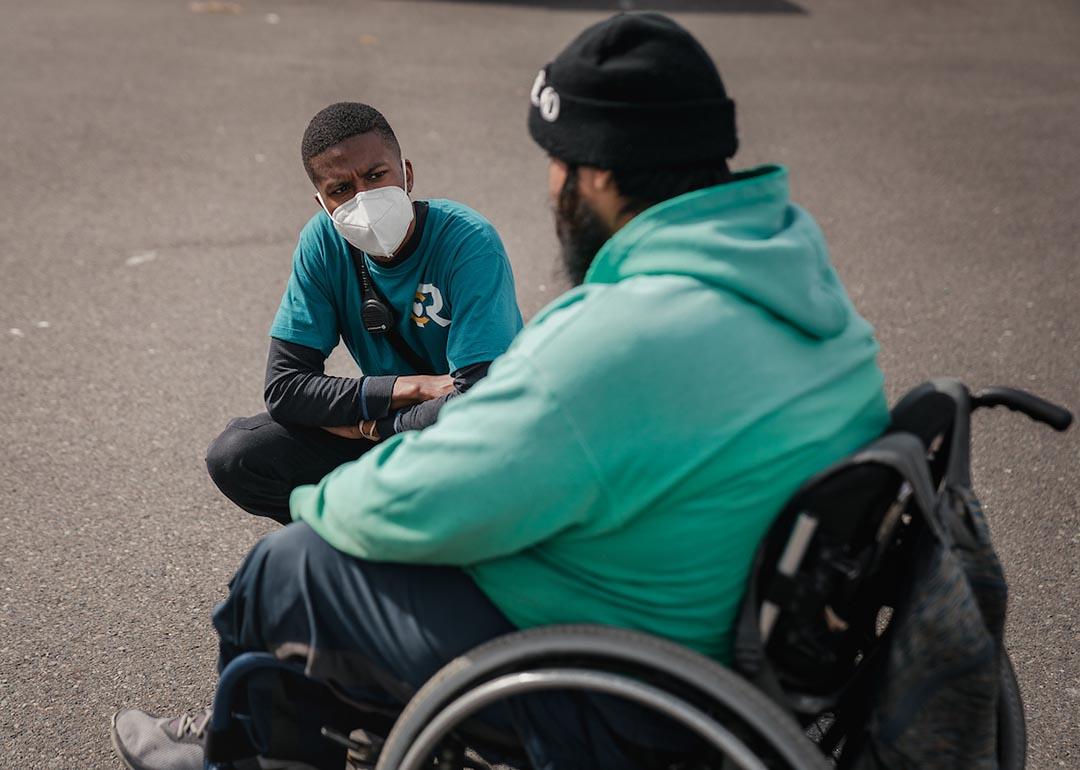
are closely related strategies in which social workers or behavioral health specialists show up to calls . These teams only respond to calls with a low probability of violence, and many engage in proactive work as well, trying to connect people with behavioral health challenges to services outside the context of a crisis. In 2020, The Marshall Project's Christie Thompson wrote about an , Washington, modeled after a long-standing program in Eugene, Oregon, known as CAHOOTS.
Such programs can have an easier time building long-term relationships because they are less affiliated with law enforcement than co-responders. "One of the biggest things we had to overcome is the idea that we would be snitches," a responder in Olympia told Thompson in 2020. "It's about reassuring folks that we don't run [their names] for warrants or anything like that."
The programs vary wildly from place to place in approach and scale. In Eugene, a small city of less than 200,000 people, CAHOOTS 鈥� which has been around since 1989 鈥� responds to some 20% of 911 calls. Meanwhile, the , which is just three years old , responded to roughly a quarter of mental health calls in precincts where it operated in the first half of 2023. Mental health calls make up 10% of all 911 calls in the city, officials have said. In Denver, a found the alternative response model reduced low-level crime.
One of the problems that CAHOOTS workers said they encounter is that some of the people they serve are afraid to call 911 due to traumatic past interactions with police. A related effort that's also picking up steam nationwide is the 988 Suicide and Crisis Lifeline, which the federal government launched in 2022. The program primarily focuses on providing support over the phone and by text, but can lead to in-person responses in certain situations too.
Mental health providers have shown broad approval of 988, and it has in polling. However, it is also not very well known, and according to a RAND Corporation analysis published in March, there are and exchanged. Some activists have raised alarms that the program can in some circumstances, as well as . and are just a few of the locales that have recently pursued efforts to expand the government's authority to compel mental health treatment.
A of also investing in "Crisis Intervention Centers" on the premise that , and emergency rooms . These crisis centers aim to " including psychiatric stabilization and substance withdrawal treatment in a place that is less restrictive and less disruptive to a person's life than a hospital or jail," reported the Nevada Current.
Other approaches and seek to promote non-police responses to chronic, low-level criminal activity () that stems from unmet behavioral health needs or poverty.
"We want to have an alternative response to a much wider array of situations than just non-crime crisis," said Lisa Daugaard, the primary architect of the "Let Everyone Advance with Dignity" program in Seattle, which launched in 2011.
The LEAD model 鈥� which previously stood for Law Enforcement Assisted Diversion 鈥� has since been exported to other cities and works to address public safety concerns without punishment or incarceration. Caseworkers with LEAD help people .
All these various efforts are vulnerable to changes in political power, public opinion, and funding from government and private sponsors. In Iowa, members of co-responder programs are concerned that a could leave them out in the cold. In Minneapolis, a recent federal audit found that in 2020, the Trump administration used a " for its LEAD program. In the denial, a Trump official noted that some of the city's councilmembers had expressed support for the "defund the police" movement.
And in late March, House Republicans after discovering that more than 80% of federal money to help states, territories and tribes implement the 988 hotline remains unspent.