Unhoused people have property rights, too
was produced by , a nonpartisan, nonprofit news organization that seeks to create and sustain a sense of national urgency about the U.S. criminal justice system, and reviewed and distributed by 麻豆原创.
Unhoused people have property rights, too
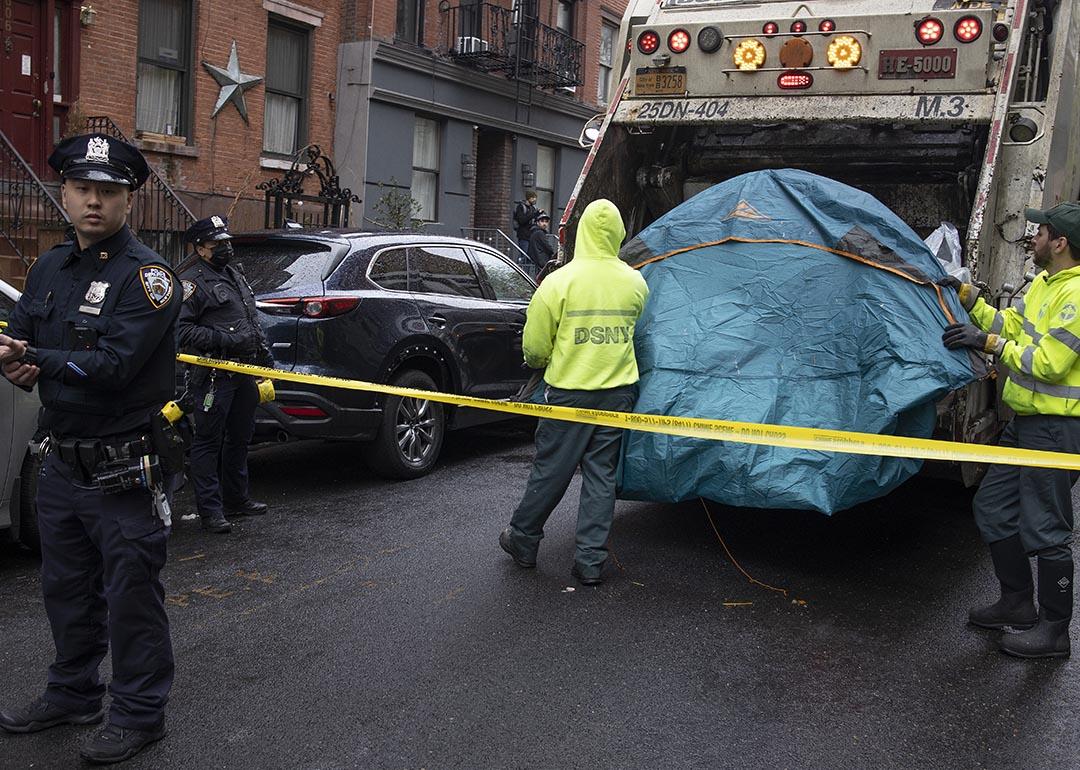
In the years Faith Kearns spent living unsheltered on Phoenix's streets, she had all kinds of belongings taken during sweeps of the public areas where she was staying. Kearns said police or city workers took, and often destroyed, her property鈥攈er birth certificate, the Visa card she used to access her disability income, medications, and the tent where she lived, reports .
She's a plaintiff in an ongoing federal challenging how Phoenix treats unhoused people living and sleeping on public property, alleging these seizures violate their constitutionally-protected property rights. "This property is what they rely on for survival," the suit reads. "It is all they have."
Kearns' litigation isn't unique in using property rights arguments to seek better treatment of unhoused people by local governments. Even after the Supreme Court ruled in June that , courts are still being asked to evaluate how cities handle the property of unsheltered people when clearing them from where they are sleeping, resting for a bit, or even simply waiting for public transit.
The Supreme Court ruling in , that said criminal penalties for sleeping outside when no other adequate shelter was available violated the Eighth Amendment's protection against cruel and unusual punishment. Cities that had limited enforcement of camping bans and postponed enacting new ones are now released from their previous constraints. That has prompted a nationwide wave of local camping prohibitions and aggressive clearing of encampments.
Over the summer, cities from , to , imposed new camping bans, or strengthened existing prohibitions. and , California, cleared encampments, while Spokane, Washington, near schools, parks, and childcare centers. San Francisco's mayor promised to begin .
However, the crackdown isn't universal. In Springfield, Illinois, community resistance .
The Supreme Court's decision left a difficult path ahead for lawsuits alleging that bans are cruel and unusual punishment. However, ongoing lawsuits also based on property right claims have resulted in orders for cities to take greater care of the belongings of unhoused people. Attorneys in these cases also say the Supreme Court decision did not impact claims about excessive fines and fees. In addition, suits filed in state courts cite additional protections under some state constitutions.
The Phoenix lawsuit, based in part on constitutional protections against government seizure of people's property, asserts the city destroyed the belongings of unhoused people, like Kearns, without giving them adequate warning or any recourse. In December 2022, a judge temporarily prohibited the city from seizing property without prior notice, required the city to hold seized property for 30 days before destroying it and to provide a process for people to retrieve their things.
In response to this order, and another in 2023, the city updated its policies. City officials have touted a in the police department, which cite 40 interviews (though only three with unhoused people themselves) which found limited cases of officials improperly handling belongings and no instances of such police misconduct after 2020.
Those findings, however, are in stark contrast with the results of a U.S. Department of Justice continued to destroy unhoused people's property without notice or the chance for them to reclaim it鈥攊n violation of their constitutional rights.
Other lawsuits on behalf of unhoused people are also citing property rights. A lawsuit in Albuquerque, New Mexico, temporarily halted the collected from homelessness enforcement. In San Francisco, an federal lawsuit led to a requirement that the city store belongings and notify their owners.
"It was very traumatic because it's very cold outside and a lot of things they're taking are warm clothes, warm jackets, blankets鈥攖hings that you need just to survive," Toro Casta帽o, one of the San Francisco plaintiffs, .
While judges are weighing unhoused policy in the courts, some voters will ponder similar questions in November. Responses to homelessness are a key issue in the mayoral elections in . In the , Democratic candidates tied homelessness to a lack of affordable housing, as their Republican opponents proposed moving unhoused people out of cities and onto camps on public lands, an approach .
These electoral battles highlight a nationwide ideological clash, where the left-leaning argument for battles the conservative desire to treat mental health and substance abuse as the root causes of homelessness.
But some of the governments that have stepped up enforcement or considered expanding camping bans are led by Democrats. In July, California Gov. Gavin Newsom, a Democrat, issued an executive order and threatened to withhold funds from counties that failed to expand their own efforts. In 2022, Newsom found bipartisan support for a bill that .
The Heritage Foundation's to homelessness. While Trump has distanced himself from , the chapter that mentions homelessness was written by Dr. Benjamin Carson, who in the Trump Administration. Policies prioritizing permanent housing without mandating mental health treatment have reduced homelessness in places like and 鈥攁nd once enjoyed bipartisan support, . Those policies now .
The conservative policy proposals closely follow those of the Cicero Institute, which has . A provision of Florida's camping ban, heralded by the think tank, allows residents, business owners, or the state attorney general to . In Arizona, voters will soon decide on a proposition that would similarly allow property owners to .
Kearns, in Phoenix, will be moving into a new apartment next month, back in the same neighborhood where she once lived on the streets.
With housing, Kearns has been able to hold onto things like a new copy of her birth certificate, a rock collection, and letters from her family. But she still recalls the sting of losing her belongings. "We all lost treasures, thanks to the city," she said.