
Why some casinos don't pay and how to get your winnings
This story originally appeared on AskGamblers and was produced and distributed in partnership with 麻豆原创 Studio.
Why some casinos don't pay and how to get your winnings
Playing the perfect winning hand or hitting the jackpot are the stuff of dreams for every player who takes a gamble. But those dreams can become nightmares when a player finally meets Lady Luck at the casino鈥攂ut the house refuses to pay any winnings.
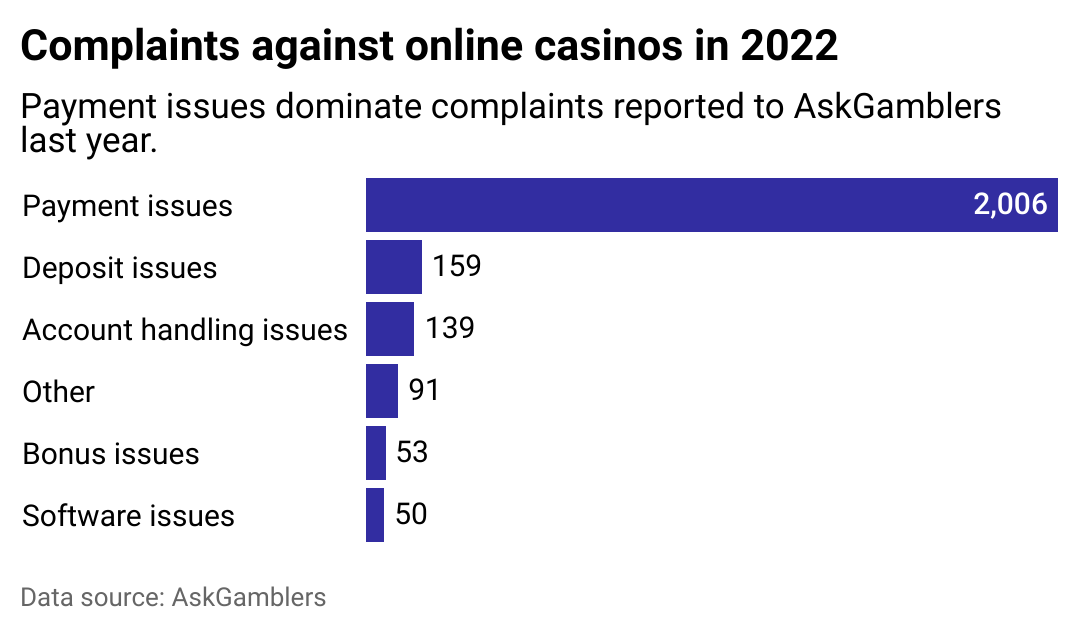
In 2022, the AskGamblers Casino Complaint Service (out of a total of 8,494 filed) seeking damages from 926 online casinos. Seventy percent of these accepted complaints were about payments, which goes to show how often winnings are in contention.
To better understand what can happen when casinos don't pay out winnings, reviewed U.S. codes, court cases, news stories, and online forums to see what current U.S. legal protections are in place to address common casino complaints, what players can do to help their case, and the ways some have successfully fought back.

Make sure the online casino is on the up-and-up
Before players take matters to court, they should take a step back and assess their situation. One of the most important things they should consider is whether they are playing on a legal casino platform. The American Gaming Association estimates that Americans have bet .
Over half of surveyed sports betters by the AGA say , despite placing most of their bets with illegal operators. AGA CEO Bill Miller that ensuring the public is educated on whether they are betting on legal or illegal gambling sites is "a job for all of us" in the casino industry.
Internet gambling casinos based offshore also present a problem. The Las Vegas Review-Journal has reported that gaming experts its reporter spoke to have after suing an offshore online casino.
One of the easiest ways to ensure a player is using a safe online casino is to look for a license. Legal sites prominently display licenses issued by gambling commissions such as the , according to the California Business Journal. Another easy way to tell is checking out the payment methods they offer. If they use services like PayPal or major credit card networks, there's a good chance the site is legal.
Determining the site's legitimacy is the first step before placing any bets. Unsurprisingly, if players stumble on illegal sites, so goes their chances of legal recourse when pursuing their winnings.
Mind the Ts and Cs
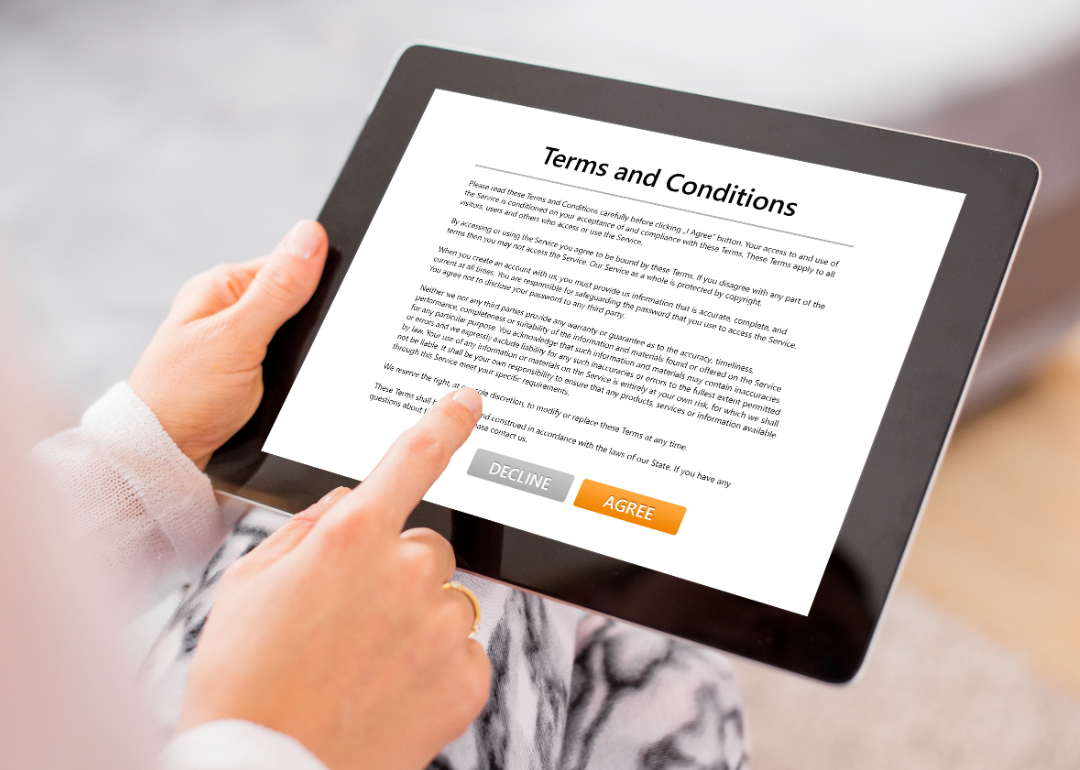
Casinos also refuse to pay out if players have breached the casino's terms and conditions, whether knowingly or not. It may seem tedious, but make sure to read the fine print.
Other reasons for refusal include using a Virtual Proxy Network while gambling, failing to provide ID, or not meeting the wagering requirements for the bet. If a player owes child care payments, their name may also appear on a database, which casinos are required to check before disbursing winnings per the .
Escalate the incident. Keep copious notes.
If players believe they're not at fault, they can contact the online casino disputes team and provide details of the incident. Documentation is key, so players should keep record relevant information including screenshots, emails, gaming logs, and chat transcripts.
If reaching out to the casino fails, players can contact an independent, alternative dispute resolution provider. They will also need documentation of the incident, but players should also keep track of their own dealings with the dispute provider. It never hurts to keep a paper trail. If all else fails, players can file a complaint directly with the .
All this may sound like a lot of work, but often yield results. In 2022, 82% of accepted complaints on Ask Gamblers Online Casino Complaint Service were resolved. Its largest disputed amount was $256,760.79.

Take legal action? Perhaps in Europe.
If players do go so far as to work with lawyers, there have been a few cases where they have won in court against casinos, especially in Europe. In 2021, after three years in court, online gambler Andrew Green of Lincolnshire, England, prize, which Betfred refused to pay because of a "defect" in its gambling game. Similarly in Austria, a compulsive player ($624,211.49 of $3.1 million), arguing that a casino did not do enough to help curb his gambling habit in 2004.
In American courts, however, players may find fewer cases in their favor. A by a New York gambler to sue for $20 million was based on her claim that casinos recognized her gambling addiction but did nothing to stop it, but was ultimately dismissed by the judge. Another suit brought against a Las Vegas casino claimed that a player was too drunk to play. The player believed he was plied with alcohol on the casino floor and had no memory of losing $500,000, but the case was dismissed after the casino claimed he was not visibly drunk.

Gamblers' protections
Despite the obstacles, legal casinos in the United States are among the most regulated. They must adhere to thousands of rules and regulations to support consumers. Many U.S. laws also aim to prevent illegal gambling operators from doing business and preying on players in the first place. The Illegal Gambling Business Act of 1955 and the Racketeer Influenced and Corrupt Organizations Act make it a criminal offense to conduct and participate in illegal gambling business in the U.S.
The Unlawful Internet Gambling Enforcement Act was enacted to prohibit gambling businesses from knowingly accepting payments to settle illegal gambling debts. In 2006, the law was used to bust an online betting business for .
Regulators can use the to prohibit the use of interstate commerce to conduct illegal gambling business. Section 1084 of the U.S. Code (under the Wire Act) makes all forms of wire transfer to conduct illegal, however, certain games like poker and chess are exempt under the Skill Game Protection Act.
There is no shortage of consumer protection, but the bottom line is this: Keeping bets on legal sites increases a player's chance of remuneration.
Story editing by Carren Jao. Copy editing by Tim Bruns.