
Inside investors’ diversification decisions for 2026: Rethinking risk, cash, and concentration
In 2026, investors are taking charge of their portfolios — and their financial future — in striking new ways, according to a new investment survey by . Diversification is often taught as a simple math problem — spreading your money around so you don’t have all your eggs in one basket. But for most people, the reality is much more personal.
To see how people are actually managing their investments, SoFi surveyed 843 investors. The research found that a group of investors is charting a diversification path of their own, tailored to today’s ever-changing world. More are keeping extra cash on hand (55%), choosing individual stocks over EFTs (31%), embracing alternative assets (55%), and dipping into AI (46%).
Here, the investors SoFi surveyed share their insights for balancing optimism about new opportunities with caution about the economy — and finding a new middle ground.
Key Survey Findings
- Individual stocks are key: 31% of investors say stocks of specific companies make up the biggest part of their portfolio.
- Investors are building a cash cushion: 55% plan to keep more money in savings or cash accounts in 2026.
- Most don’t rebalance their portfolios regularly: Only 30% of respondents have a set schedule for adjusting their investments.
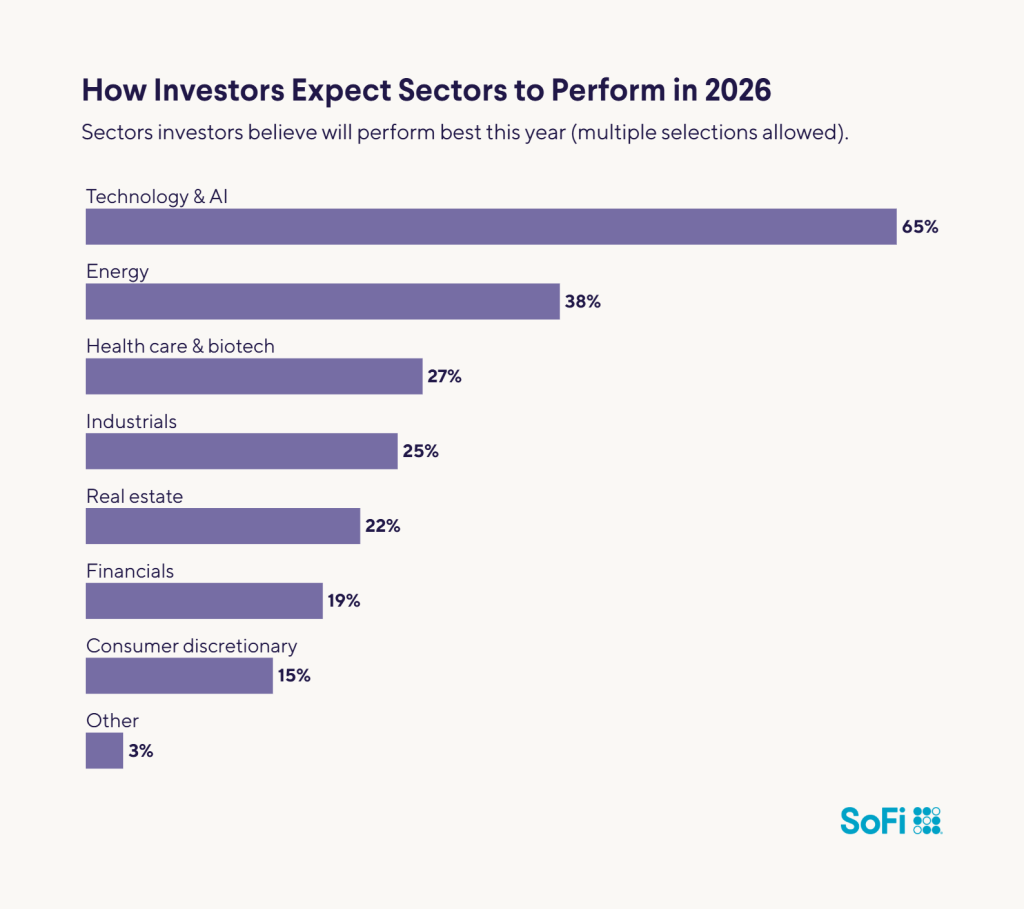
- Anticipating an AI boom: 65% think technology and AI will be the big winners in 2026.
- Alternative investments have moved into the mainstream: 55% of investors own at least one alternative asset.
- Financial professionals matter: 49% of respondents say professional advice is what influences them most when deciding how to diversify.
Who Makes the Investment Decisions
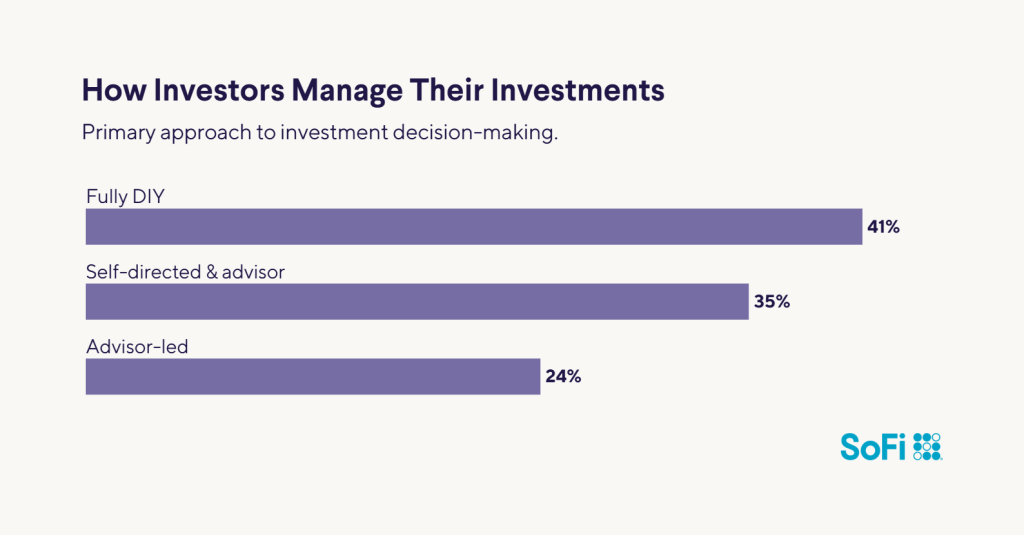
In the past, investors would either or use a financial advisor. Today, SoFi’s survey shows, those lines are blurring. Most respondents now control their own investments, but a substantial number of investors are using a combined approach.
76% of investors are actively involved in their investments
While 41% of respondents make every investment decision themselves, 35% opt for a mix of self-directed investment accounts plus a human or automated advisor.
41% of investors use a robo advisor for at least some of their investments
Technology is playing a bigger role in how investors manage their portfolios today. are now a standard part of the investment process for many respondents — and almost twice as likely to be used as human advisors.
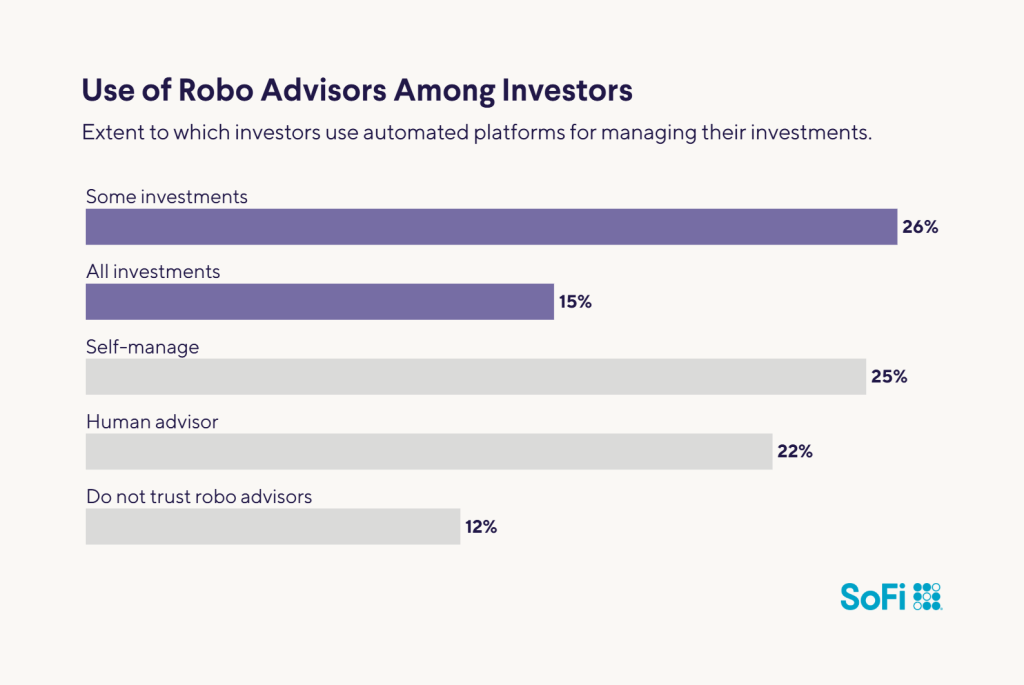
What this tells us: Investors aren’t necessarily choosing between control and guidance — they’re often blending both. Managing one’s own money has become the norm, but many people still value having some kind of professional input.
What’s in the Average Investment Portfolio?
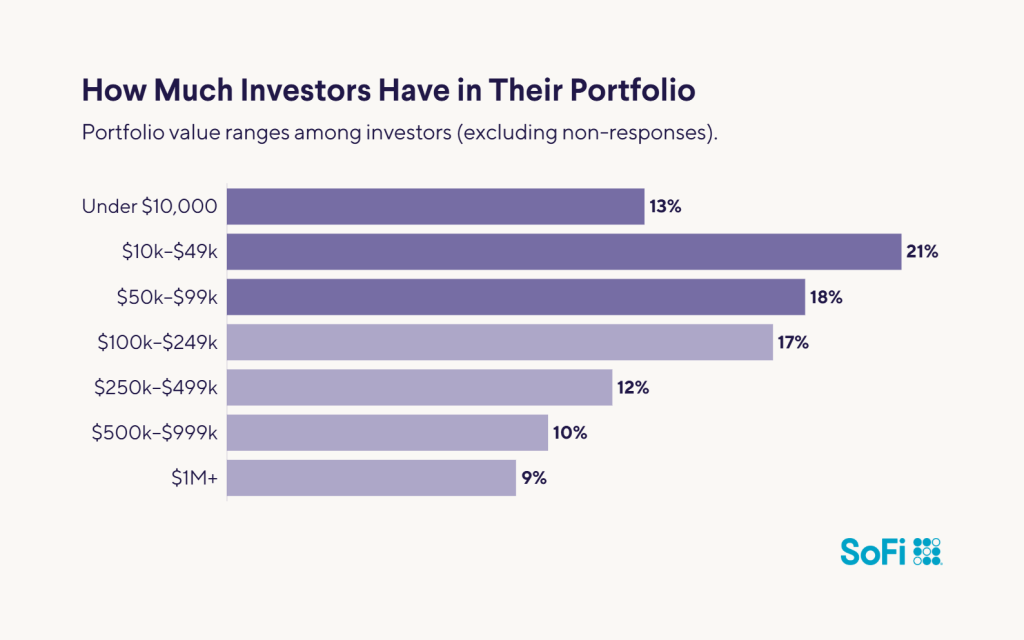
The total value of investors’ portfolios ranges from less than $10,000 to more than $1 million. However, SoFi’s survey found that most fall somewhere in the middle.
52% of investors have less than $100,000 invested
More than half of respondents (52%) have portfolios valued under $100,000, while close to one-fifth of the respondents — the biggest group among those surveyed — have $10,000 to $49,000 invested.
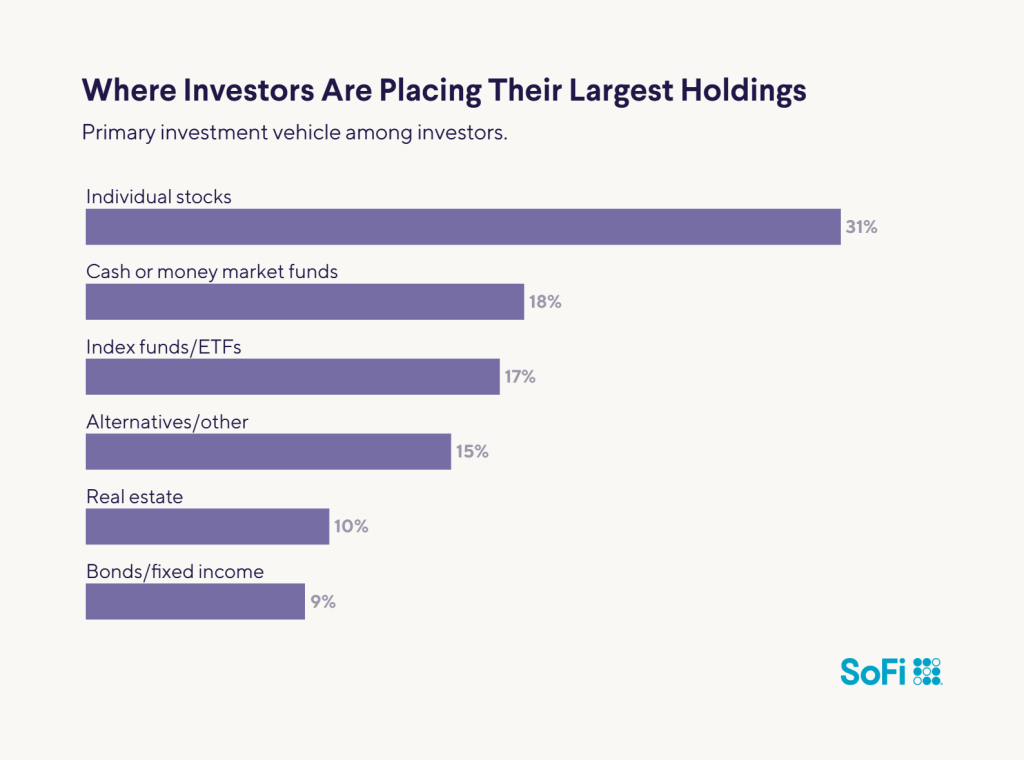
31% say individual stocks are their largest holding
Stocks make up the biggest percentage of investors’ portfolios, far outweighing cash and money market funds as well as index funds and .
57% of investors consider their home to be part of their portfolio
For most people, a house is more than just a place to live — it’s the biggest investment they’ll ever make. While 43% of respondents say their home is not part of their investment portfolio, over half see it as a pillar of their investment holdings.
The Investment ‘Rule’ Investors Don’t Follow …
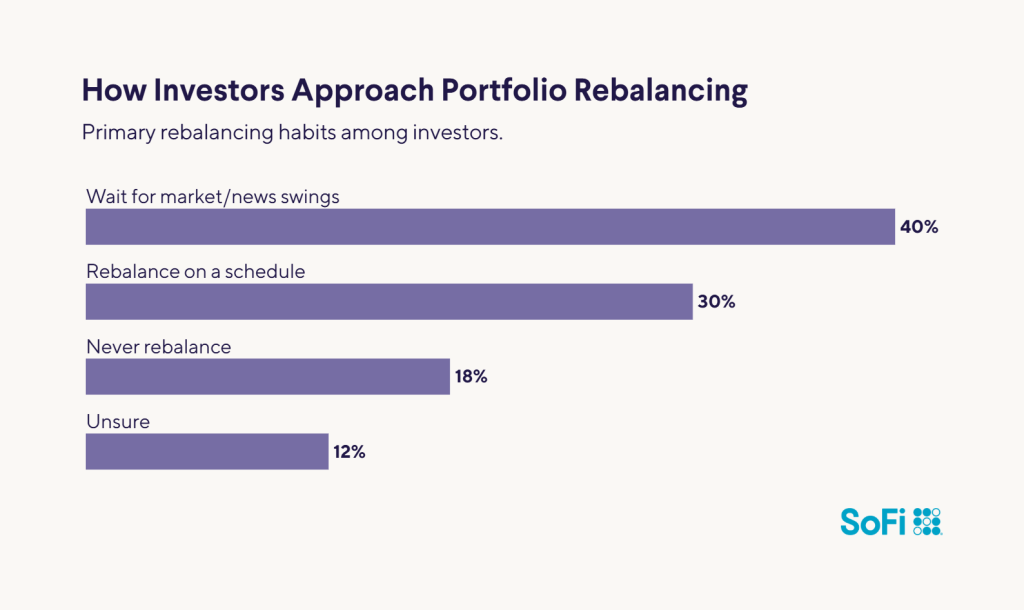
The conventional wisdom is that a needs to be rebalanced regularly to help manage risk and make sure an investor’s asset allocation is still aligned with their financial goals. But for many SoFi survey respondents, rebalancing happens sporadically at best.
Only 30% of investors stick to a schedule for rebalancing their portfolios
While about one-third of investors rebalance their portfolios regularly on a set schedule, 40% of investors rebalance only when the market makes a major move. Almost 20% never at all.
…And the Rule They’re Still Invested In
As investors rethink their strategies for , it’s natural that they may rethink traditional rules, such as the classic 60/40 allocation guideline. However, many investors still find value in this strategy.
42% of investors still believe in the 60/40 rule
For decades, the standard advice was for investors to keep 60% of their holdings in stocks and 40% in bonds. Today, more than 4 in 10 survey respondents think that the strategy is still effective and continue to consider it the gold standard.
However, 22% say the concept needs to evolve, and 19% believe it’s outdated.
Alternative Assets Are Becoming More Mainstream
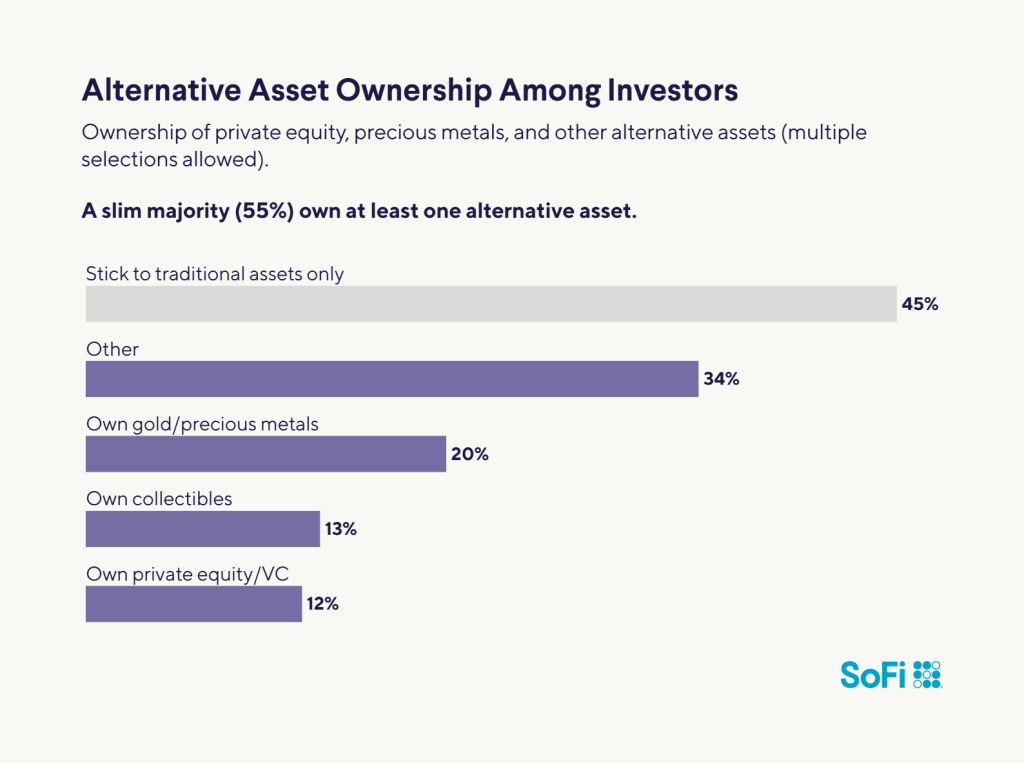
Growing numbers of investors are branching out beyond traditional investments and opting for alternatives. Alternatives are assets that fall outside the traditional ones investors typically turn to, such as stocks, bonds, and cash (or cash equivalents). Alternative investments are typically higher risk, but may also offer portfolio diversification or the potential for higher returns.
55% of investors own at least one alternative asset
From investing in private equity to precious metals to collectibles, such as wine or art, 55% of respondents now own at least one . Meanwhile, 45% prefer to stick to traditional investments only.
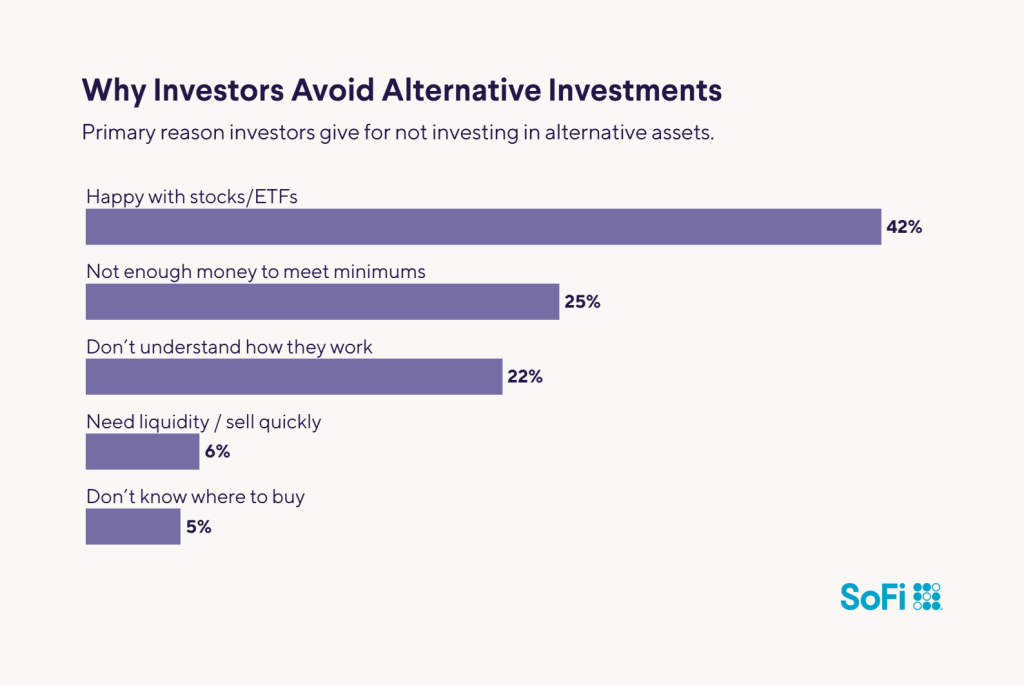
Among the investors who stick to traditional investments, 42% say they’re happy staying with stocks and ETFs over alternatives
Of the 45% of survey respondents who aren’t buying into alternative investments, 42% say they’re content to stick with buying stocks and ETFs.
Other investors in this group say their hesitancy stems from a lack of funds or in-depth knowledge. One-quarter reported that they don’t have enough money to meet the minimum amounts required to invest in alternatives, and 22% don’t fully understand how these investments work.
What this tells us: The rules of investing still matter, but they’re being applied with more flexibility. Investors aren’t abandoning traditional strategies; they’re adapting them.
What Investors Are Expecting From the Market in 2026
There’s a mix of optimism and caution about the year ahead. Investors are excited about , but they’re taking a measured approach with their money and their portfolios.
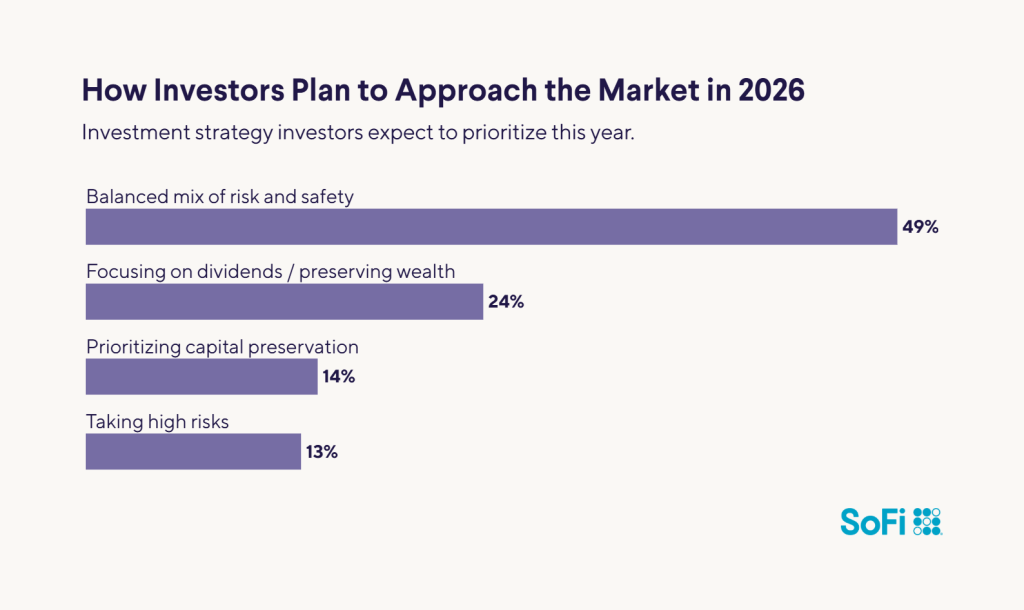
49% of investors are planning a balanced investment strategy in 2026
Most survey respondents aren’t looking to take big risks this year. In fact, 49% are aiming for a balanced approach, and 38% are focusing on dividends, preserving wealth, and capital preservation. Just 13% are looking for high returns with .
65% expect technology and AI to be the big market winners in 2026
Artificial intelligence isn’t just dominating the headlines — it’s driving expectations. Nearly two-thirds of respondents believe technology and AI will outperform every other sector in 2026, far ahead of energy (38%) and health care (27%).
What AI Investments Look Like in 2026
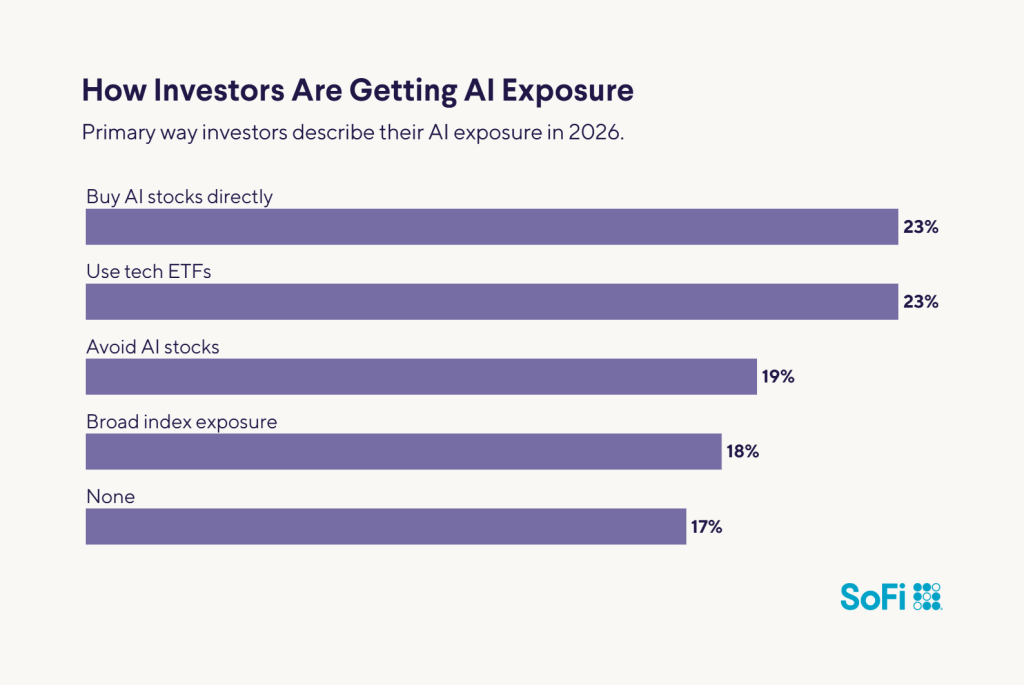
But believing AI will be a market winner doesn’t mean everyone is actively betting on it. Despite the strong confidence in AI’s potential, respondents’ investment strategies tell a more nuanced story.
While 46% say they’ve made investments in AI, they’re evenly divided in their approach: 23% are buying AI stocks directly, and another 23% are using tech-focused funds. At the same time, 17% report having no AI investments, while another 19% say they’re making a point to actively steer clear of AI stocks.
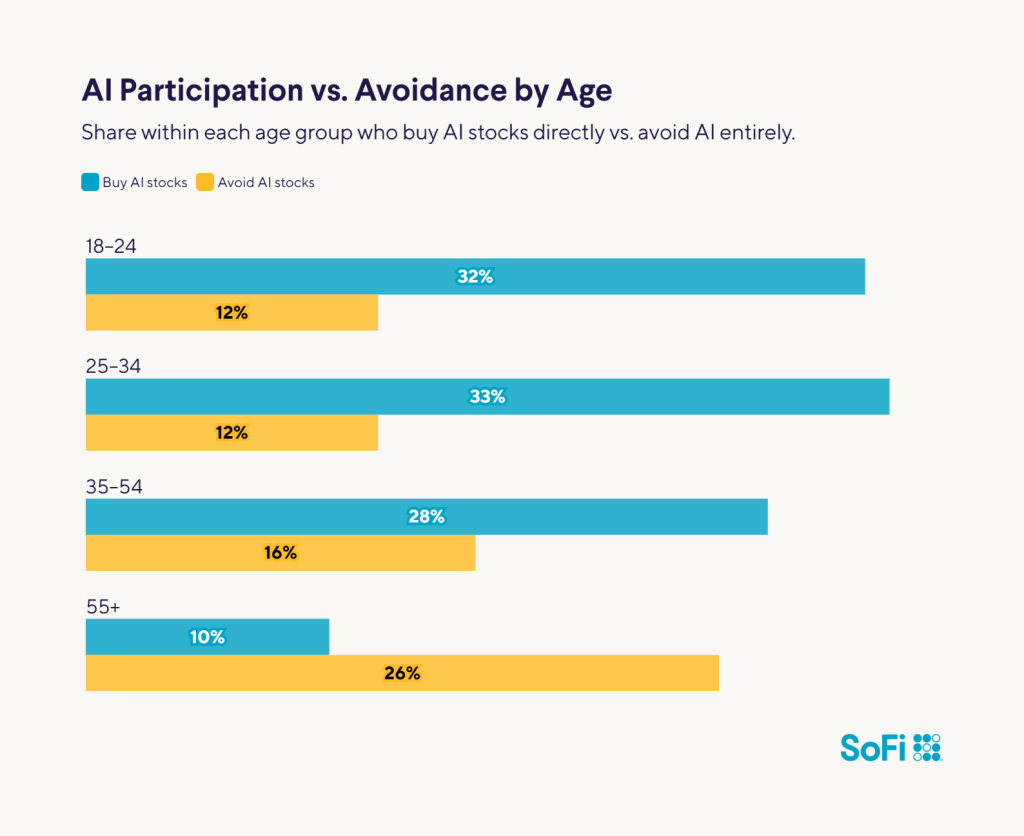
65% of AI Investors Are Under Age 35
An investor’s age shapes their approach to AI. Younger investors are more likely to buy AI stocks directly, while older investors are significantly more cautious. Among those 55 and older, AI avoidance outpaces participation by a wide margin.
55% of investors are keeping extra cash on hand in 2026
Even as new tech soaks up the spotlight, old-fashioned cash is making a comeback. The majority of investors report they’re setting aside more money this year than usual.
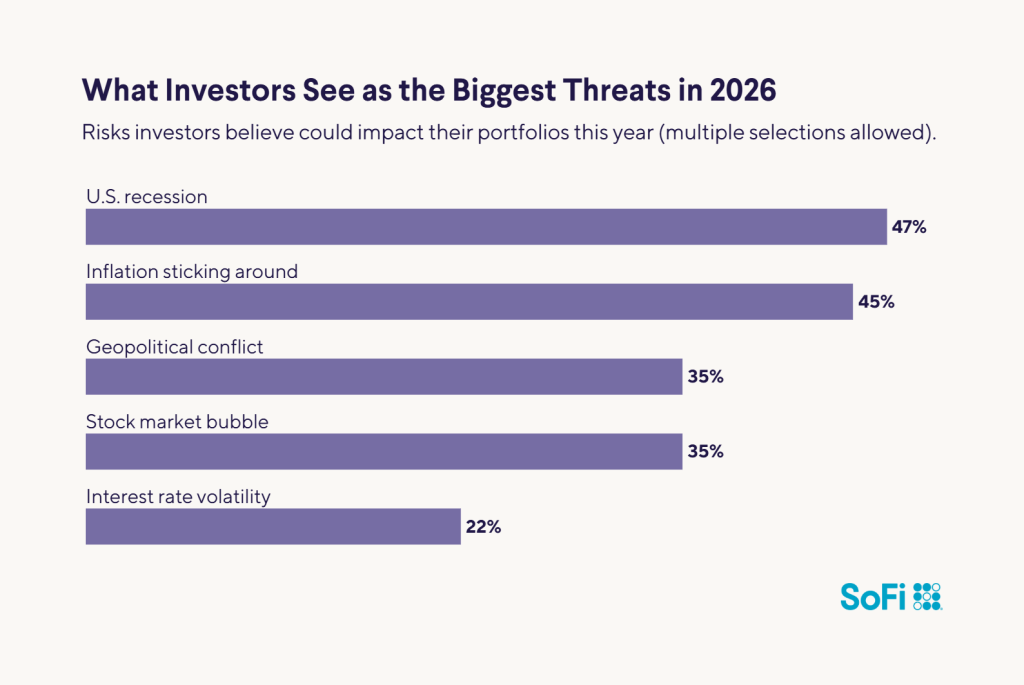
47% of investors see a recession as the biggest threat to their portfolio in 2026
Anxiety about the economy is high. Nearly half of survey respondents (47%) worry about a , and 45% are concerned that inflation will stick around longer than expected. About 35% fear a stock market bubble, and the same percentage believes geopolitical conflict is a major financial risk.
What this tells us: Investors are optimistic but not reckless. They expect AI and tech growth opportunities in the year ahead, but they’re keeping cash on hand and watching possible threats closely. Confidence is high, but so is caution.
More Investors Are Willing to Explore Options
As people look for ways to build their retirement nest egg, some are starting to explore tools typically used by experienced, hands-on investors.
36% of investors would consider using options in their retirement accounts
More than one-third of SoFi survey respondents say they would contemplate using options in their retirement portfolio.
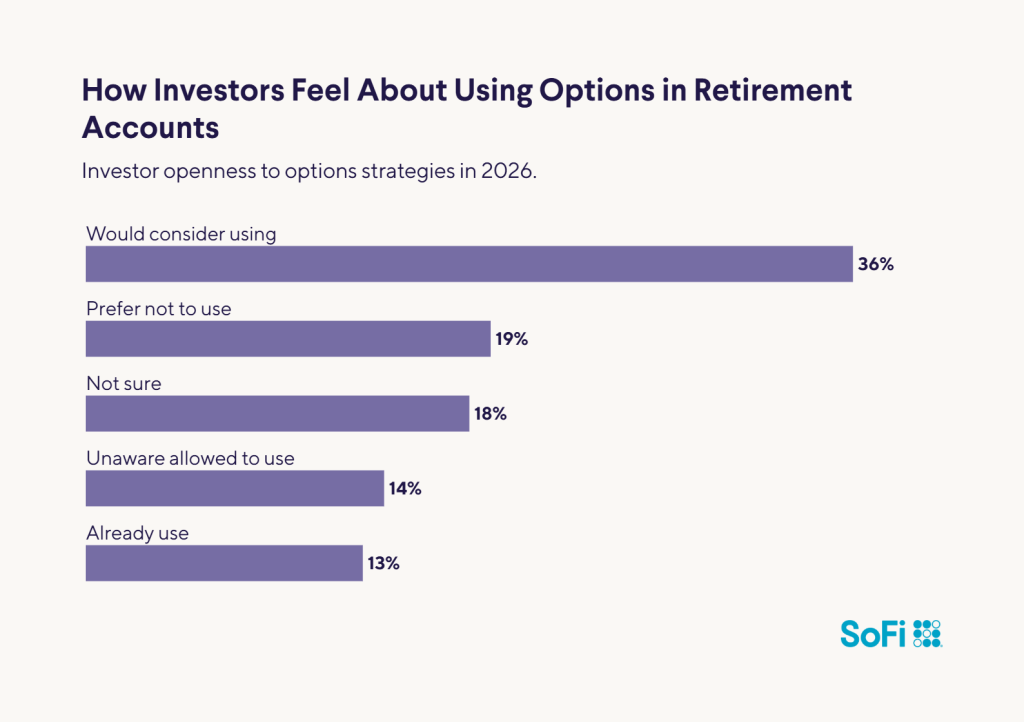
However, isn’t exactly mainstream. Only 13% of those surveyed say they use them as part of their investment strategy, 19% would rather avoid the complexity of options, and another 18% aren’t sure whether options are a good fit for their retirement funds.
Caution is warranted given the complexity and high risk associated with options trading. Options trading within retirement accounts is typically limited to lower-risk strategies and spreads. However, it requires in-depth knowledge and experience in order to manage the risk of loss alongside long-term financial goals.
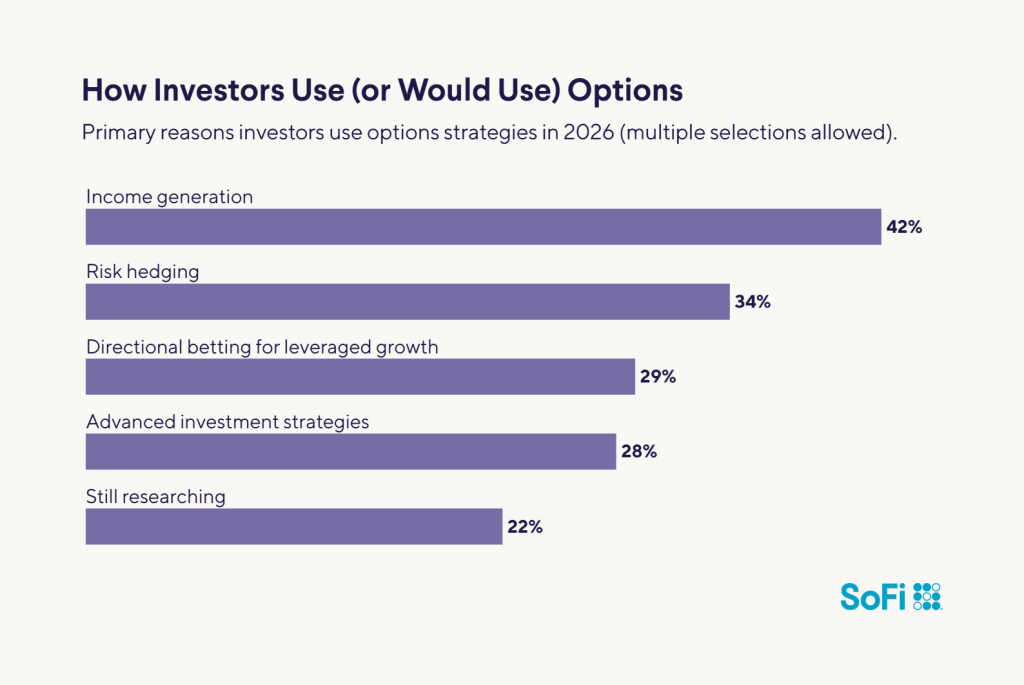
Those well versed in options may use the investments to manage downside risk or to attempt to enhance returns, typically by speculating on the direction of stock movement. For investors who are open to the idea of options, the top reasons are to generate income (42%) and hedge risk (34%).
Fin-fluencers vs Financial Advisors: Who Investors Trust For Advice
Even with the popularity of “fin-fluencers” on TikTok and YouTube, most respondents still prefer to talk to a professional about major financial choices.
49% of investors say a professional advisor has the biggest influence on how they diversify their portfolio
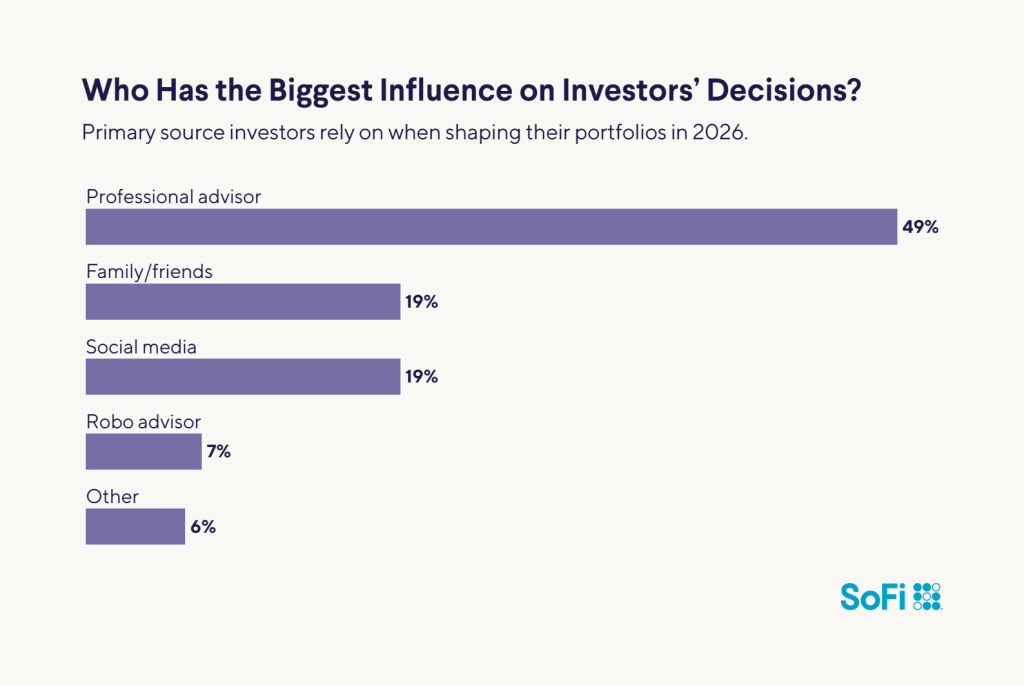
Social media (19%) and friends or family (19%) might get the financial conversations started, but when it comes to big decisions, nearly half of investors turn to a professional advisor. By comparison, robo advisors play a very small role (7%).
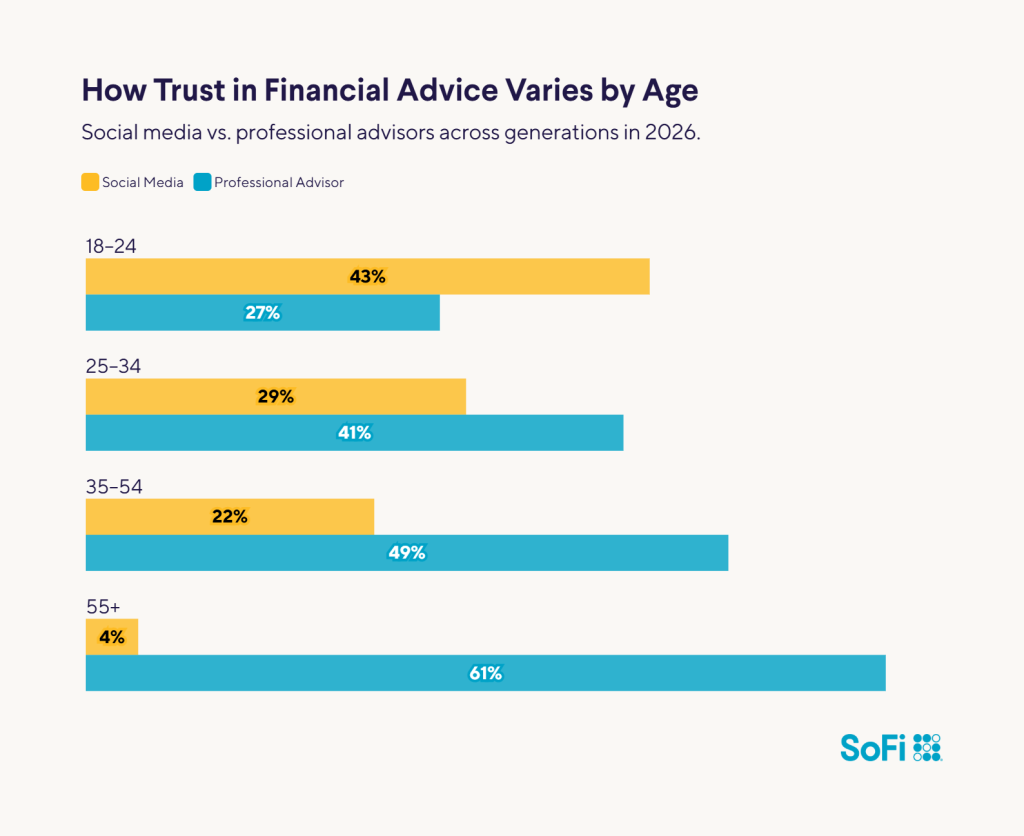
The Generational Divide
The biggest depends on age. Younger investors are far more likely to look to social media, while older investors overwhelmingly turn to financial professionals.
The Takeaway
Investing in 2026 is about balance, as SoFi’s survey shows. Investors are optimistic about growth but mindful of risk. They’re focusing on stocks, building up cash reserves, dipping into alternative assets, and keeping a close eye on AI.
As more people take an active role in managing their investments, flexibility is key — especially in times of economic flux. Reviewing their portfolio, planning an investment strategy, and being ready to adapt, if necessary, are ways for investors to work toward building their financial future.
About the Survey
Findings are based on an online survey of 843 U.S. retail investors aged 18 and older conducted in December 2025. All responses are self-reported. Percentages may not total 100 due to rounding, and select questions allowed multiple responses.
was produced by and reviewed and distributed by Â鶹ԭ´´.