The hidden costs of aging in place and how to afford it
The desire to remain in familiar surroundings as you age is natural and personal. For many older adults, aging in place means maintaining independence, cherishing memories and preserving the comfort of home.
While this emotional appeal of aging at home is undeniable, the financial reality involves significant costs that often remain hidden until they become urgent necessities.
you through these overlooked expenses, from essential home modifications to ongoing car needs, helping you and your family plan effectively for a secure and comfortable future at home.
What Are the Hidden Costs of Aging in Place?
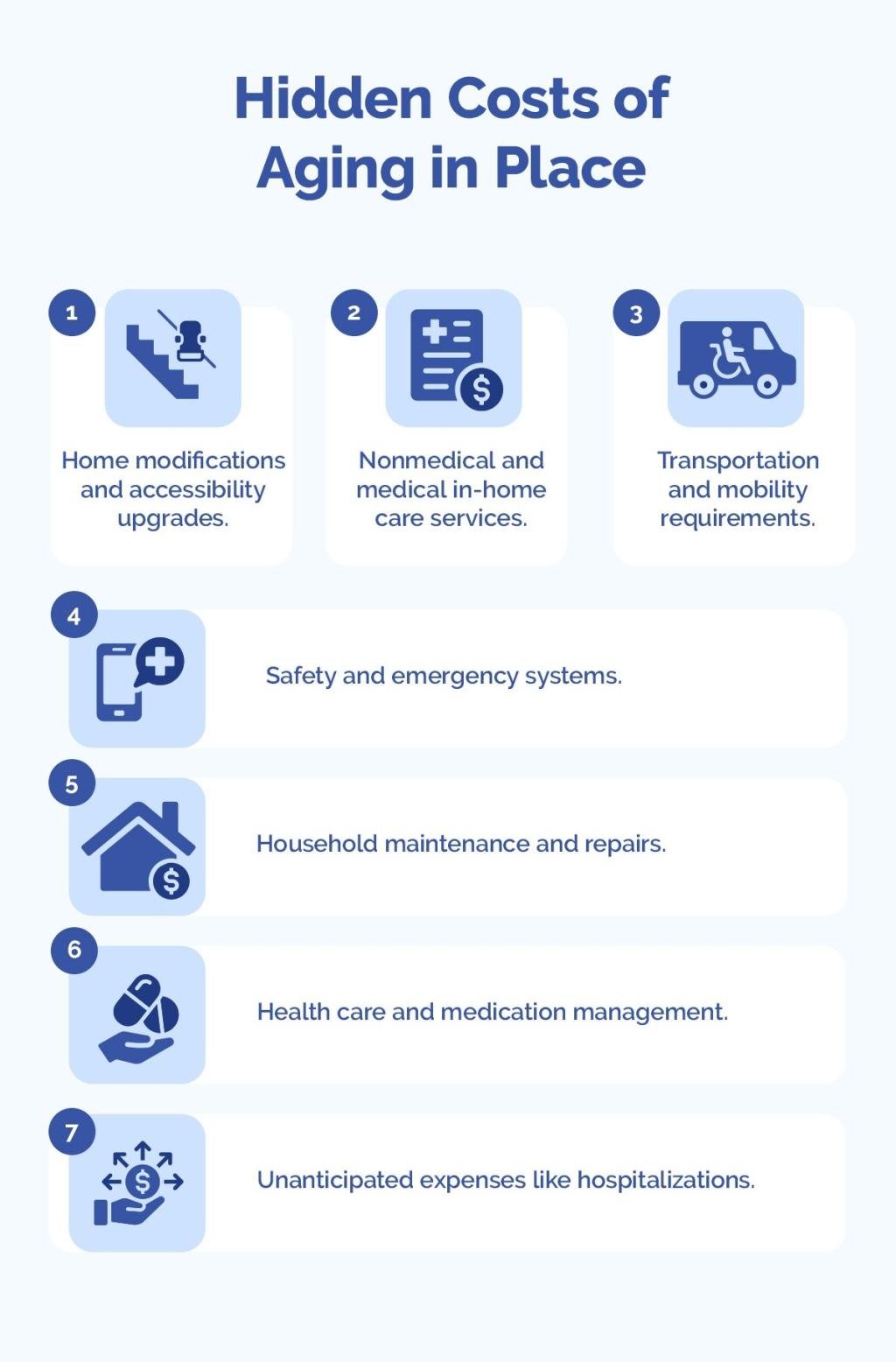
Multiple hidden expenses are associated with aging in place, including the cost of structural changes to your home, ongoing support services, health care and other necessary adjustments as your physical abilities change.
Many families are caught off guard by these expenses because they focus on whether the mortgage is paid off or if rent is affordable. This narrow view overlooks the mounting costs that accompany physical changes and increasing care needs. You might assume that staying home is more economical than senior living facilities, but the truth depends on your health situation and your home鈥檚 condition.
The lack of up-front planning contributes to financial surprises. Most people don鈥檛 anticipate needing grab bars in their 60s or a stair lift in their 70s. These unexpected expenses can strain budgets that weren鈥檛 prepared for such modifications.
The hidden costs of aging in place include:
- Home modifications and accessibility upgrades.
- Nonmedical and medical in-home care services.
- Transportation and mobility requirements.
- Safety and emergency systems.
- Household maintenance and repairs.
- Health care and medication management.
- Unanticipated expenses like hospitalizations.
Let鈥檚 explore these expenses in more detail below.
Home Modifications and Accessibility Upgrades
Home range from relatively affordable basic safety features to expensive major renovations, with most families investing substantially in creating a safer, more accessible living environment. Common modifications include:
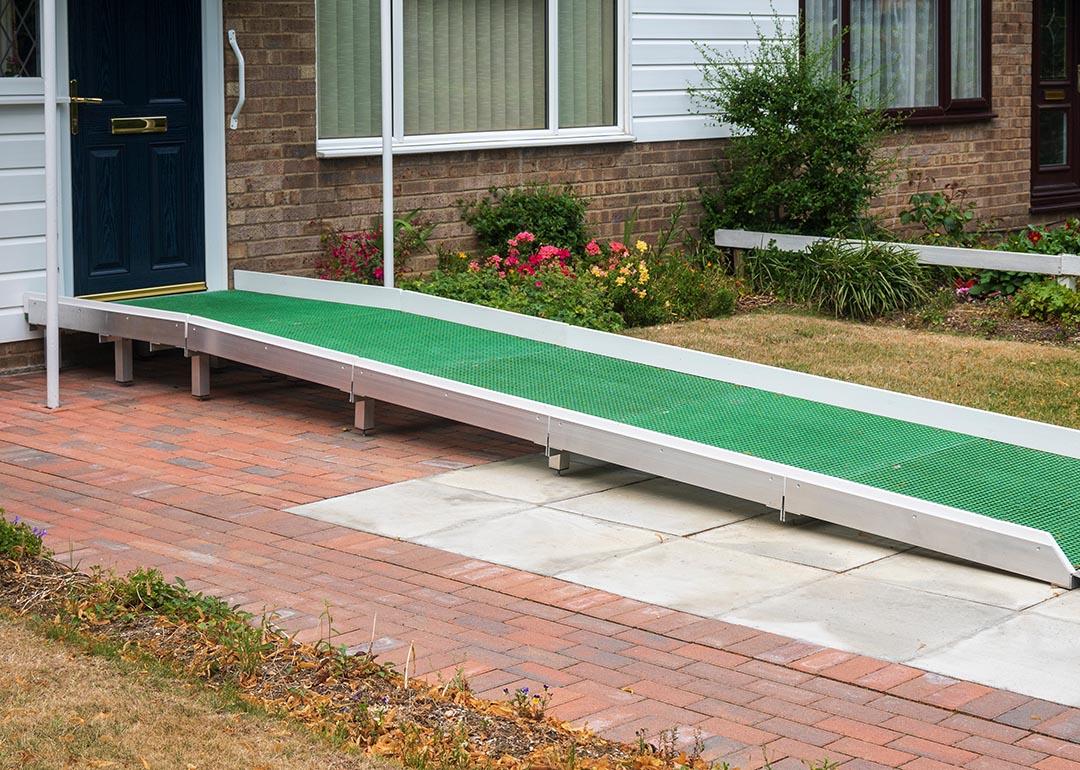
- Installing ramps for wheelchair access.
- Stair lifts.
- Bathroom , including walk-in showers or tubs and grab bars.
- Widening doorways for wheelchair access.
The prices for these modifications vary depending on many factors, including the following.
- Home structure and layout: Newer homes with wider hallways and doorways require fewer expensive alterations than older homes with narrow passages.
- Regional labor costs: Urban areas typically charge more than rural communities for the same work.
- Material quality: While budget-friendly options exist, investing in durable materials often proves more economical over time since they last longer.
- Contractor expertise: Specialized aging-in-place contractors may charge more but bring valuable experience in creating effective solutions.
- Scope of work: Bundling multiple modifications into one project can reduce overall costs compared to piecemeal improvements.
Medicare typically doesn鈥檛 cover home modifications, viewing them as home improvements rather than medical necessities. However, other financial assistance options exist. Some state Medicaid programs offer home modification to help people avoid institutional care.
Veterans can access grants through the Department of Veterans Affairs鈥� , with additional funds available for those with service-connected disabilities. Many states and local communities offer assistance programs for older people on low incomes, though eligibility requirements and available funds vary.
Home Care Services
In-home for aging in place, but are a major ongoing expense, with costs ranging from manageable to overwhelming as care needs increase. Understanding the different types of in-home care helps you plan for what lies ahead.
- Personal care assistance: Help with daily activities like bathing, dressing, grooming, toileting and mobility is essential when physical limitations make self-care challenging.
- Companionship services: Beyond physical help, these caregivers provide human connection, including social engagement, conversation, light housekeeping and accompaniment to appointments, addressing practical and emotional needs.
- Respite care: If family members provide most of your care, respite services give them essential breaks. Their help prevents burnout, making long-term family care more sustainable.
- Specialized care: When dealing with , Alzheimer鈥檚 or Parkinson鈥檚, you need caregivers with specific training, commanding premium rates due to required expertise.
Costs accumulate over time, surprising families who initially think they need minimal weekly assistance. Starting with professional help a few days per week might seem affordable within a budget. However, care needs rarely remain static. As abilities decline, those limited hours expand to daily assistance, then multiple-day visits, that can exceed the cost of residential care facilities.
Geographic location also impacts care costs, with urban areas typically charging more than rural regions. Agency-provided care costs more than hiring independent caregivers, but offers benefits like backup coverage, liability insurance and employment tax handling. Some agencies offer flat daily or weekly rates for clients who need extended hours, which can be more affordable than hourly billing.
Due to these factors, can be overwhelming. Government insurance may pay for in-home care services, but only for set hours per week. However, this may not be sufficient as care needs increase. Private but costs more. Additional financial reserves, like dedicated funds or home equity, help ensure round-the-clock care when the time comes.
Transportation and Mobility Needs
When , transportation costs become a major monthly expense that varies based on where you live, how often you need to go out and whether you require special accommodations like wheelchair-accessible vehicles.
Giving up your car keys is one of the most difficult transitions in aging. This change affects your mobility, independence and spontaneity. However, there are other ways to get around as you age.
- Ride services: Regular ride services have made getting around easier than in the past, but costs add up when you need transportation multiple times a week for groceries, medical appointments and social activities.
- Medical transport: Nonemergency medical transport services charge premium rates, particularly for wheelchair-accessible vehicles. If you receive routine treatments like dialysis or physical therapy, you鈥檒l need a substantial transportation budget. While some health insurance plans offer limited transportation benefits, coverage varies and usually includes restrictions.
- Paratransit services: Many communities offer paratransit services through their public transportation systems, providing door-to-door service at affordable rates. However, these services come with trade-offs. You鈥檒l need to book rides in advance, work around limited scheduling windows and often allow extra time for shared rides with multiple stops.
- Driving modifications: If you can drive with some modifications, adaptive equipment might extend your driving years. These modifications include hand controls for those with limited leg mobility, wheelchair lifts for van access or swivel seats that make getting in and out easier. These upgrades require substantial up-front investment but can preserve your independence.
Many people don鈥檛 grasp the ripple effects of transportation challenges and forget to budget for these costs. Adult children would need to rearrange their work schedules to drive their parents to appointments, potentially affecting their careers and income. Feelings of loneliness or isolation might creep in when getting to social settings, like community centers or friends鈥� homes, becomes too complicated or expensive. The psychological impact of asking for rides to every little outing can affect an older adult鈥檚 mental health and sense of self.
Health Care and Medication Management
Managing your health at home means dealing with ongoing expenses, from prescription copays and medical supplies to the various services that help you manage complex medical needs. These costs can feel overwhelming, especially when they keep growing year after year.
Think about how complicated health care becomes as you age. You might be juggling many prescriptions, each with specific timing and requirements. Those automated pill dispensers with alarms seem expensive until you consider the cost of a hospital stay from medication errors.
Professional , where nurses or pharmacists oversee your regimen, become worth every penny when you鈥檙e dealing with complex drug interactions or frequent medication changes.
Medical supplies for home use are another category of ongoing expenses:
- Regular monitoring equipment, like blood pressure monitors, glucose meters and pulse oximeters.
- Consumable supplies such as testing strips, lancets, wound care materials and incontinence products.
- Mobility aids, including walkers, canes, wheelchairs and transfer boards.
- Specialized equipment like hospital beds, oxygen concentrators and other durable medical equipment.
The gaps in Medicare coverage become apparent when managing chronic conditions at home. Prescription coverage includes gaps that can result in overwhelming out-of-pocket expenses, especially for specialty medications. The coverage commonly known as the 鈥渄onut hole鈥� means you might pay full price for medications after reaching certain spending thresholds.
Perhaps the most significant coverage gaps involve services Medicare doesn鈥檛 cover, including:
- Dental care, including dentures and implants.
- Vision care beyond basic exams, including glasses and treatment for age-related conditions.
- Hearing aids for maintaining social connections and cognitive function.
- Long-term custodial care that includes daily assistance but doesn鈥檛 involve skilled medical care.
Home health visits from skilled nurses may be covered by Medicare if ordered by a physician for specific medical needs. However, coverage limits apply, and services must be intermittent rather than continuous. Once Medicare-covered visits end, families who choose to continue professional monitoring must cover the expensive private-duty nursing costs that can rival or exceed residential care facility fees.
Safety and Emergency Systems
Creating means investing in systems that watch over you when loved ones can鈥檛 be there. The initial equipment costs and monthly monitoring fees add up, but these technologies provide the confidence to live independently while ensuring help is within reach.
affordable peace of mind, connecting you to emergency help at the push of a button. However, the basic models only work within the range of your home base. If you鈥檙e active and enjoy gardening, walking the neighborhood or running errands, mobile systems with GPS tracking become essential. They cost more, but offer protection wherever you go.
Modern safety technology options include:
- Medication reminder systems.
- Fall detection systems that automatically alert emergency services.
- Motion sensors that learn daily patterns and alert caregivers to concerning changes in routine.
- Smart home integration like voice-controlled systems for lights, temperature and emergency calls.
- Home security with features like smart locks and two-way communication, enabling remote family check-ins.
Investing in comprehensive safety systems requires modest to moderate monthly fees that add up annually. Insurance rarely covers these preventive technologies, viewing them as lifestyle choices rather than medical necessities. However, their protection often enables people to age in place years longer than would otherwise be possible.
Household Maintenance and Repairs
One of the hardest realizations about aging at home is accepting that tasks you鈥檝e handled for decades now require hiring help. These household maintenance costs creep up gradually, becoming essential monthly expenses that impact your budget.
The services you鈥檒l likely need include:
- Regular and deep cleaning.
- Seasonal yard work.
- Minor repairs.
- Preventive maintenance.
- Emergency repairs.
Deferring maintenance results in higher costs from more extensive repairs. That minor roof leak becomes significant water damage, and the clogged gutter causes foundation problems. Professional maintenance might seem expensive, but it prevents catastrophic failures that could make your home unsafe for aging in place.
What Unexpected Expenses Should Families Prepare For?
No matter how carefully you plan for aging in place, life throws curveballs that can impact even the most meticulous budgets. That鈥檚 why you need a substantial emergency fund.
Common unexpected costs include:
- Health-related emergencies: These include , falls requiring extended rehabilitation, sudden onset conditions like stroke, cognitive changes requiring rapid adjustments to care plans and complications from chronic conditions.
- Equipment failures and replacements: Wheelchair or mobility aids could fail, stair lifts could break down and hospital beds could malfunction, resulting in significant emergency repair or replacement expenses.
- Home emergencies: Your home systems, like plumbing, electrical, heating and cooling, could fail and require immediate repair or replacement.
- Family impact costs: These expenses include family members鈥� lost wages when they take emergency leave, the expense of temporary face their own emergencies and stress-related health issues in family caregivers.
How Can Families Plan for the Hidden Costs of Aging in Place?
Financial planning for aging at home might feel overwhelming, but taking it step by step makes it manageable. The key is starting before you need help, being honest about what lies ahead and knowing where to turn for guidance. With the right approach, you can create a plan that protects your independence and financial security.
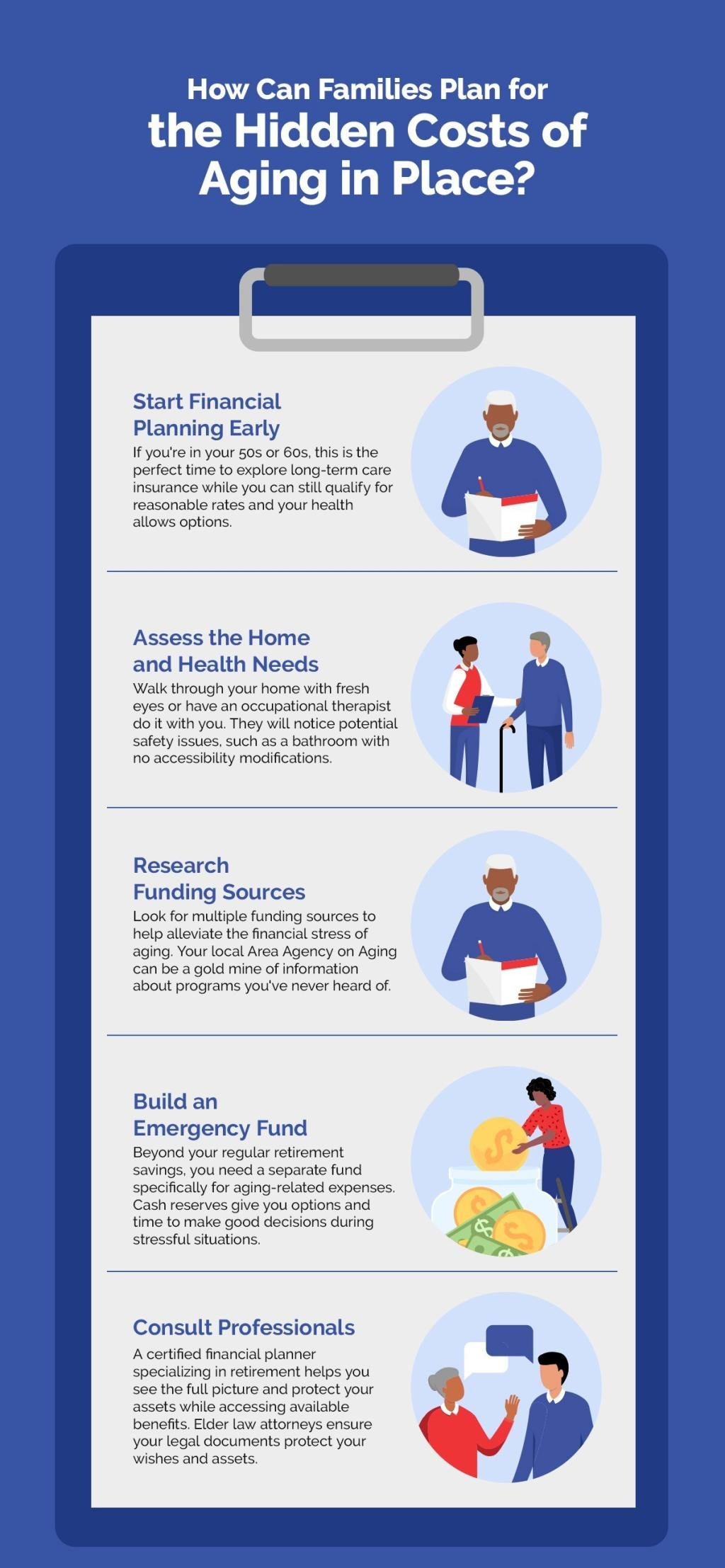
Here鈥檚 how to build your roadmap for aging in place.
1. Start Financial Planning Early
If you鈥檙e in your 50s or 60s, this is the perfect time to explore long-term care insurance while you can still qualify for reasonable rates and your health allows options. If you鈥檙e in your 40s, you may get even better rates and qualify for better options. More importantly, early planning gives you time for those difficult but necessary family conversations.
Talking when everyone鈥檚 calm and healthy leads to better decisions than crisis-driven planning. Your children, close friends, siblings, cousins or other family members need to understand your preferences, and you need to know what support they can provide.
2. Assess the Home and Health Needs
Make annual home safety evaluations as routine as your medical checkups. Walk through your home with fresh eyes or have an occupational therapist do it with you. They will notice potential safety issues, such as a bathroom with no accessibility modifications.
If you can, get regular screenings for Alzheimer鈥檚, cancer or other to understand your chances of developing these conditions as you age. Work with your doctors to understand how chronic conditions might progress. Knowledge is empowering as it helps you plan proactively rather than react to crises.
3. Research Funding Sources
Look for multiple funding sources to help alleviate the financial stress of aging. If you鈥檙e a veteran or surviving spouse, the could provide substantial monthly help. Every state has to help keep people at home rather than in facilities. Your can be a gold mine of information about programs you鈥檝e never heard of.
You may qualify for property tax exemptions, utility assistance or volunteer repair programs. However, you鈥檒l need to dig to find these resources. You should also look for:
- Niche insurance coverages that could provide additional benefits.
- Investment or excellent interest rates for added emergency reserves.
- Dedicated food or social resources from local community or religious centers.
Consider this research time an investment that could save thousands.
4. Build an Emergency Fund
Beyond your regular retirement savings, you need a separate fund specifically for aging-related expenses. Set aside at least a year of potential care costs, independent of your home equity. This fund buys you time to make thoughtful decisions rather than desperate choices. It prevents a temporary crisis from becoming a permanent change in living situation. Depending on how early you start saving and what investment tool you use, you could build up an aging care fund of up to a decade.
If you own a home, understand your options for accessing equity if needed, whether through a reverse mortgage or home equity line. However, these should be backup plans, not primary strategies. Cash reserves give you options and time to make good decisions during stressful situations.
5. Consult Professionals
You wouldn鈥檛 try to diagnose your own medical conditions, so why navigate complex aging finances alone? A certified financial planner specializing in retirement helps you see the full picture and protect your assets while accessing available benefits. Geriatric care managers know local resources, understand care options and can coordinate services when you鈥檙e overwhelmed.
Elder law attorneys ensure your legal documents protect your wishes and assets. Additionally, consulting professional home care providers on their charges and services helps you plan for additional care when the time comes or respite care to relieve family caregivers. These consultations are worth the investment, preventing expensive mistakes and identifying resources you鈥檇 never find alone.
Financially Plan to Age in Place
Aging in place offers the profound comfort of remaining in familiar surroundings while maintaining independence and cherished routines. However, the financial reality of aging at home extends beyond mortgage payments, encompassing substantial hidden costs that require careful planning and realistic budgeting. From home care services to unexpected situations, these expenses can strain even well-prepared families.
By starting your financial planning early, assessing your needs, researching available resources and building dedicated financial reserves, you can make decisions that honor your preferences while ensuring financial security.
was produced by and reviewed and distributed by 麻豆原创.