
Is an inheritance advance a good way to pay off debt?
According to Experian, one of the three biggest credit reporting companies in the United States, consumers owed in the third quarter of 2024. This was a 2.4% increase from the previous year, with some debt types, like credit cards, growing close to double-digit rates. Mortgages have the highest debt amount, valued at over $12 trillion in the same year.
In 2019, the , while 90% of people received about $10,000 to $50,000, according to the Federal Reserve. These amounts of money can help significantly if you have multiple debts to pay. However, receiving your inheritance can take some time due to probate. Would it be wise to get an inheritance advance then? breaks down the potential benefits and drawbacks in this article.
How Does an Inheritance Advance Work?
An inheritance advance enables you to access a portion of your inheritance more speedily since probate, the , can last from several months to years. Since you usually can’t be certain when this process will be completed, an advance can seem beneficial to access a part of your inherited assets right away.
An inheritance advance can go by many names — probate advance, probate cash advance, probate money advance or estate advance. As the names suggest, it is a cash advance of your inheritance offered by a third party. This third party provides your money upfront on the condition that they will get paid back through the estate when probate closes. Here’s how the process usually works:
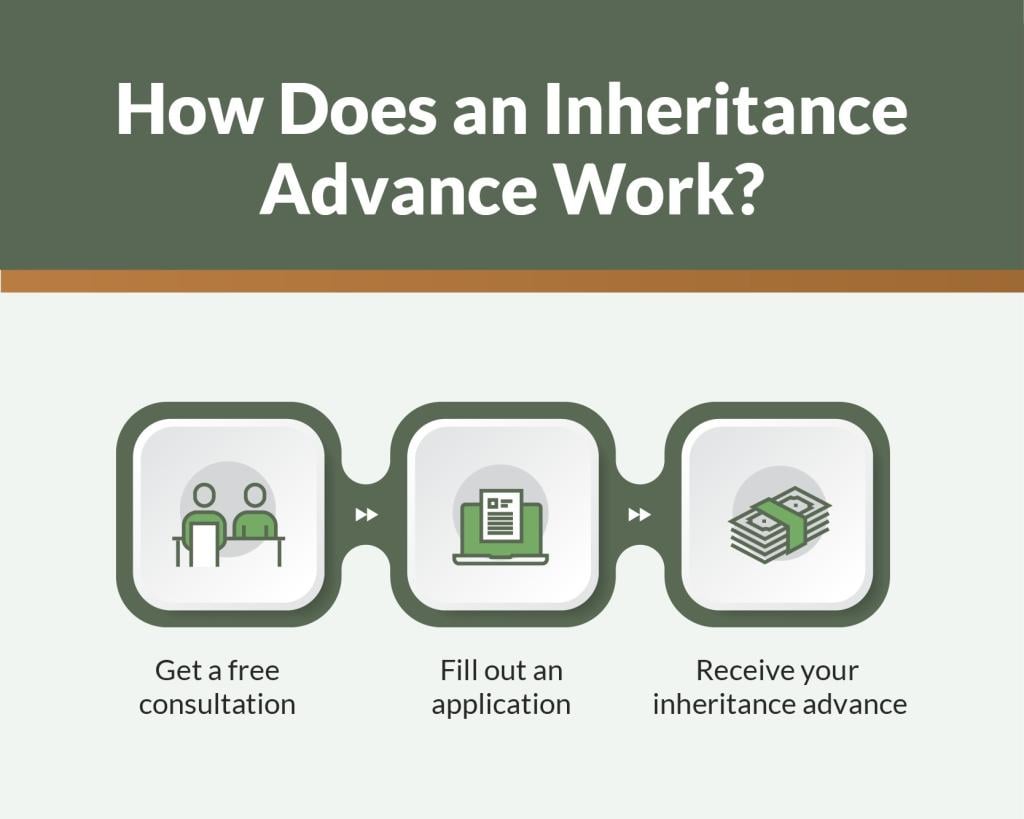
- Get a free consultation: The funding officer will discuss the potential terms of your inheritance advance with you. You’ll also need to inform them about your loved one’s estate and assets to be distributed to the beneficiaries so they can understand more about how much you can inherit.
- Fill out an application: Assuming you agree to the terms, you can fill out an application and provide the necessary documents. For instance, the funding officer may ask for the letters of administration, an inventory of the estate and a copy of your loved one’s will.
- Receive your inheritance advance: After the company reviews your documents, you can get your money right away.
Is an Inheritance Advance a Loan?
An inheritance advance is not a loan. Some people may use “inheritance advance” and “inheritance loan” interchangeably. However, this is a misconception. An inheritance loan is another financing option you can get with your inheritance.
With an inheritance advance, you don’t have monthly payments, and you don’t pay anything back to the funding company directly. The company will instead claim a part of your inheritance. The executor of the estate — the — will pay your agreed amount to the company and forward the rest of the inherited assets to you.
Conversely, an inheritance loan is a loan you get from a lender using the inheritance as collateral. You still receive the money right away, but you have to repay the loan in monthly installments with interest. This arrangement can be costly and defeats the purpose of getting the money up front to pay for your other debts.
Are Inheritance Advances Worth It?
Whether it’s worth it to pay for your debts using an inheritance advance depends on the cost of the advance and your debts. Suppose an inheritance advance company . An advance of $50,000 would cost $10,000. Once probate closes, the estate will pay the company a total of $60,000. Then, you will receive whatever remains of your inheritance. Note that inheritance advance companies may not advance 100% of your inheritance.
Experian reports that the average credit card debt in the third quarter of 2024 . Using a part of your inheritance to pay off a high-interest credit card or other debts can give you a breather. You can then put the rest of your inheritance in your savings or invest it based on your preference.
When Using an Inheritance Advance Is a Good Idea to Pay Off Debts
Apart from considering the inheritance amount you expect to receive, being in the following situations can mean taking an inheritance advance may be a good idea:
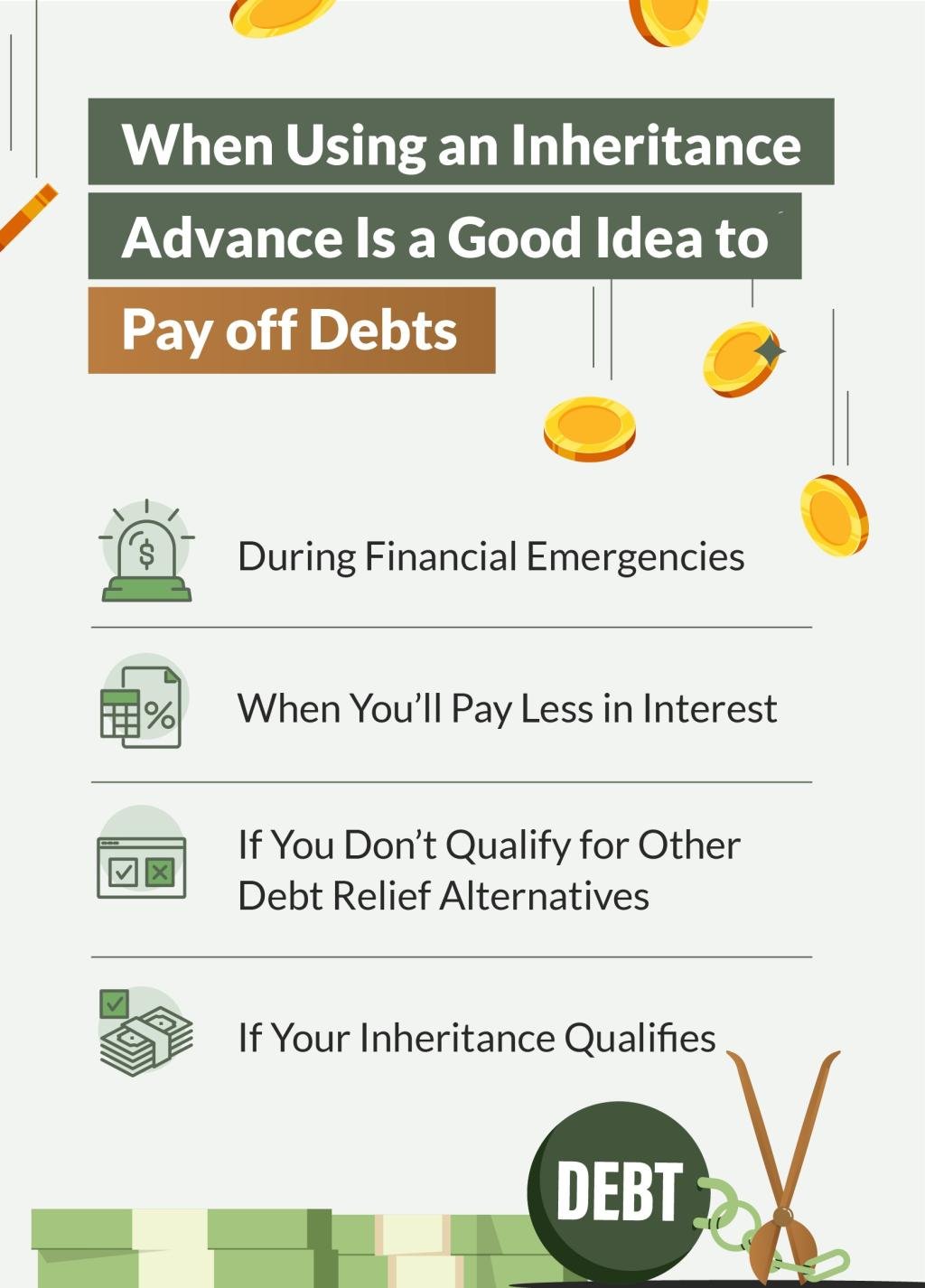
1. During Financial Emergencies
Probate can take a while to finish, especially if the estate includes a lot of assets and many of them need to be located. If you need the money immediately due to emergencies, then taking an inheritance advance can help you avoid taking on more debt and allow you to pay off some debts you already have.
Unlike with loans, you don’t need collateral or a good credit score to take an inheritance advance. You won’t need to worry about adding to the monthly interest rates you’re already paying, either. For instance, you might not have enough saved for a funeral and need financial assistance right away. With an inheritance advance, you can access the money quickly.
2. When You’ll Pay Less in Interest
If your monthly payments are crippling your budget, using your inheritance to pay off your debts can lift some weight off your shoulders. When you can only pay the monthly minimums for your credit card debt, you will need more time to pay off everything and will likely pay more overall. With the interest payments continuously growing, making minimum credit card payments doesn’t make sense in the long term. By paying off this type of debt, other debts, like auto loans or mortgages, may seem more manageable.
3. If You Don’t Qualify for Other Debt Relief Alternatives
Debt relief options are available if you’re struggling to manage and pay off your debts. Each method has its own pros and cons, but the right solution can help get your finances back on track. For instance, a debt consolidation loan can reduce your interest rate and help you pay off all your debts by focusing on making just one monthly payment. Conversely, a debt settlement program can help you renegotiate the terms of your debts with your lender.
However, companies that offer these programs have their own qualification requirements. Consequences like a negative impact on your credit score can also make you second-guess their benefits. If you don’t qualify for these programs or you don’t think the consequences are worth it, you might consider taking an inheritance advance.
4. If Your Inheritance Qualifies
Funding companies often have minimum inheritance requirements to qualify you for an inheritance advance. However, because an advance is not a loan, you won’t need to worry about collateral or taking a to pay off your debts. Your funding officer can help you determine how much inheritance you can expect and if you qualify for the advance.
When You Should Avoid Using an Inheritance Advance as Payment
Despite the benefits of using an inheritance advance for debt payments, there are certain situations where it might just not be a good idea:
1. If There Are Pending Claims Against the Estate
Creditors might still have claims over your loved one’s estate, which means they state they’re owed money and would need to be paid back from the assets. Typically, before an executor distributes the assets to the beneficiaries, they will first settle the debt payments and bills your loved one left behind. If the assets have been distributed but there are still pending claims, an executor may even “refund” some of the inheritance to pay off these claims.
This situation means it’s better to put off spending the inheritance money until all claims have been settled. It can also mean that you’ll have to wait for probate to finish, negating the need for an inheritance advance.
2. If You Don’t Want to Lose a Portion of Your Inheritance
The cost of an inheritance advance can be expensive, depending on the company you choose. In the previous example, $10,000 might seem worth the cost of getting $50,000 right away, but because the fee is a percentage, the larger your advance, the pricier the cost.
3. If the Debt Is for Depreciating Assets
Maybe you’ve accumulated debts used for depreciating assets like a car you don’t really need or an expensive trip you couldn’t afford — it can happen to the best of us. However, this may signal an underlying spending habit that will resurface even if you pay off your debts with an inheritance advance. It may be better to invest your inheritance money and make it work for you instead, as you navigate your spending habits and make some changes.
4. If the Inheritance Has Limitations
Some inheritances have limitations on how you can use the money. For instance, a trust may prohibit you from investing the money. Minors might also be limited in accessing the inheritance until they reach a specific age. Some parents choose certain life events as part of the condition for accessing the inheritance, like graduating from college or starting a business. Before you take an inheritance advance, verify if you have limitations on how you can use the money.
Frequently Asked Questions
To further understand how an inheritance advance works and what you can use it for, consider these common questions and answers:
What should you not do with an inheritance?
Try to avoid having set expectations before you even receive the inheritance money. It’s not wise to take on more expenses or loans because you think you can use the inheritance to pay them off anyway. There may be unexpected creditors with claims. Creditors can have four months to a year to file a claim against the estate, depending on your state laws.
Additionally, your inheritance can be better saved for emergencies. Although a sudden large amount of cash in your bank account makes it tempting to splurge, it’s still better if you can responsibly manage your spending to avoid getting back to where you started before you received the inheritance.
Is it wise to pay off a mortgage with an inheritance?
Whether you should pay off your mortgage with an inheritance depends on your mortgage rate. A good rate is generally below the average mortgage rate, which, according to Freddie Mac, was for a 30-year fixed-rate mortgage, and 5.69% for a 15-year fixed-rate mortgage. The average monthly mortgage payment .
If your payments and rate are above the averages, you may consider paying your mortgage with the inheritance money. Some may argue that using the funds for investments is better, but having a paid-off mortgage can also feel freeing. If you decide to pay off or pay down your mortgage with your inheritance, consider taking the amount you would have spent on mortgage payments and saving or investing it instead.
Can you borrow money from your inheritance?
Yes, you can borrow money from your inheritance through an inheritance loan. Your inheritance will serve as the collateral. Keep the terms and interest rates in mind. Because you’ll be taking on a loan, you’ll have a monthly payment, unlike if you took an inheritance advance. These loans are also not usually offered by traditional lenders. You’ll have to look for a reputable inheritance lending company to take on the loan.
In a Nutshell
Getting an inheritance advance to pay off your debt can be a good idea in certain circumstances — if you have a financial emergency, if it can significantly reduce your monthly expenses, if other debt-relief options don’t seem to be the right fit and if your inheritance amount qualifies for the advance.
However, there are potential complications and drawbacks you should be aware of. It’s best to get an advance only if there are no more pending claims from your loved one’s estate. You must also ensure your inheritance doesn’t limit you from using it as a debt payment. If your debts are caused by bad spending habits, you would have to address that to avoid putting yourself in a similar situation in the future.
was produced by and reviewed and distributed by Â鶹ԭ´´.