
Money in motion: 5 key personal finance trends reshaping 2025
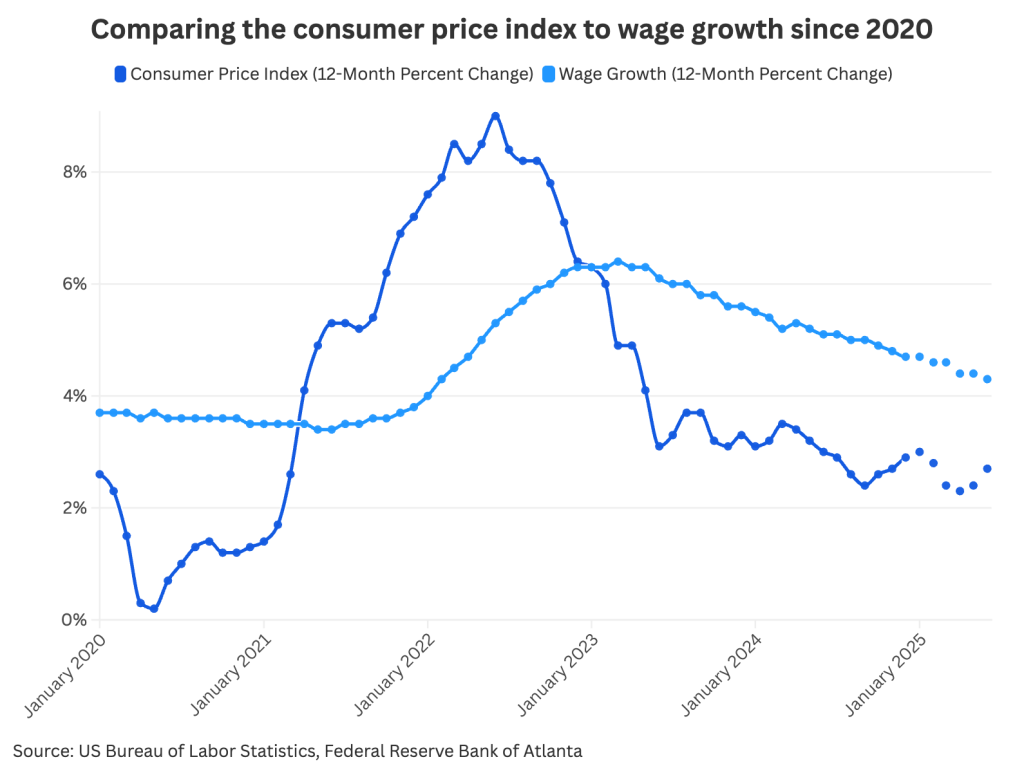
Inflation and job market jitters are changing how Americans handle their finances. According to the Bureau of Labor Statistics, the over the last year, while . That means costs are creeping up faster than paychecks.
But instead of panicking, people are adjusting. Key behaviors are on the rise: 鈥渞evenge saving,鈥� more mindful spending, diversified investments, and extra income from side gigs. Across the country, folks are reworking everyday choices, from how they shop to how they invest.
breaks down five key money trends shaping U.S. households in 2025, backed by the latest data and expert insights.
The economic reality check: inflation and income struggles
In 2025, the gap between what Americans earn and what they need keeps growing. Even with steady wage increases, inflation is chipping away at spending power.
Inflation tops the worry list
About . (still over the Fed鈥檚 2% target), essentials like groceries, rent, and gas are stretching budgets thin.
Wages aren't keeping up
Private sector wages rose 3.5% this year, but many feel it鈥檚 not enough. According to research from Atticus, on average, people say they need , well above the national median. Still, nearly half believe they could , with $75,000 seen as the sweet spot.
The chart above highlights the issue: inflation keeps outpacing wage growth, making it harder for households to stay ahead.
The rise of 鈥渞evenge saving鈥� and emergency-fund priorities
After years of financial stress, Americans are fighting back: not with spending, but with saving. , as more people cut back to build up emergency funds and financial security.
The 鈥渘o-buy鈥� challenge is trending
With money and the economy ranking among , interest in 鈥榥o鈥憇pend鈥� and 鈥榣ow鈥慴uy鈥� challenges continues to grow as people look for structure to rein in costs. These short-term spending freezes help people reset habits and focus on essentials.
It鈥檚 part of a bigger shift: impulse buys are out, and intentional saving is in. Emergency funds are becoming a top priority, as more Americans look to protect themselves from economic whiplash.
Emergency-savings snapshot
More people are trying to prepare for financial shocks, but many still fall short on emergency savings.
In 2024, say they could cover three months of expenses, according to the Fed鈥檚 SHED survey. Yet even modest savings matter. Vanguard found that just can boost a person鈥檚 financial well-being score by 21%.
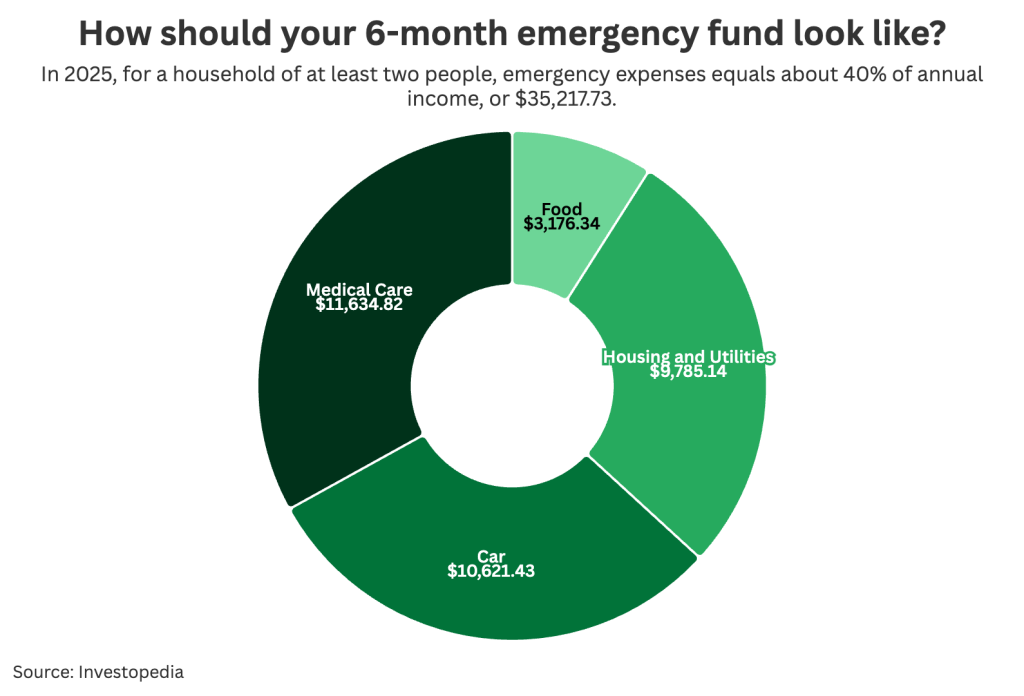
In 2025, a six-month emergency fund for a two-person household , or 40% of the average annual income, per Investopedia. The chart above breaks down the key costs 鈥� housing, food, healthcare 鈥� that make up this savings goal. The methodology for this data comes from sources such as KFF, the Bureau of Transportation Statistics, the American Communities Survey, and the Consumer Expenditure Survey.
Evolving investment behavior across generations
With the economy still uncertain, Americans are rethinking how, and where, they invest.
Participation and platform shifts
In 2025, say they plan to invest, per YouGov. Gen Z is leading the charge into crypto, with 42% owning digital assets. Others are exploring newer options like digital real estate. On the conservative side, high-yield online savings accounts (offering around 5% annual percentage yield) are drawing in cautious savers, .
Ethical and impact investing
More investors are putting their money where their values are. , and to take smaller returns to support responsible companies.
Debt management in a high-interest environment
With borrowing costs still high, Americans are rethinking how they handle debt and make repayments. According to the , U.S. credit鈥慶ard balances are near record highs.
The Consumer Financial Protection Bureau found that . That鈥檚 pushing more borrowers toward strategies like debt snowballing and consolidation to cut interest faster.
The mental health鈥揻inance connection
AMFM Healthcare reports that , and nearly 80% say that anxiety has gotten worse this year.
A survey from Northwestern Mutual backs it up: say money stress triggers anxiety or depression, and 49% say it鈥檚 hurting their work, . As financial pressures grow, it鈥檚 clear that money management and mental health can鈥檛 be treated separately. Financial wellness is becoming a mental health must.
Side hustles and alternative income
With wages lagging behind inflation, side gigs are more than just extra cash; they鈥檙e essential. Gig work and independent earning remain widespread; finds notable gig participation, especially among younger adults, and reports a sizable freelance workforce.
AI-powered gigs like and are growing fast, according to Nasdaq. And the shift isn鈥檛 slowing: one plans to ditch traditional jobs for full-time freelancing in 2025, says Forbes. It鈥檚 clear that flexible, diversified income is becoming the new normal.
Looking ahead: financial planning for uncertainty
With the economy sending mixed signals, Americans are rethinking long-term financial planning.
Retirement realignment
According to Charles Schwab鈥檚 2025 Modern Wealth Survey, , and . In response, employers are updating retirement plans, leaning into personalized managed accounts and collective investment trusts.
Conflicting outlooks
Public outlook is split. Pew Research says , while . Still, there鈥檚 growing optimism 鈥� about their financial future in 2025, the most hopeful sentiment since before the pandemic.
Strengthening financial resilience in 2025
In a shaky economy, Americans are doubling down on financial stability: building bigger emergency funds, using smart budgeting tools, diversifying investments, and leaning into side gigs. Optimism is rising, but the numbers still urge caution: inflation is sticking around, and household debt remains a real weight.
To stay on solid ground this year, it鈥檚 smart to take a few key steps: review your emergency savings, adjust your budget for inflation, automate your investments, and consider ways to earn extra income. These small moves can make a big difference in staying steady through uncertainty.
was produced by and reviewed and distributed by 麻豆原创.