Return to sender: How to avoid the USPS scam text
Return to sender: How to avoid the USPS scam text
Got a text message from USPS about a package that you don’t quite remember ordering? The impulse to click on the link to jog your memory about the delivery or to see why a package you were expecting couldn’t be delivered is totally natural—and exactly why scammers love impersonating the USPS. In fact, the ranks fake package delivery problems as the number one most common type of text fraud.
Scammers stick with the USPS scam text racket because it’s effective. But the good news is, once you know what to look for, you’ll be onto that scam like a dog on a postman. explains how the scam works and how to stay safe.
How USPS Scam Texts Work
The ever-popular USPS scam text is a , which means it combines SMS texting (the most common text platform) and phishing. Phishing is, of course, any type of scam that “fishes” for your valuable private information, usually in order to fraudulently extract money from you.
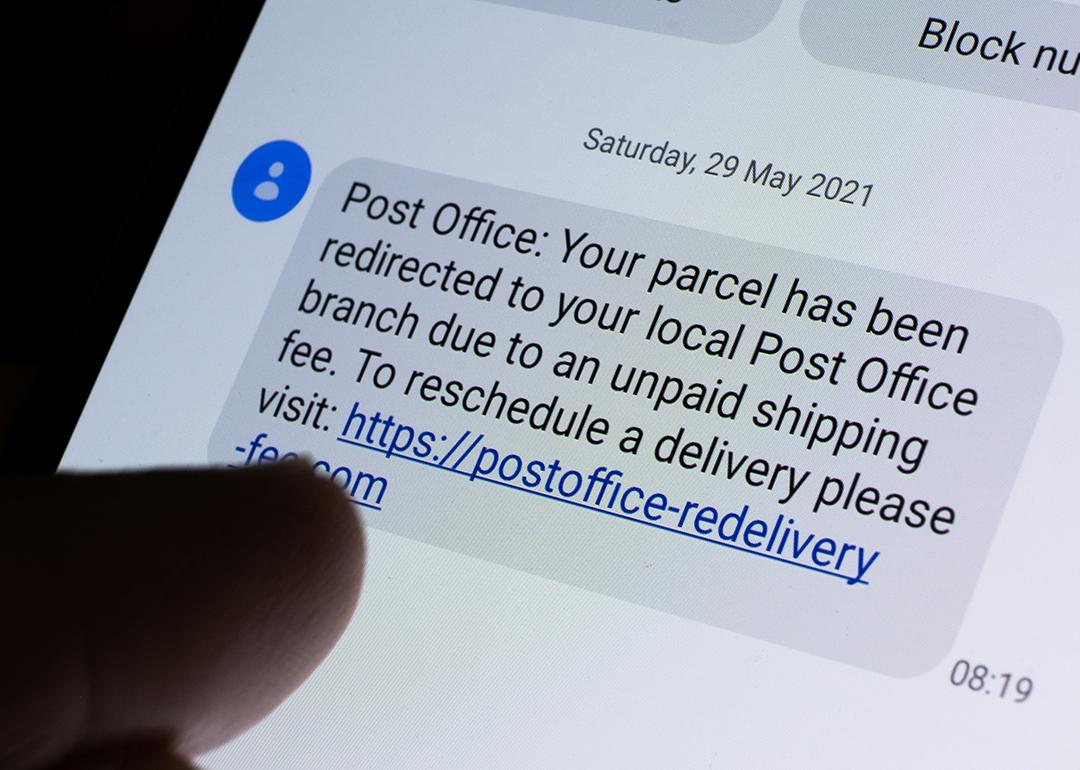
As the name suggests, the USPS scam text involves a seemingly authentic text message from the U.S. Postal Service in relation to a package that is currently in transit. The official-looking — but definitely phony — text usually asks its recipient to click on a link (to help track the would-be package down, for instance). That link may ask the user to “confirm” more private details that can be used to scam them, it may ask you to log in to a bogus site (thus revealing a password that you might use elsewhere), or it may straight-up infect your smartphone with malware that’ll do the digging for the scammer.
USPS Scam Text Variations
The vanilla, garden-variety (and still extremely common) version of the USPS scam text falsely reports that there’s a problem or delay regarding a package on the way to you. In many cases, scammers use urgent language to pressure victims to jump into action. But that’s not the only flavor of USPS scam text junk mail.
A less common variety of the scam might ask you for a small fee to access your tracking info — that’s an instant no-go, as the real USPS never requests money for tracking. Other common tweaks to the formula claim that the package is undeliverable due to an or that “your package arrived at the warehouse, but could not be delivered due to incomplete address information.”
How to Stay Safe
Whether it’s a USPS scam text or just about any other variety of phishing scam, some common-sense safeguards can help you steer clear of getting grifted. Like IRS scams and similar tricks, the USPS scam text relies on the misuse of a trusted name — in this case, the United States Postal Service. And therein lies the lesson: Always, always verify the authenticity of any source that asks you to click on a link, or to enter, “confirm” or “verify” private information.
And on that note, be wary of clicking any suspicious-looking links in general. In fact, never click a parcel tracking link if you didn’t request tracking info. While you’re at it, keep an eye out for other red flags, like obvious typos and grammatical errors in the text, or links that look like official USPS links but don’t quite get there. For instance, the Postal Service’s official URL is — not USPSS dot com.
If you’re unsure of the source, run a quick to try to verify the sender. One thing you’ve definitely got is a phone number — enter those digits into a tool.
What Comes Next
Your best bet is to ignore any USPS scam text you receive, but it’s also worth blocking the number and reporting the sender to the Postal Service via the address spam@uspis.gov, or forwarding the text itself to 7726 (SPAM) to help others avoid the scam in the future.
If you have accidentally clicked on the link and believe your phone or your info is compromised, here’s what to do:
- Put your device in airplane mode to shut off the WiFi connection and use a trusted anti-malware app to scan your system.
- for your most sensitive accounts (especially financial services).
- Contact your bank to put a hold on any compromised accounts and hopefully reverse fraudulent charges.
- Consider filing a fraud alert with one of the three main credit reporting agencies to prevent anyone from using your accounts to obtain credit lines.
FAQs
Because of the USPS scam text’s popularity, you’re not alone if you have some questions. Here are some of the most common head-scratchers from the internet.
What’s the USPS “brushing” scam?
This newer package scam is quite different from the USPS scam text. In a “” scam, you actually receive a package (typically a low-value item) you didn’t order. Then, e-commerce sellers use your name to post product reviews to boost their online presence. Sometimes, a note in a “brushing” scam package will also ask you to head to a site to sign up for more “free gifts” — in these cases, the brushing scam becomes a phishing scam, too.
Does USPS send you text messages?
Sometimes, yes, but they never send unsolicited texts. Regular USPS users know that the Postal Service will that contains a link; you have to voluntarily register with an official service, like , before the Postal Service sends you tracking links.
How can you tell if a USPS text is real?
As a rule of thumb, you should only trust a USPS text, email, or call regarding tracking if you were the one who initiated the tracking request in the first place.
Basically, no authentic text message from USPS will ever be unsolicited, and it certainly won’t try to scare you into thinking you’ve lost a package. Rain, snow, or sunshine, that’s just not their style.
was produced by and reviewed and distributed by Â鶹ԭ´´.